The scorecard
4.6/10 · Weak
- Writing25%
- 4.5
- Production25%
- 5.0
- Delivery15%
- 5.5
- Cohesion15%
- 4.0
- Originality10%
- 3.5
- Replay value10%
- 4.5
Lyrically stagnant retreads of money-and-guns themes with little wit or development, overwhelmed by clumsy seduction metaphors and obligatory threats that have no urgency.
Cheap-sounding G-Unit stalwarts and failed Dre imitations dominate the album; even Timbaland's work and the 'Top Billin' sample can't redeem the overall generic sonics.
The performance lacks the hunger and conviction that made Get Rich essential, though the mush-mouthed charm still works in spots and guest hooks carry several tracks.
Seventeen tracks split awkwardly between pandering club records and obligatory street songs with no sense of sequence, purpose, or earned length; pure demographic math.
Entirely running in place, revisiting Get Rich's fatalism without the edge and The Massacre's pop moves without the hooks, while Graduation was rewriting what rap stardom could sound like.
Most tracks tire quickly on second listen and the album offers no reason to return as a whole, though 'I Get Money' and 'Ayo Technology' hold up as singles.
50 Cent Curtis — The Price of Winning a Battle He Already Lost
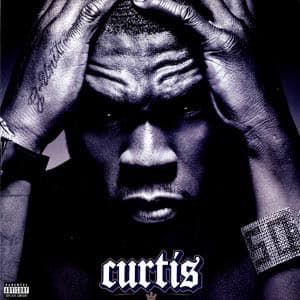
Curtis arrived marketed as a heavyweight championship bout and left the ring as proof that the wrong man was still shadowboxing. The album-sales war with Graduation was supposed to settle who owned September 2007, but the real contest was never about SoundScan numbers: it was whether 50 Cent could make an album that justified his dominance, and he lost that fight before the first-week tallies came in. Curtis moves 691,000 units and sounds exactly like what a committee would design to move 691,000 units: a few Timbaland tracks for pop radio, a few threats for the base, a Mary J. Blige feature for older listeners, all assembled with the craft of a marketing deck. The thesis of this album is that 50 can keep running the same plays and still win, and he is half right. He won the sales week against everyone except the one artist who mattered. He lost the argument that his formula still had any life in it.
The tragedy of Curtis is that it was designed entirely as a defensive move in a moment that required offense. After Get Rich or Die Tryin' made him inevitable and The Massacre proved the pop moves worked once, 50 spent 2007 trying to defend both positions at once: still the hardest out and still the club king, still Dre's protégé and still the independent hustler, still hungry and still on top. The album splits down the middle trying to serve every demographic, and both halves feel calculated. The street records sound like a man trying to remember what made him dangerous.
The pop records sound like focus-group results. What is missing is the thing that made Get Rich a classic: the sense that 50 needed this, that rap was his only way out and he knew it. Curtis sounds like the work of someone who has already made it and is just defending the crown, which is exactly the energy Kanye killed that week.
The Committee That Built a Placeholder
The production on Curtis is where the defensive strategy falls apart first. Get Rich worked because Dre and Eminem gave 50 the coldest, emptiest beats in their catalogs, all minor-key dread and wide-open space for his deadpan threats. Curtis tries to replicate that sound with cheaper approximations and throws in Timbaland when it needs a single. The result is an album that sounds dated on arrival, a collection of beats that could have been G-Unit album cuts or mixtape filler.
Detroit Red and Don Cannon give 50 a Scooby-Doo-sampling midtempo that goes nowhere. Havoc shows up twice with standard Mobb Deep gloom that 50 mumbles over without energy. Jake One provides workmanlike soul loops that sound fine and vanish from memory before the next track starts. The album has three Dre beats, and two of them sound like Dre outtakes: one is a Janet Jackson replay that belongs on a Mary J. album, another is a pop move with Nicole Scherzinger that mistakes bombast for momentum.
Only one of them, with its grimey low-end churn, comes close to the ominous minimalism Dre used to give 50, and even that one feels like a retread.
The one producer who does something is Timbaland. His shredded-keyboard melody has actual propulsion, and Justin Timberlake singing the hook gives 50 room to just play the creep in the club without trying to sound hard. It is the only track on Curtis that feels like a collaboration with someone operating at a higher level. Everything else sounds like 50 working with people who will give him what he wants instead of what he needs.
Apex samples Audio Two's "Top Billin" on one track, and it works because the sample is bulletproof; 50 coasts on the loop and sounds bemused at his own survival, which is the closest he gets to the fatalism that made "Many Men" essential. But that is one track. The rest of the album is 50 trying to sound like 2003 50 on 2007 budgets, and the production never lets him get there.
Lyrically, Curtis is 50 on autopilot. The writing is competent in the sense that the rhymes land and the wordplay occasionally flashes, but there is nothing here that he has not said better before. One early track tries to revisit the raw fatalism of Get Rich with lines about tomorrow being just a day away if you can keep your heart beating, and it almost works; the verse has some of the old dread. But then the album pads that out with fifteen more tracks of money talk, sex talk, and threats that sound rote.
The seduction tracks are the worst of it: 50 mumbling through clumsy metaphors with no conviction, letting Robin Thicke and the beat do the work. Even the street records feel obligatory. Tracks with Akon and others are just 50 running through the motions of sounding dangerous because that is what the base expects, not because he has anything new to threaten anyone with. The writing has no urgency, no hunger, no development from the last album. It is a star coasting on the assumption that his presence is enough.
Seventeen Tracks of Demographic Math
Curtis is seventy minutes of music with no sense of pacing, sequence, or earned length. The album does not build or develop; it just alternates between street records and pop records in whatever order the label thought would maximize playlisting. The opening stretch starts strong, then the album veers into two pop moves with big-name guests back-to-back that have nothing to do with each other sonically. The midsection sags under the weight of filler, all tracks that sound like they were included because 50 had verses lying around, not because they serve the album.
The Eminem collab should be a tentpole, but it is just two stars doing a perfunctory sex jam with no chemistry and no hook. The back half tries to end on street credibility, but by then the album has lost any momentum it might have had. There is no arc, no peaks and valleys, no reason these seventeen tracks are in this order instead of another. It is a playlist masquerading as an album, and the length is not earned.
The album would be tighter and more focused at twelve tracks, but that would require cutting songs with big-name features, and Curtis was built to have something for everyone, which means it has nothing for anyone who wants a coherent listen.
The sequencing disaster is most obvious in how the album burns through its two best tracks early. The best material arrives within the first third, and after that there is nothing approaching that level of craft or hooks for ten more songs. The album peaks twenty-five minutes in and then slogs through filler for another forty-five minutes, which is the opposite of how a seventy-minute rap album should be built. If the best material was scattered across the runtime it might sustain interest, but the front half gets the singles and then has nothing left.
The Album That Proved the Formula Expired
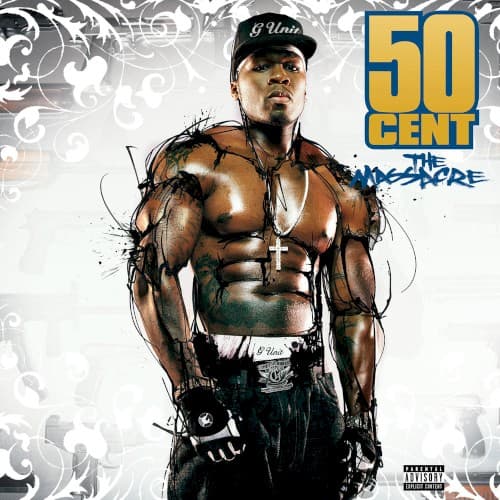
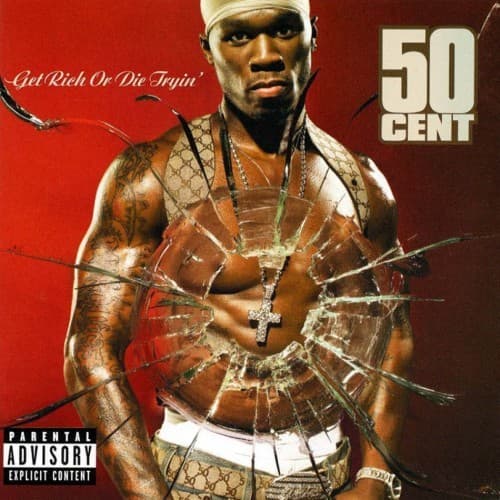
Curtis is 50 Cent's weakest album to that point, a step down from the already inconsistent Massacre and a distant echo of the debut. It sits third in his catalog, below Get Rich and The Massacre, and the gap is not close. Get Rich was a classic because it had something to prove and the music was built to prove it; The Massacre was messy but had enough hooks to justify the pop moves. Curtis has neither the hunger of the debut nor the hooks of the follow-up.
It is an album made by a star who assumed his presence was enough, released in a week when Kanye proved that stardom required evolution. The critical consensus was mixed for a reason: Curtis is professionally made, occasionally entertaining, and entirely redundant. The worst thing about it is not that it is bad; it is that it is unnecessary. 50 Cent did not need to make this album, and it sounds like he knew it.
The album is for 50 Cent fans who want more of the same and do not care that the same is now a decade old. If you are nostalgic for the Get Rich era and want to hear 50 try to replicate it with cheaper production and less inspiration, Curtis will give you that. If you want to hear what 50 sounds like working with Justin Timberlake and Timbaland, one track is worth the click. If you are looking for growth, risk, or any reason to believe that 50 Cent in 2007 had something new to say, skip this entirely and go listen to Graduation to hear what evolution actually sounds like.
The album aged poorly because it sounded dated on arrival. The sales competition with Kanye is now remembered as the moment the culture moved on from 50's formula, and Curtis is the proof. Start with the two singles if you are curious, then stop there unless you need to hear every album in the catalog. For what comes next, go back to Get Rich and remember when 50 needed it. For albums that do what Curtis tries and fails to do, listen to The Massacre for better pop-rap crossover or listen to any Kanye album from this era for what it sounds like when a star refuses to repeat himself.
Track by track
Track Listing
Intro
SolidDialogue from a British crime film over minimal Eminem production, setting a grim tone the album will not sustain. Brief and forgettable.
My Gun Go Off
StandoutThe best pure street record on the album, with Adam Deitch and Eric Krasno giving 50 a live-instrumentation groove that feels looser than the stiff programming elsewhere. The writing almost recaptures the fatalism of Get Rich: 50 rapping about tomorrow being just a day away if you can keep your heart beating, the casual proximity of death that made "Many Men" a classic. The verse has the old dread, the sense that 50 is narrating his own survival in real time instead of just boasting about it. But even here the energy is a notch below the debut, the delivery more detached than committed, and the track does not have a hook strong enough to make it a single.
Man Down (censored)
WeakDetroit Red and Don Cannon sample the Scooby-Doo theme for a midtempo street record about killing cops, which got every police reference censored even on the explicit version. The beat is cheap, the concept is provocative in a way that feels like trolling instead of conviction, and the censorship neuters whatever impact it might have had. 50 called it his favorite song on the album, which says more about Curtis than the track.
I’ll Still Kill
SolidAkon on the hook, DJ Khalil on the boards, 50 rapping threats that sound entirely obligatory. The writing is competent, the beat is functional, and nothing about the track suggests that 50 needed to make it or that listeners need to hear it. Standard album filler from an artist who used to have no filler.
I Get Money
StandoutThe album's clear standout and the only track that belongs in the conversation with 50's best singles. Apex builds the entire song around Audio Two's "Top Billin" sample, and the loop is so strong that 50 just glides over it, sounding bemused at his own wealth and survival. The writing here is specific in a way most of Curtis is not: 50 tallying up his revenue streams, mocking rivals for their lower tax brackets, treating his own success as a punchline. The appeal is in how effortless it sounds; 50 is not trying to convince you he is rich, he is just describing it with the detachment of someone reading a bank statement. Time magazine ranked it the sixth-best song of 2007, and the praise was deserved. This is the one track on Curtis that earns replay value, the one moment where the formula still works because the sample and the concept are strong enough to carry it.
Come & Go
WeakDre producing a Janet Jackson interpolation for a seduction track that belongs on a Mary J. Blige album, not a 50 Cent record. The beat is lush and polished and entirely wrong for 50's voice, and his attempts at singing the hook are painful. Pure demographic pandering with no conviction behind it.
Ayo Technology
StandoutThe album's biggest single and its only moment of genuine collaboration with someone operating at a higher level. Timbaland's production is sharp and propulsive, the shredded-keyboard melody giving the track actual momentum, and Justin Timberlake on the hook handles all the singing so 50 can just play the creep in the club. The writing here is 50 at his most lascivious, describing a strip-club seduction in clinical detail, and the deadpan delivery works because the track is built around his limitations instead of trying to hide them. Timbaland and Timberlake elevate this into something that sounds like 2007 instead of 2003, which makes it the exception on an album full of retreads. The song peaked at number five on the Billboard Hot 100 and remains the most listenable track on Curtis.
Follow My Lead
WeakRobin Thicke singing the hook while 50 mumbles through a seduction that never finds a compelling angle. The writing is clumsy, the metaphors are forced, and 50 sounds entirely uninterested in the whole exercise. Tha Bizness gives it a smooth, radio-ready beat, but the track is lifeless.
Movin On Up
SolidJake One flips Miracles and Russell Simmons samples for a soul-rap track about upward mobility. The production is polished and the concept is solid, but 50's writing is generic and the execution is flat. It sounds fine in the moment and vanishes from memory immediately after.
Straight to the Bank
SolidThe grittiest Dre production on the album, a minimal churn of low-end and sparse drums that comes closest to the ominous sound Dre used to give 50. The writing is pure money talk, nothing revelatory, but the beat carries it and 50 sounds more engaged here than on most of Curtis. Still, it is a retread of better songs from earlier albums, and the chorus is weak.
Amusement Park
WeakThe nadir of the album's seduction tracks: 50 mumbling through an extended metaphor comparing sex to a theme park, with no irony and no wit, over a cheap Dangerous LLC beat. Critics singled this out as an example of how poor 50's writing had become, and they were right. Painful to sit through.
Fully Loaded Clip
SolidHavoc gives 50 a standard Mobb Deep gloom track, and 50 raps threats that sound like he is reading them off a checklist. The writing is competent, the beat is fine, and the entire song feels obligatory. Filler.
Peep Show
WeakAn Eminem collaboration that should be a tentpole and instead is a perfunctory sex track with no chemistry and no hook. Eminem produces and raps a verse, and both artists sound like they are phoning it in, two stars doing a favor for each other with no investment in the result. The beat is thin, the concept is tired, and the execution is lazy.
Fire
WeakDre's most bombastic production on Curtis, a pop move with Young Buck and Nicole Scherzinger that mistakes loudness for energy. The beat is overblown, Scherzinger's hook is shrill, and 50 and Buck sound lost in the mix. It aims for anthemic and lands on grating.
All of Me
SolidMary J. Blige on the hook, Jake One on the boards, 50 trying for a vulnerable moment about a relationship and not pulling it off. The writing is surface-level, the delivery is unconvincing, and even Blige's presence cannot save the track from feeling like a checkbox: album needs a Mary J. feature, here it is.
Curtis 187
SolidHavoc returns for another gloom track, and 50 uses it to respond to his critics and assert his continued relevance. The writing is defensive in tone, 50 arguing that he is still on top even as the album proves otherwise. The beat is solid, the performance is flat, and the track feels like an artist trying to convince himself.
Touch the Sky
WeakTony Yayo shows up for a posse cut that should provide some energy and instead just extends the album past any reasonable length. The beat is generic, the verses are forgettable, and the track exists only to include Yayo on the album. Pure filler.
Frequently Asked Questions
Is 50 Cent Curtis worth listening to?
Why did Curtis sell less than 50 Cent's previous albums?
What are the best tracks on 50 Cent Curtis?
How does Curtis compare to 50 Cent's other albums?
Styles