The scorecard
6.8/10 · Good
- Writing25%
- 6.5
- Production25%
- 7.0
- Delivery15%
- 8.0
- Cohesion15%
- 6.0
- Originality10%
- 6.5
- Replay value10%
- 6.5
The loyalty-and-betrayal obsession gives the lyrics a spine, but the verses restate one mood in similar terms across 21 songs.
The beats share a clear mood and Cheese's mix holds them together, though the repetition of slow-burning minor-key trap across so many tracks limits the sense of craft.
The Baton Rouge drawl bends into melody and cracks into shouts without a guest to hide behind, and the hooks on On My Side and Life Support carry the record.
The back third repeats earlier moods and the no-features rule removes contrast, though the tight song lengths and confessional through-line give it some shape.
The sung, emotional Louisiana trap approach was already his signature, but doing it at this scale with zero guests is a distinctive commercial move.
As a projection, the repetitive stretches make the full run more tiring than it needs to be, though the singles and a handful of deep cuts should hold up.
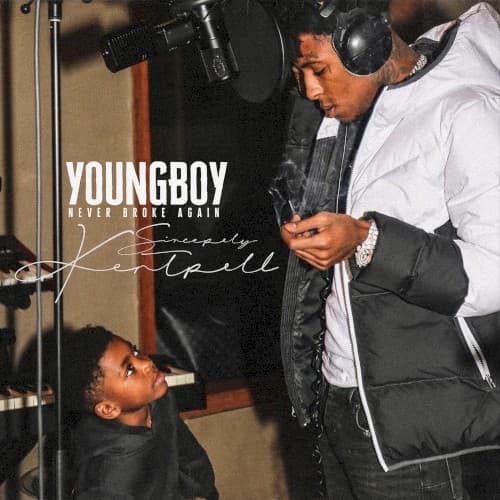
YoungBoy Never Broke Again Sincerely, Kentrell — One Voice, No Escape Hatch
The most telling decision on Sincerely, Kentrell is the one you cannot hear: nobody else is on it. In a streaming era where a rap album's hit chances are often padded with a guest verse or two, YoungBoy Never Broke Again built a 21-song record around his own voice, a Baton Rouge drawl that bends into singing and cracks into shouts, and left himself with nowhere to hide. That is the album's thesis in practice, and it is why the record is more compelling than its sprawl suggests.
The claim here is that this is YoungBoy's most focused work to that point, and its focus comes from limitation rather than editing. Loyalty and betrayal sit at the center, with paranoia, grief and a stubborn pride filling the edges. Because there is no second voice to relieve the pressure, every song carries the same weight, and the sound of one person working through the same fears in different keys becomes the point instead of the problem. It is a long record that still feels like one long thought.
The context makes that quality hard to separate from the music. The record arrived while the rapper was facing federal charges, and the fact that it debuted at number one with 137,000 units, with eleven songs reaching the Hot 100, tells you how closely his audience was listening. The commercial result matters here because it shows his fans did not need features to follow him. That is a quiet kind of power, and it reflects how much of Southern rap's current energy runs through direct artist-to-fan loyalty rather than label-assembled event albums.
The flaws are real, and they come from the same source as the strengths. An album this devoted to one mood risks sameness, and the back half does lean on familiar patterns. Still, the best songs are among the most affecting melodic rap of 2021, and the record works as a portrait of a Louisiana voice that has learned to turn pain into hooks. It asks you to spend time with one person's state of mind, and the better songs make that time worth spending.
A Louisiana Drawl Over Melodic Trap and Heavy Weather
The writing is built around a few stubborn ideas, and YoungBoy returns to them from different angles. Betrayal by people close to him, the cost of fame, his own anger and a need to be understood all show up repeatedly, and the album's strongest verses drop the boasting and speak plainly about how it feels to be surrounded by pressure. The language is direct, closer to a diary than to a punchline machine, which suits the music but also limits the variety of the ideas. Where a more dazzling lyricist might find a new image for each song, he tends to find a new melody for the same feeling.
That is where the delivery earns its keep. He moves from a low, rasping growl to an aching sing-song line within a single verse, and the rhythm of his phrasing carries the kind of bounce that has long defined Louisiana and Gulf Coast rap. There is a sense of Baton Rouge in the way words are stretched and clipped, and echoes of Lil Wayne and Young Thug in the way melody and grit share a line. Hooks do much of the emotional work, and because no guest shares the microphone, the whole record depends on his control of tone. On the better tracks, that control is thrilling.
The production draws from a long list of beatmakers, including Cheese, TNTXD, DMAC, TayTayMadeIt, Smash David and Mike Will Made It, yet the album holds together because the beds share a mood: slow-burning, minor-key melodic trap with space for the voice. Cheese's work mixing and mastering the whole record gives it a consistent texture, and small live-instrument touches, such as guitar, percussion and piano on Nevada, break up the programmed drums. The beats rarely try to compete with the vocal, which is the right instinct for a singer-rapper whose strongest tool is his tone.
The main weakness is repetition. Several songs share nearly the same tempo, hook shape and emotional register, and the verses sometimes rephrase earlier ideas without adding to them. The shortest cuts, many barely over two minutes, can feel like sketches rather than finished songs, and a few of them end just as they begin to say something new. The no-features rule is bold, but it also removes the contrast that a guest verse might have provided, so the album's few weaker stretches have nothing to cut the monotony. Sharper editing would have turned 21 tracks into a more powerful 15.
Twenty-One Short Songs and One Long Mood
As a sequence, this record plays like one long confessional broken into small pieces. Most songs run between two and three minutes, so the pacing is quick, and the album rarely lingers on a single idea long enough to overstay it. That brevity is a strength. It keeps the energy moving, and it suits the way streaming-era listeners move between songs. A track ends before the listener has fully settled into it, and the next one picks up the same mood from a slightly different angle.
The opening stretch is the most persuasive. The record starts with a heavy, emotional tone, then moves quickly into its melodic hooks, and by the fifth or sixth song it has established its terms: confession, defiance, loyalty tested. Single releases are spread through the sequence rather than stacked at the front, which gives the album a healthy rhythm of hard-hitting and wistful moments. A couple of songs near the center rank among the best material, and they land because they come after a few quieter cuts have built tension.
The sag arrives late in the second half. Several songs in a row share a similar tempo and feel, and the cumulative effect is of a mood that has been fully explored and then explored again. The record never collapses, but the moments of real surprise become rarer, and a listener could remove four or five songs without missing a thread of the story. Length is where the album's structure and its reach part ways. Twenty-one tracks suit the streaming-count strategy that made the record a chart success, but they do not all earn their places as an album.
The ending recovers some of that ground by returning to a more vulnerable register. After a long run of defiance, the quieter finish lets the voice crack and the melodies soften, which turns the album from a display of toughness into something closer to a plea. That choice shows a better sense of arc than the middle suggests. The record's rhythm is not flawless, but it knows where it wants to end, and that clarity of purpose is what holds the sequence together.
The Best Argument for Going It Alone
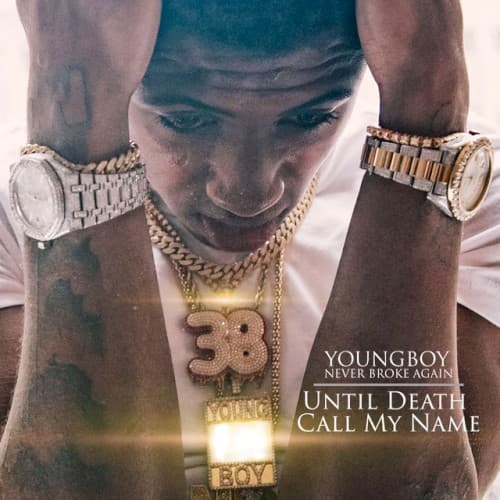
In the YoungBoy Never Broke Again catalog, Sincerely, Kentrell stands well above Until Death Call My Name, which is rated 6.3 on this site. The earlier record has the raw talent but a less settled sound; this one has a clear emotional through-line, stronger hooks and a production sheen that makes the pain easier to take in. Landing at 7.0, it ranks as a clear step forward without reaching the level of the genre's best records, held back by length and sameness.
It is for listeners who like melodic Southern rap that treats feeling as the main event, who enjoy long, mood-driven albums, and who are curious about how a streaming-era star builds a record without guests. It will also suit anyone who has heard the singles and wants more context for them. Skip it if you want varied tempos, tricky wordplay or storytelling that moves from one setting to the next; the album stays close to one voice and one emotional temperature.
How it ages depends on how you take it. The biographical weight that surrounded the release may fade, and what will remain is the quality of the melodies, which are strong enough to stand without a backstory. The best songs already feel like they could sit in a playlist for years, and the no-features gamble has become a useful reference point for artists weighing the same choice.
Start with On My Side for the clearest example of the hook-driven sound, then Life Support for the album's most grown-up writing, then Nevada for the guitar-tinged beat. If you want more, go back to Until Death Call My Name for the rougher early version of this style, or look to Lil Wayne for the older Louisiana model of mixing melody with grit. This record's real accomplishment is proving that one voice, used honestly, can fill a whole hour.
Track by track
Track Listing
Bad Morning
StandoutA subdued opener with Dubba-Aa, The Lottery and Laury behind the boards. It sets a dark, reflective tone and gets the listener into the right headspace, though it plays more as an invitation than a full song.
Hold Me Down
SolidA short, hooky cut with a tight, bouncing beat. It establishes the album's habit of pairing urgent delivery with melody, but it does not stand out from what follows.
On My Side
StandoutThe final single, produced by Cheese, Haze and Leor, and the album's most direct hook. The melody is the kind that sticks after one listen, and he sings with a pleading edge that turns loyalty into something close to a request. The beat gives him a lot of room, with a steady low end and a bright top line that lets the vocal sit forward. At two and a half minutes it never overstays, and the writing stays focused on a single emotional problem: who is really in his corner. It reached number 37 on the Hot 100, the highest of the album's singles, and it earned that position. This is the cleanest argument for the record's melodic approach and a good first play.
Smoke Strong
SolidA mid-tempo cut that leans on atmosphere more than on hooks. It fits the mood but adds little new, and it sounds like a close relative of the songs around it.
50 Shots
StandoutTayTayMadeIt supplies a harder, more aggressive bed, and YoungBoy answers with a clipped, forceful delivery. It breaks up the melodic run for a moment, and the change in energy is welcome.
No Where
SolidA competent but familiar track that sticks to the album's central themes. Neither a highlight nor a weak point.
Sincerely
StandoutThe title track is a compact statement of purpose, with a plain, direct tone that suits the album's diary-like approach. At under three minutes it makes its point and moves on, though it does not push far beyond the mood already set.
I Can't Take It Back
StandoutA regretful mid-album cut with a Cheese, Haze, TNTXD and Zuus production team. The hook carries real feeling, and the apology-like framing gives the record a human beat. A solid song that plays best in context.
Rich Shit
SolidA boast-leaning track that is less revealing than the surrounding songs. The beat is fine and the delivery is confident, but it is the album's stock flex and adds little to the portrait.
Toxic Punk
SolidThe lead single, and at barely two minutes it is among the shortest songs on the record. Its four-producer team of Cheese, DMAC, TNTXD and DJ Trebble builds a punchy, driving beat, and YoungBoy attacks it with a growling, rhythmic flow that favors attitude over melody. It debuted at number 99, the lowest of the singles, which says more about the timing of its release than about the song. The brevity is both its strength and limit: it hits hard and leaves quickly, but it feels more like a snapshot than a finished piece. Good for a mood, less rewarding as a deep listen.
My Killa
SolidA dark, direct track built for loyalty and menace, with Smash David among the producers. It delivers its message cleanly, though the theme is one the album covers more convincingly elsewhere.
Life Support
StandoutA single built by Smash David, Ravis, Stunner Samples and SMPLGTWY, and the longest song in the first half at nearly four minutes. The extra time is used well. The sample-driven bed feels warmer and more spacious than the trap beats around it, and YoungBoy sings with a worn, vulnerable tone that fits the subject of leaning on someone to stay afloat. The writing is some of the album's most mature: less about threats, more about need. It reached number 48 on the Hot 100, and the combination of melody and emotional honesty is the reason it works. If a single track can explain why people took this record seriously, this is a strong candidate.
Break or Make Me
StandoutThe song that received the first video on release night, and the choice is sensible. It balances a catchy hook with an introspective verse about pressure, and the beat gives the voice room to turn from growl to song. A strong deep cut with real replay value, and one of the best examples of how the album mixes toughness with doubt.
Forgiato
SolidReusing the production team behind the opener, it feels like a continuation of the same dark, hazy mood. Pleasant enough, but not distinct.
Baddest Thing
SolidA glossier, brighter cut with Mike Will Made It among the credits. The sound is more polished than the surrounding tracks and gives the album a brief change of texture, though the writing leans on familiar swagger.
Nevada
StandoutA third single, co-produced by TNTXD and Vadebeatz, who also plays guitar, percussion and piano on it. Those live touches make it one of the record's most distinctive beds, with a warm, open feel that stands out against the programmed drums elsewhere. YoungBoy rides it with a loose, melodic flow and a hook built to be sung back. The song had been circulating online before its official release, and its position at number 58 on the Hot 100 shows how strongly fans responded. It sounds natural, unforced and emotionally clear, and it is the best argument that the album's instrumental choices matter as much as its voice.
Level I Want to Reach
SolidA brief, ambitious-sounding cut about climbing higher. The hook is simple and the verse is serviceable, but at barely over two minutes it ends before it can build.
Kickstand
StandoutThe shortest song on the album at under two minutes, and it got its own video after release. It is a fast, energetic burst with a sharp rhythmic flow, and it works as a palate cleanser in the dense late stretch. More a mood than a statement, but a tight, effective one.
All I Need
SolidA mellow, loyal-leaning track that softens the album's tone ahead of the close. It is pleasant and sincere, but the melody blends into the surrounding songs.
White Teeth
StandoutTayTayMadeIt returns for the second single, which peaked at number 78. It is bouncy and confident, with a hook that suits the swagger of the verses and an easy groove that makes it one of the more playful songs in the sequence. Its placement near the end gives the record a last burst of energy before the quieter close. It is not the deepest song here, but it is among the most replayable, and it shows that the album can sound relaxed as well as wounded.
Panoramic
StandoutA short, reflective closer that lets the record end on a quieter note instead of a final flex. It is not a showstopper, but it fits the album's turn toward vulnerability and ends the sequence cleanly.
Frequently Asked Questions
Is Sincerely, Kentrell good?
Does Sincerely, Kentrell have any features?
What are the best songs on Sincerely, Kentrell?
How does it compare with Until Death Call My Name?
Genres
Styles