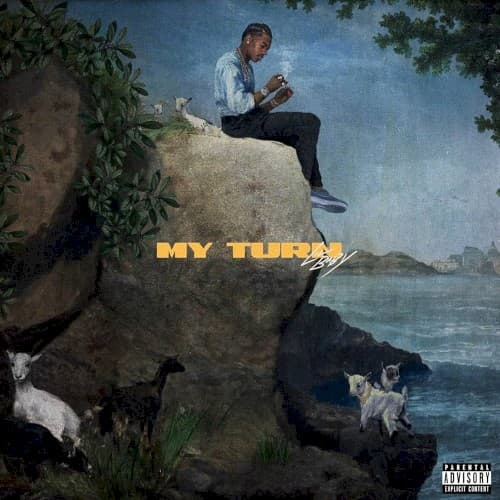
The scorecard
6.1/10 · Mixed
- Writing25%
- 6.0
- Production25%
- 6.5
- Delivery15%
- 7.0
- Cohesion15%
- 5.0
- Originality10%
- 5.5
- Replay value10%
- 6.5
The verses recycle money, trust and loyalty without telling a full story, though Emotionally Scarred conveys damage through plain detail and restraint.
The Quay Global and Twysted Genius beats are polished and give his flat voice room, though dark piano and guitar loops dominate until Gang Signs brings a Memphis jolt.
His weathered, slightly behind-the-beat cadence and short sticky hooks on Woah and Sum 2 Prove make the performance the most dependable asset on the record.
Twenty tracks at near-identical tempo and mood blur together in the middle, and even the high-grade filler the critics noted adds up to a playlist rather than an album.
It consolidates the melodic Atlanta trap template instead of extending it, with confidence standing in for invention and only Gang Signs stepping outside the formula.
The singles and a handful of album tracks hold up on repeat, while the long middle stretch is the part most listeners will skip, so this is a project that plays better as a playlist.
Lil Baby My Turn — A Great Playlist Wearing an Album's Clothes
My Turn is an album built to be lived inside rather than listened through, and that is both its smartest trick and its central flaw. Lil Baby arrived with a voice that sounds tired in the right way, a flat, weathered rasp that makes every line about money, loss and loyalty land like a report from someone who stopped being surprised long ago. Across twenty tracks that voice almost never changes register, and the pleasure of the record and its problem turn out to be the same thing.
The argument here is simple. My Turn is a very good playlist and a merely good album. The singles hold up, and the best songs have a rare emotional plainness in which hurt arrives as a fact instead of a performance. But a tracklist this long, built largely from the same slow-rolling melodic loops and the same patient 808 pulse, asks the listener to hunt for differences, and the differences are thinner than the commercial numbers suggest.
Those numbers matter because they explain the shape of the record. It debuted at number one on the Billboard 200 with 197,000 units, his first chart-topper, and went on to be the most consumed album in the United States in 2020. That is the payoff for a streaming-era strategy: plenty of runtime, a steady mood, no jarring tempo shifts to make a playlist skip. Rolling Stone's critic complained about filler while admitting that the filler was high grade, which is the most accurate short description of the project anyone has offered.
Set beside the elastic, yelping melodies of Young Thug and Gunna, Baby is the plainer stylist, and the album is at its best when it leans into that plainness. It is at its weakest when it mistakes consistency for development. The question worth answering is whether twenty tracks of a single, convincing mood add up to more than five or six great ones, and for most listeners they do not.
Plain Words, Patient Loops, and a Voice That Never Changes Gear
The writing is the album's real strength and its ceiling. Baby is not a punchline rapper and rarely reaches for a quotable turn of phrase. What he does well is stack small, concrete details about spending, scarcity and suspicion until a feeling emerges without being named. The Rolling Stone point that he conveys emotion without formally unpacking old traumas is fair: the songs about losing people and trusting no one work because he declines to dramatize them.
The same restraint becomes a limitation across a long record. Pitchfork's complaint that the music lacks charisma and personality is too harsh, since his voice is distinctive, but there is a real stretch in the middle where the subject matter turns over and over: the money is up, the circle is small, the haters are noted. Verses blur together because they are built from the same few moves, and the album has too few songs that let a story run to its end.
Production is where the sameness is easiest to hear. The credits list a crowd of beatmakers, with Quay Global and Twysted Genius supplying most of the singles and Tay Keith, Wheezy, Murda Beatz, Hit-Boy and DJ Paul each getting a turn, and yet the palette is remarkably unified. Dark pianos, plucked guitars and softly spinning keyboard loops sit over drums that rarely bang hard enough to change the room. This is the Atlanta trap template of the late 2010s executed with discipline, and the discipline is the point, because Baby's flat delivery needs a bed that does not compete with him.
The exceptions are the best evidence that more variety would have helped. When Memphis menace arrives through DJ Paul and a Three 6 Mafia element on Gang Signs, the record suddenly has a pulse. When the production tightens around a hard, rhythmic flow, as on the singles, Baby locks into the beat in a way the slower tracks never ask him to.
Delivery is the strongest dimension. His cadence is conversational and slightly behind the beat, with melodic drawl that bends notes without crossing into full singing, and his control over pitch inside a verse is better than his reputation for plainness suggests. Hooks are short and sticky rather than elaborate. The guest verses are mostly competent but rarely transformative; the features tend to match his mood rather than disturb it, which suits the album's consistency and also explains why none of them reorients a song.
On originality, the album consolidates a sound rather than extending it. Nothing here would have startled a listener who had followed his mixtapes, and the title's argument that it was his turn is delivered through confidence, not invention. That is a legitimate way to make a rap album, but it caps the score.
Twenty Tracks, One Mood: Where the Plateau Begins
As a sequence, My Turn front-loads its energy and then settles into a long, low plateau. The opening run establishes the formula quickly and the early singles arrive in a tidy cluster, so the first third of the album feels purposeful. NME's critic said it starts a little slow and dreary, and the very top does drag compared with the stretch that follows, but by the time the melodic singles arrive the pacing is right.
The trouble begins in the second half. Tracks run between two and a half and three and a half minutes, which keeps any single song from overstaying, but the aggregate runtime is where the cost lands. Moods repeat at nearly the same tempo, features recur at predictable intervals, and a listener who lets the album run without watching the tracklist will struggle to say where one song ended. That is exactly what streaming rewards and exactly what an album should resist.
There is a late recovery. The stretch toward the end gets a jolt from the Memphis-flavored Gang Signs, and the closing songs settle into a quieter register, which gives the record a better landing than its middle deserves. Even so, the sensible way to hear this record is to treat it as a long shuffle. Take out six to eight tracks and the remaining twelve would be a sharper, more memorable album, and the standard edition would have been stronger for it.
The later deluxe edition added six more songs, and that decision is telling. It treated the album as an open container rather than a finished statement, and nothing in the runtime of the original suggests it needed expanding. Length here is a feature of distribution, not an artistic necessity, and the pacing shows it.
Six Songs Worth Keeping and a Record Built for Streaming
My Turn ranks as a strong commercial statement and a middling artistic one. The catalog context lists no other Lil Baby albums rated on the site yet, so the placement is relative to the genre: it belongs in the good band, around 6.5, well above the pile of streaming-bait albums that are mostly filler, but short of the great records of its own year. The scorecard reflects that, with delivery and production carrying it and cohesion pulling it down.
Who should start here? Anyone who wants to understand why melodic Atlanta trap dominated the early 2020s, and anyone who likes a rapper who sounds tired and truthful rather than loud. Fans of Gunna, Young Thug and Future will find the template familiar and the execution polished. Who should skip it? Listeners who want vivid storytelling, wordplay or sonic risk, because the album delivers mood and not much beyond it.
It has aged better as a body of singles than as an album. The big songs still sound sturdy, and the best of them carry real feeling, but the project as a whole has become a snapshot of a year in which streaming totals and album quality drifted further apart. Over time it will likely be remembered for the sales rather than for any song-by-song argument.
Start with Woah, Emotionally Scarred and Sum 2 Prove, then add Gang Signs for the tempo change and Forever for the Lil Wayne guest verse. To hear what a sharper edit of this sound could do, move on to the artists who shaped it: Future for the darker, more mournful version, and Gunna for the lighter, melodic one. Together they show what My Turn does with a narrow idea, and where a bigger idea might have gone.
The simplest summary is that Baby proved he could make people stay for twenty tracks, but only six of them give a reason to come back.
Track by track
Track Listing
Get Ugly
SolidA short, rough opener that sets the album's tone without establishing a melody. Baby sounds locked in and the beat gives him room, but the track works as a warm-up more than a statement, and it is why the start feels slow next to the singles.
Heatin Up
SolidA pairing with Gunna that interpolates the Young Thug and Gunna song Hot, built on a beat from Quay Global. The two voices are close enough in temperament to blend, which makes it smooth and also a little redundant. It is pleasant, bouncy and replaceable, and the video went out on release day, which says what the label thought it was.
How
SolidA Murda Beatz beat with a clean, urgent bounce. Baby rides it with more hunger than the surrounding tracks, though the hook is a notch too thin to make it stick.
Grace
StandoutA collaboration with 42 Dugg in which the two raspy voices push against each other with real friction. Dugg's gruffer approach gives the song bite, and it is one of the better uses of a guest on the album.
Woah
StandoutThe lead single, produced by Quay Global, peaked at number 15 on the Hot 100, and the success is earned. The hook is built around Baby bending a simple syllable into something instantly memorable, and the verses stay conversational enough that the song never feels like a calculated radio entry. It is the clearest demonstration of how much character his voice carries when the melody gives it something to grip, and it is the first place the record shows its best self.
Live Off My Closet
SolidA track with Future from the Twysted Genius and Priority Beats camp. Future adds a hazier, more mournful colour, but his guest turn stays safely inside the album's mood and does not elevate the song beyond solid.
Same Thing
SolidA Tay Keith beat with a firmer low end. The punchier drums are welcome, but the verse repeats ideas the listener has already heard by this point, and the song fades quickly after it ends.
Emotionally Scarred
StandoutThe strongest argument for Baby as a writer. Produced by Twysted Genius, it reached number 31 on the Hot 100 and serves as the album's most open reckoning with damage, delivered without self-pity. The beat is spare, the verses move from detail to detail, and the hook gets out of the way. It does what the Rolling Stone review described: it communicates hurt without explaining it, and that restraint is exactly why it hits harder than louder songs on the record.
Commercial
SolidA feature with Lil Uzi Vert on a Tay Keith production. Uzi's jittery cadence is a useful change from Baby's flatness, but the collaboration feels staged for the playlist rather than written together, and the title says what it is.
Forever
StandoutLil Wayne appears on a Twysted Genius beat and a video followed days after release. Wayne's verse is nimble and a little overqualified for the setting, which exposes how plain Baby's own writing is by comparison. The song is pleasant and benefits from the contrast, even if the guest does more than the host.
Can’t Explain
WeakA Quay Global track that drifts by without leaving a mark. The mood is right and the beat is gentle, but there is no hook or verse to hold onto, and it is a good example of the filler the critics mentioned.
No Sucker
SolidA Moneybagg Yo collaboration on a Tay Keith beat, with a video that arrived in April. Moneybagg's gravelly delivery meshes well with Baby's, and the two trade bars with steady confidence. A solid midpoint, though it does not stand apart from the other duets.
Sum 2 Prove
StandoutThe second single, from Twysted Genius, peaked at number 16 on the Hot 100 and is the most aggressive of the hits. Baby raps with real urgency, packing the verses with defiant lines about doubters and proving himself, and the beat gives him a hard, steady runway. It captures the title's attitude better than anything else on the album and shows what a tighter, harder version of the record could have sounded like.
We Should
StandoutA Wheezy beat with Young Thug, whose elastic voice is the most distinctive guest presence on the album. Thug's melodic swerves wake up the middle stretch and prove how much the record needed another personality, even if he is clearly working below his usual range.
Catch the Sun (from “Queen & Slim: The Soundtrack”)
StandoutProduced by Hit-Boy, this promotional single came from the Queen & Slim soundtrack and brings an uplift the rest of the record lacks. The sound is warmer, more open and more melodic, and Baby sounds hopeful rather than weary. It sits slightly outside the album's mood, which is exactly what makes it worth hearing, and it is a reminder that his voice has more range than most of the tracklist demands.
Consistent
WeakA Quay Global beat that lives up to its title in the least flattering way: steady, sturdy and forgettable. Nothing is wrong, and nothing demands a second play.
Gang Signs
StandoutProduced by DJ Paul and TWhy Xclusive, with elements from Three 6 Mafia's Throw Your Sets. The Memphis menace gives the album its most distinct texture, and Baby adapts well, snapping his flow into a tighter, more percussive pocket. The track works because it breaks the established tempo and brings a regional sound into an Atlanta record, and it is one of the best arguments for adding more variety.
Hurtin
SolidAnother Quay Global production, slow and quiet. The mood is sincere and the performance is controlled, but the song is nearly interchangeable with its neighbors.
Forget That
SolidA Rylo Rodriguez feature produced by Murda Beatz, with a video that appeared in September. Rodriguez brings a rougher, more emotional edge that fits the song's tone, and it is a better late-album choice than most.
Solid
SolidThe closer, from Chi Chi and Hagan, ends the record on a quiet, steady note. It lands better than a typical filler and gives the album a calm landing, even if it does not build to a payoff.
Frequently Asked Questions
Is Lil Baby My Turn a good album?
What are the best songs on My Turn?
How did My Turn perform commercially?
Genres
Styles