The scorecard
6.0/10 · Mixed
- Writing25%
- 6.0
- Production25%
- 6.5
- Delivery15%
- 7.5
- Cohesion15%
- 4.5
- Originality10%
- 5.5
- Replay value10%
- 5.5
The best verses on "I Hate YoungBoy" and "Proof" turn grudges and grief into plain, specific accusations, but across thirty tracks the same few images of loyalty, betrayal and cars keep returning.
Dozens of credited hands still produce a consistent bruised, melodic bounce, and "Vette Motors" and "Mr. Grim Reaper" show the sound at its sharpest, though the mid-album beats blur together.
His shifts from a strained croon to a barking snarl inside a single verse on "Don't Rate Me" and "4kt Baby" carry songs that the writing alone would not.
Thirty tracks with a large stretch of interchangeable two-minute sketches between "Swerving" and "Wagwan" make this a playlist more than an album, and the sequence has no real arc.
It polishes the melodic street-confessional formula he already owns rather than extending it, with the Gorillaz sample on "Don't Rate Me" the one real left turn.
A tight playlist of the six or seven best songs will hold up well, but the full record is unlikely to survive repeated front-to-back listens.
YoungBoy Never Broke Again The Last Slimeto — Six Great Songs Buried in a Thirty-Track Diary
The Last Slimeto holds roughly six of the best songs YoungBoy Never Broke Again has ever recorded and surrounds them with two dozen that sound like the same mood sampled at a different hour. That ratio is the whole argument about this album. The highs are high enough to make the record worth your time, and the length is long enough to make you resent the time it asks for.
It arrived as the last project under his Atlantic Records deal, and it plays like a man clearing a backlog. The fact sheet notes that the producer-engineer Jason "Cheese" Goldberg had more than three hundred recordings to choose from, and a thirty-track tracklist with a median runtime near two and a half minutes is what that abundance looks like when nobody says no. Many of the songs were reportedly cut at home, in cars and on a patio, and the sound agrees: close, dry vocals, almost no room reverb, a voice that sounds like it is talking at you from the next seat.
That intimacy is the album's real asset. YoungBoy does not perform heartbreak or paranoia from a distance; he sings it with a cracked rasp, then flips into a clipped, angry bark, then back again, often within sixteen bars. When a beat gives him enough to push against, as on "Vette Motors" or "Don't Rate Me," the result is some of the most urgent melodic rap of 2022. When it does not, the record turns into mood without incident.
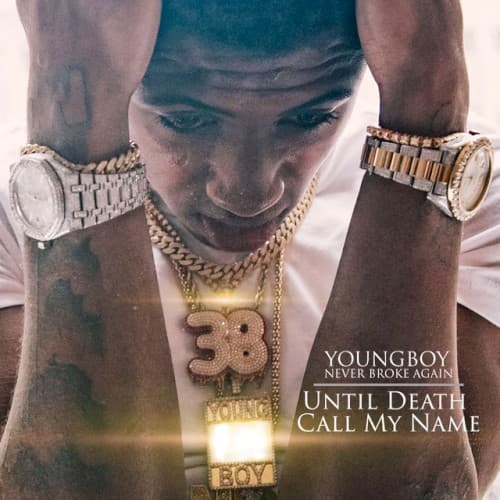
Compared with Until Death Call My Name, his earlier album that Rap Album Reviews scored at 6.3, this one is cleaner, better mixed and clearly more confident, and that earns it a slightly higher number. It is also far less disciplined about what it keeps. The critics quoted in the fact sheet split along exactly that line: nearly all of them admired the commitment and the best songs, and nearly all of them said the album was too long. They are right on both counts, and this review will not pretend otherwise.
A Cracked Voice Over Borrowed Beats
The first thing to understand about the writing is that YoungBoy rarely builds a song in the old sense, with a setup, a turn and a payoff. He starts mid-feeling and stays there. Love, lust and violence are the three subjects the album's reviewers kept naming, and they are accurate: the songs are about who stuck with him, who did not, what it costs to be watched, and how fast a room can turn dangerous. The best verses make those feelings concrete. A line about a former friend becomes a specific accusation rather than a general grievance, and a grief verse stays in the plain language of someone talking to himself. The weaker ones swap in stock images, the cars, the guns, the loyalty speech, and say them with the same conviction but less detail.
His delivery is where the record separates itself from lesser melodic rap. He treats the vocal as an instrument with two settings, a strained, Auto-Tune-bent croon and a flat, quick snarl, and the songs get their drama from switching between them. Doubled and tripled backing vocals thicken the chorus without making it glossy, and he lets cracks and strain stay in the take. That choice gives the hooks an unfinished edge that polished studio singing would lose. It also makes the melodies hit harder than the lyrics on first listen, which is why the record sounds better in a car than on a lyric sheet.
The production is credited to a very large cast, headed by Cheese, who also mixed and mastered the whole record, with names such as Southside, OG Parker, Jetsonmade, Bobby Raps and DJ Suede the Remix God appearing on specific songs. Given that many hands, the sound is remarkably consistent: minor-key guitar and piano loops, heavy 808s tuned to hum rather than shake the room, and drum programming that stays out of the way of the voice. "Top Sound" borrows from an existing dance record and "Don't Rate Me" flips a Gorillaz sample, and both show that the formula can stretch when someone bothers to stretch it. Most of the beats do not bother.
That is the concrete weakness. The consistency that makes the record feel unified also makes the middle stretch feel anonymous. Many of the beats share tempo, key and loop length, and many of the verses share a mood, so songs that should register as separate events pass as one long cut. The guests add to the problem rather than solving it: "My Go To" brings in Kehlani, "Home Ain't Home" brings in Rod Wave and "Don't Rate Me" brings in Quavo, and only one of the three gives the record a voice with a clearly different texture. A tighter version of this album would have kept the cracked-voice intimacy and cut the sameness, and the gap between that version and this one is the distance between a very good record and an overstuffed one.
Thirty Songs, One Long Night Drive
As a sequence, The Last Slimeto front-loads its case. The opening run sets the terms quickly: short songs, close vocals, a mix of tenderness and menace, and a willingness to start a track already in motion. Anyone who stops after the first third will think they heard a lean, moody and very effective album, and that impression would be mostly fair.
The trouble starts around the middle, where the sequence stops making decisions. Songs run two to two and a half minutes, share a tempo band and arrive without any change of scene, so the record loses the sense of moving forward. There are no skits, no long breaks, no pivot where the sound changes or the mood turns. The pacing that keeps a short playlist alive becomes a treadmill over seventy-odd minutes, and the highs that do appear, a stronger hook here, a harder beat there, read as exceptions rather than as peaks in a designed arc. Several critics in the fact sheet described the album as closer to a playlist than a project, and the sequencing supports that reading.
The back end recovers somewhat. The final run collects some of the record's most pointed songs, including the former single "Mr. Grim Reaper," and ends with the aggressive "I Hate YoungBoy," which gives the album a closing statement it did not earn through its structure but nevertheless delivers. That placement is smart. It sends you out on the strongest argument rather than the last of many sketches.
Is the length earned? Not as a whole. A cut to roughly eighteen songs would have lost almost nothing important and gained a clear shape. What the length does give is range for devoted listeners: the sheer volume lets you find your own favorites, and fans of this artist have always treated his output as a stream to be sorted rather than a statement to be admired. As a document of an artist at work, the sprawl is revealing. As a record to sit through in one sitting, it is a test.
A Better Playlist Than Album
Within the catalog Rap Album Reviews has scored, The Last Slimeto lands just above Until Death Call My Name, and the margin is deliberate and modest. The newer album has the stronger vocals, the cleaner mix and a handful of songs that outclass anything on the older one. It also has a much weaker sense of what an album is for. The extra confidence earns the higher number; the unchecked sprawl keeps it from going much higher.
This record is for listeners who already like melodic street rap and want the version where the artist sounds most relaxed in his own sound. It is also a good entry point for anyone willing to treat it as a source for a playlist rather than a front-to-back listen, since the best material is easy to pull out. Skip it if you want tight structure, big stylistic range or lyrical density; those are not what this artist does, and thirty tracks will only make the absence more obvious.
As for how it ages, the best songs should hold up well, because they rest on voice and hook rather than on trend. The full tracklist will age less well, since the hours it demands are hard to justify once streaming habits shift and attention moves on. Most listeners will end up with a personal shortlist, and that is probably the intended use.
Start with "Vette Motors" for the cleanest hook and the hardest beat, "Don't Rate Me" for the Quavo feature and the odd Gorillaz flip, and "I Hate YoungBoy" for the sharpest verse and the closest thing to a thesis. After that, go back to Until Death Call My Name if you want to hear the same voice in a looser, rawer setting, or try Rod Wave if the sing-rap pain on "Home Ain't Home" is what you came for. The honest summary is that a very good eighteen-song album is hiding inside this one, and finding it is the listener's job.
Track by track
Track Listing
I Know
StandoutA short, confident opener that sets the close, dry vocal and the minor-key bounce right away. It is more statement than song, and it works as a handshake.
Hold Your Own
SolidA steady, mid-tempo warning delivered in a tired croon. The hook is solid, but the song mostly establishes mood.
Umm Hmm
StandoutReportedly recorded in his car, and it sounds it: tight, intimate and casual. Barely over two minutes, it is a nice change of pace and over before it overstays.
Top Sound
StandoutBuilt on an interpolation of a dance record, this is the brightest beat early in the run and the quickest song. He sounds looser here than on the grimmer cuts around it. At under two minutes it is a sketch, but a good one.
My Time
SolidA confident, forward-moving track with a clean hook and a beat that pushes him into a steadier cadence than usual. Competent and enjoyable without leaving a lasting mark.
Free Dem 5’s
SolidA loyalty song with a sorrowful loop under it. The sentiment is sincere, but the writing stays general and the melody blends into the tracks on either side.
My Go To
StandoutThe Kehlani feature gives the record its most obvious romantic detour. Her voice contrasts nicely with his rasp, and the song is warmer than most of the album, though the pairing is pleasant more than memorable.
Lost Soul Survivor
SolidA downcast, self-examining cut that fits the title. The beat is gentle and the vocal is raw, but the song settles into a groove without developing it.
Fuck da Industry
SolidAn angry swipe at the label world, delivered in a hard, clipped bark. It carries the album's grievance against the business most directly and is a useful angle, but the hook is thin.
Kamikaze
SolidA reckless, fast-feeling track where the title sets the tone. The vocal performance is committed and the energy rises, though the song ends before it builds to anything.
Swerving
SolidThe start of a long stretch that sounds interchangeable. Pleasant melody, familiar subject matter, nothing to separate it from its neighbors.
Stay the Same
SolidA loyalty-and-change song with a steady, wistful feel. Fine on its own and forgettable in sequence.
Home Ain’t Home
StandoutRod Wave is the right guest for a song about displacement: his voice is more open and plaintive than YoungBoy's, and the contrast helps. The melody is among the album's most affecting, even if the beat is understated.
7 Days
SolidA mid-tempo cut that fits the mood and does little else. It is competent filler on a record that already has plenty.
Digital
StandoutOne of the better of the quieter songs, with a hypnotic loop and a vocal that drifts between singing and speaking. The video came out right after release, and the track earns the attention without being a showpiece.
Vette Motors
StandoutThis is the album's clearest single and one of its best songs. The beat is the sharpest on the record, with a bright, bouncing loop and drums that give him room to ride. His hook is simple and sticky, and the verses keep a steady, confident pace without overreaching. It is the track that most successfully merges his melodic side with a genuine club-ready push, and it deserves its place as a chart entry. If you only play three songs from the record, this one belongs on the list.
Slow Down
SolidA short, restrained cut that lives up to its title but sits in the album's most undifferentiated stretch. Nothing wrong with it; nothing needed it either.
Don’t Rate Me
StandoutThe Gorillaz sample gives this the most distinctive texture on the album, a slinking, slightly eerie loop that pulls him out of his usual minor-key comfort. Quavo's verse is crisp and does not outstay its welcome, and YoungBoy answers with a harder, more rhythmic delivery than usual. The hook is catchy without being cute, and the whole thing moves with an unforced swagger. It is also one of the few places where the album sounds like it wants to try something, and it is better for it.
Proof
StandoutReportedly recorded in the garage, and the dry, close sound suits the song. The writing is at its plainest and most effective here, with a defensive, wounded tone that feels unrehearsed. The melody is memorable without being showy, and the vocal cracks in the right places. It stands as one of the best examples of the album's emotional register and a reminder of how well the stripped-down approach can work.
4kt Baby
StandoutThe song chosen to accompany the sampler's video, and the choice is sound. The beat is bright and bouncy, his flow is nimble, and the hook locks in quickly. It balances menace and melody better than most of the surrounding songs, and it moves with real momentum for a track that runs just over two minutes. A clear highlight in the back half.
The North Bleeding
SolidA heavier, more downcast track with a drawn-out melody. One of the more atmospheric songs in the second half, though it runs a bit long for what it says.
Loner Life
SolidA short song about isolation that does exactly what the title promises. The mood is convincing, but the songwriting is generic.
Acclaimed Emotions
SolidA melodic, mid-tempo track with a decent hook and a pained tone. Enjoyable, but easily mixed up with the songs on either side.
Wagwan
SolidA brisk, bouncier cut that livens up the late-middle sag. The energy is welcome, even if the writing is thin.
Ghost
SolidA haunted, minor-key track that suits the title. Atmospheric and short, and mostly filler.
Nightfall
SolidA moody late-night cut that is more atmosphere than song. Forgettable once it ends.
Holy
StandoutThe shortest song on the album at under two minutes, which suits its compact, urgent punch. The vocal is raw and the hook is direct.
I Got the Bag
StandoutA bouncy, confident track with a clean hook, and one of the better late-album songs. It is straightforward bravado, but the delivery sells it.
Mr. Grim Reaper
StandoutThe lead single is a lean, dark and immediate piece that shows the formula at full strength. The beat is minimal, with a low pulse and a small, ominous melody, and it leaves plenty of space for the vocal to carry the tension. He switches between a pained sing-song and a hard, rapid delivery without strain, and the hook is simple enough to stick after one listen. At under three minutes, it says what it needs to and leaves, which is a quality most of the album lacks.
I Hate Youngboy
StandoutThe longest song on the record, and the one that earns every minute. Released as a response to a rival's diss track, it turns the argument inward and outward at once, with a pointed, direct verse that is angry without being sloppy. The beat gives him room to go from a slow, deliberate pace to a rapid-fire run, and the performance has real force behind it. The hook is blunt and effective, and the song gives the album the closing thesis its structure never provides. It is one of the best things he has recorded.