The scorecard
6.4/10 · Mixed
- Writing25%
- 6.5
- Production25%
- 7.0
- Delivery15%
- 6.5
- Cohesion15%
- 6.0
- Originality10%
- 5.5
- Replay value10%
- 6.0
The vanity, faith and ambition material is among the sharpest he had written to that point, but the posse cuts and the Rihanna remix return him to stock boasts.
Live-band soul and a Just Blaze closer give the best songs real warmth, while the guest-driven stretch drops back to generic radio trap.
His clipped, conversational D.C. cadence is controlled on the introspective songs, yet it turns stiff next to Meek Mill, Nicki Minaj and 2 Chainz.
Sixteen tracks fall into two albums, a soul-minded one and a guest-driven one, and the second half keeps interrupting the first.
Reaching for Marvin Gaye, Michael Jackson and a Gary Jules cover is ambitious, but the results sit close to what Kanye-era soul rap and MMG radio rap had already done.
The best five or six songs hold up well on repeat, and the rest are easy to skip, so a trimmed playlist works better than the full run.
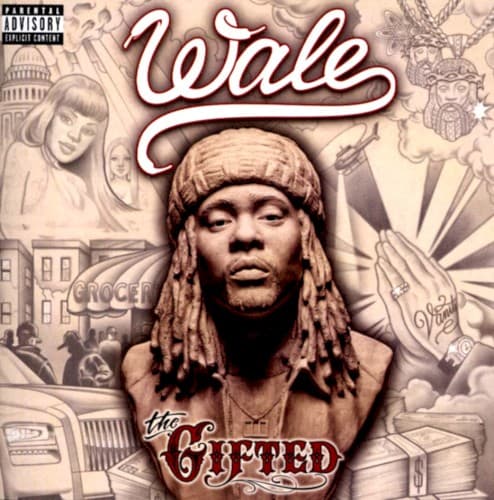
Wale The Gifted — A Soul Rapper Stuck Between Two Jobs
The Gifted keeps asking who Wale is allowed to be. On one side stands a Washington, D.C. writer raised on Go-Go percussion and soul records, a man who wants to talk about Black ambition, vanity and faith with some weight. On the other stands a Maybach Music Group lieutenant whose duties, for long stretches of this record, include delivering a club single, a Rihanna remix and a guest-stacked posse cut on schedule. The album is strongest when the first Wale wins the argument and flattest when the second one signs the paperwork.
That tension is the real subject here, and it is why the record is better than its split reviews suggest. The Gifted is not a failed attempt at a coherent statement so much as a coherent statement interrupted by obligations. The songs where Wale speaks as himself, to a community that watched him spend years as the capital's standard-bearer, carry real conviction. The songs where he speaks as a brand extension carry a bill for the commercial run that put him at number one.
The stakes were unusually personal. This was his third album, the one that gave him his first number-one debut, with 158,000 copies in its first week, and it arrived after he said he wanted to show range and stand on his own sonically. That promise is half kept. The soul-leaning songs, built with live-band touches and old-record warmth, sound like the album he said he was making. The rest sound like the album the market asked for, and the two never settle into a single voice.
Critics read that split as a verdict on Wale himself, ranging from a lukewarm five out of ten to a warm eight. Both camps have a point. The Gifted rewards anyone who wants to hear a D.C. rapper wrestle with self-image in public, and it punishes anyone who expects the full length to hold that line. Taken as a document of a rapper negotiating his place in a bigger machine, it is more interesting than it is consistent, and that is the honest summary of its 16 tracks.
Soul Samples, Strip-Club Hooks and a Stiff Pocket
Wale's writing works best when it turns inward and social at once. He is a rapper preoccupied with the gap between how he is seen and how he wants to be heard, and the album's better songs treat that gap as material instead of complaint. Vanity, faith, the cost of success and the tiredness of chasing a dream all get a verse or a hook, and the language stays plain enough that the ideas land. There is a sense of someone who studied Southern and Midwestern radio rap and also read his own press. When he is on point, the lines make an argument rather than a list of accomplishments.
The production does much of the heavy lifting for that tone. Several tracks lean on live instrumentation, vintage soul textures and warm keys, and the credits spread across Tone P, Stokley Williams, Sam Dew, Lee Major, Just Blaze and others. That variety matters less than the shared taste: the best beats leave air around the voice and let it sit in a conversational pocket instead of fighting the drums. A Gary Jules interpolation on Vanity and a Dap-Kings contribution on Gullible give the record a retro polish that sets it apart from the trap-driven rap around it. The mix is clean and the low end is controlled.
Delivery is where the album's identity problem shows most plainly. Wale has a clipped, almost speech-like cadence, with a D.C. accent that gives his punchlines a dry edge. It is a strong instrument for reflection and a limited one for bounce. On the club-minded songs, the guests do the work of selling the groove, and Wale sounds like a visitor in his own hook. Nicki Minaj and Juicy J give Clappers its energy; Wale supplies the framing, much as Rick Ross leaned on him as a reliable second voice. That is not fatal, and in some places the contrast pays off, but it means the commercial songs are less distinctive than the personal ones.
The main weakness is not any single bad song but the way the album commits to two plans at once. Its themes of vanity and self-doubt are set against posse cuts and a radio remix that add nothing to those themes, and a few verses fall back on the stock imagery of money, jewelry and women that the better songs argue against. The guest list is long, and while some features sharpen the material, others dilute it. The result is a record whose finest ideas are scattered through a runtime that does not always let them breathe.
Two Albums Sharing One Tracklist
As a sequence, The Gifted opens with intent and then loses its footing in the middle. The first third is the most cohesive stretch: a brief statement of purpose, a soul-inflected single, and a run of songs that stay with one mood. The pacing is patient, the hooks are sung by guests who suit the mood, and the sense of a rapper thinking out loud holds from track to track. If the album had kept that discipline for another handful of songs, it would sit among the better rap records of its year.
The middle is where the sag comes. A procession of features arrives with a different sound each time, and the tempo and tone jump from reflective to loud and back again with little transition. The record stops sounding like one voice and starts sounding like a playlist assembled by committee. The slot reserved for the radio remix is the clearest example, since it interrupts the album's flow for a song that already exists in a better form elsewhere on the record.
The back end partly recovers. A long, thoughtful stretch near the finish returns to the themes that made the opening work, and the closing sequence ties back to the comic framing that shaped his earlier work. That recovery is welcome, but it also makes the length feel less earned. Sixteen tracks is not excessive on paper, yet the guest-heavy middle repeats ideas the stronger songs already settle, and the album would land harder at around twelve.
Sequencing is therefore the record's quiet problem. The individual songs are often good, sometimes very good, but they are arranged to serve two different audiences, and neither gets a fully satisfying run. A listener who skips the middle will find a tidy, soulful record about ambition and vanity. A listener who plays it straight through will find a rapper still negotiating the terms of his own album.
Better Than the Reviews, Worse Than the Promise
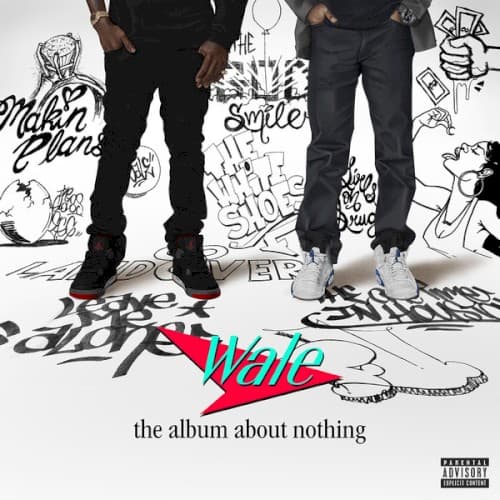
Within Wale's catalog, The Gifted sits just below The Album About Nothing, which is rated 7.0 on this site. The later record commits to its premise, a loose, humorous and personal project with a clear voice, while The Gifted wavers between that voice and the one the label wanted. That is why this album lands at 6.4: the best songs are as good as anything he made in the period, but the whole is less certain of what it is.
It is for listeners who like soul-sampling rap with a human scale, who want to hear a D.C. rapper think about vanity and faith, and who are willing to build a shorter playlist from a long album. It is also a fair entry point for anyone curious about the Maybach Music Group era and the pressure it placed on its artists. Skip it if you want a tight, front-to-back record, or if guest-driven radio rap is your main interest; the personal songs will feel buried and the commercial ones will feel like better versions exist elsewhere.
The album has aged better in its quieter moments than its loud ones. The radio material now sounds like a snapshot of 2013 industry habits, while the soul-leaning songs still read as the work of a rapper who cared about craft. That durability is the album's real argument for itself.
Start with LoveHate Thing for the clearest statement of the sound, then Gullible for the live-band warmth, then 88 for the closest the record gets to a personal manifesto. If you like those, move on to The Album About Nothing, where the humor and the soul textures finally get a whole album to themselves. If you want the other side of this tension, listen to a release from Meek Mill, who guests here, and hear what Wale was being asked to compete with. The Gifted is at its best as a record about being a talented person who is tired of being told what to do with it.
Track by track
Track Listing
The Curse of the Gifted
StandoutThe Sean C and LV production gives the opener a stately, almost ceremonial feel, and Wale uses it to frame talent as a burden as much as a blessing. It sets the album's central tension early, even if the thesis is clearer than the verses that carry it.
LoveHate Thing
StandoutBuilt with Sam Dew, who sings the hook, this is the album's cleanest statement of the soul-rap sound it keeps reaching for. Wale has said Marvin Gaye guided its feel, and the song earns the nod with a restrained groove and a relationship story told in specific, adult terms rather than boasts. His verses stay conversational and unforced, which suits the material, and the hook gives the song a memorable center without drifting into pop filler. The arrangement leaves room for each part to be heard, and the song never rushes its own emotion. It also works as a mission statement for the quieter half of the record, showing what Wale can do when the production trusts him to carry feeling. This is one of the first songs to play for anyone sampling the album.
Sunshine
StandoutA warm, easygoing cut with Tone P and Stokley Williams behind the boards, it plays like a lighter cousin of the lead single. Wale sounds relaxed, and the groove is pleasant, though the writing stays on the surface and the song is more a mood than a statement.
Heaven’s Afternoon
StandoutMeek Mill's guest verse supplies the heat, and Wale responds with a more measured turn that links ambition to the weight of where he came from. The production leans on a soulful bed with Dew's contributions, creating a hopeful, upward-looking tone that suits the theme of earning your way up. The two voices are quite different, and that contrast is what keeps the song interesting: one hits like a shout, the other like a steady argument. It is one of the better examples of the album's pairing of soul texture with street energy, and it works because the guest serves the song's idea rather than redirecting it. The hook is simple and effective, and the song earns its place among the album's stronger cuts.
Golden Salvation (Jesus Piece)
StandoutLee Major's production gives the song a gospel-tinged weight, and Wale uses the chain as a symbol for faith, status and the tension between them. The idea is good and the delivery is committed, but the verses sometimes explain the point too directly. A solid, thoughtful cut that does not quite reach the heights of the best material.
Vanity
SolidThe interpolation of Gary Jules's "Mad World" is an ambitious choice, and it gives the song a dark, reflective cast that matches a subject Wale clearly wants to explore: self-image, appearance and what pride does to a person. The idea is stronger than the execution. His verses reach for insight but sometimes settle for broad statements, and the borrowed melody can overshadow the writing instead of supporting it. Still, the song deserves credit for taking a risk on a theme that most radio rap avoids, and the mood is distinctive enough to stay in the memory. It shows both the appeal and the limits of Wale's soul-rap ambitions on this record: bold concept, partial payoff, and a sound that is more interesting than it is fully satisfying.
Gullible
StandoutWith Cee Lo Green on the hook and a live-band feel associated with the Dap-Kings, this is the record's warmest moment of retro soul. The groove sits low and relaxed, and Wale's cadence fits it better than it fits any of the trap-leaning tracks. His writing about trust and being fooled has a rueful humor, and Cee Lo's voice adds the right amount of grit and charm. The song is more about feeling than about verse-by-verse invention, and that is a fine trade here. It is the clearest example of the album's classic-soul ambitions working in practice, and a smart pick for listeners who think they dislike Wale's commercial side.
Bricks
WeakCardiak's production aims for a harder, street-minded sound, with Yo Gotti and Lyfe Jennings filling out the guest slots. Wale sounds like he is borrowing a style rather than inhabiting it, and the song slows the album's momentum. Forgettable next to what surrounds it.
Clappers
SolidA strip-club single that does its job. Nicki Minaj and Juicy J bring the bounce, and Wale handles the connective tissue with a looser, more playful performance than he gives most of the record. The beat is built for volume, and it succeeds on those terms. It is not deep and does not pretend to be, which is its own kind of honesty. Critics noted that Wale is good at this role, and they are right, though it also exposes how the album treats its commercial obligations as an interruption rather than an extension of its themes. Fun, effective and entirely disconnected from the record's more thoughtful songs.
Bad (remix)
WeakThe Rihanna version of the album's biggest single adds a famous voice but little else, and it feels like a marketing decision more than a creative one. MexManny's production is competent, but the original already did the job. Filler.
Tired of Dreaming
SolidNe-Yo handles the hook and Rick Ross adds a guest verse, while Wale reaches toward a Michael Jackson-style sweep. The song is smooth and polished, and the theme of dream fatigue fits the album's mood. It leans on star power more than on writing, so it plays as pleasant rather than memorable.
Rotation
WeakWiz Khalifa and 2 Chainz arrive on a beat by Travi$ Scott and AdoTheGod, and the result is a generic, mid-tempo posse cut. Nobody sounds bad, but nobody sounds essential either. It is the sort of song the album would be stronger without.
Simple Man
StandoutA brief, stripped-down moment of personal reflection, with Ralph Folarin credited among the producers. Wale sounds candid and unhurried, and the shorter runtime keeps the song from overstaying. A modest but welcome return to the album's better instincts.
88
StandoutJust Blaze and Tone P give the song a driving, triumphant bounce, and Wale turns a basketball career into a metaphor for his own: patience, repetition, a hunger to be remembered. He has said Michael Jordan guided the feel, and the song delivers a sustained argument rather than a list of boasts. The writing is focused, the flow is controlled, and the beat has the kind of momentum that most of the guest-heavy middle lacks. It plays like a rapper stepping up to his own challenge, and it is the closest the album comes to a personal manifesto. The song feels earned, and it is an easy recommendation for anyone who wants to understand what Wale was trying to build here.
Black Heroes / Outro About Nothing
StandoutTwo ideas share one track. The first part pays tribute to Black figures, with Lee Major, Dew and Stokley Williams handling the music, and it gives the album its most community-minded moment. The second part brings in Jerry Seinfeld for a comic outro that nods to Wale's earlier mixtape about nothing. The tribute is sincere and well meant, though the writing stays general. The Seinfeld bit is charming but slight, a wink to existing fans more than a statement. Together they make a fitting end to the main run: earnest first, playful second, and clear about the voice Wale prefers when he is not performing for a hit.
Bad
StandoutTiara Thomas's hook and a smooth, easy beat made this the album's breakout single, and it remains the cleanest example of how Wale can write a crossover hit without losing his personality. The verses are patient and conversational, and the melody is easy to remember. It reached number 21 on the Hot 100, his highest placement as a lead artist at that point, and it earned the position. Placing it last gives the record a gentle landing, though it also means the best-known song arrives after the remix has already used its idea.
Frequently Asked Questions
Is Wale's The Gifted good?
What is the best song on Wale's The Gifted?
How did The Gifted do commercially?
How does The Gifted compare with The Album About Nothing?
Styles