Kentucky's Underground Hip-Hop Architects: The CunninLynguists Story
CunninLynguists emerged from Lexington, Kentucky in 2000 as unlikely ambassadors for the Southern underground, carving out territory where soulful production met densely packed wordplay. Founded by Deacon the Villain and Kno, with Mr. SOS joining later, the group built their reputation outside the commercial spotlight, crafting albums that treated hip-hop as high art without sacrificing street credibility. Their name—a deliberate play on language itself—signaled both irreverence and intellectual ambition, qualities that would define their two-decade run.
While the mainstream South was dominated by crunk and trap during their formative years, CunninLynguists pursued a different path entirely. They constructed elaborate concept albums, collaborated with a rotating cast of underground luminaries, and established their own label infrastructure through QN5 Music. The Kentucky trio never chased radio play or viral moments. Instead, they cultivated a devoted following through relentless touring, consistent output, and a refusal to compromise their artistic vision for commercial demands.
Their influence extends beyond their own catalog. As architects of the Southern underground sound, CunninLynguists demonstrated that the region could produce more than party anthems and trap beats. They proved that Southern rap could be introspective, musically adventurous, and lyrically complex without abandoning its regional identity. For listeners seeking substance beneath the surface, CunninLynguists became essential listening—a group that demanded attention rather than begging for it.
Soul-Sampling Craftsmanship Meets Multilayered Lyricism
Kno's production forms the sonic foundation of the CunninLynguists experience. His sample-heavy approach draws from soul, jazz, and psychedelic rock, layering chopped vocals over live instrumentation and carefully programmed drums. The beats feel lived-in and textured, with enough space for the lyrics to breathe but dense enough to reward repeated listens. There's a warmth to the production that contrasts with the often dark thematic material, creating productive tension between sound and subject matter.
Lyrically, Deacon the Villain and Mr. SOS operate in complementary registers. Deacon brings a more grounded, observational perspective—street-level philosophy delivered with technical precision. SOS leans harder into abstraction and wordplay, constructing intricate rhyme schemes that reveal new layers on subsequent passes. Neither rapper prioritizes punchlines over substance. Their verses function as extended arguments, building ideas across multiple bars rather than hunting for quotable moments. The chemistry between them creates a push-pull dynamic, balancing accessibility with complexity.
The group's vocal production emphasizes clarity over effects-heavy manipulation. You hear every syllable, every internal rhyme, every shift in cadence. This approach serves the content—when you're tackling existential questions or social critique, mumbling defeats the purpose. Guest appearances from underground stalwarts like Tonedeff, Natti, and PackFM add textural variety without disrupting the albums' thematic coherence. CunninLynguists never sound like a collection of random features; every voice serves the larger artistic vision.
From Will Rap for Food to A Piece of Strange: Charting an Underground Evolution
CunninLynguists announced their arrival with Will Rap for Food in 2001, a debut that established their core aesthetic: boom-bap drums, soul samples, and lyrical density. The album circulated through underground channels, building word-of-mouth credibility in an era when independent hip-hop still relied heavily on physical distribution and message board buzz. It wasn't a commercial breakthrough, but it didn't need to be. The group was playing a different game entirely, one measured in artistic respect rather than chart positions.
Southernunderground arrived in 2003, expanding their sound and sharpening their conceptual ambitions. The album addressed Southern stereotypes head-on while celebrating the region's musical heritage. Tracks like "Lynguistics" and "Thugged Out Since Cub Scouts" demonstrated their ability to balance social commentary with technical prowess. Kno's production matured significantly, incorporating live instrumentation and more ambitious arrangements. The album positioned CunninLynguists as torchbearers for a Southern underground that existed in parallel to the region's commercial dominance.
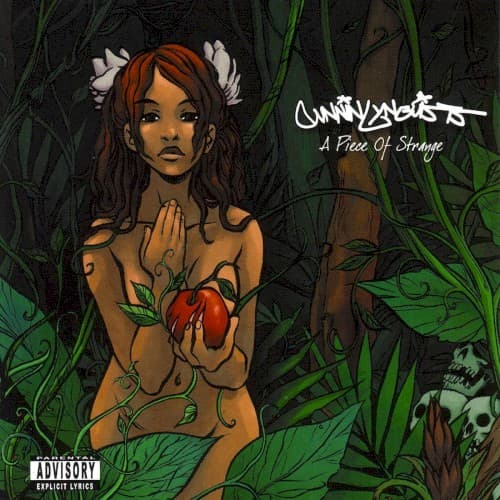
Then came *A Piece of Strange* in 2006, the album that cemented their legacy. A sprawling meditation on mortality, mental health, and existential dread, it represented underground hip-hop's answer to concept albums like The Wall or OK Computer. Kno's production reached new heights of cinematic ambition, while the lyrics grappled with weighty themes without collapsing into pretension. The album resonated deeply with listeners navigating their own darkness, becoming a touchstone for fans seeking emotional honesty in their rap music. Its 9.2 rating reflects both its artistic achievement and its enduring impact on those who discovered it.
The group maintained consistent output throughout the late 2000s and 2010s with albums like Dirty Acres (2007) and Oneirology (2011), each exploring different thematic territory while maintaining their sonic identity. Rose Azura Njano (2016) found them collaborating with producer Adil Blaiq in Morocco, incorporating new influences without abandoning their foundation. Throughout these releases, CunninLynguists never chased trends. When trap dominated, they stuck to sample-based production. When melodic rap took over, they doubled down on traditional MCing. This consistency has been both their strength and their limitation—beloved by core fans, largely ignored by casual listeners.
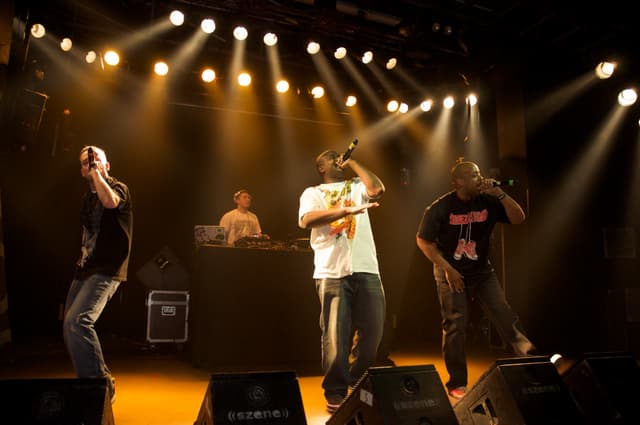
Their influence on the underground ecosystem extends beyond their albums. Through QN5 Music, they've released projects from affiliated artists and helped build infrastructure for independent hip-hop. Their willingness to tour relentlessly in smaller venues created a blueprint for sustainable independent careers. They proved you could build a two-decade career without major label support, radio play, or viral moments—just consistent quality and direct connection with your audience.
The Underground's Keepers: CunninLynguists' Lasting Impact on Conscious Hip-Hop
CunninLynguists occupy a unique position in hip-hop's ecosystem—too artistically ambitious for mainstream success, too accessible for experimental purists. They've become a reference point for what underground hip-hop can achieve when it prioritizes craft over commerce. Artists like Brother Ali, Atmosphere, and Billy Woods exist in a similar space, but CunninLynguists brought a distinctly Southern perspective to this tradition, proving the region could produce introspective rap without mimicking New York or West Coast templates.
Their impact on production aesthetics shouldn't be understated. Kno's sample-based approach influenced a generation of producers who valued texture and mood over minimal trap constructions. His willingness to incorporate live instrumentation, orchestral elements, and unconventional samples expanded what Southern hip-hop production could sound like. When artists cite the importance of "soulful" production, they're often describing the territory CunninLynguists helped map.
A Piece of Strange remains their defining achievement, an album that continues finding new listeners years after release. It's become a rite of passage for fans exploring underground hip-hop's deeper waters, recommended in the same breath as *Labor Days or God Loves Ugly*. The album's willingness to confront mental health, mortality, and existential questions created space for more personal, vulnerable rap music before that became commonplace. CunninLynguists didn't invent conscious rap, but they demonstrated how to execute it with musical sophistication and emotional authenticity. For two decades, they've represented an alternative path—proof that you can build something meaningful without compromise.