Eazy-E: The Compton Founder Who Put West Coast Gangsta Rap on the Map
Eric Lynn Wright did not sound like a technician, and he never pretended to be one. What Eazy-E had instead was nerve, a high, nasal, instantly recognizable voice and a gift for putting the right people in the room. He was born on September 7, 1964, in Compton, California, to a postal worker father and a grade-school administrator mother. He left Compton High School in the tenth grade, later earned a GED, and died on March 26, 1995, at 30. In the years between he founded Ruthless Records, led N.W.A and changed what a record label could look like in West Coast rap.
The Eazy-E discography is short, and that is part of the story. Much of his importance sits behind the microphone. He put up the money for Ruthless in 1987, working with the veteran manager Jerry Heller, and recruited a group that became N.W.A: Dr. Dre, Ice Cube and Arabian Prince first, then DJ Yella and MC Ren. The group's records are what most people remember, but the label deal and the nerve behind it were his.
Critics often call him the Godfather of Gangsta Rap. The title is a little grand for a rapper who leaned so heavily on writers and producers, and yet it is hard to argue with when you look at what followed. West Coast rap as a national business starts in his hands, and so does a version of the gangsta image that stayed on radio and in headlines for years.
He was only 30 when he died, and his catalog stopped just as Ruthless was becoming a launch pad for others. That makes him one of the great what-ifs of the genre, a businessman whose instincts were still being tested.
A Nasal Voice, Borrowed Pens and the Dr. Dre Sound Behind It
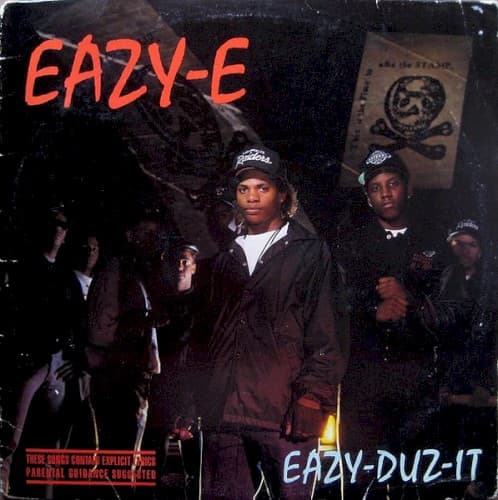
Eazy-E's voice is the first thing you notice and the last thing you forget. It is thin, nasal and slightly amused, the sound of someone who is about to say something he knows he should not. On record, though, he was often the front man for a team of writers. His debut, Eazy-Duz-It, was produced by Dr. Dre and DJ Yella and largely written by MC Ren, Ice Cube and The D.O.C., with Eazy selling the lines as if they were his own. That arrangement is no secret anymore and it does not make the album any less his.
Musically, that record sits at a crossroads for West Coast hip-hop. It keeps some of the rougher edges of the mid-80s Los Angeles scene, and the funk underneath still bounces. AllMusic's Jason Birchmeier wrote that Dre and Yella blended P-Funk, Def Jam-style hip-hop and the leftover electro sounds of mid-80s Los Angeles into something dense, funky and unique, and that it sounded revolutionary in 1988. Eazy's own taste ran wider than that, with influences that included Ice-T, Run-D.M.C., Too $hort, Schoolly D, Prince and Richard Pryor.
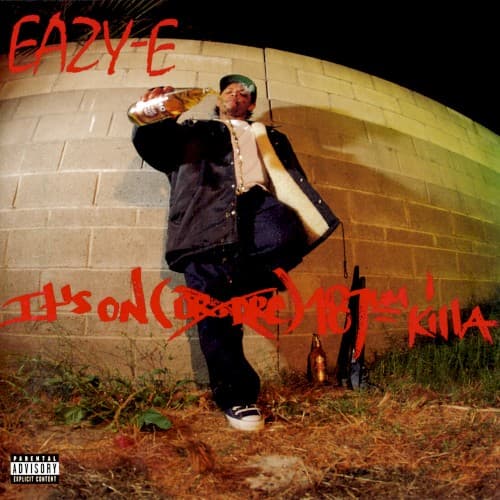
The later solo EPs, 5150: Home 4 tha Sick in 1992 and It's On (Dr. Dre) 187um Killa in 1993, rely on a broader cast of guests: Kokane, B.G. Knocc Out, Gangsta Dresta and others. They are patchier than the debut, and the second one is mostly remembered for its target. Still, the character holds steady across all of it, a small man with a big mouth and a sense of humor. Put the records on today and what lands first is how loose and playful they feel, which is easy to forget when the group's reputation is mostly about confrontation.
From Eazy-Duz-It to It's On: Ruthless Records, N.W.A and the Break With Dr. Dre
Wright started recording in the mid-1980s in his parents' garage, a modest start for a label that would reshape West Coast rap, and Ruthless Records took shape in 1987. N.W.A debuted on the split compilation N.W.A. and the Posse, released in November 1987 and later certified Gold. His own first album, Eazy-Duz-It, followed in November 1988, reaching number 41 on the Billboard 200 and selling more than 2.5 million copies in the United States. We rate it 7.1/10, the best of the three Eazy-E projects we have reviewed: it is slick, funny and a good bit more fun than its reputation suggests.
Songs such as "Eazy-Duz-It" and "We Want Eazy" were among the singles that reached the US charts, which gave him a presence beyond the group. Straight Outta Compton came out in January 1989, with Eazy performing on seven songs and helping to write four. It is now ranked among the most influential albums ever made, though it was controversial on release. Ice Cube left the group in 1989 over internal disputes, and N.W.A carried on as a four-piece with 100 Miles and Runnin in 1990 and a final album in 1991. A diss war with Cube played out across those records.
The group did not survive the money. As Jerry Heller took a bigger role in the group's management, Dr. Dre and The D.O.C. grew suspicious of the finances and asked to be released from their Ruthless contracts. Eazy resisted, and after pressure that involved Suge Knight he signed the releases, which ended the group's ties to both men. Dre's solo debut The Chronic then contained a track that insulted Eazy.
He replied with the 1993 EP It's On (Dr. Dre) 187um Killa. We rate it 6/10: a record whose reason to exist is the feud, and it plays like one. He also kept a hand in the business, signing and nationally debuting Bone Thugs-n-Harmony between 1993 and 1994, a move that arguably did more for his legacy than any diss record.
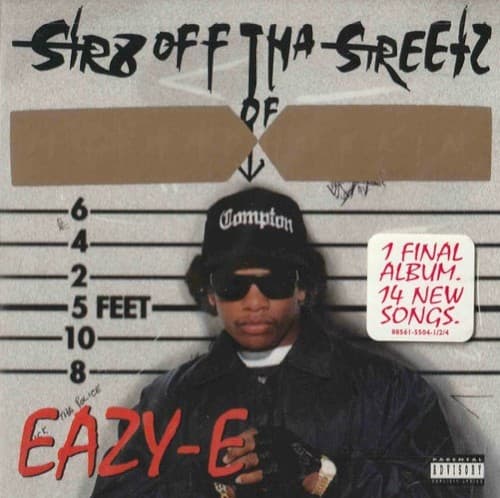
In February 1995 he was admitted to Cedars-Sinai Medical Center and was diagnosed with HIV/AIDS. He announced the diagnosis publicly on March 16, and he died on March 26. His widow, Tomica Woods, whom he had married twelve days earlier, took over Ruthless. Str8 off tha Streetz, released in January 1996, is the posthumous album; we rate it 5.4/10, an uneven collection that works better as a document than as a listening experience.
The Godfather of Gangsta Rap: Eazy-E's Lasting Footprint
Eazy-E's legacy is unusually split between the records and the roster. He was never the best rapper in N.W.A and rarely claimed to be, but his label gave Dr. Dre and Ice Cube their start and later gave national exposure to Bone Thugs-n-Harmony. Without Ruthless, the map of 1990s hip-hop would look noticeably different.
His death also put HIV and AIDS in front of a hip-hop audience. Magazines including Jet, Vibe, Billboard and Newsweek covered his diagnosis, and he is commemorated as part of the AIDS Quilt. Since then there have been documentaries and biopics. Straight Outta Compton in 2015 cast Jason Mitchell in the role, and a 2021 docuseries, The Mysterious Death of Eazy-E, was made by his daughter Ebie and others.
All of his studio albums and EPs reached the Billboard 200, a detail that tells you the audience was real even when the critics were divided. The honors have come late but they have come. N.W.A, including Eazy posthumously, was inducted into the Rock and Roll Hall of Fame in 2016, and in 2024 he received a Grammy Lifetime Achievement Award as a member of the group.
As a solo artist, his catalog is thin and uneven, and the late records show it. As a founder, he is hard to overstate. Anyone who starts with Eazy-Duz-It and then moves to the work of Dr. Dre and Ice Cube will hear exactly where those careers began.