Scorecard: 8.4/10 · Great
How we score- Writing(25%)
- 9.0
The wordplay is dense without being opaque, imagery moves from street economics to Haitian history in a single bar, and every verse rewards close attention.
- Production(25%)
- 8.5
Eight producers deliver stripped soul loops and jazz fragments that leave space for the rapping, with Conductor Williams and Camoflauge Monk anchoring the sound.
- Delivery(15%)
- 8.0
The flow is unhurried and conversational, prioritizing clarity and weight over pyrotechnics, with a voice that carries authority without raising its volume.
- Cohesion(15%)
- 7.5
Two brief skits and a 37-minute runtime keep the album lean, though the sequencing feels more like a strong playlist than a deliberate arc.
- Originality(10%)
- 8.0
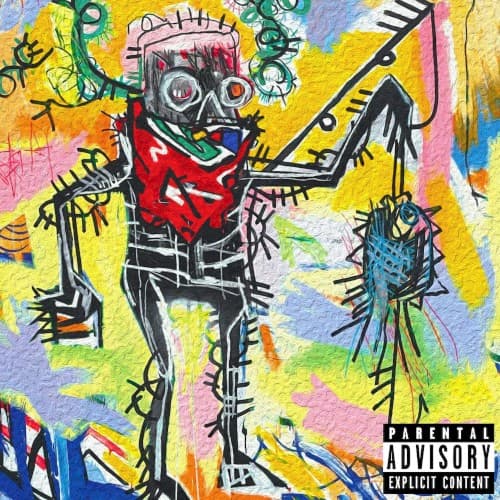
The Haitian Creole, the Basquiat homage cover, and the refusal to pander to streaming length or hooks set it apart from the Griselda catalog and the underground at large.
- Replay value(10%)
- 8.5
The bars reveal new layers on each listen and the production never wears thin, making this the kind of record that gets better the longer you sit with it.
Mach-Hommy Pray for Haiti — The Patience That Separates Craft from Clout
Pray for Haiti opens with a producer tag and a loop that sounds like it was lifted from a record your uncle kept in a milk crate, and then Mach-Hommy starts rapping like he has all the time in the world. No hook, no build, no concession to the idea that you might lose interest. The thesis arrives in the first verse: this is what rap sounds like when you stop chasing the algorithm and trust the audience to meet you where the writing lives.
Released in May 2021 through Griselda Records after years of high-priced independence and a reconciliation with Westside Gunn, the album announces its priorities immediately—bars over everything, with production that knows when to step back. At 37 minutes across sixteen tracks, it moves quickly but never rushes, and the result is the most focused and confident record in the Griselda catalog that year.
The case it makes is simple: if you strip away the filler, the pandering and the need to sound like anyone else, what remains is the writing, and Mach-Hommy has enough of it to carry an album on density alone. The gamble is that the listener will do the work, and the album rewards that work on every track that matters. This is not the record to start with if you need your hand held, but if you are past that point it makes the case for why the underground still matters.
The Space Between the Samples and the Syllables
The production across Pray for Haiti is deliberately spare, built on soul loops, jazz piano fragments and drums that hit without overwhelming the pocket. Conductor Williams handles three tracks and sets the template: find a sample with enough warmth to anchor the mood, loop it with minimal interference, and let the rapper work. The beat on The Stellar Ray Theory is a two-bar piano figure that repeats for three minutes without variation, and it works because Mach-Hommy treats it as a canvas rather than a crutch.
Camoflauge Monk, who produces four tracks including the Westside Gunn features, leans into grimier loops with more low-end thump, while Nicholas Craven on Kriminel delivers one of the album's hardest beats with a sped-up soul sample and snares that crack like gunshots. Sadhu Gold and Denny LaFlare round out the roster with beats that feel like they could have been made in 1995, and the stylistic consistency across eight producers is the album's greatest production achievement: no one tries to showboat, and the result is a sound that feels like a single sustained argument rather than a playlist.
The writing is where the album earns its reputation.
Mach-Hommy raps in English and Haitian Creole, often in the same bar, and the wordplay is dense without ever feeling like a puzzle for its own sake. He moves from street economics to Haitian history to hip-hop inside baseball in a single verse, and the references are specific enough to reward research but clear enough that you understand the tone even if you miss the details. The imagery is vivid: he describes money, violence and survival with the kind of clarity that makes you see the scene, and he does it without raising his voice or leaning on shock value.
The delivery is conversational, almost monotone in its refusal to perform, and that restraint makes the moments when he does vary his cadence land harder. The hooks are minimal or nonexistent; most tracks end when the verse is over, and the album trusts that the bars are enough to hold attention.
The weakness is that the writing occasionally prioritizes density over momentum, and a few tracks feel like collections of great lines rather than complete thoughts. Magnum Band with Tha God Fahim is a back-and-forth that delivers solid bars but never coheres into more than a sparring session, and Blockchain ends abruptly just as it starts to build. The guest verses from Westside Gunn on three tracks are serviceable but not essential, and they highlight how much more controlled Mach-Hommy's approach is by comparison.
The album is at its best when it lets him work alone.
Thirty-Seven Minutes and No Wasted Space
At 37 minutes, Pray for Haiti is one of the leanest rap albums of the streaming era, and the brevity is a feature rather than a compromise. Most tracks clock in under three minutes, and several end before the two-minute mark, which keeps the album moving at a pace that never sags. The two skits, Leta Yo and Kreyol, are spoken-word interludes in Haitian Creole that add texture without disrupting the flow, and they earn their space by lasting less than a minute each.
The sequencing does not build to a climax or follow a narrative arc; instead, the album feels like a strong playlist where every track justifies its inclusion but the order could be rearranged without losing much. The stretch from Kriminel through Murder Czn is the album's most consistent run, with three beats that hit hard and verses that feel fully realized, but there is no sense that the album is building toward those moments or away from them.
The length works because the album knows when to stop: there is no back half slump, no filler disguised as ambition, and no sense that tracks were included to pad the runtime. The result is an album that feels complete at 37 minutes in a way that most 50-minute albums do not, and the restraint is what makes it work. The only cost is that the album does not linger in memory the way a record with more obvious peaks might; you finish it satisfied but without a single moment that dominates the experience, and whether that is a strength or a weakness depends on what you came for.
The Album That Proves the Griselda Blueprint Still Works
Pray for Haiti ranks as one of the best underground rap albums of 2021 and the strongest argument for Mach-Hommy as a technician on par with anyone in the Griselda orbit. It sits comfortably alongside Westside Gunn's Hitler Wears Hermes and Benny the Butcher's The Plugs I Met as proof that the stripped-back, sample-heavy sound still has room to grow when the writing is sharp enough to carry it. The album is for listeners who prioritize bars over hooks and who are willing to sit with a record long enough to catch what it is doing, and it will frustrate anyone looking for instant gratification or obvious singles. It has aged well in the three years since release, with the kind of replay value that comes from writing that rewards attention rather than production that chases trends.
Start with The 26th Letter, Kriminel, and Murder Czn to get a sense of the range, then let the full album play if those three land. If you want more in this vein, Westside Gunn's Pray for Paris and Griselda Ghost make the case for the label's broader aesthetic, while Roc Marciano's Marcberg offers a similar commitment to minimal production and maximum wordplay.
The album ends with Ten Boxes – Sin Eater, a two-part closer that fades out on a loop rather than delivering a final statement, and that restraint is the album's signature move: it never oversells itself, never begs for your attention, and trusts that the work will speak for itself. For a certain kind of rap fan, that is enough.
Track Listing
The 26th Letter
▲The album opens with a Denny LaFlare beat built on a dusty soul loop and spare drums, and Mach-Hommy uses the space to establish his approach: unhurried delivery, layered wordplay, and no interest in making it easy. The bars move from street economics to metaphysical claims about language itself, and the track ends without a hook or a resolution, trusting that the density is enough. It works as both an opening statement and a warning about what kind of album this will be.
No Blood No Sweat
●Camoflauge Monk delivers a grimier loop with more low-end, and the track clocks in under two minutes, which keeps it from overstaying its welcome. The writing is sharp but the brevity makes it feel like an interlude rather than a full thought, and it serves the album better as a bridge than as a standalone moment.
Folie á deux
▲Conductor Williams builds a muted piano loop that gives all three voices room to work, and Westside Gunn and Keisha Plum both deliver solid verses without overshadowing the main event. Mach-Hommy's verse is the centerpiece, with wordplay that moves from crime narratives to art-world references in a single bar, and the track benefits from the interplay without relying on it. The beat never shifts or builds, which is a choice that pays off because the rapping is strong enough to carry the repetition.
Makrel Jaxon
●Another Conductor Williams beat, this one even sparser than the last, and Mach-Hommy uses the two minutes to deliver a verse that feels like a series of punchlines strung together with minimal connective tissue. The writing is technically impressive but the track does not cohere into more than the sum of its bars, and it works better as a showcase for craft than as a complete song.
The Stellar Ray Theory
▲The piano loop here is hypnotic, a two-bar figure that repeats without variation for over three minutes, and Mach-Hommy treats it as a meditation rather than a liability. The verse is one of the album's longest and most focused, moving from personal history to street philosophy without losing the thread, and the refusal to add a hook or a bridge makes the writing the only thing to hold onto. The result is one of the album's strongest moments, a track that rewards close attention and gets better on repeat listens. The delivery is calm and deliberate, with a cadence that locks into the loop without ever sounding robotic, and the track ends exactly when the verse does, which is the kind of confidence that defines the album.
Marie
▲Cee Gee flips a soul sample into something warmer and more melodic than the tracks around it, and the shift in tone makes the track stand out. The writing is more personal here, with references to family and memory that feel specific rather than generic, and the beat gives the verse room to breathe. It is one of the album's quieter moments, and it works because it does not try to compete with the harder tracks for attention.
Leta Yo (skit)
●A brief spoken-word interlude in Haitian Creole that adds texture without disrupting the flow. It lasts 34 seconds and earns its place by committing to the album's tonal palette.
Kriminel
▲Nicholas Craven delivers one of the album's hardest beats, a sped-up soul sample with snares that crack like gunshots, and Mach-Hommy matches the energy with a verse that feels more aggressive than anything else on the record. The writing is still dense and layered, but the delivery has more urgency, and the result is a track that works as both a showcase for technical skill and a moment of genuine intensity. The beat switch at the end is subtle but effective, and the track ends on a high note that makes you wish it had gone longer.
Pen Rale
●Sadhu Gold's production is stripped to the studs, just a loop and drums, and the brevity keeps the track from feeling undercooked. The verse is solid but not essential, and the track works better as a transition than as a destination.
Murder Czn
▲Camoflauge Monk returns with a beat that feels like a companion piece to No Blood No Sweat, and Westside Gunn shows up for a verse that adds energy without stealing focus. Mach-Hommy's verse is the centerpiece, with wordplay that moves from crime narratives to meta-commentary on the rap game itself, and the back-and-forth between the two voices keeps the track from feeling static. The beat is simple but effective, and the track benefits from knowing when to end: it wraps at 3:28, which is exactly as long as it needs to be.
Magnum Band
●Tha God Fahim trades bars with Mach-Hommy over a Messiah Muzik beat that leans into jazz more than soul, and the result is a solid sparring session that never coheres into more than the sum of its parts. Both verses are technically strong, but the track lacks the focus that defines the album's best moments, and it feels like a detour rather than a necessary stop.
Rami
●Westside Gunn returns for his third appearance, and Camoflauge Monk delivers a beat that splits the difference between grime and nostalgia. The track is short and punchy, with both verses landing without overstaying their welcome, and the production keeps the momentum high. It is not an essential moment, but it works as a late-album energy boost.
Kreyol (skit)
●Another spoken-word interlude in Haitian Creole, this one slightly longer but still under 90 seconds. It reinforces the album's cultural grounding without demanding too much time or attention.
Au revoir
▲DJ Green Lantern flips a jazz sample into something lush and melancholic, and Melanie Charles adds sung vocals that give the track a different texture than anything else on the album. Mach-Hommy's verse is reflective and measured, with writing that leans into memory and loss, and the production supports the mood without overwhelming it. The track works as a penultimate moment, a chance to catch your breath before the album closes, and the vocal interplay between Mach and Charles gives it a warmth that the rest of the album only hints at.
Blockchain
●Camoflauge Monk delivers a beat that feels like unfinished business, and the track ends abruptly just as it starts to build. The verse is solid but the brevity makes it feel like a missed opportunity, and it works better as a transition into the closer than as a standalone moment.
Ten Boxes – Sin Eater
▲Denny LaFlare returns to close the album with a two-part track that shifts moods midway through, and Mach-Hommy delivers a verse that feels like a summation without being a conclusion. The writing touches on themes that have run through the album—survival, economics, identity—and the production fades out on a loop rather than delivering a definitive ending. It is the kind of closer that trusts the album to speak for itself, and the restraint is what makes it work.