Style & Context
Influences
Renaissance religious paintings, revolutionary propaganda posters, gangsta rap shock aesthetics
Location
Released weeks after his Las Vegas shooting, the cover became a self-fulfilling prophecy from the Las Vegas-Compton axis.
Visual Language
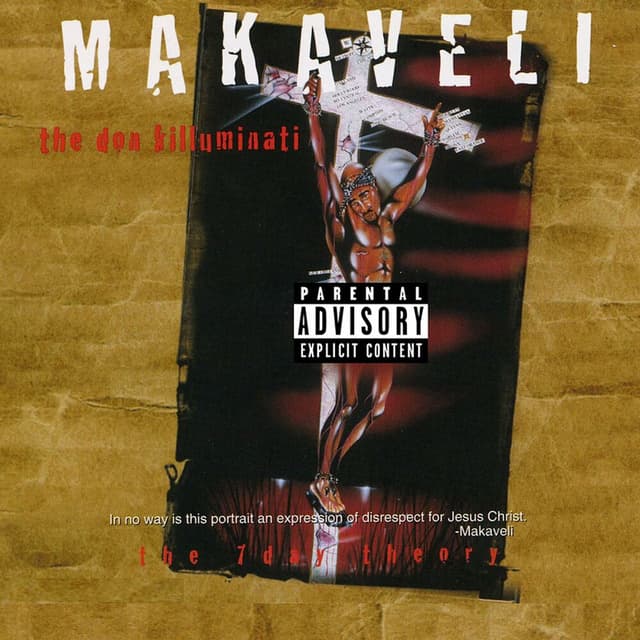
The cover merges classical crucifixion iconography with Death Row's provocative visual language to create controversy as prophecy.
Symbols
Crucifixion pose
2Pac positions himself as a martyr crucified by American society, law enforcement, and the music industry itself.
Map background
The United States geography beneath his body suggests his sacrifice spread across the entire nation's conscience.
Crown of thorns
The thorned crown connects street kingship to religious persecution, merging thug life with spiritual warfare.
Where Sound Meets Image
The crucifixion visual directly mirrors the album's obsession with mortality, betrayal, and violent resurrection explored in tracks like 'Hail Mary' and 'Blasphemy.' The religious imagery supports 2Pac's philosophical shift toward viewing himself as a revolutionary prophet rather than simple gangster, evident in the Makaveli persona's strategic thinking. The blood and thorns anticipate the album's darkest moments addressing friend-turned-enemies, while the map placement reflects songs targeting both coasts. The cover's fusion of street and spiritual warfare perfectly captures the album's mafioso rap meets conscious examination of systemic violence.
The Don Killuminati cover became the template for posthumous hip-hop releases treating dead rappers as martyred prophets rather than entertainment casualties. Its bold religious appropriation influenced countless rap album covers mixing sacred imagery with street violence, from DMX to Kendrick Lamar. The design's eerie prescience made it perhaps the most discussed cover in hip-hop history, fueling decades of conspiracy theories about 2Pac's death and the industry's complicity. Beyond rap, the image influenced how popular culture depicts Black artists as simultaneously crucified by and complicit in American violence, a visual argument still echoing through social justice movements.