The scorecard
8.3/10 · Great
- Writing25%
- 8.5
- Production25%
- 8.0
- Delivery15%
- 9.0
- Cohesion15%
- 8.0
- Originality10%
- 7.5
- Replay value10%
- 8.5
The album's paranoid intensity produces some of Pac's most vivid imagery, from the apocalyptic warfare of the opening to the bitter catalog of betrayals closing it out.
The beats favor dark, minor-key loops and spare drums that create a purposeful claustrophobic mood, with the sound serving the aggression effectively despite limited textural variation across twelve tracks.
Pac raps with a controlled fury that never tips into shouting, his voice carrying equal parts menace and exhaustion, and the Outlawz match his energy without overshadowing him.
The sequencing moves from outward violence to inward reflection with clear intent and the twelve-track length strains the thesis only slightly, though repetitive tempos create some sag in the middle.
The Makaveli persona and the album's death-haunted perspective pushed past the cinematic gangsta rap Pac had been making, staying within West Coast boundaries but redefining what intensity could sound like in that framework.
The best tracks remain essential twenty-seven years later and the album's relentless darkness rewards repeat engagement with its focus and writing, though stretched length makes full listens more demanding than All Eyez.
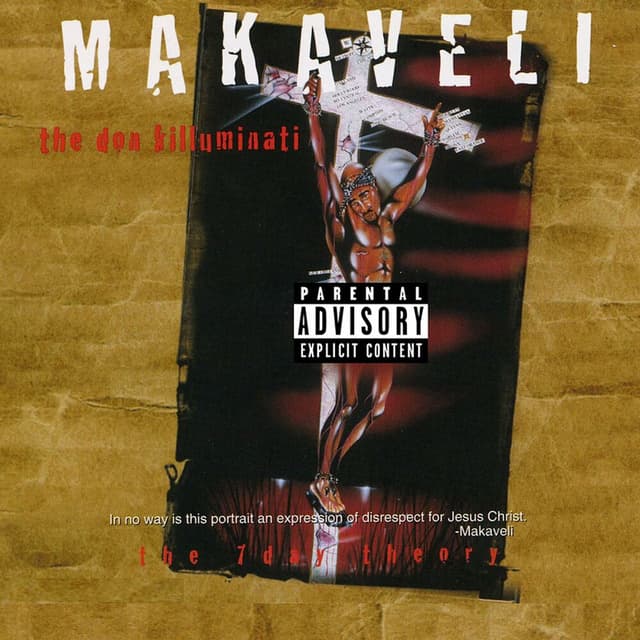
2Pac The Don Killuminati: The 7 Day Theory — The Farewell He Didn't Know He Was Recording
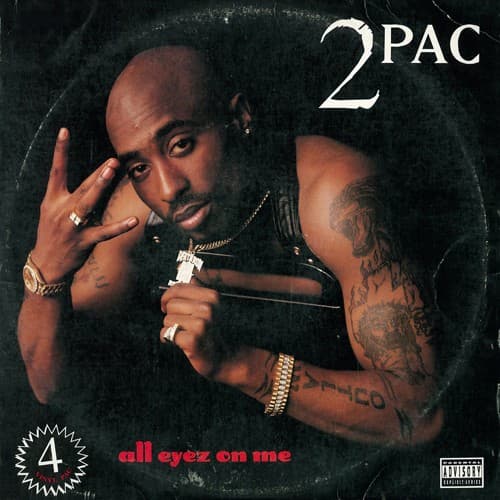
Tupac Shakur recorded The Don Killuminati: The 7 Day Theory in August 1996, released it in November under the Makaveli alias, and died in September without hearing the finished album. That timing matters because the record plays like a man convinced his death is imminent, only he thought he would be around to see the reaction. Where All Eyez on Me sprawled across twenty-seven tracks of West Coast celebration, this album contracts into twelve songs of focused rage, paranoia and score-settling. The Makaveli persona was meant as a rebranding, a harder and colder version of the charismatic figure who had dominated rap for three years, but what the album actually captures is an artist who knew he had enemies on every side and decided to name them all before they could move first.
The thesis: this is Pac's most intense album, the one where his writing sharpened under mortal pressure, but the sound that serves that intensity also traps it. The dark, low-end production creates a claustrophobic mood that fits the first half perfectly and starts to feel monotonous by track eight. The sequencing is deliberate, moving from declarations of war to meditations on loyalty and betrayal, but the album does not earn its runtime the way All Eyez did with variety. What it does earn is its place as Pac's most critically respected work in the West Coast catalog, the one where he stopped performing invincibility and started documenting what it costs. The question is whether the unrelenting grimness is a feature or a limitation.
The Sound of Siege Mentality
The production across The Don Killuminati favors minor-key loops, deep bass and stripped-down drums that leave space for Pac's voice to carry the weight. The beats are constructed to sound ominous and spare, with little of the funk or melody that defined mid-90s West Coast rap. This approach works in service of the album's war footing: the intro and Bomb First set the tone with menacing strings and hard drums, Hail Mary floats over a gothic, nearly beatless backdrop, and To Live & Die in L.A. is the only track that gestures toward the sunlit G-funk Pac had been rapping over earlier in the year. The sound is purposeful, but it is also relentless. By the time the album reaches Krazy and White Man'z World, the tempos and textures have blurred together enough that the music begins to feel like a single extended mood rather than a sequence of distinct songs.
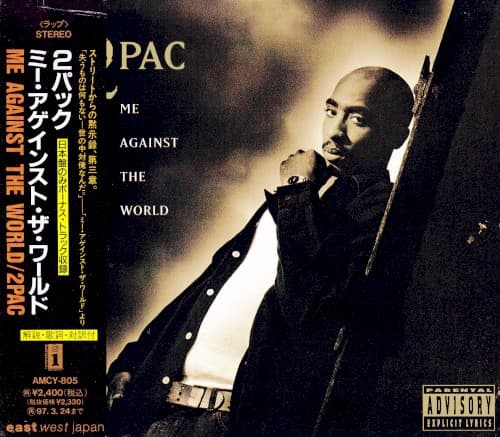
Pac's writing here is some of the best of his career. The imagery is more specific and more violent than on Me Against the World, which dealt in introspection, or All Eyez on Me, which dealt in abundance. Bomb First catalogs enemies with the precision of a man who has made a list, Hail Mary imagines his own martyrdom in explicitly religious terms, and Against All Odds names names in a six-minute indictment that feels less like a rap song and more like a deposition. The paranoia is not theoretical: Pac raps like he is certain someone is coming for him and he wants the record to survive as evidence. The writing sacrifices some of the emotional range of Me Against the World for focus, and the tradeoff is that the album has no real relief. Just Like Daddy offers a glimpse of something lighter, but it is brief and the album snaps back to suspicion immediately.
Pac's delivery is controlled throughout, his voice lower and more measured than the passionate shout-rapping that had defined his earlier work. He sounds exhausted and furious at once, and that combination gives even the most aggressive tracks a sense of weariness. The Outlawz, who appear on nearly every song, handle their roles competently without adding much personality; they function as a crew presence rather than as distinct voices. The writing is the engine, the production is the frame, and the delivery holds it all together, but the album gives itself very little room to breathe. The single real weakness is that the sound becomes its own limitation: the dark, spare aesthetic that makes Hail Mary and Life of an Outlaw so effective also makes the lesser tracks feel like they are running in place.
An Album That Peaks Early and Never Lightens
The Don Killuminati sequences itself as a descent: it opens with two of the hardest tracks Pac ever made, offers a brief reprieve in the middle, and closes with the longest and bitterest song in his catalog. The first stretch establishes the album's thesis so effectively that the rest of the runtime is spent defending it, and that structure creates a pacing problem. The opening run frontloads the album's best material, and while the middle section offers a tonal shift with smoother production and Los Angeles-specific perspective, the back half does not justify its length.
The beats grow repetitive, the subject matter circles back on itself, and the album begins to feel like it is arguing the same point in slightly different language. The sequencing works better in the final third, where the extended metaphor approach shifts to talk about loyalty in terms that feel less overtly militant. The closing run delivers the album's thesis statement in its most unfiltered form.
The album does not sag because of filler in the traditional sense; every track is committed and performed with intensity. It sags because the sound and the subject matter do not vary enough to sustain twelve tracks at this emotional pitch. The length is not earned the way it was on All Eyez on Me, which used its sprawl to show different sides of Pac's persona. Here, the album has one mode, and by track nine that mode has made its case.
The Best and Least Forgiving Album in the Catalog
The Don Killuminati: The 7 Day Theory is the best-written album Tupac Shakur made and the hardest to recommend as an entry point. It ranks above All Eyez on Me for focus and intensity, and above Me Against the World for the sheer force of its conviction, but it is also the least accessible of the three. All Eyez had the hits, the variety and the celebration that made it the commercial and cultural peak; Me Against the World had the vulnerability and the songcraft that made it the critical favorite among fans who wanted Pac the poet rather than Pac the icon. The Don Killuminati has neither hooks nor hope. It is an album for listeners who want to hear an artist at his most uncompromising, and who can handle twelve tracks of unrelieved aggression and paranoia. The writing is sharper, the performance is more controlled, and the album's reputation as Pac's darkest and most serious work is deserved.
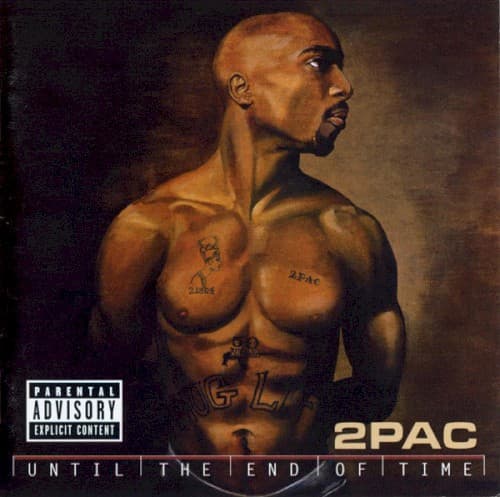
Who this is for: fans who already know the hits and want to hear what Pac sounded like when he stopped performing for anyone but himself and his enemies. Who should skip it: anyone looking for the charisma or the accessibility that defined his mainstream work. Start with Hail Mary, Me and My Girlfriend and Against All Odds to understand the album's range, then decide whether the full experience is worth the emotional toll. If the intensity lands, the album justifies its reputation as the most artistically successful thing Pac made. If it does not, All Eyez on Me remains the safer and more rewarding entry point. For context, hear Me Against the World to understand what Pac sacrificed in vulnerability to gain this focus, and hear All Eyez on Me to understand the version of himself he was willing to abandon.
Track by track
Track Listing
Intro / Bomb First (My Second Reply)
StandoutThe intro sets the album's apocalyptic tone with a spoken monologue that frames the Makaveli persona as a strategic rebranding, then Bomb First launches immediately into a declaration of war. The beat is built on ominous strings and hard, spare drums, and Pac and the Outlawz trade verses that catalog enemies with the specificity of men who have made lists. Pac's verse is among his most vicious, naming the East Coast by implication and making clear that this album will not be subtle about its targets. The track works as both an opening statement and a thesis: the aggression is not performative, it is operational. The only weakness is that the Outlawz verses, while competent, do not match Pac's intensity and the track loses some momentum when he is not rapping.
Hail Mary
StandoutThis is the album's centerpiece and one of the best tracks Pac ever made. The production is sparse and gothic, built on a low drone and minimal percussion that leaves Pac's voice exposed, and he uses that space to imagine his own death in religious terms. The writing is vivid and specific, the delivery is controlled and deliberate, and the track's slow tempo gives every line room to land. The chorus, sung rather than rapped, reinforces the martyrdom theme without feeling overdone. Hail Mary is the track that justified the Makaveli rebrand and the one that has aged the best, in part because its sound was unlike anything else in West Coast rap at the time. It remains essential.
Toss It Up
WeakThe first real misstep, a club track that does not fit the album's tone and feels like a concession to radio. The beat is smoother and more commercial than anything else here, and the writing about money and women is generic compared to the specificity of the first two tracks. Pac sounds engaged, but the song does not advance the album's thesis and the sequencing suffers for it. It works as a breather, but the album did not need one this early.
To Live & Die in L.A.
StandoutThe album's only real nod to the Los Angeles celebration that defined All Eyez on Me, and it works because the production is warm and melodic without abandoning the album's darker undertone. Pac raps about the city with the same specificity he brings to his enemies, and the track functions as a moment of regional pride in an album otherwise consumed with betrayal. The writing is strong, the beat is one of the few here that invites repeat listens for pleasure rather than study, and the sequencing is smart: placing this after Toss It Up resets the album's momentum without breaking its mood entirely.
Blasphemy
SolidA solid but unremarkable track that addresses religion and hypocrisy with less nuance than Hail Mary and less force than Bomb First. The beat is competent but forgettable, and the writing, while committed, does not say anything the album has not already said better. The Outlawz contributions are adequate. Blasphemy is not filler in the sense of being lazy, but it is the first track where the album's single-minded focus begins to feel repetitive.
Life of an Outlaw
SolidA posse cut that serves its purpose without standing out. The beat is built on a eerie loop and minimal drums, and Pac and the Outlawz trade verses about the costs of loyalty and the certainty of early death. The writing is solid, the performances are energetic, and the track works as a statement of collective identity, but it does not add much to what the album has already established. It is a good example of the album's core problem: the sound and subject matter are so consistent that even the strong tracks start to blur together.
Just Like Daddy
SolidThe album's lightest moment, a brief and relatively upbeat track that imagines Pac as a father figure and role model. The beat has more bounce than anything else here, and the writing, while still serious, trades paranoia for aspiration. The track is too short to develop its ideas fully, and the album snaps back to suspicion immediately after, but it functions as necessary relief in a runtime that otherwise offers none.
Krazy
WeakA mid-tempo track about paranoia and instability that suffers from its placement in a sequencing that has already made the point repeatedly. The beat is minimalist and the writing is competent, but the song does not justify its four-minute runtime. Pac's delivery remains committed, but Krazy is the clearest example of the album's pacing problem: by track eight, the relentless darkness has become its own monotony.
White Man’z World
SolidA posse cut addressing systemic racism and economic inequality, ambitious in scope but uneven in execution. The writing is more explicitly political than most of the album, and Pac's verse is strong, but the Outlawz contributions are generic and the beat, while atmospheric, does not distinguish itself from the tracks around it. The song works better as a statement of intent than as a listening experience, and at over five minutes it tests the patience the album has already strained.
Me and My Girlfriend
StandoutOne of the album's best tracks, a extended metaphor that describes Pac's relationship with his gun as a romance. The writing is clever without being cute, the beat is slower and more deliberate than the album's other material, and the track offers a tonal shift that the sequencing needed. Pac's performance is focused and the metaphor is sustained across the entire song without collapsing into gimmick. Me and My Girlfriend is the album's best example of Pac's ability to find new angles on familiar material, and it has aged well as one of his more conceptually interesting songs.
Hold Ya Head
SolidA track aimed at incarcerated friends, with writing that balances encouragement and realism. The beat is unambitious and the song does not stand out in the catalog, but it works as a moment of solidarity in an album otherwise consumed with enemies. Pac's delivery is sincere, and the track serves its purpose without overstaying its welcome.
Against All Odds
StandoutThe album's longest track and its true closer, a six-minute catalog of betrayals that names names and settles scores with the specificity of a legal document. The beat is sparse and repetitive, which serves the writing: Pac is not trying to entertain here, he is trying to leave a record. The song has no chorus and no relief, just verse after verse of accusation, and it works as the album's thesis statement in its most unfiltered form. Against All Odds is exhausting by design, and it closes the album on the same note of fury and paranoia that opened it. The track has not aged as well as Hail Mary or Me and My Girlfriend because its references are specific to conflicts most listeners do not care about, but it remains essential for understanding what Pac thought this album was for.
Frequently Asked Questions
Is The Don Killuminati 2Pac's best album?
What is the Makaveli persona on The Don Killuminati?
Why is Hail Mary considered 2Pac's best song?
How does The Don Killuminati compare to All Eyez on Me?
Styles