Style & Context
Influences
WWII nose art, military branding, technical manuals, propaganda posters
Location
This represents the perspective of a Detroit veteran watching younger artists dominate charts with styles he fundamentally rejects.
Visual Language
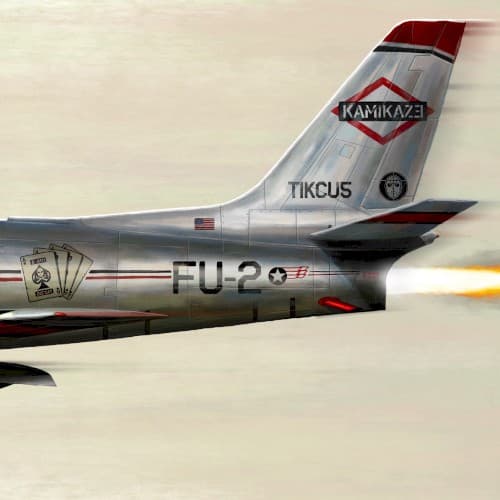
The hyper-realistic rendering borrows from defense contractor marketing and warplane documentation to establish authenticity and threat.
Symbols
Fighter Jet Tail
The aircraft represents Eminem as a weapon aimed at mumble rappers and critics who doubted his relevance.
Playing Cards Decal
The four aces reference gambling everything on this surprise release, going all-in against the industry establishment.
FU-2 Marking
The nose art doubles as a middle finger to adversaries, making the hostile intent impossible to miss.
Where Sound Meets Image
The fighter jet perfectly mirrors the album's surprise-attack rollout strategy and lyrical content focused on destroying opponents. Songs like 'Killshot' and 'The Ringer' deliver technical wordplay as precision weaponry, while the kamikaze concept reflects Eminem's willingness to alienate fans and peers alike. The cold, militaristic visual matches the album's aggressive production and confrontational energy throughout its 46-minute runtime.
The cover revived hip-hop's tradition of warfare imagery at a time when album art had grown softer and more abstract. It demonstrated how a veteran MC could use stark, literal symbolism to contrast with contemporary trap aesthetics. The design influenced subsequent comeback albums from older rappers seeking to reclaim relevance through confrontation rather than adaptation.