Style & Context
Influences
Pharmaceutical imagery, medical photography, horror film posters, destruction photography
Location
Detroit's struggle with opioid epidemic made personal through one artist's public pharmaceutical warfare.
Visual Language
The technique mirrors Chuck Close's photorealism broken into components, reimagined through prescription drug aesthetics.
Symbols
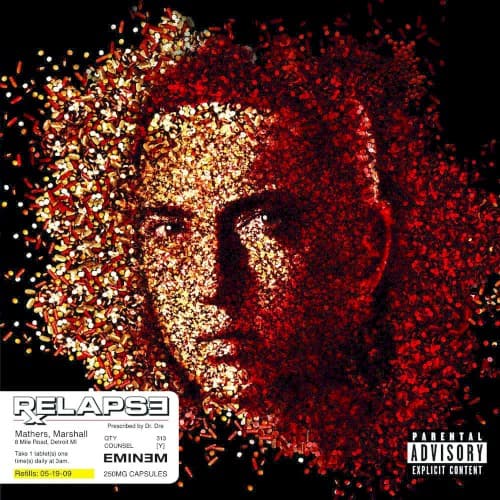
Dissolving pills forming face
His identity literally composed of medication represents addiction consuming the person beneath the addiction.
Left-right color split
The dual toning suggests a personality divided between sobriety and relapse's seductive pull.
Particles scattering into darkness
The outward dispersion visualizes loss of control and the self fragmenting under chemical influence.
Where Sound Meets Image
The fragmenting portrait mirrors the album's fractured narrative structure and multiple personality disorder themes across tracks like '3 a.m.' and 'My Mom.' The warm-to-cold color progression reflects the sonic journey from Dre's lush production to the album's darker psychological spaces. Just as pills dissolve the face's coherence, Eminem's accented characters dissolve his stable identity throughout twenty tracks of relapse documentation.
The cover established pharmaceutical horror as viable album art vocabulary during hip-hop's overdose crisis years. Its influence appears in subsequent artists' addiction-themed visuals, though few matched its unflinching directness. The design predicted Instagram-era face fragmentation effects while maintaining analog pill-count tangibility that digital effects couldn't replicate.