Style & Context
Influences
Horror film aesthetics, crime photography, album art from Relapse era
Location
This reflects Detroit's tradition of confronting mortality head-on, from street realities to horrorcore roots.
Visual Language
The photographic realism creates documentary-like urgency while theatrical lighting emphasizes the performative nature of killing a fictional character.
Symbols
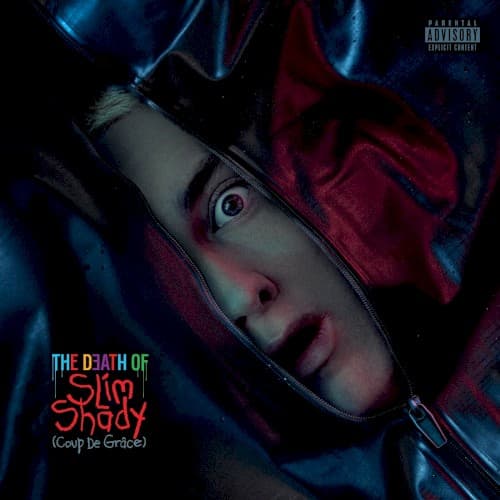
Body bag zipper
The partially opened zipper represents Slim Shady's final gasps before permanent silencing and burial.
Wide, panicked eye
The visible terror in the eye captures Slim's awareness of his own execution.
Red bag interior
The crimson lining evokes both violence and the womb, suggesting death and rebirth simultaneously.
Where Sound Meets Image
The suffocating visual mirrors the album's concept of systematically dismantling Slim Shady through self-aware lyricism. The clinical execution reflected in the cover matches Eminem's technical precision as he dissects his own creation across tracks. The duality of terror and acceptance visible in the eye parallels Marshall's conflicted relationship with retiring his most commercially successful but culturally problematic alter ego. The red and blue police-light coloring reinforces themes of judgment and consequence explored throughout the record.
This cover continues hip-hop's tradition of literal visual metaphors while updating the approach with contemporary horror aesthetics. The body bag concept will likely influence how other artists visualize persona deaths or career transitions, providing a template for theatrical legacy management. Its visceral directness stands against the minimalist trends dominating recent rap covers, reasserting the power of confrontational imagery.