The scorecard
6.4/10 · Mixed
- Writing25%
- 6.5
- Production25%
- 7.0
- Delivery15%
- 7.5
- Cohesion15%
- 5.5
- Originality10%
- 5.0
- Replay value10%
- 6.0
The concept work on tracks like "Guilty Conscience 2" shows ambition, but the album veers between sharp wordplay and forced provocation that reads dated rather than dangerous.
Dr. Dre and Eminem himself deliver varied textures from the Mouth and MacNeal flip on "Lucifer" to the Steve Miller interpolation on "Houdini", though the back half loses momentum.
Technical command remains elite across "Fuel" and "Tobey", with the multi-syllabic runs and pocket shifts proving he can still outrap most peers, even when the material doesn't merit it.
The conceptual frame of killing Slim Shady gets abandoned halfway through for unrelated songs like "Temporary" and "Road Rage", leaving the album feeling like two projects stitched together.
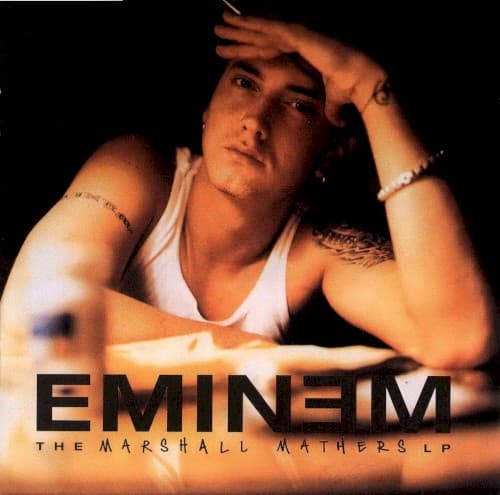
The shock tactics land as nostalgia rather than subversion, and while the second Guilty Conscience structure offers a worthwhile update, the album yields few insights that weren't clearer on The Marshall Mathers LP.
The album's length and tonal whiplash from controversy to sentiment make full playthroughs a chore, though the early conceptual tracks and technical displays in the middle offer enough to justify selective returns.
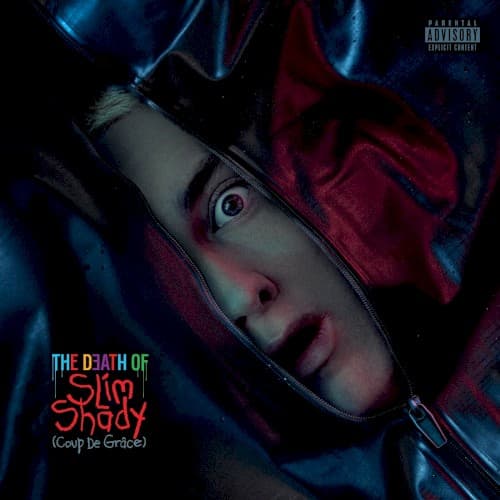
Eminem The Death of Slim Shady — The Persona That Survived Its Own Funeral
The central question on The Death of Slim Shady is whether Eminem can stage a conceptual mercy killing of his most famous alter ego and make it mean something twenty-five years after the character debuted. The answer arrives early and stays consistent: he cannot decide if he wants Slim Shady dead or if he wants one more victory lap, so he attempts both and ends up with neither. The fake obituary in the Detroit Free Press and the Unsolved Mysteries rollout promised a reckoning, but the album delivers a muddled argument that loses interest in its own premise halfway through, trading the concept for a grab bag of technical reveal, sentimental detours, and provocations that feel more like obligations than risks.
What was billed as a conceptual sendoff plays more like a artist hedging his bets, unwilling to fully commit to introspection or to the chaos the character once represented. The problem is not that Eminem cannot rap anymore; the problem is that he cannot decide what this album is supposed to prove. The production from Dr. Dre, Eminem himself, and collaborators like Dem Jointz and Mr. Porter gives him room to operate, and the guest list from JID to BabyTron offers generational contrast, but the record never coheres around a thesis strong enough to justify its existence as anything beyond a victory lap disguised as a farewell.
By the time the closing stretch arrives with its teary apology to his daughters, the Slim Shady concept has been abandoned entirely, leaving the album to function as two separate projects that happen to share a tracklist. The result is an album that ranks in the middle of his catalog not because it fails outright but because it succeeds at nothing in particular, a technically proficient but emotionally inert exercise in nostalgia that mistakes callbacks for commentary.
When the Shock Tactics Became the Safety Net
The writing on The Death of Slim Shady splits cleanly between Eminem trying to interrogate his relationship with the Slim Shady persona and Eminem simply playing the character one more time without reflection. The former yields the album's most interesting moments: the extended back-and-forth on the second Guilty Conscience revisits the 1999 original with Eminem now arguing both sides, a structure that works because it foregrounds the contradiction rather than pretending it resolved itself. The verses stack competing justifications over Dem Jointz and Fredwreck production that recalls the menace of the early records without xeroxing them. But that conceptual discipline evaporates across much of the tracklist, where the writing defaults to the same shock-for-shock's-sake mode that defined his post-Encore misfires.
The jokes about cancel culture and trans people on the second track and elsewhere do not scan as dangerous or even particularly offensive in 2024; they read as a fifty-one-year-old artist recycling the moves that worked when he was twenty-seven, mistaking repetition for courage. The specificity that made the original Slim Shady records compelling, the sense that the persona was aimed at particular hypocrisies, has curdled into a generalized defensiveness that mostly targets people who stopped paying attention to Eminem a decade ago. When he pivots to sincerity in the closing stretch, the whiplash is severe, and the sentimentality lands flat because the album has spent no time earning the tonal shift.
The wordplay remains sharp in bursts: the multi-syllabic runs on multiple tracks prove he can still bend rhythm in ways most rappers cannot approach, and the internal rhyme schemes are as dense as anything on The Marshall Mathers LP. But technical proficiency without purpose becomes its own kind of filler, and too many verses here feel like Eminem showing he can still do the thing rather than using the thing to say something.
Production carries more weight than the writing wants to give it. Dr. Dre appears on multiple tracks, and both benefit from his ability to build tension without overcrowding the mix; the Mouth and MacNeil sample on one early cut is the kind of unexpected flip that justified the Dre partnership in the first place, creating a haunted space that Eminem's flow plays against rather than just filling. Eminem's own production, handled with Luis Resto across multiple tracks, leans into the bright, synthetic textures that have defined his post-Relapse work, and the results are mixed. One Steve Miller interpolation succeeds because it is hooks-first and gives the song a structure that Eminem's verses can work within; another track recorded in 2004 and finished two decades later sounds exactly like the Encore leftover it is, a curiosity rather than a statement.
The back half of the album loses steam as the production becomes more uniform and the conceptual throughline disappears entirely. Mr. Porter's work on one track gives JID a canvas that plays to his kinetic delivery, and JID outshines Eminem on his own album by treating the beat as something to explore rather than conquer. BabyTron and Big Sean hold their own on another cut, with BabyTron in particular matching Eminem's technical ambition without trying to mimic his style, but the song does not build to anything; it is three good verses in search of a reason to exist on this album specifically.
The sequencing stumbles badly. Opening with the first track signals that this will be a conceptual statement, but by the time the final stretch arrives, the Slim Shady framing has been forgotten, and the album plays like a standard Eminem tracklist with a concept tacked onto the front third. The skits gesture toward the album's themes without advancing them, and one late interlude teases a return that the following track, a Jelly Roll ballad, immediately contradicts. At nineteen tracks, the album is too long by at least four songs, and the lack of discipline in the sequencing makes the bloat more obvious.
The Album That Kept Interrupting Itself
The album works best in its first half, where the concept still has some purchase and the songs at least pretend to be in conversation with each other. Two early tracks feel essential, one for its eerie Dr. Dre production and another for its willingness to stage the internal argument the album title promises. After that, the record becomes a series of isolated moments that do not accumulate into anything.
The middle section functions as technical reveal, proof that Eminem can still command a booth, but these tracks exist outside the album's stated mission. The tonal whiplash between one track that interpolates Juvenile and leans into aggression and another that serves as a maudlin letter to his daughter is so severe that it reads as two different albums competing for space on the same tracklist. The skits do nothing to smooth these transitions; they acknowledge that the concept exists without doing the work to hold it together.
By the closing run, the album has abandoned any pretense of being about Slim Shady's death and settles for being a random Eminem album with a misleading title. The sequencing needed either full commitment to the concept or full abandonment of it; instead, it tries to have both and ends up with neither, a record that peaks early and spends its second half reminding you why it should have been shorter.
The Farewell That Refused to Leave
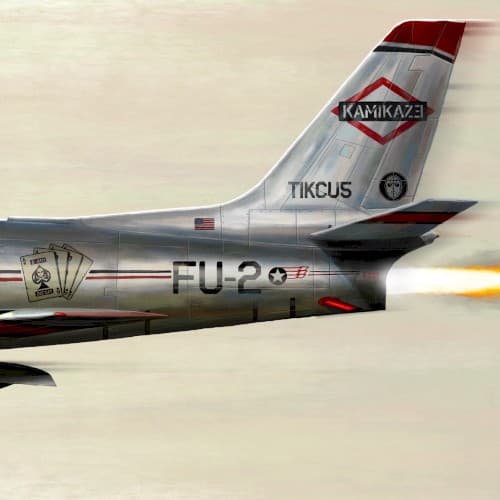
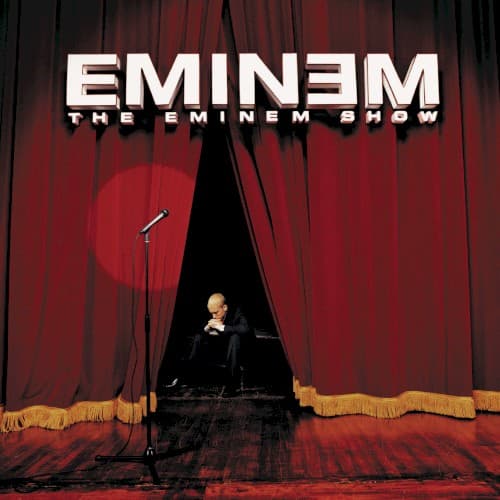
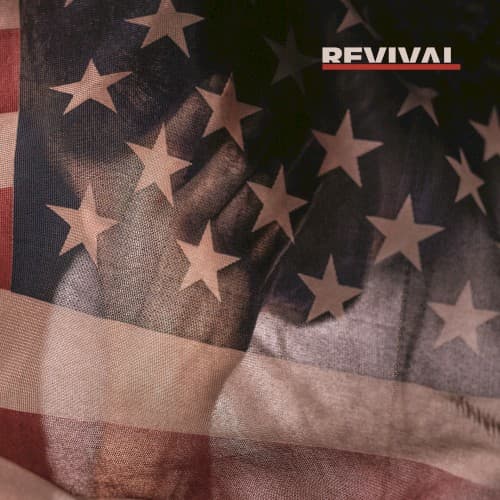
The Death of Slim Shady ranks in the middle of Eminem's catalog, ahead of the outright misfires like Revival but well behind the records that justified the persona in the first place. It is better than Kamikaze because it has higher ambitions, even if it fails to meet them, and it is better than Relapse because the writing is less self-indulgent and the production is more varied. But it is nowhere near The Marshall Mathers LP or The Eminem Show, albums that used the Slim Shady character to say something specific about fame, class resentment, and the mechanics of offense. This album mistakes the character for the argument, assuming that reviving Slim Shady in 2024 is inherently interesting without doing the work to explain why.
The result is an album for Eminem completists and fans who want to hear him rap at a high technical level, but it is not an album for anyone looking for a reason to care about Slim Shady in the first place. Start with the second Guilty Conscience and the Dre-produced early cut to hear the album at its most focused, then move to the middle stretch if you want the technical display. Skip the sentimental closing tracks unless you are invested in Eminem's personal narrative; they are well-executed but belong on a different album.
If you want to understand what Eminem was capable of when the Slim Shady persona had purpose, go back to The Marshall Mathers LP and The Eminem Show; if you want to hear him try to reconcile with it and mostly fail, this album does that much. The more interesting question is what comes next, now that he has staged the funeral and proven he cannot stay away from the character that made him famous. Until he answers that question with something other than nostalgia, the catalog will keep stacking albums that remind you how good the early ones were.
Track by track
Track Listing
Renaissance
SolidA spoken-word introduction that frames the album as Slim Shady's final chapter, setting up the conceptual premise with ominous production from Eminem and Luis Resto. Functions as a mission statement the album will abandon.
Habits
WeakEminem targets social media and cancel culture over White Gold production that leans into trap-influenced drums and a nagging vocal sample from South Park. The writing relies on shock tactics that feel recycled from earlier records, and the outrage reads more performative than pointed. The technical execution is sharp, but the song mistakes provocation for insight and ends up sounding like an artist yelling at people who are not listening.
Trouble
SolidA forty-one-second interlude over Dem Jointz and Fredwreck production that teases the chaos to come. Too brief to evaluate as a standalone track.
Brand New Dance
WeakA track recorded in 2004 and left in the vault until now, which explains why it sounds like an Encore outtake. The production from Eminem and Resto is bright and oddly chipper, and the song functions more as a curiosity than a statement, proof that some ideas should stay unreleased.
Evil
SolidEminem leans into the Slim Shady persona over production from Don Cannon, Cubeatz, and himself, with a beat that churns and menaces without ever quite catching fire. The writing toggles between clever wordplay and try-hard edginess, and the song suffers from the same problem as much of the album: it assumes resurrecting Slim Shady is interesting without explaining why. The flow is strong, but the material is thin.
All You Got (skit)
SolidA brief skit that gestures toward the album's conceptual frame without advancing it. Filler.
Lucifer
StandoutThe best track on the album, built on a Mouth and MacNeal sample that Dr. Dre and Eminem flip into something genuinely eerie. The production is patient, letting the sample breathe and giving Eminem space to work without overloading the mix. His verses explore temptation and self-destruction with more specificity than most of the album manages, and Sly Pyper's hook adds texture without overwhelming the song. The writing here feels purposeful rather than reactive, and the track works both as a conceptual piece and as a standalone song. This is what the album should have sounded like if it had committed to the concept.
Antichrist
SolidEminem, Resto, and Foulmouth build a claustrophobic beat that matches the song's apocalyptic themes, and the writing leans into religious imagery and self-mythologizing. At over five minutes, the track drags in places, and the concept work feels more atmospheric than specific. The flow is strong, but the song needed editing.
Fuel
StandoutMr. Porter and Eminem craft a high-energy beat that gives JID room to operate, and JID takes full advantage, delivering a verse that matches Eminem's technical ambition without trying to mimic his style. Eminem's own verses are dense with internal rhymes and pocket shifts, proof that he can still bend rhythm in ways most rappers cannot approach. The problem is that the song exists outside the album's stated concept, functioning as a showcase rather than a statement. Still, it is one of the album's most replayable tracks, elevated by JID's presence and the kinetic production.
Road Rage
StandoutDem Jointz and Dr. Dre interpolate Juvenile's "Ha" over a beat that leans into aggression, and Eminem responds with a confrontational verse that plays to the production's strengths. The writing is sharper here than on some of the earlier provocations, and the song benefits from a clear target rather than generalized anger. Dem Jointz and Sly Pyper add texture to the hook, and the track functions as a standalone moment of controlled chaos. It does not advance the Slim Shady concept, but it works on its own terms.
Houdini
StandoutThe lead single and the album's most obvious commercial play, built on a Steve Miller Band sample and an interpolation of Eminem's own "Without Me". The production from Eminem and Resto is bright and hook-forward, and the song leans into nostalgia without drowning in it. The writing toggles between self-awareness and self-indulgence, and the track functions as a mission statement for the album's attempt to revive Slim Shady. It charted well for a reason: it is catchy, technically proficient, and familiar enough to appeal to casual fans. Whether it says anything new is another question, but as a single it does its job.
Breaking News (skit)
SolidA skit framing the album's concept as a news story. Brief and unnecessary, though it at least acknowledges the throughline the album is about to abandon.
Guilty Conscience 2
StandoutThe album's most fully realized conceptual track, revisiting the 1999 original with Eminem now arguing both sides of the internal conflict that the Slim Shady persona represents. Dem Jointz and Fredwreck build production that recalls the menace of the early records without simply copying them, and the structure gives Eminem room to interrogate the character rather than just inhabit it. The writing is specific and self-aware, acknowledging the contradictions without trying to resolve them cleanly. At over five minutes, the track earns its length, and it functions as the album's clearest statement of intent. If the rest of the record had this level of conceptual discipline, it would rank much higher in the catalog.
Head Honcho
SolidEminem and Ez Mil trade verses over production from Eminem, Ez Mil, Jameil Aossey, and Resto. The beat is solid but unmemorable, and Ez Mil holds his own without adding much that the album needed. The song functions as a competent showcase but does not justify its place in the sequence.
Temporary
SolidA maudlin letter to Eminem's daughter Hailie, produced by Skylar Grey and Eminem, with Grey providing the hook. The sentiment is earnest, and the production is polished, but the tonal whiplash from the rest of the album is severe. The track belongs on a different project, one focused on Eminem's personal narrative rather than the Slim Shady concept. As a standalone song it is well-executed, but its placement here undercuts the album's conceptual coherence. The writing is specific enough to land emotionally for fans invested in Eminem's family narrative, but it does nothing to advance the stated mission of killing Slim Shady.
Bad One
WeakEminem and White Gold deliver a track that leans into melody and hook craft over production from Eminem and Resto. The writing is forgettable, and the song functions as filler in a back half that has already lost momentum. Competent but unnecessary.
Tobey
StandoutEminem, BabyTron, and Big Sean trade verses over production from Cole Bennett and a team of collaborators, and all three rappers deliver technically. BabyTron in particular matches Eminem's ambition without mimicking his style, and Big Sean holds his own with a verse that balances wordplay and clarity. The beat is solid, and the song works as a showcase for three different generations of technical rap. The problem is that the track exists outside the album's concept entirely, functioning as a posse cut that could have appeared on any Eminem album from the past fifteen years. As a single it charted well, and as a showcase it succeeds, but it does not justify its place on an album that was supposed to be about killing Slim Shady.
Guess Who’s Back (skit)
SolidA skit teasing Slim Shady's return, which the following track immediately contradicts. The conceptual incoherence is now complete.
Somebody Save Me
SolidA Jelly Roll collaboration that closes the standard edition with a teary apology and a plea for redemption, produced by Benny Blanco, Emile, and Eminem. The song samples Jelly Roll's own "Save Me", and the sentiment is earnest to the point of melodrama. The production is polished, and Jelly Roll's hook is effective, but the track has nothing to do with the Slim Shady concept and everything to do with Eminem's personal narrative. As a closer it functions fine, but as the endpoint of an album titled The Death of Slim Shady it makes no sense. The writing is competent, the performance is committed, but the placement is baffling. If you are invested in Eminem's relationship with his daughters and his regrets about his career's impact on his family, the track will land; if you came for the conceptual sendoff the title promised, it will feel like a betrayal.