Style & Context
Influences
Film noir posters, blaxploitation cinema, luxury brand advertising, Wu-Tang comic aesthetics
Location
Staten Island's Stapleton projects inform the working-class luxury paradox, where Clarks Wallabees count as status symbols.
Visual Language
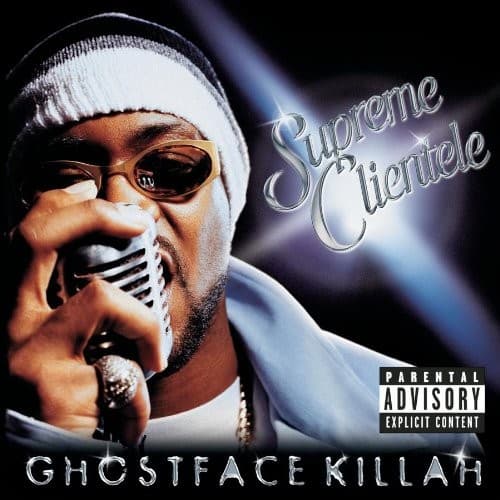
The theatrical lighting creates cinematic depth while the centered composition demands attention like a wanted poster.
Symbols
Striped white knit cap
References prison attire while nodding to Staten Island winter wear, symbolizing incarceration's proximity to daily life.
Oversized tinted eyewear
Creates anonymity and cool detachment, protecting identity like a mobster avoiding surveillance cameras downtown.
Diamond-encrusted microphone
Transforms the MC's tool into jewelry, equating verbal skill with material success and criminal spoils.
Where Sound Meets Image
The visual chaos of overlapping elements mirrors the album's dense, stream-of-consciousness wordplay and abstract narratives. Ghostface's animated expression captures the manic energy that drives tracks where he shifts topics mid-verse, piling on non-sequiturs and pop culture references. The luxury accessories reflect songs about Cristal champagne, fur coats, and the spoils of both music success and hustling, while the aggressive stance matches the boom-bap aggression of RZA's production and the album's combative energy.
The cover helped cement the visual language of street luxury in early 2000s hip-hop, where prison culture and high fashion existed without contradiction. Its dramatic lighting approach influenced countless independent rapper photoshoots seeking cinematic gravitas on limited budgets, while the prominent jewelry display predicted the bling era's full emergence.