Style & Context
Influences
B-boy photojournalism, 1970s street photography, album-as-artifact aesthetic
Location
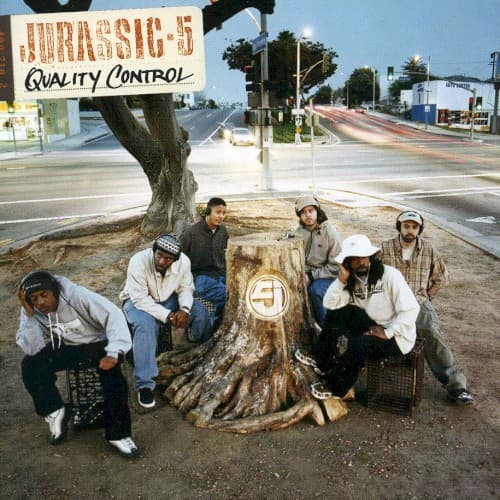
The working-class LA boulevard captures West Coast street reality beyond South Central gang narratives.
Visual Language
The grainy film quality and natural lighting reject the glossy excess dominating late-90s rap visuals.
Symbols
Cut tree stump
The severed trunk represents hip-hop's roots being destroyed by commercial development and mainstream dilution.
Branded 'J5' logo
The burned emblem claims ownership over authentic boom bap craft in an era of manufactured pop-rap.
Intersection setting
The crossroads symbolize choices facing hip-hop culture between staying true or crossing over commercially.
Where Sound Meets Image
The visible grain and texture mirror the album's sample-heavy production aesthetic, where dusty breaks get chopped and reconstructed. Just as the crew physically brands wood, tracks like 'Jurass Finish First' stamp their mark on classic boom bap templates. The urban backdrop connects to songs examining Los Angeles street life, while the collaborative seating arrangement reflects their tag-team verbal interplay and overlapping verses. The motion blur captures their rapid-fire delivery style, while the static stump represents their commitment to unchanging hip-hop fundamentals.
This cover helped establish alternative hip-hop's visual vocabulary of anti-gloss authenticity that influenced Atmosphere, Little Brother, and the entire indie rap movement. The street photography approach anticipated the raw documentary aesthetic that would dominate mixtape culture. By choosing communal labor over luxury, Jurassic 5 created a template for conscious rap packaging that values substance over flash, still referenced whenever artists want to signal underground credibility.