Scorecard: 7.1/10 · Good
How we score- Writing(25%)
- 6.5
The tag-team verses trade clean imagery and golden-age callbacks without much new to say, and the craft stays playful but the wordplay never pushes past competence.
- Production(25%)
- 8.0
DJ Nu-Mark and Cut Chemist dig through jazz, funk and soul with precision, building beats that breathe and swing, though a few tracks lean on loop work without much arrangement.
- Delivery(15%)
- 7.0
Four MCs trading bars stay in sync and on beat with solid technical control, but the conversational flow rarely shifts out of midtempo pocket.
- Cohesion(15%)
- 7.5
The sequencing front-loads the album's strengths and moves with purpose through the first half, then coasts for too long without finding new ideas to justify the runtime.
- Originality(10%)
- 6.0
The record refines the indie rap sound Jurassic 5 built on their EP without pushing the formula into new territory, a very good version of a sound already becoming codified.
- Replay value(10%)
- 7.0
The best beats hold up because the samples breathe and the drums knock, but the interchangeable verses and stretched runtime make the back half sag on repeat.
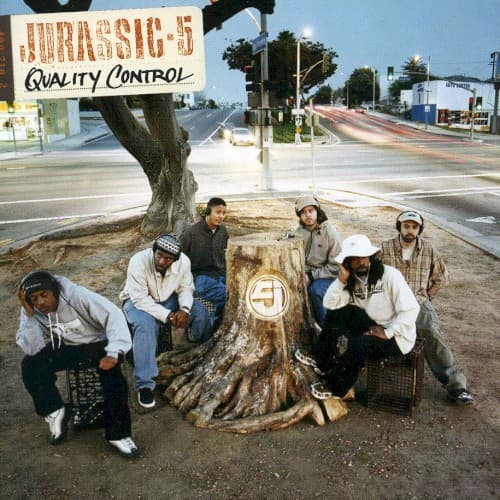
Jurassic 5 Quality Control — What the Backpack Boom Sounded Like Before It Became a Punchline
Quality Control arrived in the summer of 2000 as proof that you could sign to Interscope, keep your indie credibility and still sound like you recorded the album in 1993. Jurassic 5 had built a reputation on their self-titled EP as revivalists with taste: four MCs trading clean verses over DJ Nu-Mark and Cut Chemist's sample-heavy beats, no gunplay and no mysticism, just the golden-age formula executed with enough craft to feel like more than tribute. The major-label follow-up keeps that promise for about half its length, then overstays by three or four tracks because the group never figured out what else to do with the recipe.
The thesis here is narrow but confident: rap in 2000 does not have to choose between Rawkus earnestness and Ruff Ryders theatrics, and the West Coast has room for a crew that sounds more like De La Soul than DJ Quik. The production holds up that claim better than the rapping does. Nu-Mark and Cut Chemist work through the same jazz and funk bins that J Dilla and Pete Rock were raiding, but they favor swing over knock, and they leave space in the mix where most boom-bap records pile on horns and loops until the drums disappear. The writing is capable without being urgent, the kind of clean technical rapping that wears well until you realize it is not saying anything the EP did not already say. Jurassic 5 wanted to prove the underground could go overground without compromise, and they did, but Quality Control also shows why that was not enough to build a catalog on.
Four MCs, Two DJs and One Tempo
The production is the reason to return to Quality Control, and it comes almost entirely from DJ Nu-Mark and Cut Chemist working through record collections with more taste than most sample-based producers had in 2000. "The Influence" builds around a Hi-Lo's vocal jazz sample that should feel precious but lands airy and buoyant, the kind of loop that does not announce itself as crate-digging because it works as a beat first. "Monkey Bars" flips a Rufus and Chaka Khan sample into a brisk midtempo groove with a bassline that moves, and "Swing Set" closes the album with big-band drums and a loose, lived-in feel that justifies the five-minute runtime. The best tracks here sound like the Dust Brothers working at half-speed: sample sources that nod to an older era, chopped and rearranged with enough swing that the homage does not overwhelm the song. Shafiq Husayn contributes two tracks, "Contribution" and "Twelve", and both lean more soulful and less playful than the DJ work, adding texture without disrupting the group's lane.
The rapping is clean, technically solid and almost entirely interchangeable across all four MCs. Chali 2na's baritone anchors most hooks, but the verses rotate without much variation in flow or subject matter: golden-age callbacks, light wordplay, vague positivity about the state of hip-hop and a few jabs at commercialism that feel obligatory rather than earned. The tag-team structure keeps energy up, and the group never stumbles on a verse or loses the beat, but fifteen tracks of the same conversational pocket starts to blur. "Quality Control" works as a single because the Blowfly sample is strange enough to give the rapping some edge, and "Jurass Finish First" benefits from a Shelly Manne drum break that pushes the tempo slightly higher than the album's default cruise. Elsewhere the writing coasts on competence, never embarrassing itself but never staking a claim that another crew could not make with the same skill level.
The biggest weakness is that Jurassic 5 built their sound as a reaction to what mainstream rap was doing in the late nineties, and by 2000 that reaction was already codified as a genre: the backpack boom, complete with its own clichés and its own monotony. Quality Control does not push past those boundaries or even test them. It is a very good version of a sound that was already becoming a formula, and the album never acknowledges that limitation or works against it.
Fifteen Songs Pretending to Be Twelve
The sequencing front-loads the album's strengths and then coasts for too long. The first half moves with purpose: tight tracks, quick interludes and enough variety in sample sources to keep the production from feeling one-note. The peak arrives early, built around sample choices that give the rapping room to breathe without demanding more from the group than it can deliver. The stretch from the middle section through the closing run is where the album sags, not because the songs are bad but because they do not justify the runtime.
Several solid tracks would work in a tighter running order; here they feel like filler because the album has already made its point by the halfway mark and cannot find a new one. The interludes do not help much either. The brief ones do not intrude, but one is redundant when the title track appears thirty seconds later, and the album does not need a formal introduction at all. The only weak entry loops a classic soul hook without doing much with it and leans too hard on the tag-team gimmick without a strong enough beat to carry it.
Everything else is competent, but competence stretched to fifteen tracks and fifty-three minutes becomes a liability when the first ten tracks already covered the range. The back half offers no new ideas or approaches that were not already established. The running time feels indulgent rather than earned.
Where It Ranks and Who Should Start Here
Quality Control is the second-best record Jurassic 5 made, which is not a ranking that means much given the catalog, but it is the clearest statement of what the group did well and where they ran out of ideas. The production holds up better than almost anything else in the indie rap boom of the early 2000s because Nu-Mark and Cut Chemist understood swing and space in a way that most of their peers did not. The rapping is solid and unembarrassing, but it does not have the personality or the ideas to carry an album this long, and the group never figured out how to grow past the golden-age tribute that made them notable in the first place. As a document of what the underground sounded like when it went overground without selling out, it is valuable; as an album you return to for the songs rather than the context, it is front-loaded and three tracks too long.
This is for listeners who want clean, sample-heavy rap that does not demand much beyond appreciation for the craft, and for anyone curious about what the backpack era sounded like before it became a punchline. Skip it if you need writing with urgency or stakes, or if you are allergic to golden-age nostalgia. Start with "The Influence", "Quality Control" and "Monkey Bars" to hear the production at its best, then decide if the conversational rapping is enough to carry the rest. If you finish this and want more of the same sound done better, try the Jurassic 5 EP or move laterally to Blackalicious or Dilated Peoples. If you want to hear what West Coast rap was doing in 2000 that actually moved the genre forward, go listen to Deltron 3030 or Tha Alkaholiks.
Track Listing
How We Get Along
●A quick DJ scratch intro that establishes the group aesthetic and gets out of the way. Functional scene-setting, nothing more.
The Influence
▲The album's clearest argument for why Jurassic 5 deserved a major-label deal. Nu-Mark flips a Hi-Lo's vocal jazz sample into a breezy, head-nodding beat that swings harder than most boom-bap from this era, and the four MCs trade verses without stumbling or grandstanding. The writing is light on specifics but heavy on craft, with internal rhymes and clean handoffs that showcase the group's technical skill. Chali 2na's baritone anchors the hook and gives the track a center. This is the formula at its best: a strong sample, tight rapping and enough personality in the delivery to justify the interchangeable verse structure. The track works as both a single and as the album's thesis statement, proving that golden-age revivalism could sound fresh if the production was good enough.
Great Expectations
▲A solid follow-up that leans more aggressive than "The Influence" without abandoning the group's conversational pocket. Nu-Mark and Cut Chemist build a guitar-driven beat that nods to Larry Coryell's jazz-fusion without getting precious about it, and the rapping sharpens slightly with a few jabs at commercial rap that feel more convincing than the album's usual positivity. The tag-team structure keeps the momentum high, and the production does not overstay. Not essential, but strong enough to belong in the album's front half.
Quality Intro
●A thirty-second scene-setter that introduces the title track. Redundant when the actual song is right behind it, and the album does not need a formal introduction at all.
Quality Control
▲The strangest and most durable track on the album, built around Blowfly samples that give the beat a low-end funk groove most backpack rap would not touch. Cut Chemist leans into the sample's grit without trying to sanitize it, and the result is a beat that feels looser and less reverent than the rest of the record. The rapping benefits from the contrast: the verses trade the usual clean wordplay for something slightly more playful, and Chali 2na's hook hits harder because the production gives it room to knock. This is the one track where Jurassic 5 sound like they are having fun rather than proving a point, and it works as both a single and as the album's most replayable moment. The nearly five-minute runtime is earned because the beat evolves and the group does not run out of ideas halfway through.
Contact
●A brief interlude with vocal samples from Rufus Thomas. Sets up "LAUSD" without adding much on its own, but it is short enough not to disrupt the flow.
L.A.U.S.D
▲Cut Chemist flips a Cold Blood sample into a mid-tempo groove that sounds more organic than most sample-based beats from 2000, and the group uses the track to address the state of LA public schools with more specificity than the album usually attempts. The writing is still light on solutions and heavy on observation, but the subject matter gives the verses purpose, and the four-MC structure works because each verse adds a new angle rather than repeating the same complaints. The production stays understated and lets the rapping carry the track, which is the right choice given that this is one of the few songs where Jurassic 5 tries to say something concrete. Not a standout on replay value, but the most focused writing on the album.
World of Entertainment (W.O.E. Is Me)
●Nu-Mark builds a looped jazz groove around Thomas Clausen's "Bio Rhythm #9", and the group uses it to critique entertainment culture with the same light touch they bring to everything else. The intro samples "Movin' On Up" from The Jeffersons, which adds a nostalgic frame without doing much work beyond that. The rapping is technically solid but low on stakes, and the track does not justify its four-minute runtime because the beat loops without evolving and the verses do not build toward a sharper point. Competent filler that would have worked better as a three-minute interlude.
Monkey Bars
▲The album's second-best track, built around a Rufus and Chaka Khan sample that Nu-Mark chops into a brisk, bassline-driven groove. The production here is looser and more dynamic than anything else in the first half, with enough movement in the loop to keep the track from feeling static over four minutes. The rapping is the usual tag-team wordplay, but the beat is strong enough to carry it, and Chali 2na's hook lands because the production gives it space to breathe. This is the kind of track that justifies Jurassic 5's reputation: a great sample choice, clean execution and enough swing to make the nostalgia feel like more than tribute. Holds up on repeat better than most of the album because the beat does not wear out.
Jurass Finish First
▲Nu-Mark flips a Shelly Manne drum break into the album's fastest-paced beat, and the group responds with sharper flows and a more competitive energy than usual. The writing is still light on substance, but the tempo pushes the MCs out of their conversational pocket, and the result is the most dynamic rapping on the record. The track suffers from placement: it arrives right as the album starts to sag, and the energy spike feels more like an anomaly than a turning point. Still a strong song that would have worked better earlier in the sequence.
Contribution
●Shafiq Husayn's production leans soulful and less playful than the DJ work, giving the track a warmer, more introspective feel. The rapping adjusts accordingly, trading the usual wordplay for reflections on the group's role in hip-hop, but the writing does not dig deep enough to justify the shift in tone. A solid track that adds texture without standing out, and one that feels like filler because the album has already made its case by this point in the running order.
Twelve
●Shafiq Husayn's second contribution, built around a laid-back soul loop that gives the track a mellow, late-album feel. The rapping is the weakest it has been so far, coasting on the beat without adding much in the way of wordplay or ideas. The production is strong enough to keep the track from dragging, but the four-and-a-half-minute runtime is not earned, and the song does not justify its place this deep in the sequence. Competent but inessential.
The Game
▼The album's only weak song, built around a "Soul Man" sample that loops without doing much with it. Nu-Mark and Cut Chemist usually know how to chop and rearrange a sample to give it new life, but here they let the hook dominate and the beat never develops past the initial loop. The rapping leans too hard on the tag-team gimmick without a strong enough foundation to support it, and the track feels like it was included to reach a target length rather than because it had something to add. Skip this one.
Improvise
●Nu-Mark flips a Quincy Jones sample into a mid-tempo groove that works fine but does not stand out this late in the album. The rapping is solid, the production is clean, and the track does what it sets out to do without offering a reason to return to it once the album ends. Filler that would have been stronger in a tighter running order.
Swing Set
▲The album closer, built around big-band drums and a loose, swinging feel that justifies the five-minute runtime. Nu-Mark and Cut Chemist sample Sandy Nelson's "Big Noise from Winnetka" and excerpts from the Animal House soundtrack, stitching them into a beat that feels more playful and less reverent than the rest of the record. The rapping stays in the group's usual pocket, but the production carries the track and gives the album a strong ending after a saggy back half. This is the kind of closer that redeems a too-long album by reminding you why you started listening in the first place: the production is inventive, the beat swings, and the group sounds like they are having fun rather than proving a point. Holds up on replay because the sample work is varied enough to stay interesting over five minutes.