The Six-Person Formula: Jurassic 5's Collaborative Blueprint
Jurassic 5 represented something increasingly rare in hip-hop: a genuine collective where individual ego dissolved into group chemistry. Emerging from Los Angeles in the mid-90s, the six-man crew—MCs Chali 2na, Akil, Zaakir, Marc 7, and DJs Cut Chemist and DJ Nu-Mark—built their reputation on intricate vocal interplay and turntablist virtuosity. They arrived when mainstream rap was splintering into coastal factions and commercial excess, offering instead a return to hip-hop's foundational elements: skillful DJing, lyrical dexterity, and the collaborative energy of the cipher.
Their formation came from the merger of two groups, Rebels of Rhythm and Unity Committee, during the early 90s Los Angeles underground scene. What distinguished them wasn't just technical proficiency but their democratic approach to creation. Tracks featured voices weaving in and out, finishing each other's lines, trading verses mid-bar—a technique that felt like watching skilled jazz musicians pass solos. The name itself evoked preservation and survival, suggesting they were archaeological remnants of hip-hop's original DNA.
They became standard-bearers for alternative hip-hop during its late-90s ascendance, standing alongside groups who prioritized artistry over commercialism. Their influence extended beyond record sales into the cultural psyche of backpack rap—a movement that valued substance, technical skill, and connection to hip-hop's roots. Jurassic 5 proved that nostalgia could be progressive, that looking backward didn't mean standing still.
Turntablist Craftsmanship and Multi-Vocal Architecture
The sonic signature of Jurassic 5 rested on two pillars: DJ-driven production and interlocking vocal arrangements that functioned like verbal architecture. Cut Chemist and DJ Nu-Mark weren't just beatmakers—they were turntablists in the purest sense, constructing tracks from vinyl fragments, scratches that served melodic purposes, and breaks that felt excavated from crate-digging sessions. Their production aesthetic favored warmth over aggression, sampling soul, funk, and jazz with a curator's care rather than a plunderer's haste.
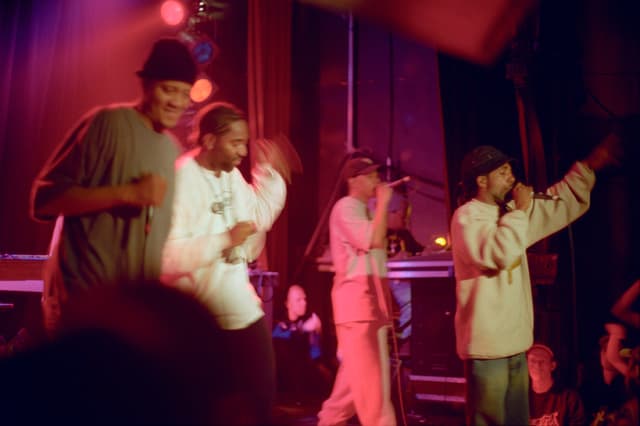
The four-MC configuration created a unique vocal texture. Rather than traditional verse-hook-verse structures, their songs often featured rapid-fire exchanges, tag-team delivery, and unified group chants that recalled early hip-hop crews. Chali 2na's baritone anchored tracks with a voice that sounded like it emerged from a different era entirely—deep, resonant, unmistakable. Around him, Akil, Zaakir, and Marc 7 wove complementary flows, each distinct but serving the collective vision. This wasn't competitive rap; it was collaborative composition.
Production-wise, they favored live instrumentation and organic textures. Bass lines bubbled, horns punctuated verses, and drum breaks felt crisp and unprocessed. The sound was deliberately retro but never derivative—they weren't imitating the Golden Age so much as extending its principles into contemporary contexts. Tracks maintained an upbeat energy even when addressing serious themes, creating music that moved bodies while engaging minds. The result was hip-hop that felt accessible without being simplistic, cerebral without being inaccessible.
From Underground Ciphers to Alternative Hip-Hop Ambassadors
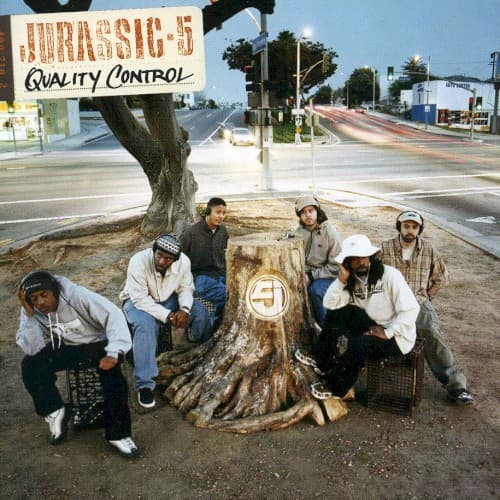
Jurassic 5's career arc traced the rise and eventual plateau of the alternative hip-hop movement itself. Their 1997 self-titled EP introduced their formula to a receptive underground audience, particularly the UK, where their sound aligned with the breakbeat and DJ culture flourishing there. The EP's success built anticipation for their 2000 full-length debut, Quality Control, which delivered on that promise. The album felt cohesive and purposeful, built around the interplay between DJs and MCs, featuring tracks that showcased their vocal gymnastics and the turntablists' vinyl manipulation skills.
Quality Control performed respectably without crossing into mainstream dominance, a fate that would define much of their trajectory. They occupied a sweet spot: too sophisticated for commercial radio, too accessible for underground purists. Tracks like "Concrete Schoolyard" became alternative hip-hop anthems, receiving MTV2 rotation and college radio support. The album demonstrated their ability to craft songs that honored hip-hop tradition while sounding fresh, avoiding the dusty nostalgia trap that ensnared some of their contemporaries.
Their sophomore effort, Power in Numbers (2002), expanded production palettes and featured higher-profile collaborations, but struggled to match the debut's cohesion. The music remained competent, the flows still intricate, yet something intangible had shifted—perhaps the cultural moment had moved, or perhaps the formula revealed its limitations. By 2006's Feedback, tensions within the group had become apparent. Cut Chemist departed before the album's release, removing one of their core architectural elements. The record reflected this instability, feeling more like solo tracks compiled than true collective work.
They disbanded in 2007, a casualty of creative exhaustion and the changing economics of independent hip-hop. The reunion came in 2013, sporadic touring rather than sustained creative output. Their recorded legacy remained frozen in that late-90s to mid-2000s window, a time capsule of alternative hip-hop's commercial peak before streaming fragmented listening habits and viral moments replaced album-oriented artistry.
Preserving Hip-Hop's Collaborative Spirit in an Era of Solo Stardom
Jurassic 5's legacy resides in demonstrating that hip-hop's collective spirit could survive in an industry increasingly oriented toward individual brands. In an era when Wu-Tang Clan's model pointed toward solo careers launched from group platforms, Jurassic 5 maintained democratic authorship. No member became a household name; the crew itself was the identity. This approach limited their commercial ceiling but preserved their artistic integrity.
They influenced the aesthetics and ethos of the backpack rap movement, providing a template for groups prioritizing craft over commercial appeal. Their impact appears in the DNA of later collectives who valued group chemistry and technical proficiency. The turntablist elements they championed helped preserve DJ culture as a creative force rather than just a functional role, showing younger audiences that scratching and beat-juggling remained vital art forms.
Culturally, they represented an alternative path for hip-hop during its most commercially explosive period. While Bad Boy and No Limit dominated charts with glossy production and street narratives, Jurassic 5 offered music that felt handcrafted, human-scaled, and connected to hip-hop's foundational values. They proved a viable audience existed for intelligent, positive-minded hip-hop that didn't preach or condescend. Their music became a gateway for listeners who might have been alienated by gangsta rap's dominance, expanding hip-hop's demographic reach without diluting its essence. The group's dissolution felt emblematic of the challenges facing alternative hip-hop in the digital age, but their catalog endures as evidence that collaboration, skill, and reverence for tradition can coexist with innovation.