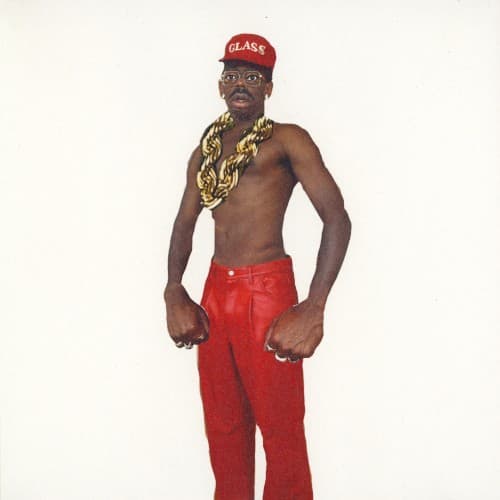
Style & Context
Influences
Caravaggio chiaroscuro, Kanye West minimalism, Francis Bacon isolation
Location
This Houston artist abandons his usual carnival maximalism for monastic restraint and introspection.
Visual Language
Dramatic spotlight photography isolates the subject in void space, building existential weight through absence.
Symbols
Upward reaching arms
The pose mirrors religious ecstasy and surrender, suggesting utopia requires letting go of control.
Shirtless vulnerability
Stripped bare of armor and artifice, the figure offers himself completely to transformation.
Falling object above
Something descends from the darkness — revelation, judgment, or the cost of ascension itself.
Where Sound Meets Image
The cover's stripped-down aesthetic mirrors UTOPIA's journey from darkness into psychedelic revelation. Where Astroworld's cover exploded with color and carnival energy, this void reflects the album's meditative intro tracks before building toward rage-filled catharsis. The upward reach visualizes the album's central tension — the gap between flawed reality and idealized fantasy. The falling object could represent the pills, codeine, and excess that fuel both the music's hedonism and its underlying anxiety about whether utopia is achievable or just another high.
This cover represents Travis Scott's conscious pivot toward artistic maturity after crisis. The rejection of his signature maximalism influenced how rappers approach comeback albums — favoring introspection over spectacle. The religious iconography adds to hip-hop's ongoing conversation with spirituality, joining Kendrick Lamar and Kanye West in framing redemption as visual narrative. The stark minimalism set a template for vulnerability as strength in an era when rappers increasingly use covers to signal personal transformation.