Style & Context
Influences
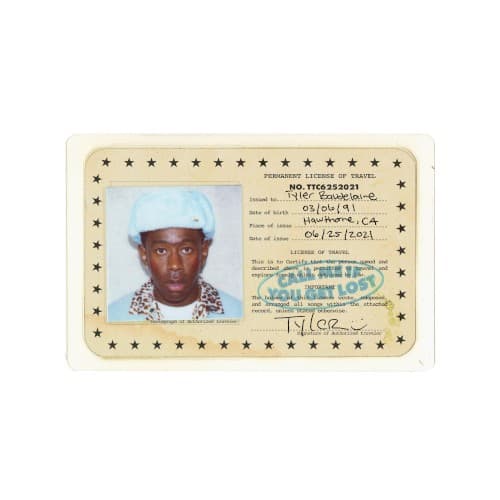
Soviet propaganda posters, vintage passport design, Wes Anderson's symmetrical framing
Location
This wasn't Ladera Heights or Hawthorne but a placeless international space that Tyler's success now afforded him.
Visual Language
The rigorous symmetry and bureaucratic typography clash intentionally with Tyler's expressive gaze and playful fabrication.
Symbols
Star border frame
The repeating stars reference luxury hotel ratings and American patriotic imagery, merging consumerism with national identity.
Passport photo format
The official ID structure mocks bureaucracy while claiming freedom to cross borders both literal and cultural.
Handwritten signature
Tyler's scrawled autograph humanizes the sterile document, asserting personal authorship over institutional control.
Where Sound Meets Image
The travel document mirrors the album's Gangsta Grillz format and globe-trotting production palette, from boom-bap to soul samples to jazz flourishes. Tyler raps as both tour guide and tourist, name-dropping foreign cities while DJ Drama provides the mixtape commentary that made Gangsta Grillz legendary. The bureaucratic aesthetic contrasts with the album's luxurious sonic texture, creating tension between paperwork drudgery and the freedom of wealth that defines tracks about yachts, passports, and romantic escapades.
The cover reinvigorated the fake-ID aesthetic in hip-hop visual culture, spawning countless fan-made travel documents and alternate personas across social media. It proved that post-Flower Boy Tyler could balance conceptual sophistication with accessible humor, influencing a wave of rappers who began using bureaucratic and institutional design language to comment on identity and status rather than just flexing wealth directly.