Style & Context
Influences
Richard Avedon minimalism, 1990s hip-hop portraiture, voguing culture, high fashion lookbooks
Location
Tyler moves beyond his Los Angeles roots into global dance floor territory with European influences.
Visual Language
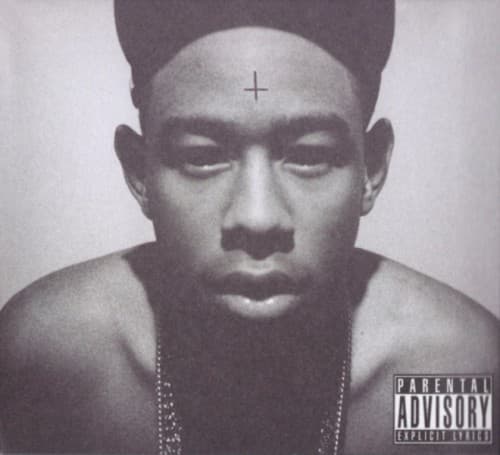
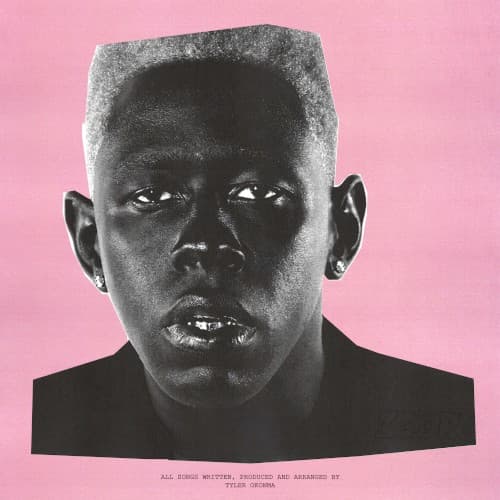
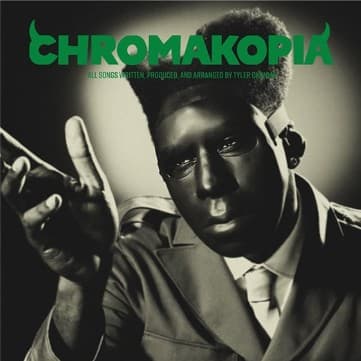
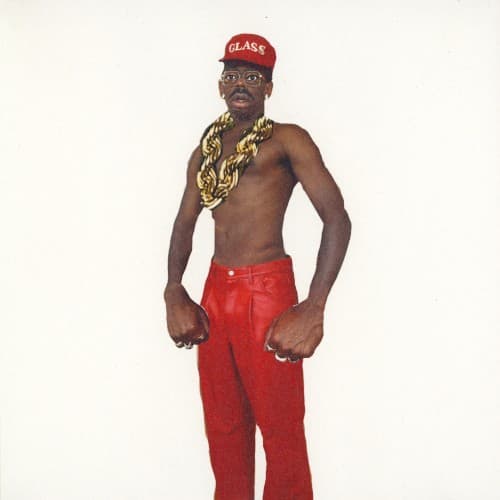
The direct gaze and centered composition borrow from fashion photography while maintaining hip-hop's confrontational stance.
Symbols
Red leather pants
The glossy red leather signals both luxury and club culture readiness for the dance floor.
'CLASS' cap
The word positioning above his face redefines class as confident self-expression rather than traditional elegance.
Multiple gold chains
Layered chains represent accumulated success while the shirtless pose shows he has nothing to hide.
Where Sound Meets Image
The cover's physicality mirrors the album's genres—bounce and dance-rap demand body movement, and Tyler presents his body as ready for that energy. The red leather and gold chains suggest club-ready glamour while maintaining hip-hop's status symbols. The title 'Don't Tap the Glass' takes on dual meaning here: don't interrupt the artistic vision, but also don't break the fourth wall between performer and audience. The stark simplicity lets the music do the talking, just as the white space lets Tyler's styling speak.
This cover continues Tyler's evolution from the deliberately ugly Goblin era to increasingly confident self-presentation. The minimal approach influenced by high fashion lookbooks shows how far hip-hop has moved from cluttered maximalism. By presenting himself as both vulnerable (shirtless) and powerful (chains, leather, direct gaze), Tyler models a new template for artists navigating dance music's physical genres. The absence of props or effects suggests the artist himself is the complete statement—a bold move in an era of digital maximalism.