The scorecard
4.7/10 · Weak
- Writing25%
- 4.5
- Production25%
- 6.0
- Delivery15%
- 5.5
- Cohesion15%
- 3.5
- Originality10%
- 3.0
- Replay value10%
- 4.0
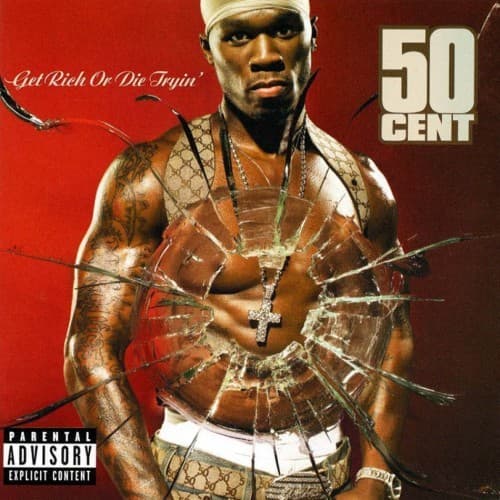
The threats are generic and the flexing is vague: most of the album recycles the same ten-year-old boasts about wealth and haters without the concrete detail that made Get Rich or Die Tryin' visual, though 'Irregular Heartbeat' threatens with the old menace.
Too many tracks sound like they were assembled to meet the weekly single deadline rather than shaped for impact: Jake One's spare drums on 'Hustler' hit and Dr. Dre gives 'Smoke' a slow-burn West Coast glide, but the rest is workmanlike.
The energy is half what it was in 2003 and most guest verses outshine him on his own album, though the smirking deadpan that defined Fifty's flow is still recognizable on 'Hold On' and 'Pilot'.
Releasing all eleven songs as singles before the album dropped destroyed any sense of sequence: the record plays like a Spotify playlist on shuffle, with no momentum between tracks and three bonus cuts that feel stapled on.
Animal Ambition offers nothing 50 Cent has not done better elsewhere: same subject matter, same cadences, same threats, all sounding more tired than the material on his 2003 debut.
Most of it fades on a second listen: a handful of tracks work in a playlist, but the album as a whole has no reason to exist once you have extracted 'Irregular Heartbeat' and 'Hustler'.
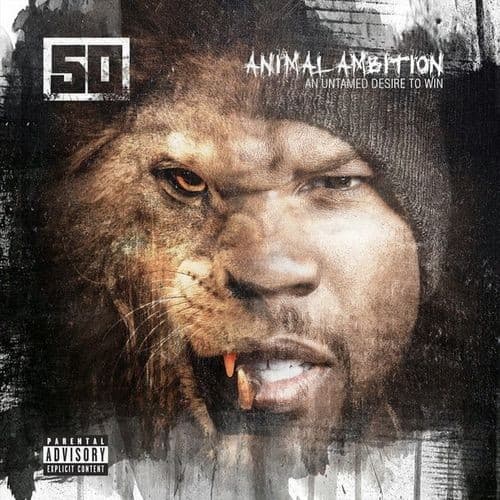
50 Cent Animal Ambition — The Rollout That Ate the Album
Animal Ambition arrives as a case study in how industry decisions can sink a record before it plays. 50 Cent released all eleven tracks as singles over twelve weeks in early 2014, each with a music video, each meant to sustain interest until the next drop. The strategy worked as marketing—he left Interscope after twelve years, signed to Caroline as an independent, debuted at number four on the Billboard 200—but it destroyed the album. By the time the full project landed in June, there was no album left to hear, just a pile of songs the audience had already sorted through.
The concept was prosperity and the paranoia it breeds, the jealousy and threats that arrive with success. Fifty described it as writing wealth from distorted angles, the way Biggie wrote about people trying to stick him for his paper. The idea had potential, but the execution is nowhere.
The songs do not build a thesis or explore the concept with any depth; they repeat the same defensive boasts about haters and money that Fifty has been making since 2003, only now the writing is vaguer and the delivery sounds like he is reading his old rhyme book out of obligation rather than hunger. What makes Animal Ambition worth examining is not the music but the miscalculation: a veteran rapper with nothing left to prove to a major label, trying to operate like an independent hustler, and winding up with a project that plays like a promotional campaign instead of a body of work.
The Sound of a Rollout Strategy, Not an Album
The production on Animal Ambition is assembled rather than crafted. Jake One gives one track spare, knocking drums that let Fifty's flow breathe, and Dr. Dre's work builds a slow, syrupy West Coast groove that recalls the sound Dre was pushing in the early 2010s. Those two tracks feel considered. The rest sound like beats pulled to meet a release schedule.
Frank Dukes produces with a looped soul sample and minimal drums; it works as a backdrop but does not push Fifty anywhere new. Charli Brown Beatz handles one track, and it has the low-end thump of a club record without the hook to justify it. Ky Miller gets additional production credits on five songs, which suggests a lot of these beats were assembled in pieces rather than built with a single vision.
The sequencing does not help. There is no arc, no sense that one song was meant to follow another. The opening stretch feels arbitrary, three different moods with no connective tissue. That is what happens when you release every song as a single: the tracklist becomes a formality, and the album loses any reason to be played front to back.
The guest spots are mixed. Jadakiss snaps on one track, delivering the kind of lived-in threat that Fifty used to own. Styles P and Prodigy bring gravity to their appearance, and their verses remind you what New York street rap sounded like when it still had specificity. Trey Songz adds a melodic hook, but the song does not need it—his presence feels like a concession to radio.
Kidd Kidd appears on three tracks and does not leave an impression on any of them.
Fifty's own writing is the weakest element. The concept was prosperity and its discontents, but he does not write it with the concrete imagery that would make the idea land. On the title track he raps about ambition and winning in broad strokes, never naming a specific decision or sacrifice. On another he talks about success attracting hate, but the hate is faceless and the success is described in clichés.
Compare that to Get Rich or Die Tryin', where every boast was tied to a lived detail—Fifty flipping work, getting shot, watching his enemies. Here the threats are generic, the flexing is vague, and the whole album feels like it was written to fulfill a content quota rather than to say something that mattered to him.
Fourteen Singles Do Not Make a Sequence
Animal Ambition has no pacing because it was never designed to be heard as an album. The standard edition runs eleven tracks; the deluxe adds three more. None of them earn their placement, and none of them build on what came before.
The opening stretch has no logic to the movement, no sense that these songs were meant to sit next to each other. The first track is mid-tempo with a workmanlike hook, then it jumps to a harder street record, then pivots to a motivational tone. There is no connective tissue between any of these shifts.
The middle sags. Two consecutive tracks are forgettable, and by the time the sung hook arrives later, the album has already lost momentum. The back half offers a late spark with posse cut energy and guest verses that give it weight, but it is buried at track eleven, where most listeners will have already tuned out.
The deluxe edition adds three tracks, but they feel like leftovers rather than essential additions. One was released as the first single three months before the album announcement, and it sounds like a standalone track rather than part of a concept. The sequencing problem is not just bad tracklist decisions; it is structural.
When you release every song as a single over twelve weeks, you train the audience to hear each track in isolation, and you eliminate any reason for them to care about the album as a whole. Animal Ambition never recovers from that self-inflicted wound.
Where It Ranks and Who It Is For
Animal Ambition is 50 Cent's weakest solo album, a step down from Get Rich or Die Tryin' in every measurable category: writing, production, cohesion, replay value. The 2003 debut scored an 8.0 because it had a thesis—hunger, survival, paranoia—and executed it with concrete storytelling and beats that elevated the rapping. Animal Ambition has a concept on paper but no execution, and the music sounds like it was made to meet a marketing timeline rather than to explore an idea.
The album debuted at number four and sold 46,000 copies in its first week, respectable numbers for an independent release in 2014, but the sales dropped hard in week two and the project disappeared. It has not aged well. The songs that work succeed because of the guests or the producers, not because of what Fifty brings. The rest is filler, and even the better tracks do not justify revisiting the album as a whole.
This is a record for completists and for students of how not to structure an album rollout. If you are a casual fan wondering whether Animal Ambition is worth your time, the answer is no. If you want to hear where Fifty was in 2014, start with a couple standout tracks, then go back to Get Rich or Die Tryin' to remember what he sounded like when he was hungry.
If you are interested in how an artist can sabotage his own project with a bad release strategy, Animal Ambition is a perfect example: a concept album that released every song as a single, a veteran rapper who sounded bored with his own material, and a rollout that mistook quantity for quality. The album is a missed opportunity, and it confirms that Fifty's best work is behind him.
Track by track
Track Listing
Hold On
SolidThe album opens with a mid-tempo soul loop and minimal drums, Fifty delivering the same unbothered tone he has used for fifteen years. The hook is functional but forgettable, and the verses rehash familiar themes about staying focused while others hate. Frank Dukes produces with a light touch, but the song does not build to anything, and by the second verse it is already repeating itself. A weak opener that sets the tone for an album with nothing urgent to say.
Don’t Worry ’Bout It
SolidFifty and Yo Gotti trade verses over a bass-heavy street beat from Charli Brown Beatz, both rappers threatening enemies and flexing money. Gotti's verse has more energy than anything Fifty delivers on the track, and the hook is a one-line repetition that does not justify its four-minute runtime. The production is solid but the rapping is lazy, and the song does not hold up past a first listen.
Animal Ambition
WeakThe title track attempts a motivational tone, Fifty rapping about ambition and drive over a Swiff D beat that sounds like a generic workout playlist cut. The writing is vague—lines about winning and grinding with no concrete images—and the delivery is flat. The song was released as the eleventh and final single, three days before the album dropped, which tells you how much confidence anyone had in it. Filler.
Pilot
StandoutProduced by Shamtrax with additional work from Ky Miller and Dot N Pro, 'Pilot' has the smirking charm of early Fifty: a conversational flow, a simple piano loop, and verses that sound like he is enjoying himself for the first time on the album. The writing is still surface-level, but the delivery has the ease that made him compelling in 2003. One of the few tracks that works on its own terms, though it does not add up to much.
Smoke
SolidDr. Dre produces with a slow, syrupy West Coast beat, and Trey Songz handles the melodic hook. The track has the polish of a radio single, and Dre's hand is audible in the mix and the spacing of the drums. Fifty's verses are competent but uninspired, and Songz's hook does not justify its prominence—he is singing over the track rather than serving it. The production is the only reason to revisit this one.
Everytime I Come Around
WeakKidd Kidd guests on a forgettable street record with a repetitive hook and no memorable lines from either rapper. Steve Alien produces with a minimal beat that does not give the song any identity, and by the halfway point it has already worn out its welcome. Skip.
Irregular Heartbeat
StandoutThe best song on the album, built on a tense, stripped-down beat from G Rocka and Medi. Jadakiss and Kidd Kidd guest, and Jadakiss steals the track with the kind of stone-faced threats and internal rhymes that Fifty used to deliver himself. Fifty holds his own here, rapping with more focus than anywhere else on the record, and the song captures the paranoia and menace that the album concept promised but mostly failed to deliver. The sequencing hurts it—'Irregular Heartbeat' is buried at track seven, after three forgettable songs, and most listeners will not make it this deep. This should have been the lead single.
Hustler
StandoutJake One produces with spare, knocking drums and a simple bassline, giving Fifty room to settle into a pocket. The verses are workmanlike—more talk about grinding and outlasting enemies—but the beat is strong enough to carry the track, and Fifty's flow sounds more natural here than on most of the album. A solid cut that works in a playlist but does not justify the album's existence.
Twisted
WeakMr. Probz guests on a midtempo track with a sung hook that does not fit the verses. The production from Capsvl, Just Hustle and Ky Miller is cluttered, and Fifty's writing is vague. The song was released as the tenth single, and it sounds like a leftover that was included to meet the content quota. Filler.
Winners Circle
WeakGuordan Banks sings the hook on a track about success and the hate it attracts, and Ky Miller produces with a clean, R&B-leaning beat. The song has no edge and no specificity—just broad statements about winning and staying focused—and the hook does not add anything. Forgettable.
Chase the Paper
StandoutThe posse cut energy lifts this track above most of the album. Prodigy, Kidd Kidd and Styles P trade verses over a Ty Fyffe beat with additional work from Ky Miller, and all three guests outrap Fifty. Prodigy delivers the best verse, bringing the lived-in detail and gravity that the album needed more of, and Styles P adds weight to the closer. The production is solid and the guest spots justify the four-minute runtime. A strong late-album moment, though it cannot save the record.
The Funeral
SolidThe first single, released in February 2014, three months before the album was even announced. Jake One produces with a haunting piano loop and minimal drums, and Fifty raps about outlasting his enemies and watching them fall. The writing is better than most of the album—more concrete images, more focus—but the song feels like a standalone single rather than part of a concept. Solid, but it does not fit the tracklist.
You Know
WeakA low-energy deluxe edition bonus track with a repetitive hook and no standout moments. Soul Professa produces with a forgettable beat, and Fifty sounds bored. Skip.
Flip on You
SolidSchoolboy Q guests on the final deluxe track, and his verse is the only reason to play it. The production from Nascent, QB and Ky Miller is competent but unremarkable, and Fifty's verses are more of the same vague threats and boasts. Q brings energy and specificity that the album needed more of, but one good guest verse does not justify adding this to the tracklist.