The scorecard
5.5/10 · Mixed
- Writing25%
- 6.0
- Production25%
- 5.5
- Delivery15%
- 7.0
- Cohesion15%
- 4.5
- Originality10%
- 4.0
- Replay value10%
- 5.0
Chuck D's righteous anger remains vivid but the sloganeering overwhelms the specificity that made the Bomb Squad era dangerous
Beats alternate between digital funk that recalls the classic sound and flat loops that sound like they were assembled rather than built
Chuck's voice still commands every room he enters and carries conviction that the writing sometimes lacks
Two intermissions and fifteen tracks for an album with perhaps nine tracks worth of ideas stretches the running time past the point of discipline
Tries to recapture 1989 with 2005 tools but the formula itself had been better executed by younger groups by this point
The energy carries the first listen but the shortage of actual hooks and the meandering tracklist make the second pass feel longer than it should
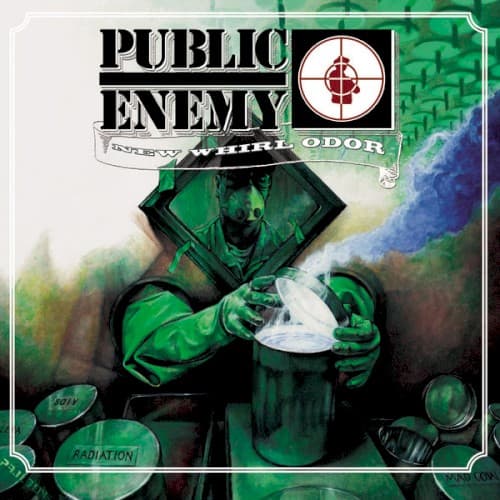
Public Enemy New Whirl Odor — When Shouting Stopped Being Enough
The title is a pun and the pun tells you the problem: Public Enemy spent two decades warning about the New World Order and by 2005 the warning had calcified into a catchphrase. New Whirl Odor arrived seventeen years after It Takes a Nation of Millions to Hold Us Back with the same righteous fury and roughly a third of the discipline. Chuck D still sounds like he could break down a wall but the walls he is pointing at keep shifting from track to track and the album never settles on which one matters most. The war in Iraq gets a mention, corporate media gets a mention, apathy gets a mention, and by track nine you realize the hectoring has replaced the argument.
This is Public Enemy without the Bomb Squad and without the density that made the noise feel necessary. The production credits are scattered and the beats sound like it: some tracks recall the layered chaos that made Terminator X and Hank Shocklee dangerous and others sound like beats pulled from a folder marked "digital funk." The fury is real but fury alone had stopped being enough by the mid-nineties and nothing here makes the case that the group figured out what comes after fury. The album works in flashes when Chuck lands on a concrete image or a producer finds a pocket but those flashes are surrounded by filler and slogans that could have appeared on any Public Enemy album from any year. It is not embarrassing and it is not phoned in but it is not essential and the gap between those two things is the story of the album.
The Machine Still Works But the Blueprint Faded
Chuck D remains one of the most commanding voices in the genre and that voice does most of the work here. His delivery has not softened and his conviction has not wavered: when he barks a line about questioning your media diet on Check What Ya Listenin' To or builds a chant on Put Yo Hands in the Air the authority is instant. The problem is not the performance but the writing underneath it. Where Nation of Millions landed specific images and Apocalypse 91 built arguments track by track, New Whirl Odor trades in broad declarations that assume agreement rather than earn it. The title track throws punches in every direction without a clear target and So What Ya Sayin' repeats the phrase enough times that it stops sounding like a question and starts sounding like a placeholder.
The production is inconsistent in a way that suggests the album was assembled rather than composed. A handful of tracks build on the dense sample collages that defined the Bomb Squad era: Bring That Beat Back layers horns and breaks into something that moves and Makes Ya Blind finds a groove that supports the rapping instead of just sitting behind it. But too many beats sound flat and digital in the wrong way, loops that cycle without building tension or swing. The Revolution Rocks On aims for an anthem and lands on a mid-tempo chug that never catches fire. Get Down has energy but the hook is just the title repeated and the verse never justifies the repetition.
The guest work is minimal and the album suffers for it. Flavor Flav appears in reduced capacity and the absence of a true foil leaves Chuck shouting into empty space for long stretches. The Moby collaboration mentioned in the fact sheet does not appear on this tracklist which suggests either alternate versions or a mismatch between the Wikipedia entry and the final release. What remains is Chuck carrying fifteen tracks with conviction and a handful of producers who understand the assignment and a handful who do not. The peaks are real but they are brief and the valleys are too long to skip.
Fifteen Tracks and Two Intermissions That Nobody Asked For
The album runs fifteen tracks deep with two intermissions and the pacing collapses under that weight. The intermissions break up the sequencing without adding anything and their presence makes the whole project feel padded. The strongest stretch comes early when the opening establishes the energy and the argument before the album starts to meander. By the closing track the initial momentum is long gone and it offers no resolution, just another declaration that Public Enemy is still here.
The middle sags badly. Several tracks occupy space without justifying their existence and the transitions feel arbitrary rather than deliberate. One late arrival is ironic in title because by that point the album has already said the same thing six different ways. The sequencing needed an editor willing to cut the album to ten or eleven tracks and let the best moments breathe. Instead the group chose to include everything and the result is an album that feels longer than its runtime and less focused than its thesis required. The peaks are high enough to remind you why Public Enemy mattered but they are surrounded by filler that makes the whole thing feel like an effort to recapture the past rather than build something new.
A Victory Lap That Forgot to End at the Finish Line
New Whirl Odor ranks well below It Takes a Nation of Millions to Hold Us Back and below the string of essential albums Public Enemy released between 1988 and 1991. It is a functional political rap album from a group that once defined the category but it does not make a case for why anyone outside the existing fanbase needed to hear it in 2005. The production is too uneven and the writing is too reliant on slogans that had been sharper elsewhere. Chuck D sounds as vital as ever but vitality without new ideas is just nostalgia with better breath control.
This is for completists and for listeners who want to hear what Public Enemy sounded like in the mid-2000s when the industry had moved on and the group had not. If you are new to Public Enemy start with It Takes a Nation of Millions and do not look past Fear of a Black Planet until you have worn both of those out. If you already know those records and want to hear where the group landed fifteen years later start with Bring That Beat Back and the title track to see the sound at its best here, then decide whether the rest is worth your time. The album has aged into a footnote: a reminder that even the most important voices eventually run out of new things to say. For the next album to hear try The Roots' Game Theory from the same year for political rap that found new forms, or reach back to Disposable Arts by Masta Ace for what conscious East Coast hip-hop sounded like when it still had somewhere to go.
Track by track
Track Listing
Intro
SolidA brief scene-setter that establishes the tone without overstaying its welcome or saying much of substance.
New Whirl Odor
StandoutThe title track opens with the energy the album needs and Chuck sounds fully engaged, barking over a beat that recalls the chaotic sample layering of the Bomb Squad era without quite matching the density. The pun in the title is obvious but the verse at least tries to build an argument about media saturation and manufactured consent instead of just repeating the phrase. The production keeps the energy high enough that the lack of a real hook does not sink it and the track works as a statement of intent even if the intent is backwards-looking. This is New Whirl Odor at its best: Chuck commanding the track with a beat that mostly supports him and writing that gestures toward specificity without quite landing there.
Bring That Beat Back
StandoutThe best pure beat on the album, a looping horn sample and break that actually swings and gives Chuck room to build momentum. The writing is still broad but the energy is undeniable and the call to bring the beat back feels earned rather than hollow. This is what the whole album should have sounded like: dense enough to recall the classics without trying to be a cover version. The track holds up on repeat and works as both a mission statement and a reminder that Public Enemy could still build a proper song when the production was there.
Intermission One
WeakA pointless break in the sequencing that adds nothing and makes the album feel padded.
Put Yo Hands in the Air
WeakA mid-tempo chant that aims for the participatory energy of a live show but lands flat on record. The hook is just the title repeated and the verse never builds enough specificity to justify the repetition. Chuck sounds committed but the beat is too thin and the writing is too generic for the track to work as anything other than filler. Skip it.
Questions
WeakBuilt around a question-and-answer structure that quickly becomes repetitive. The beat is serviceable but unremarkable and the writing never sharpens the questions into anything that sticks. By the second verse the format feels like a gimmick and by the end of the track it feels like wasted time. Not offensively bad but completely skippable.
Makes Ya Blind
StandoutA solid groove finally gives Chuck a foundation to work with and he responds with one of the sharper verses on the album, targeting willful ignorance with more specificity than most of the surrounding tracks manage. The beat has swing and the hook is functional without being memorable. This is the kind of solid album track that a tighter version of New Whirl Odor would have been built from: good enough to hold your attention, not quite strong enough to be a highlight, but miles better than the filler that surrounds it.
Look It Here
WeakA flat beat and a wandering verse that never settles on what it wants to say. Chuck sounds engaged but the writing is too scattershot and the production is too lifeless for the track to justify its existence. Filler.
Get Down
SolidAims for a club-ready banger and lands somewhere in the middle, with energy that never quite ignites and a hook that is just the title shouted over a loop. The beat has potential but the repetition wears thin quickly and the verse does not add enough to make up for the weak foundation. Not terrible but not memorable.
The Revolution Rocks On
WeakThe title promises an anthem and the track delivers a mid-tempo chug that never builds the momentum it needs. Chuck sounds committed but the beat is too plodding and the hook is too vague for the song to work as the rallying cry it wants to be. By the time the track ends you have forgotten it already.
Check What Ya Listenin' To
StandoutA pointed critique of corporate radio and manufactured tastes that lands some real punches, with Chuck in full preacher mode over a beat that finally matches his intensity. The writing is sharper here than on most of the album and the argument is specific enough to feel lived-in rather than theoretical. The hook is repetitive but the verses earn it and the track works as one of the few moments where the fury and the focus align. This is what Public Enemy still did better than most: righteous anger delivered with enough precision to cut.
Somethin' to Say
WeakArrives late in the tracklist with nothing new to add. The beat is fine and Chuck sounds fine but the writing is generic and the track feels like it was included to reach a target length rather than because it had a reason to exist. Skippable.
So What Ya Sayin'
WeakBuilt around a phrase repeated so many times it loses all meaning. The beat is thin and the verse never develops the central question into an actual argument. By the end of the track the title feels like a taunt aimed at the listener rather than a provocation aimed at the subject and not in a way that works.
Intermission Two
WeakAnother pointless interlude that breaks the flow without adding anything. The album would be better if both intermissions were cut entirely.
Back in the Building
WeakThe closer arrives with no sense of closure, just another declaration that Public Enemy is still here and still fighting. The beat is unremarkable and the writing is too reliant on slogans to land as a final statement. The track does not resolve the album or build toward anything and it ends the record on a shrug rather than an exclamation point. A wasted opportunity to tie the project together.
![[untitled] by Nas album cover](/_next/image?url=https%3A%2F%2Fv8ewju5eansilllx.public.blob.vercel-storage.com%2Fcovers%2Fnas-untitled.jpg&w=640&q=75)