The scorecard
7.2/10 · Good
- Writing25%
- 7.5
- Production25%
- 8.0
- Delivery15%
- 6.5
- Cohesion15%
- 7.0
- Originality10%
- 6.0
- Replay value10%
- 7.0
The group addresses spirituality, media scrutiny and internal conflicts with layered wordplay, though paranoia sometimes clouds the messaging
The Ummah crafts a stripped-down, Low End Theory-style minimalism that serves the darker tone, with Jay Dee's five beats bringing fresh textures
Q-Tip and Phife sound noticeably weary and tense, a shift from their usual chemistry that drains energy even as it fits the album's mood
The album sags in the middle stretch with too many short interludes disrupting the flow, though the front-loaded opening run establishes a clear vision
The approach pulls from The Low End Theory's blueprint with minimalist production that recalls rather than reinvents their sound
1nce Again and Stressed Out reward repeat listens, but the album's gloom and uneven pacing make full runs feel longer than necessary
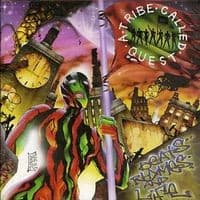
A Tribe Called Quest Beats, Rhymes and Life — When the Chemistry Died
The first sign that something has shifted arrives in the opening seconds of Phony Rappers: the beat is spare, almost skeletal, and when Q-Tip and Phife start trading verses they sound less like partners finishing each other's thoughts than two people talking past each other in the same room. Three years after Midnight Marauders turned the group into consensus builders, Beats, Rhymes and Life debuted at number one on the Billboard 200 in July 1996 and went platinum, but the joyful momentum was gone. Phife had moved to Atlanta after the last album wrapped, Q-Tip had converted to Islam and brought a new seriousness to the sessions, and the production team had expanded to include Jay Dee, who sent beats from Detroit that Q-Tip would lay without the old collaborative process. The result is the group's darkest album, a record that replaces the warmth of the first three with fatigue, defensiveness and the sound of a collective coming apart.
The thesis here is that Beats, Rhymes and Life is a better album than its reputation suggests, but only if you accept that it is a different kind of Tribe record. The Ummah's minimalist production, inspired by The Low End Theory's stripped-down aesthetic, gives the group space to address media scrutiny, spiritual searching and industry politics with more complexity than before. The writing is layered and the best tracks hold up against anything in the catalog. The problem is that the group sounds tired of each other. The interplay that made Midnight Marauders effortless now feels forced, and the album sags under the weight of too many short interludes and too much unresolved tension. It ranks fourth in the catalog, ahead of only The Love Movement, because the peaks are real but the whole never coheres the way the early albums did.
The Ummah's Spare Frames and the Weight They Carry
The Ummah, the production trio of Q-Tip, Ali Shaheed Muhammad and Jay Dee, built Beats, Rhymes and Life around a minimalist sound that Ali Shaheed Muhammad described as nothing extravagant or far out. The approach recalls The Low End Theory's jazz-sample economy, but where that album felt loose and exploratory, this one is tight and claustrophobic. The bass lines are deep, the drums hit hard, and the samples are used as instruments rather than decoration, a technique that gives tracks like The Pressure and Mind Power a hypnotic pull. Jay Dee contributed five beats, sending them from Detroit for Q-Tip to build around, and his contributions, including the lead single 1nce Again, bring a different texture: choppier, more percussive, less immediately warm. The production holds the album together even when the rapping does not.
The writing addresses everything from the O.J. Simpson trial to spirituality, and the group handles the range with more subtlety than they are sometimes credited for. On Keeping It Moving, Q-Tip responds to diss tracks from MC Hammer and Westside Connection, clarifying that his past comments about the West Coast were misinterpreted and not intended as shots. The verse is measured and specific, a defense that does not escalate. Elsewhere, the lyrics turn inward: Phife reflects on his return to the group after time away, Q-Tip wrestles with his new faith and the responsibilities it brings, and both MCs sound wary of the industry machinery around them.
The problem is that the wariness sometimes curdles into paranoia. Critics at the time called the group confused, hostile and occasionally bored, and the charge is not unfair. The wordplay is still sharp, but the energy that used to animate it has drained out.
Delivery is where the cracks show most clearly. Phife and Q-Tip still trade verses with precision, but the chemistry that made them sound like one voice split in two is missing. They sound like two people who used to finish each other's sentences and now just want to get their own lines out. Guest appearances from Consequence and features from Tammy Lucas and Faith Evans add color, but they also underline the absence of the old interplay. The group's usual playfulness is replaced by a grinding determination to prove something, and the effort shows. The fatigue is part of the album's identity, a feature rather than a bug, but it makes for a less inviting listen than anything that came before.
An Album That Peaks Early and Struggles to Earn Its Length
Beats, Rhymes and Life front-loads its best material and then struggles to maintain momentum across its back half. The opening run establishes the album's darker tone and highlights the production's strengths, but the middle stretch sags under the weight of short interludes that disrupt the flow without adding much. Two brief tracks run under two minutes each, and while both serve a purpose as breathers, they fragment the album rather than hold it together. By the time the later material arrives, the record feels longer than its forty-nine minutes.
The sequencing choices reflect a group that could not quite settle on a vision. The album oscillates between introspective tracks that demand close listening and more straightforward bangers that recall the earlier records, but the shifts feel abrupt rather than dynamic. The pacing never finds a groove, and the listener is left waiting for a second wind that never fully arrives. The middle section provides a jolt of energy with its R&B crossover appeal, but it sits oddly against the grimmer material around it. The album closes with a brooding track that offers no resolution, just a fade into exhaustion. It is an honest ending, but not a satisfying one. The length is not excessive by mid-nineties standards, but the album does not earn every minute the way Midnight Marauders did.
A Necessary Pivot That Could Not Save the Group
Beats, Rhymes and Life ranks fourth in A Tribe Called Quest's catalog, a clear step down from The Low End Theory and Midnight Marauders but more ambitious and successful than The Love Movement would be two years later. It is the sound of a group trying to grow up in public while the internal chemistry dissolves, and the tension produces some of the most interesting writing of their career alongside some of the least enjoyable listening. The album is for fans who want to hear Tribe grapple with doubt and disillusionment rather than coast on their established sound, and it should be skipped by anyone looking for the effortless interplay of the early records. New listeners should start with 1nce Again, Stressed Out and The Pressure to hear the album's range, then decide whether the darker tone justifies the slog.
The album has aged better than its initial reception suggested. The minimalist production influenced a generation of underground producers, and the willingness to trade joy for complexity reads as honesty rather than miscalculation two decades later. For context, listeners should follow this with The Love Movement to hear the group attempt one more reconciliation, or backtrack to Midnight Marauders to remember what the chemistry sounded like when it was still alive. Beats, Rhymes and Life is not the album fans wanted in 1996, but it is the album the group needed to make, a document of fracture that at least had the integrity not to pretend otherwise.
Track by track
Track Listing
Phony Rappers
SolidThe album opens with a declaration of intent: a stripped-down beat and verses that call out inauthenticity in the industry without naming names. Q-Tip and Phife trade lines about rappers who front for the cameras, and the writing is sharp, but the interplay already sounds more mechanical than inspired. The production sets the minimalist template for the album, with a deep bass line and sparse drums that leave room for the vocals. It establishes the darker tone immediately, a sharp turn from the warmth of Midnight Marauders, and makes clear that this will not be a victory lap.
Get a Hold
SolidThe Ummah's production here is hypnotic, built around a looped sample that feels like it is circling the same point without resolution. The verses address the need for self-control and focus in a chaotic industry, and the messaging is solid if not particularly memorable. The track works as a mood-setter but does not offer much to return to on its own. It is competent album filler that serves the sequencing without demanding close attention.
Motivators
StandoutPhife and Q-Tip reflect on the people and experiences that pushed them forward, and the writing has moments of real specificity. The beat is understated, letting the verses breathe, and the track feels like an extension of the introspection that has been building since the opener. The energy is still low, but the content justifies the subdued delivery. It is a solid album track that rewards attentive listening without announcing itself as a standout.
Jam
StandoutOne of the album's highlights, praised by Robert Christgau among others, Jam features a looser, more playful energy than most of the surrounding material. The production has a swing to it, and the verses feel less burdened by the weight of the album's themes. Phife and Q-Tip sound closer to their old selves here, trading lines with a hint of the chemistry that defined the early records. It is a brief reminder of what the group could still do when they stepped out of their own way, and it stands as one of the few moments where the album exhales.
Crew
SolidA short interlude that barely clears two minutes. It serves as a breather but disrupts the album's momentum rather than building it.
The Pressure
SolidThe title track addresses the scrutiny and expectations that come with success, and both MCs sound genuinely weighed down by it. The production is minimal even by this album's standards, just a skeletal beat and a murmuring bass line, and the starkness amplifies the paranoia in the lyrics. The verses describe feeling watched and misunderstood, and while the writing is strong, the track's relentless grimness makes it a tough listen. It is effective as a document of where the group's collective headspace was in 1996, but it offers little relief or resolution.
1nce Again
StandoutThe lead single and the album's most successful crossover moment, 1nce Again features a guest vocal from Tammy Lucas and a Jay Dee beat that chops samples into percussive hits. The production is brighter and more textured than anything else on the record, and the R&B-leaning hook gives the track commercial appeal without compromising the group's identity. Q-Tip and Phife both deliver strong verses, and the track's relative warmth makes it an obvious standout. It was hailed as one of the few successes on the album at the time, and it remains the most accessible entry point for listeners wary of the darker material.
Mind Power
StandoutThe group turns inward again, addressing mental discipline and the effort required to stay focused in a draining industry. The beat is meditative, built around a repeating loop that mirrors the theme of concentration, and the verses are thoughtful without being preachy. It is a well-executed album track that deepens the introspective thread running through the record, though it does not offer much hook or replay value. The writing is solid, but the delivery remains weary.
The Hop
StandoutProduced by Rashad Smith rather than The Ummah, The Hop shifts the sonic palette slightly with a beat that has more bounce and swing than most of the surrounding tracks. The verses are playful, closer in spirit to the group's earlier work, and the change in production brings a welcome shift in energy. Robert Christgau highlighted it as a standout, and it earns the recognition by offering a moment of levity in an otherwise heavy album. It is one of the few tracks that feels like it could have fit on Midnight Marauders without revision.
Keeping It Moving
StandoutQ-Tip uses the first verse to address diss comments from MC Hammer and Westside Connection, clarifying that his past remarks about the West Coast were not intended as shots and should not be misinterpreted. The response is measured and specific, a rare moment of direct engagement with the group's critics, and it shows the writing at its most focused. The production is understated, letting the verses carry the track, and the whole thing feels like necessary business handled with professionalism. It is not flashy, but it is one of the album's most effective moments.
Baby Phife’s Return
SolidPhife reflects on his time away from the group and his return to the fold, and the verses convey both confidence and unease. The production is solid but unremarkable, and the track serves more as a statement of presence than a musical standout. It addresses the internal dynamics without resolving them, and the result is a track that documents a moment without transcending it. It is competent but not essential.
Separate/Together
SolidAnother brief interlude that barely exceeds ninety seconds. It fragments the album's flow without adding enough to justify the interruption.
What Really Goes On
SolidThe group addresses the gap between public perception and private reality, a theme that has been building throughout the album. The verses are pointed, calling out the media and industry figures who profit from distortion, and the writing is sharp. The production stays minimal, and the track works as a piece of the album's larger argument even if it does not stand out on its own. It is solid but unremarkable, another entry in the record's ongoing self-examination.
Word Play
SolidA showcase for the group's technical skill, Word Play focuses on rhyme craft and lyrical dexterity without much thematic weight. The verses are well-constructed, full of internal rhymes and wordplay that demonstrate the MCs' abilities, but the track feels like a demonstration rather than a statement. It is the kind of track that earns respect without inspiring much emotional response, and it serves as a reminder that the group's skills were never in question even when the chemistry was.
Stressed Out
StandoutThe album closes with its second-longest track, a collaboration with Faith Evans that leans into the exhaustion and disillusionment that have defined the record. The production is somber, built around a slow groove and a melancholy loop, and Faith Evans' hook reinforces the sense of weariness. Q-Tip and Phife both deliver introspective verses about the toll of fame and the effort required to keep moving forward, and the writing is some of the album's most honest. It is a fitting closer for a record that refuses to offer easy answers, but it leaves the listener drained rather than resolved. The track rewards repeat listens for its craft, but it is not an easy or uplifting experience.