The scorecard
8.3/10 · Great
- Writing25%
- 8.5
- Production25%
- 9.0
- Delivery15%
- 8.0
- Cohesion15%
- 7.5
- Originality10%
- 7.5
- Replay value10%
- 8.0
Sharp political commentary and introspective verse work across most tracks, though the final third loses some thematic precision
Q-Tip's analog equipment and sample choices create a warm, layered sound that honors the group's jazz-rap foundation while incorporating R&B and rock textures
Phife's presence elevates every track he appears on; guest verses from Kendrick and André 3000 are excellent, but Jarobi's contributions are less consistent
Strong first half with clear thematic focus on race and resistance, but the album's 16-track length introduces some drift in the final third
Updates the Tribe sound with contemporary production techniques without abandoning their aesthetic, though it follows rather than leads the political rap of the 2010s
The emotional weight of Phife's final performances and the craft in the production reward repeated listens, though the sixteen-track length becomes more noticeable over time.
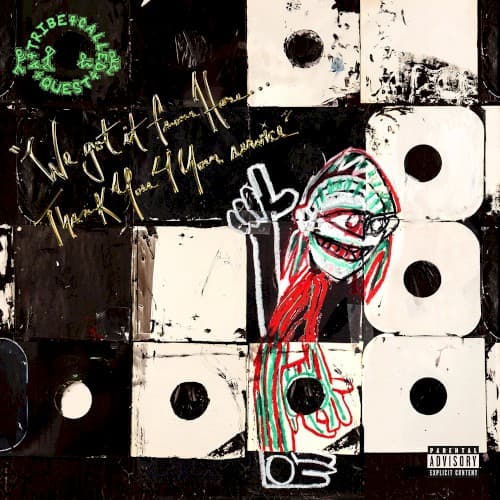
A Tribe Called Quest We Got It From Here — The Album They Earned the Right Not to Make
Eighteen years is long enough to let a legacy rest. A Tribe Called Quest closed the nineties with The Love Movement, an album that sounded tired and admitted as much, then split under the weight of internal friction that most reunions never survive. What makes We Got It From Here standout is not that they came back, but that they came back with something to say that justified the effort. This is an album about what it means to be black in America in 2016, recorded in Q-Tip's New Jersey studio while Phife Dawg flew in from California between dialysis treatments, and it refuses to pretend the eighteen-year gap did not happen.
The first two tracks alone make the thesis clear: gentrification on one side, the election-year ugliness that became the Trump presidency on the other, both addressed with the clarity that comes from watching the cycle repeat. The album is a reclamation of the space Tribe carved in the early nineties and a reminder that conscious rap does not require detachment. Q-Tip and Phife sound charged, not nostalgic, and the production builds on the jazz-rap foundation without retreating into it.
The stakes here are personal in a way The Love Movement never managed: Phife died two months after finishing his vocals, making this both a return and a farewell. The question is whether the album can hold together across sixteen tracks and whether it earns a place in the catalog above the decent but unfocused closer they released in 1998.
The Warm Crackle of Expensive Preamps and Borrowed Stooges Energy
Q-Tip produced the entire album at his home studio using analog equipment that once belonged to Jimi Hendrix, Blondie and Frank Zappa, and the result sounds like what it cost: warm, wide and tactile in a way that digital recordings from the same year do not. The production honors the group's jazz-rap past without imitating it. There are still samples from Can and Gentle Giant, still bass lines that move like conversational asides, but the palette has expanded to include rock grit and soul smoothness that pulls more from the 2000s than the nineties.
Q-Tip has said he drew inspiration from Iggy Pop and the Stooges during the sessions, and you can hear it in the churn underneath the album's second track, which samples Black Sabbath, and in the live-band feel that punches harder than anything on The Love Movement. Jack White and Elton John contribute to a track where live instrumentation drives the energy forward.
The writing is direct and political in ways the group avoided on their earlier records. The opening track uses NASA as a metaphor for gentrification and calls for minority unity without the vagueness that sinks message rap. The second track confronts anti-immigrant and anti-Muslim rhetoric head-on, structured as a list of taunts that doubles as documentation. Another early cut critiques the shallowness of contemporary culture and name-checks social media by implication.
These are not subtle songs, and they are stronger for it.
Phife's presence sharpens every track he appears on; his verses on the album's political tracks have the competitive edge that made The Low End Theory work, and his final performance feels like someone who knew he was running out of time. The guest verses are carefully chosen: Kendrick Lamar delivers one of his best features of the decade, and André 3000 brings the melodic experimentation that keeps the album from feeling like a period piece.
The weaknesses show up in the album's length and in the uneven contributions from Jarobi White, who appears on eight tracks but rarely adds what Phife does. Some of the later tracks feel like mood pieces that do not justify their runtime. The sequencing front-loads the album's strongest material, which makes the second half feel like a slower burn than it needs to be.
Sixteen Tracks When Twelve Would Have Made the Case
The album earns its runtime for the first ten tracks, where the pacing alternates between sharp political commentary and introspective moments without losing momentum. The opening stretch sets the tone immediately, the middle section arrives when things could have sagged, and the transitions between production experiments feel deliberate.
The problem is that sixteen tracks is a lot to ask when the thesis has already been argued by track nine. Sung interludes introduce moments that do not lead anywhere, and late-album features arrive too late to change the shape. The sequencing also separates Phife's appearances unevenly: he is all over the first half, absent for long stretches in the middle, then returns for the closing run. That structure makes sense as a reflection of the recording process, where Phife's health limited his time in the studio, but it creates an imbalance that the album never fully addresses.
The peaks are high enough to carry the length: the posse cuts rank among the best Tribe has recorded, and Q-Tip's solo performances build into some of his most confident work. But the album would have been tighter at twelve tracks.
Where the Catalog Stands When the Last Album Is Also One of the Best
We Got It From Here ranks second in the Tribe catalog, behind The Low End Theory and ahead of Midnight Marauders. It does not have the concision or the youthful hunger of the early nineties records, but it has something those albums did not need: the perspective that comes from watching the culture shift and deciding you still have a stake in it. This is an album for anyone who thought Tribe's best work was behind them and for anyone who needs proof that political rap can be specific without being preachy.
It is not for listeners who want the boom-bap of 1991 recreated; the production here is warmer and more layered, closer to Q-Tip's 2008 solo work than to the stripped-down sound of the group's early records. Start with the opening three tracks. If those work, the rest of the album will earn the time.
Skip it if you are looking for nostalgia or if sixteen tracks feels like too much commitment for a comeback. For next listens, go back to The Low End Theory to hear where the foundation was laid, or try Kendrick Lamar's To Pimp a Butterfly for another album from the 2010s that treats political commentary as craft rather than sloganeering. We Got It From Here is the album Tribe earned the right not to make, and the fact that they made it anyway, under the circumstances they did, is the reason it belongs in the catalog.
Track by track
Track Listing
The Space Program
StandoutOpens the album with a gentrification metaphor that names the problem without overexplaining it. Q-Tip and Phife trade verses over a beat built from samples of Willie Dynamite and Willy Wonka, and the juxtaposition works: smooth soul textures underneath verses that describe displacement and call for minority solidarity. Phife's verse about being priced out and pushed aside is specific enough to feel lived-in, and the hook about space programs for people who cannot afford rent in their own neighborhoods makes the metaphor land. The production has the warmth and width that defines the rest of the album. This is the thesis statement, and it works as an album opener because it sets the stakes immediately.
We the People…
StandoutThe most direct political track Tribe has ever recorded, structured as a list of anti-immigrant and anti-Muslim taunts that document the rhetoric of the 2016 election cycle. The Black Sabbath sample gives it a trudging, ominous feel that matches the content, and Q-Tip and Phife deliver the verses with the kind of controlled anger that does not need to shout. The hook is a chant that could have felt heavy-handed but instead feels like the point: this is what was being said, and here is the record of it. The track has aged well because it was never subtle to begin with.
Whateva Will Be
SolidA looser, more conversational track that brings in Consequence and Jarobi for a posse cut about moving forward despite the obstacles. The Nairobi Sisters sample gives it a buoyant, mid-tempo feel that contrasts with the heavier opening tracks. The verses are solid but not essential, and the track functions more as a breather than a statement. Phife's verse about dealing with health issues and still showing up is the high point.
Solid Wall of Sound
StandoutThe best posse cut on the album and one of the best tracks Tribe has recorded in any era. Jack White and Elton John both contribute, the Bennie and the Jets sample is flipped into something harder and more percussive than the original, and Busta Rhymes delivers a verse that reminds you why he was always the group's most frequent collaborator. Phife and Q-Tip both sound hungry here, and the energy does not let up for the entire three minutes and forty-three seconds. This is the sound of a group remembering what they do best and then doing it better than they have in years.
Dis Generation
StandoutA critique of shallow contemporary culture that name-checks social media, reality TV and the attention economy without sounding like a lecture. The Musical Youth sample and the Busta Rhymes feature give it a playful energy that keeps the message from feeling preachy, and Phife's verse about preferring substance over trends is specific enough to avoid cliché. Jarobi's contribution is the weakest link here, but the track holds together because the production and the hook are strong.
Kids…
StandoutAndré 3000's feature is the centerpiece, a melodic, free-associative verse about childhood, memory and the ways adults fail the next generation. Q-Tip's production is stripped-down and spacious, giving André room to experiment with cadence and phrasing in ways that would have cluttered a busier beat. Q-Tip's own verse is more straightforward and less memorable, but the track works because it hands the spotlight to someone who uses it well. This is one of the album's more introspective moments, and it earns its place in the sequencing.
Melatonin
SolidA sung interlude with contributions from Ambrosius and Abbey Smith that feels like a detour. The production is pretty and the vocal performances are fine, but the track does not serve the album's larger argument and it arrives at a point where the momentum is starting to dip. It is not actively bad, just unnecessary.
Enough!!
SolidQ-Tip and Jarobi over a mid-tempo beat that addresses frustration and burnout without offering much that the earlier tracks did not already say. The writing is competent but not sharp, and the track feels like it is marking time rather than pushing the album forward. Skippable.
Mobius
SolidBusta Rhymes and Consequence join Q-Tip for a track built from a Gentle Giant sample, and the result is a fast-paced posse cut that does not quite have the spark of Solid Wall of Sound. The verses are solid, the production is busy in a way that works for the first minute and starts to feel cluttered by the end, and the track lands in the middle of the album's quality range. Fine, not essential.
Black Spasmodic
SolidPhife returns for a three-minute track with Consequence that addresses identity and resistance. The production is sharp and the verses are focused, but the track does not add much that We the People and The Space Program did not already cover. It is one of the stronger entries in the album's second half, but it still feels like a reiteration rather than an expansion.
The Killing Season
StandoutA posse cut with Talib Kweli and Kanye West that addresses violence, mortality and the ways systemic oppression kills slowly and quickly. Kanye's verse is one of his better features from the 2016 era, and Talib Kweli's contribution is sharp and specific. Q-Tip and Jarobi hold their own, and the production has a somber, low-end-heavy feel that matches the subject matter. This is the track that pulls the album's second half back into focus.
Lost Somebody
SolidA slower, more reflective track about grief and loss that samples Can and features Katia Cadet on the hook. Q-Tip and Jarobi trade verses about people they have lost, and the production is appropriately muted and spacious. The track works as a mood piece, but at four minutes and eighteen seconds it overstays its welcome slightly. Trim a minute and this would be stronger.
Movin Backwards
SolidAnderson .Paak contributes to a track about regression and the ways progress gets reversed, and his melodic hook is the strongest element here. Q-Tip and Jarobi's verses are fine but not memorable, and the track arrives too late in the sequencing to change the album's shape. The Emotions sample is flipped well, but the song feels like an afterthought.
Conrad Tokyo
StandoutPhife's final full verse and Kendrick Lamar's best feature of the 2010s. The production is minimal, just bass and drums and a sample that stays out of the way, and both rappers use the space to deliver some of the sharpest writing on the album. Phife's verse about traveling the world while dealing with his illness is specific and unsentimental, and Kendrick's verse about systemic inequality and personal responsibility is dense with internal rhymes and imagery that rewards repeat listens. This is the album's emotional peak and one of the best tracks in the Tribe catalog.
Ego
StandoutQ-Tip solo over a György Ligeti sample, a three-minute track that builds from a minimal opening into a layered, confident performance. The writing is introspective without being navel-gazing, and the production is some of the most adventurous on the album. This is Q-Tip making a case for himself as a solo artist and producer, and it works because it does not overreach.
The Donald
StandoutThe closer brings back Phife, Busta Rhymes and Katia Cadet for a five-minute track that addresses the 2016 election and the ugliness it surfaced. Phife's verse is one of his last recorded performances, and it sounds like someone who knows he is running out of time and wants to make the point as clearly as possible. Busta Rhymes matches the energy, and Q-Tip ties the album's themes together without repeating what has already been said. The production is heavier and more chaotic than most of the album, and it works as a closing statement. The track title makes the target obvious, and the song does not bother with metaphor.
Frequently Asked Questions
Is We Got It From Here A Tribe Called Quest's last album?
What is the best song on We Got It From Here?
How does We Got It From Here compare to The Low End Theory?
Styles