The scorecard
5.5/10 · Mixed
- Writing25%
- 6.0
- Production25%
- 5.5
- Delivery15%
- 6.5
- Cohesion15%
- 4.0
- Originality10%
- 5.0
- Replay value10%
- 5.5
Half the tracks recycle ideas Pac already said better on released albums, though the paranoia and raw storytelling of his '92-'94 peak still surface in the verses.
We Got Kidz Productions stripped out most of the original beats and replaced them with generic '97 G-funk that flattens the songs' original moods, though a few Johnny J and QDIII tracks keep some menace.
Pac's voice carries the same uncut desperation it had before Death Row hardened him, but the forgettable guests and bloated tracklist dilute his presence.
Twenty-seven tracks from three separate album sessions with no sequencing logic beyond filling three discs; the two versions of 'I Wonder If Heaven Got a Ghetto' say it all.
Recorded before his peak but released after his death, it adds nothing to what Me Against the World and All Eyez on Me already proved Pac could do, though a few vault cuts show him still searching for his voice.
The best eight tracks justify occasional visits, but the bloat and the reworked production make this a footnote next to the albums Pac actually finished.
2Pac R U Still Down? [Remember Me] — The Vault They Should Have Left Closed
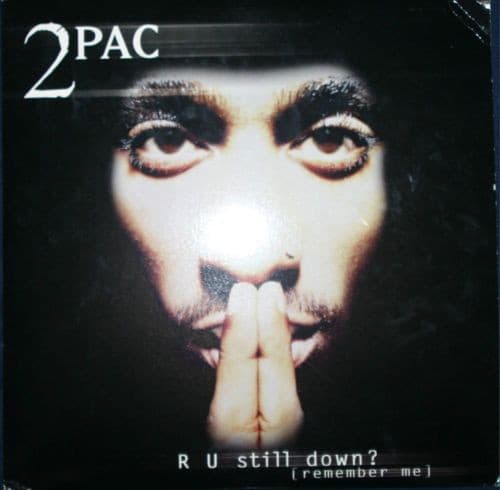
The first question any posthumous album has to answer is whether the artist left it unfinished for a reason. R U Still Down? (Remember Me) was released a year after Tupac Shakur's death, built from vault material recorded between 1992 and 1994, the years that gave us Strictly 4 My N.I.G.G.A.Z. and Me Against the World. Afeni Shakur and Amaru Records packaged twenty-seven tracks across two discs, nearly all of them unreleased, and hired We Got Kidz Productions to strip out the original beats and build new ones over Pac's old vocals.
The thesis is that these leftovers prove Pac was still brilliant in the years before Death Row. The reality is that most of this material stayed unreleased because Pac had already said it better somewhere else, and the new production buries what made the original recordings worth keeping. The album sold half a million copies in its first week and topped the R&B charts for three weeks, but commercial success does not make a coherent artistic statement.
What listeners got was a bloated alternate history: Pac before the East-West war, with his paranoia and introspection intact, but presented as a formless pile of songs that needed an editor Pac never got to be.
The best moments prove he was magnetic even in the studio's spare moments, but the album as a whole argues that some vaults are better left closed.
Old Vocals, New Beats, and the Problem of Tampering
The production tells you everything about what went wrong. We Got Kidz Productions reworked the instrumentals on more than half the tracklist, replacing the original beats with smoothed-out G-funk that was already dated by late 1997. Tracks like 'Thug Style' and 'Enemies With Me' credit the original producers Chris Rosser, Conrad Rosser and Live Squad in parentheses, but what made the cut sounds nothing like the raw early-nineties production Pac was rapping over when he recorded the vocals. The result is a tonal mismatch: Pac's voice carries the hunger and desperation of an artist still trying to prove himself, but the beats sound like they were built for a different, more commercial artist. Soulshock and Karlin's work on 'Do for Love' and the two versions of 'I Wonder If Heaven Got a Ghetto' is the exception; the Bobby Caldwell flip is lush and the hook is immediate, which is why the single went Gold. QDIII's beat on 'Hellrazor' and Johnny J's work on 'Ready 4 Whatever' and 'Fake Ass Bitches' keep some of the original menace, but they are outliers on an album where most of the music feels like it was designed to fill shelf space, not to support what Pac was saying.
The writing is where the album's real problem shows itself. Pac's verses still have the specificity and paranoia that made Me Against the World essential: the foreshadowing of his death on 'Open Fire' and 'Only Fear of Death' is eerie in hindsight, and the storytelling on '16 on Death Row' has the same desperate clarity as 'Me Against the World' the song. But across twenty-seven tracks, the repetition becomes impossible to ignore.
He returns to the same themes, sometimes in nearly the same language, that he had already explored on released albums: the ghetto as trap, the fear of death, the distrust of women, the fantasy of escape. 'Fuck All Y'all' and 'Let Them Thangs Go' are competent posse cuts, but they say nothing Pac had not already said with more force on All Eyez on Me. 'I'm Gettin Money' recycles the exact lyrics from 'Str8 Ballin' with a different title and beat, which is less a creative choice than an admission that the vault was running dry. The album includes two full versions of 'I Wonder If Heaven Got a Ghetto,' one of them a remix of a B-side that had already been released in 1993, which makes the double-disc length feel less like artistic ambition and more like inventory management.
Delivery is where Pac's presence saves individual songs from the production around them. His voice still cracks with desperation on 'Open Fire,' still goes hoarse with rage on 'Fuck All Y'all,' still carries the mix of bravado and fatalism that made him more than a technician. The guests are mostly forgettable: Stretch, Big Syke and Dramacydal do what they are hired to do, but none of them add much, and the Blackstreet singer on 'Do for Love' is there to sell the hook, not to match Pac's intensity. Richie Rich sounds engaged on 'Lie to Kick It,' one of the few tracks where the original Warren G production survived, but the overall impression is of an album built around one voice, with the rest of the cast serving as filler.
Twenty-Seven Tracks in Search of an Album
The sequencing is nonexistent. The album opens with a brief spoken-word piece that promises introspection, then jumps to hard paranoia, then to softer reflection, with no logic beyond the order someone wrote on a sheet of paper. The first interlude arrives halfway through the first disc and breaks whatever momentum the previous tracks had built; the second interlude does the same thing near the end of disc two.
The decision to include both the original and hip-hop versions of the same song is the album's clearest admission that it was padded to justify the double-disc format. The pacing sags in the middle of both discs, where the weaker posse cuts pile up, and by the time the closing track ends at five minutes, the length feels punishing rather than earned. There is no arc, no sense that these songs were meant to be heard in this order or even on the same project. The title R U Still Down? came from handwritten tracklists Pac had drafted in 1993 and 1994, but those tracklists included songs that eventually appeared on Me Against the World and Thug Life: Volume 1, albums Pac actually sequenced. This version is what was left after the good material was already spoken for.
A Commercial Success That Proved Nothing
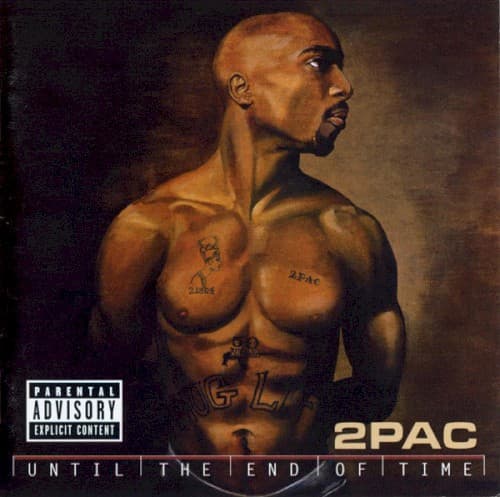
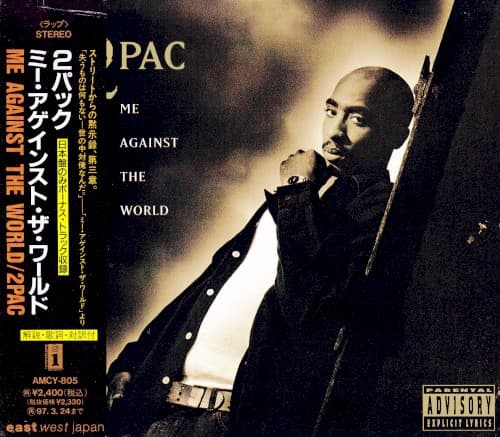
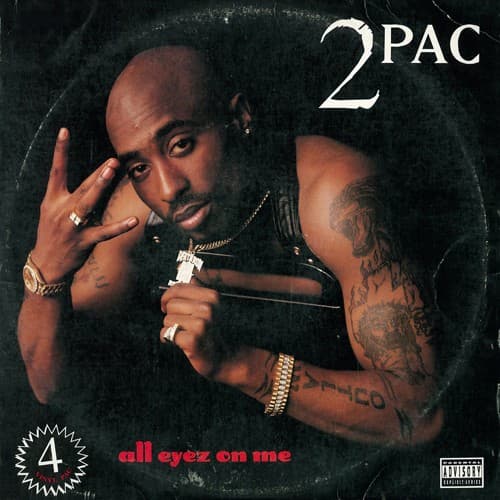
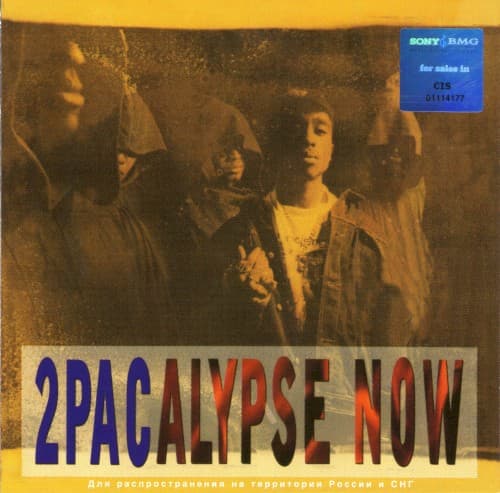
R U Still Down? (Remember Me) ranks near the bottom of Pac's catalog, better than the later cash-ins like Until the End of Time but nowhere near the albums he finished himself. It sits below 2Pacalypse Now, which had a vision even when the execution was rough, and far below Me Against the World, The 7 Day Theory and All Eyez on Me, the three albums that define his legacy.
The album is for completists who want to hear every Pac verse that exists, regardless of whether Pac thought it was ready, and for fans who will take any version of 'Do for Love' and 'I Wonder If Heaven Got a Ghetto' they can get. Casual listeners should skip it entirely: everything worth hearing here, Pac said better on the albums he actually assembled. Start with 'Do for Love' and 'Open Fire' if you are curious about the sound of Pac before Death Row hardened him, then move to Me Against the World for the introspection and The 7 Day Theory for the focus.
The reworked production and the shapeless tracklist make this a footnote to a catalog that did not need more material to prove its point. Afeni Shakur's instinct to honor her son's memory is understandable, but the album is proof that the vault does not always hold buried treasure. Sometimes it holds the drafts an artist chose not to release, and this is what twenty-seven of those drafts sound like when someone else makes the final call.
Track by track
Track Listing
Redemption
SolidA brief spoken-word piece that sets a reflective tone the album immediately abandons.
Open Fire
StandoutPac's voice is raw and unfiltered, the paranoia audible in every line about enemies closing in. The production is spare and menacing, one of the few tracks where the beat matches the desperation in the vocals. The foreshadowing of his death is eerie without being heavy-handed, and the guest Akshun stays out of the way. One of the album's strongest moments, proof that the vault held a few songs worth releasing.
R U Still Down? [Remember Me]
StandoutThe title track is softer and more introspective, Pac reflecting on loyalty and loss over a smoothed-out beat by Tony Pizarro. The hook is plaintive, the verses specific enough to avoid cliché, and the mood fits the question Pac is asking. A solid song that would have been stronger on a tighter album.
Hellrazor
SolidQDIII's beat keeps some edge, and Pac's verses have the vivid detail of his best storytelling, but the song drags past four minutes without building to much. Stretch and Val Young add texture without taking over. A good track that runs a minute too long.
Thug Style
SolidThe reworked production by We Got Kidz flattens what the original Chris and Conrad Rosser beat must have been. Pac's verses are competent but familiar, covering ground he had already walked on Me Against the World.
Where Do We Go From Here [interlude]
WeakAn interlude that breaks the flow and adds nothing to the album.
I Wonder If Heaven Got a Ghetto
StandoutSoulshock and Karlin's production is lush, the hook is immediate, and Pac's verses balance desperation and hope without tipping into sentimentality. The best song on the album, and the reason it charted. The decision to include a second version later is the album's worst sequencing choice, but this version justifies the single's Gold certification.
Nothing to Lose
StandoutPac and Live Squad build a tense posse cut with Y?N-Vee that moves quickly and does not overstay. A solid deep cut.
I’m Gettin Money
WeakThe same lyrics as 'Str8 Ballin' with a different beat. Mike Mosley and Natures Fynest do competent work, but the recycling is too obvious to ignore.
Lie to Kick It
StandoutWarren G's original production survived, and it shows: the beat has bounce and the hook has clarity. Richie Rich is engaged, and Pac sounds loose, like he is enjoying the session. One of the few tracks that feels like it was finished rather than assembled.
Fuck All Y’all
SolidPac goes hoarse with rage over a We Got Kidz beat that is serviceable but generic. The venom in his voice saves it from being filler, but the production does him no favors. A track that would have been better with the original instrumental.
Let Them Thangs Go
SolidA posse cut with Quimmy Quim and DJ Daryl that covers familiar ground. Competent but redundant next to the harder songs on All Eyez on Me.
Definition of a Thug Nigga
SolidOriginally on the Poetic Justice soundtrack, this Warren G production has the G-funk swing of 1993 and Pac's verses define the outlaw persona he was building at the time. A strong song that did not need to be here, since it was already released.
Ready 4 Whatever
StandoutJohnny J's beat is hard and spare, and Pac's verses have the same desperate energy as 'Me Against the World.' Big Syke adds weight without taking over. One of the album's best deep cuts, proof that Pac was writing at a high level in this period.
When I Get Free
StandoutWe Got Kidz and Ricky Rouse build a mid-tempo track that lets Pac imagine life after prison. The fantasy is specific, the verses are tight, and the beat does not get in the way. A solid song that earns its four and a half minutes.
Hold On Be Strong
SolidPac and Stretch trade verses over a Choo beat that is competent but forgettable. The message is encouragement, but the execution is workmanlike.
I’m Losin It
SolidPac, Big Syke and Spice 1 over production by Tony Pizarro, Def Jef and Levant Marcus. The paranoia is real, the beat is too busy, and the song does not add much to the album's second half.
Fake Ass Bitches
WeakJohnny J and We Got Kidz build a hard beat, and Pac's verses are venomous, but the misogyny is lazy even by his standards. A track that shows his worst instincts without the specificity that made songs like 'Brenda's Got a Baby' essential.
Do for Love
StandoutThe Bobby Caldwell flip is smooth, the hook is undeniable, and Pac's verses soften his usual edge without losing his voice. Eric Williams of Blackstreet adds the R&B touch the single needed, and Soulshock and Karlin's production is the album's most polished. The commercial peak, and one of the few tracks that justifies the album's existence.
Enemies With Me
WeakWe Got Kidz reworked the original Live Squad beat, and the result is flat. Pac and Dramacydal do what they can, but the production saps the menace the song needed.
Nothin but Love
SolidDJ Daryl and Pac build a smooth track with Dave Hollister that tries for the same vibe as 'Do for Love' but comes up short. The hook is weaker, the verses are less specific, and the song feels like a lesser version of a better idea.
16 on Death Row
StandoutPac alone for nearly six minutes, reflecting on prison and the choices that put him there. The storytelling is vivid, the production by Pac and We Got Kidz is spare enough to let the words breathe, and the song has the same desperate clarity as 'Me Against the World' the track. One of the album's strongest moments, proof that Pac could still write at his peak even when the vault was full of filler.
I Wonder If Heaven Got a Ghetto [Hip-Hop version]
WeakA second version of the album's best song, this time with Maxee on the hook. The beat is different, the mood is slightly harder, but the song is redundant. Including both versions on the same album is the clearest sign that the tracklist was padded to justify the double-disc format.
When I Get Free II
SolidChris and Conrad Rosser build a beat that complements the first version, and Yaki Kadafi adds a verse. A decent track that did not need to exist next to the original.
Black Starry Night [interlude]
WeakAnother interlude that adds nothing and breaks the flow.
Only Fear of Death
StandoutLive Squad's beat is ominous, and Pac's verses face mortality with the same mix of bravado and fatalism that defined his best work. The song runs over five minutes and earns most of it, closing the album on a strong note that makes the preceding filler harder to forgive.