Scorecard: 8.6/10 · Essential
How we score- Writing(25%)
- 8.5
Stream-of-consciousness narratives and pop-culture deep cuts create a vivid Lower East Side world across tracks like Johnny Ryall and Car Thief, matching wordplay density with actual storytelling.
- Production(25%)
- 9.5
The Dust Brothers layer 105 samples into seamless compositions where funk breaks, Beatles snippets and Thin Lizzy riffs serve the flow rather than announcing themselves, reaching a complexity hip-hop had never heard.
- Delivery(15%)
- 7.5
The three voices interlock across dense beats like Shake Your Rump without getting buried, though the conversational approach sacrifices some of the raw attack of their debut.
- Cohesion(15%)
- 8.0
The album flows from compact gut-punches to the twelve-minute B-Boy Bouillabaisse suite with purpose, though the front half plays stronger as individual songs than the back half's experimental stretches.
- Originality(10%)
- 9.0
No rap album before this attempted multi-layered sampling as compositional method or matched juvenile punch lines with literary allusion, inventing a template the industry immediately made illegal.
- Replay value(10%)
- 8.5
Thirty-five years later the sample density still reveals new details and the jokes still land, though the experimental suite requires patience modern listeners may not grant it.
Beastie Boys Paul's Boutique — The Album That Broke Every Rule Before Anyone Made Them
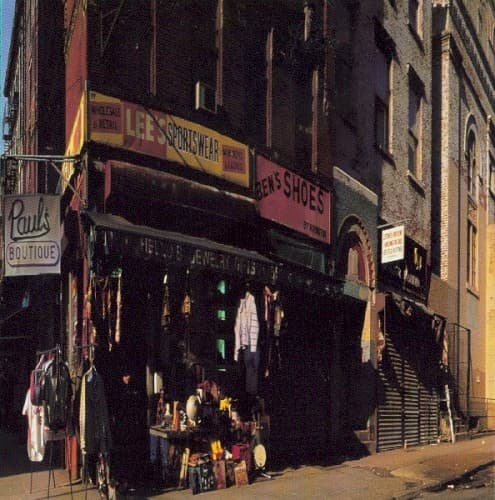
Paul's Boutique arrived in the summer of 1989 as commercial suicide disguised as artistic ambition. The Beastie Boys and the Dust Brothers built an album so dense with samples, so packed with left-turn references and narrative detours, that it made Licensed to Ill sound like a demo. Where the debut had leaned on Rick Rubin's stripped-down boom-bap and frat-party hooks, this one layered funk breaks under Beatles loops under Thin Lizzy riffs, stacking sounds until the beats became compositions and the rapping became one more texture in the mix. Capitol Records barely promoted it, radio ignored it, and it peaked at number fourteen on the Billboard 200 before disappearing. The question the album posed in 1989 was whether hip-hop could be art without being a lecture. The answer took a decade to arrive, but it was yes.
The breakthrough was not in the subject matter, which remained as juvenile and profane as anything on Licensed to Ill, but in the execution. The writing moved from punchlines to narratives, sketching characters like the homeless Vietnam vet and the car thief with enough detail to make them real. The production refused to choose between funk, rock, soul and psychedelia, grabbing all of it and making it cohere.
The Dust Brothers had built the backing tracks as instrumental club records, assuming the density would scare off any rapper; the Beastie Boys heard the density as the point and wrote to match it. The result was the first hip-hop album that worked like a novel, with recurring images and callbacks across fifteen tracks that built a world rather than a playlist. It also inaugurated the end of an era: the 105 samples cleared easily and affordably in 1989 would have cost millions two years later, after the Biz Markie lawsuit shut down the practice. Paul's Boutique is the sound of a window closing and three kids diving through it before anyone could stop them.
When Samples Became Architecture Instead of Decoration
The production on Paul's Boutique treats sampling as composition rather than quotation. The Dust Brothers and the Beastie Boys do not drop a James Brown break and call it done; they build entire tracks from dozens of sources, layering basslines from one record under drum breaks from another under guitar licks from a third until the result sounds like a band that never existed. The opening track alone pulls from Thin Lizzy, Funky 4 + 1, the Sugarhill Gang and James Brown, stitching the pieces into a groove that moves like a single take. The psychedelic sprint that follows flips four Beatles samples, a Pato Banton dub and the group's own voices without ever announcing its sources. One later track drops a Led Zeppelin drum fill, an Alice Cooper riff and a Gene Harris piano line into the same mix without any of them overwhelming the others. The approach was unprecedented: where earlier sample-heavy records like It Takes a Nation of Millions used samples as sonic aggression, Paul's Boutique uses them as architecture, building spaces for the rapping to move through.
The writing matches the production's ambition. The Beastie Boys had always been clever, but on Licensed to Ill the cleverness was in the service of one-liners. Here they stretch out, building narratives that take entire verses to land. One story follows a homeless man who once had prospects, sketching his fall in enough detail to make him more than a joke.
Another track follows a joyride from theft to crash, piling on details until the verses feel like scenes from a short film. A Western-themed number name-checks Sergio Leone and John Wayne while describing a dusty showdown that never quite resolves. The group's three voices trade lines and finish each other's thoughts, creating a conversational flow that makes the density feel natural rather than forced. The wordplay is still there, but it serves the stories now instead of replacing them.
The weaknesses are structural. The album front-loads its hooks: the first three proper tracks hit harder than anything in the back half, and the experimental sprawl of the closing suite rewards close listening but does not reward casual play. The twelve-minute finale closes the album with nine connected pieces that range from the haunting to the throwaway, and while the ambition is clear, the execution is uneven. Some listeners will hear it as the album's peak; others will hear it as the moment the Beastie Boys forgot that even art records need to end.
The sequencing also buries some of the album's best moments in the middle of side two where they can be overlooked, even though both tracks highlight the production and writing at full strength. These are not fatal flaws, but they explain why the album took years to find its audience. Paul's Boutique does not make it easy.
The Flow and the Sprawl
The album moves in waves, alternating compact bangers with longer, stranger detours. The first half hits a groove early and maintains it: the opening skit sets the Lower East Side scene, then the next two tracks lock in back-to-back, establishing the new sound and the new writing in six and a half minutes. The following stretch slows the pace without losing momentum, and the psychedelic sprint kicks it back up before the album settles into more commercial territory. The sequencing here is deliberate: the album gives you enough hooks to stay engaged while pushing you toward the weirder material.
The back half sags in the middle before rallying. Two strong tracks carry the early portion of side two, separated by a brief interlude and followed by another excellent moment that arrives at a point where the album's length starts to register. The late stretch picks things up again with one of the album's hardest beats and tightest verses, then the album closes with the suite, which is either the culmination of everything that came before or a bridge too far depending on your tolerance for experimentation. The suite has peaks, but it also has dead weight. The album earns its length more than most hip-hop records of its era, but it does not earn all of it. At seventy-three minutes, Paul's Boutique is a statement; at sixty it might have been flawless.
Where It Stands and Who It's For
Paul's Boutique is the Beastie Boys' best album and the most important record in their catalog, surpassing Licensed to Ill in every measure that matters for longevity. The debut was a louder commercial success and a cultural event, but this one invented a sound and proved the group could write. It ranks among the essential albums of golden age hip-hop, sitting alongside It Takes a Nation of Millions, 3 Feet High and Rising and The Low End Theory as records that expanded what the genre could do. Its influence is everywhere in the sample-heavy work that followed, from the Bomb Squad's later productions to Madvillainy to anything J Dilla touched, even though the legal territory it exploited no longer exists.
The album is for listeners who want hip-hop that rewards attention, who will sit with the sample layers and the narrative threads and the pop-culture callbacks until they click. It is not for anyone looking for instant hooks or straightforward bangers; Hey Ladies and Shadrach are the only tracks that work as singles, and even those require some patience. Start with Shake Your Rump to hear the production at its densest and most propulsive, then move to Johnny Ryall for the writing and Car Thief for the balance of both. If those three tracks work, the rest of the album will follow. If they do not, try Check Your Head or Ill Communication, which take the ambition here and sand down some of the edges.
The album has aged into a monument, which is both a compliment and a warning. It sounds as fresh now as it did in 1989 because no one else has built beats this way since the lawsuits made it impossible, and the writing holds up because the stories are specific enough to survive their moment. But its status as an untouchable classic can obscure the fact that it is still a seventy-three-minute experiment with some filler in the back half. Paul's Boutique is not perfect, but it is fearless, and in 1989 fearlessness was exactly what hip-hop needed. The Beastie Boys jumped without a net and stuck the landing.
Track Listing
To All the Girls
●A forty-second scene-setter that drops you onto Ludlow Street with car horns, street chatter and the group introducing themselves over a minimal loop. It is a skit with a purpose, establishing the Lower East Side setting and the conversational tone before the album proper begins.
Shake Your Rump
▲The thesis statement. Four samples from four different records, a bassline that never stops moving, and verses that pile references on top of wordplay on top of narrative without ever losing the groove. The Dust Brothers built this as an instrumental club track and assumed it was too dense for vocals; the Beastie Boys heard it as an invitation to match the production's ambition with their own. The result is the cleanest distillation of what makes this album work: every element serves the whole, nothing announces itself, and the density feels natural rather than forced. If this track does not grab you, the rest of the album will not either.
Johnny Ryall
▲A character study of a homeless Vietnam vet built over a Paul McCartney sample, sketching his past and present in enough detail to make him a person rather than a punchline. The writing here is where the Beastie Boys prove they can do more than joke: the verses move through Johnny's life with specificity, from the bum knee to the stolen sneakers to the makeshift home under the Manhattan Bridge. The storytelling does not erase the humor, but it gives it weight.
Egg Man
▲The dumbest premise on the album, a declaration of war using eggs as the weapon, elevated by the Jaws theme sample and the group's commitment to the bit. It is juvenile in the best sense, leaning into absurdity without apologizing for it. The track works because the production is serious even when the subject is not.
High Plains Drifter
●A cinematic Western homage built on an Eagles sample, with verses that reference Sergio Leone and John Wayne while describing a showdown that never quite happens. The track stretches past four minutes without a traditional hook, relying on atmosphere and imagery to hold attention. It is one of the album's slower burns, and it works better as a mood piece than as a song you would pull out for a playlist.
The Sounds of Science
▲A psychedelic sprint through four Beatles samples, a Pato Banton dub and the group's own catalog, moving too fast to let any single reference dominate. The verses are pure stream-of-consciousness, piling pop-culture callbacks and non-sequiturs into lines that work more as texture than as narrative. It is the album at its most experimental within a three-minute runtime, proof that the Beastie Boys could push boundaries without losing the plot entirely.
3‐Minute Rule
●A mid-tempo groove with verses that play with sports metaphors and street stories, settling into a pocket that is neither a highlight nor a weak link. The track does its job without demanding much attention, which is fine at this point in the album but also means it gets lost between the peaks on either side of it.
Hey Ladies
●The closest thing to a Licensed to Ill retread, with a catchy hook and a beat built for clubs. It was the album's biggest single and the most obvious concession to commercial appeal, which does not make it bad but does make it feel slightly out of place next to the more adventurous material. The verses are solid and the production is clean, but the track plays it safer than anything else here.
5‐Piece Chicken Dinner
●A twenty-three-second interlude that is exactly what it sounds like: a quick break before the album's second half begins. Harmless filler.
Looking Down the Barrel of a Gun
▲Four samples including Pink Floyd and the Incredible Bongo Band, stitched into a beat that sounds like a chase scene, with verses that match the urgency. The production here is as dense as anything on the album, layering drum breaks and guitar riffs until the track feels like it is moving in three directions at once. The writing keeps up, sketching scenes of paranoia and violence without tipping into parody. This is one of the album's best tracks, buried in the middle of side two where it can be overlooked.
Car Thief
▲A joyride from theft to crash, told in enough detail to feel like a short film. The verses follow the action step by step, from hot-wiring the car to running from the cops to the inevitable wreck, and the Max Yasgur Woodstock sample in the background adds a layer of irony to the chaos. The storytelling here is some of the album's sharpest, balancing humor with consequence in a way that makes the track more than just a stunt.
What Comes Around
▲A darker, slower track built on Led Zeppelin and Alice Cooper samples, with verses that meditate on karma and consequences without getting preachy. The production gives the rapping room to breathe, and the group uses the space to stretch out their flows and dig into the theme. It is one of the album's more serious moments, and it lands because the Beastie Boys do not oversell it.
Shadrach
▲The hardest beat on the album, built from Sly and the Family Stone and Black Oak Arkansas samples, with a bassline that hits like a fist. The verses are pure braggadocio, the group trading lines and finishing each other's thoughts with the tightest chemistry on the record. This is the track that proves the Beastie Boys did not abandon the attack of Licensed to Ill; they just saved it for the moments when it mattered most. Shadrach is the album's most immediate banger and one of its best arguments for itself.
Ask for Janice
●An eleven-second phone interlude that does nothing except set up the closing suite. Harmless but pointless.
B‐Boy Bouillabaisse
●A twelve-minute suite split into nine pieces, ranging from the haunting A Year and a Day with its Led Zeppelin sample to the throwaway Dropping Names to the closing A.W.O.L., which fades out on a note of unresolved tension. The suite is the album's most ambitious gamble, an attempt to close with something that feels like a statement rather than just another song. Parts of it work: 59 Chrystie Street sets a mood, Get on the Mic and Mike on the Mic bring the energy back, and A Year and a Day is one of the album's best individual pieces. But parts of it drag, particularly Stop That Train and Lay It on Me, which feel like sketches that did not get finished. The suite rewards patience and repeated listens, but it also tests both. It is the reason some listeners will call this album a masterpiece and others will call it overlong, and both will be right.