The scorecard
7.2/10 · Good
- Writing25%
- 6.5
- Production25%
- 8.0
- Delivery15%
- 7.0
- Cohesion15%
- 7.0
- Originality10%
- 7.0
- Replay value10%
- 7.5
Rocky's image-making is strong on fashion, status and Harlem swagger, but the rhymes mostly repeat that persona and "Hell" and "Pain" reach for depth the verses do not supply.
Hazy, slowed-down, bass-heavy beats on "Goldie" and "Fashion Killa" make the Houston-by-way-of-Harlem sound feel expensive and fully realized, even when the EDM detour on "Wild for the Night" jars.
Rocky is a stylish, melodic and unhurried rapper with a good ear for hooks, though his flow is more mood than muscle and the guests on the big single often outrap him.
The record swings between cloudy mood pieces, radio singles and a posse cut with no obvious plan, so the pop moves and the moody ones keep interrupting each other.
Merging Southern slow-tempo rap with New York attitude and cloud-rap textures on a major-label album was a real move for 2013, even if the mixtape had already done it.
The best half of the tracklist still plays well on repeat, and the atmospherics hold up better than the singles' chart-chasing moments.
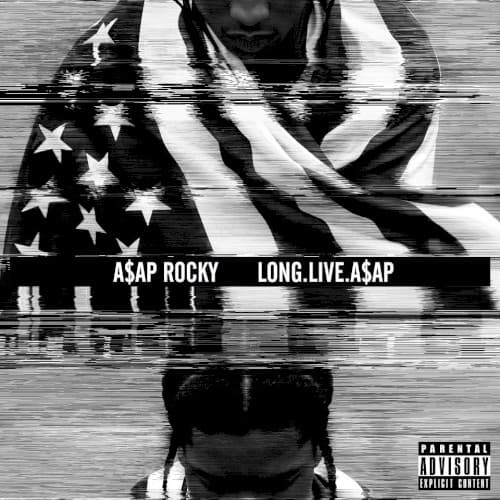
A$AP Rocky Long. Live. ASAP: Houston's Slow Tempo, Harlem's Wardrobe
Long. Live. ASAP is a major-label debut that tries to settle an argument about where New York rap comes from. Its answer is that the city's next sound would be borrowed from Houston: slowed-down, bass-heavy, syrupy beats that came out of the South, worn by a Harlem rapper who treats his own wardrobe as seriously as other rappers treat their guns. That is the album's thesis, and at its best it is a convincing one.
The record works when it commits to that blend. On "Goldie" and "Fashion Killa", Rocky sounds like a rapper with a precise point of view rather than a trend, slipping into a half-sung, half-rapped drawl that owes more to the Southern tradition of UGK and Three 6 Mafia than to the boom-bap orthodoxy of his own city. The influence is audible, not claimed. A New York rapper in 2013 was supposed to sound like the city's older records; Rocky sounds like a kid who grew up on mixtapes and blogs and decided regional boundaries were optional.
The stakes are what happens to that idea once a label wants singles. This album is the pivot point where a hazy, internet-bred sound gets polished for radio, and the cost shows up in the second half as guests, features and a dance-music detour crowd out the personality that earned the deal. The debut mixtape had already made Rocky a name; the job of the studio album was to show that the voice could carry more than a mood. It mostly does, but not always.
The case in short: this is a good, stylish and sometimes striking debut that is more important as a template than as a complete album. Its best songs predicted a whole wave of New York rappers who treated the South as a source and fashion as a subject. Its weaker ones show how quickly a distinct sound can be diluted when it is asked to do everything at once.
Cloud Rap With a Budget, and What the Budget Bought
Production is the album's main argument, and the sound is consistent in its best moments: low, rolling bass, slow-motion drums, reverb-soaked synths and vocal samples stretched until they feel like weather. This is cloud rap with a major-label budget, and it is richer than the mixtape version. The drums hit harder, the low end is cleaner, and the arrangements have room for strings and keys that a homemade tape could not afford. The Houston inheritance is clearest in the tempo and the syrupy drawl of the vocals, and it gives the record a physical, nighttime feel that sets it apart from most rap released the same year.
Rocky himself is an interesting rapper rather than a technical one. His delivery sits close to the beat, often just behind it, and he uses melody to carry hooks. When he stays in that lane, as on the record's slower moods, the voice is part of the instrumentation. His strength is in tone and image: clothes, cars, women, neighborhood, all delivered with the confidence of someone who believes his taste is the subject. The sound of his voice does a lot of work that the actual words are not asked to do.
That is also where the weaknesses begin. The writing is thin. Verses lean on repeating status markers rather than developing scenes, and on the more emotional tracks, such as "Pain" and "Hell", the intent is deeper than the lyrics can deliver. The bars are fine as texture and rarely survive scrutiny. A listener hunting for storytelling, argument or surprise will find a lot of attitude and little else.
The album also suffers from its own appetite. In pursuit of mainstream reach, the tracklist adds a trap-pop single and an electronic dance track that sound like they belong to different records. The pop collaboration with Drake, 2 Chainz and Kendrick Lamar is a legitimately catchy song, but Rocky is outshone by the voices around him, and "Wild for the Night" is the kind of crossover play that dates quickly. These are not disasters, but they interrupt the album's most distinctive quality.
The positives still outweigh the negatives. The sonic world is consistent enough that you feel like you are in one place, even when the songs wander, and Rocky's persona is strong enough to hold it together. It is a record that sounds good before it says anything, and sometimes that is enough.
A Mood Album Interrupted by Radio
The sequence is a tug-of-war between an atmospheric record and a commercial one. The opening stretch is the most coherent: it establishes the slow tempo, the dark tone and the swagger, and it keeps the guest list short enough that the voice remains the center. The first half builds a genuine sense of place, and the tracks lead into each other with some logic. When the album is good, it feels like a single long evening.
Then the pacing starts to wobble. Around the middle, the record shifts toward its radio ambitions, and the changes in tone feel imposed rather than earned. A rap-pop crossover is followed by a more melodic piece, then a dance-music collaboration, then a posse track, and each lurch breaks the mood that the album worked hard to create. At twelve tracks the length is reasonable, but the second half feels longer than the first because the style stops being consistent. The cohesion that opens the record does not survive its own commercial planning.
The peaks still land. The strongest songs are the ones where the beat and the voice share a mood, and the best of them, "Fashion Killa", could stand next to any rap song of its year as a piece of tone and detail. The weakest stretch is the center, where the album seems unsure whether it wants to be a hazy mixtape or a radio-ready debut.
The ending recovers some of the opening's calm. The final tracks return to the slower, introspective register and try to give the record a sense of closure, with partial success. It lacks the clear arc of a concept album, but it works better as a mood than as a sequence, which is another way of saying that it holds up best when you play it as a playlist and skip the experiments. In that form the record is tighter and far more convincing than the full-length version.
A Template Bigger Than the Album Itself
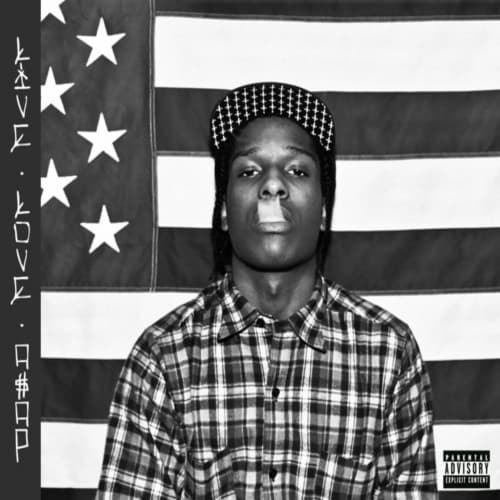
Within Rocky's catalog as it is rated here, Long. Live. ASAP sits below LIVE.LOVE.A$AP. That ordering is deliberate. The mixtape is tighter, stranger and more sure of what it wants to be; the studio album is bigger, glossier and better built, but it spends some of that polish on moves that do not suit him. The debut mixtape sounds like a rapper discovering a style, and the follow-up sounds like a label trying to sell it.
It is for listeners who like their rap atmospheric and fashion-conscious, who are interested in how Southern slow-tempo rap reshaped New York in the 2010s, and who care more about sound than about lyrics. It is also a good entry point for anyone who wants to understand the cloud-rap-meets-trap moment of 2013. It is not for people who want dense writing, storytelling or technical rapping, and it is not for anyone allergic to a major-label sheen.
As for age, the mood has held up better than the pop moves. The slower, darker songs sound as good now as they did then, partly because the template they set was widely copied. The crossover singles are the part that sound most like their year.
For a first listen, start with "Fashion Killa" for the clearest expression of Rocky's voice, then "Goldie" for the Houston-by-way-of-Harlem sound, and "1 Train" for the posse-cut side of the era. If you want to hear the idea in a rawer form, go back to LIVE.LOVE.A$AP, which is rated higher here. If you want the Southern roots of this sound, go to UGK, whose slow, drawling approach is the reason this record exists at all.
Long. Live. ASAP is a good debut whose best half is better than its whole, and the half worth keeping is the one that sounds like nobody else was in the room.
Track by track
Track Listing
Long Live A$AP
StandoutA slow, grand opener that sets the album's terms: heavy tempo, shadowy atmosphere and a rapper announcing himself as the main subject. It builds a sense of occasion without doing much that is surprising. Effective scene-setting, short on memorable lines.
Goldie
StandoutOne of the album's best statements of the Houston-meets-Harlem idea. The beat is bass-heavy and spacious, and Rocky's laid-back drawl rides it with confidence. The writing is mostly about shine and status, which is the point. This is the track that proves the sound works at full volume, and the clearest case for why the album mattered in 2013. A good one to start with.
PMW (All I Really Need)
SolidA hedonistic, hook-driven cut that sits closer to Southern party rap than to anything from the city. Smooth and likable, with a chorus built for repetition rather than depth.
LVL
SolidA hazy, atmospheric piece that leans on mood and repetition. It is pleasant and well made, though it does not leave much behind once it ends.
Hell
SolidA melodic, more emotional track with a female vocal hook that tries for sweep and drama. The production is lush, but the lyrics do not quite deliver the weight the arrangement promises, and it ends up feeling like a good beat in search of a better verse.
Pain
SolidA darker, more melodic cut that tries to show the sensitive side of the persona. The mood is convincing, the writing less so, and it works better as atmosphere than as confession.
Fuckin’ Problems
SolidThe album's biggest crossover moment, a trap-pop single with a bouncy, immediately catchy hook and a lineup of guest verses that gives it star power. It is the most obviously radio-ready song here, and it works as one. The problem is that Rocky is outshone on his own record: the guests are sharper and more energetic, and his verse reads as the supporting turn. It is a hit that does not tell you much about the album around it, and that is both its appeal and its limitation.
Wild for the Night
WeakAn electronic dance collaboration that drops Rocky into a big-room beat. It is energetic and was clearly aimed at a different crowd. It also sounds the most dated track on the album and breaks the mood the rest of the record builds, which makes it the clearest example of the commercial detours.
1 Train
StandoutA posse cut that gathers a wide range of rappers over a single beat and lets everyone take a turn. It is a welcome change of pace and works as a showcase of the 2013 New York scene as seen through Rocky's friends. The verses are uneven, as posse cuts always are, but the idea of putting a generation on one track is the album's best argument for its place in rap history.
Fashion Killa
StandoutThe best song on the album and the cleanest expression of Rocky's persona. The beat is smooth and slow, the hook is memorable, and the subject, a love interest described through brand names and tailoring, is exactly what he writes best. It is detailed, stylish and charming, and it shows that his fashion obsession can produce a real song rather than a list of labels. Play this first.
Phoenix
SolidA slower, more reflective piece that continues the late-album mood. It is atmospheric and competent, but it blends into its surroundings.
Suddenly
SolidA closing track that tries for reflection and a sense of arrival. The mood works, though the song is too gentle to feel like a payoff.