Scorecard: 9.1/10 · Essential
How we score- Writing(25%)
- 9.0
Pusha and Malice turn coke-rap formulas into precision instruments: every bar on "Trill" and "Dirty Money" sharpens the image instead of repeating it, and the moral void becomes the subject rather than an oversight.
- Production(25%)
- 9.5
Pharrell builds beats that sound like paranoia: the fractured harp on "Ride Around Shining," the blown-out bass on "Trill," the skeletal clatter on "Mr. Me Too" all refuse to comfort the listener or the rappers.
- Delivery(15%)
- 8.5
Pusha's sneer and Malice's dead-eyed matter-of-fact trade verses with surgical timing, and neither ever oversells or underplays a line; the guest slots stay minimal and functional.
- Cohesion(15%)
- 9.0
Twelve tracks, forty-eight minutes, no fat: the album moves from the opening snarl through escalating paranoia to the closing "Nightmares" without a single throwaway, and the sequencing earns the unrelenting tone.
- Originality(10%)
- 9.0
The Neptunes had done spare before and Clipse had done coke rap before, but the combination of this specific anger and this specific sonic architecture had no template in 2006.
- Replay value(10%)
- 9.0
The beats reward attention on every listen and the writing is dense enough that lines keep surfacing years later; two decades on it still sounds colder and meaner than most rap trying the same territory.
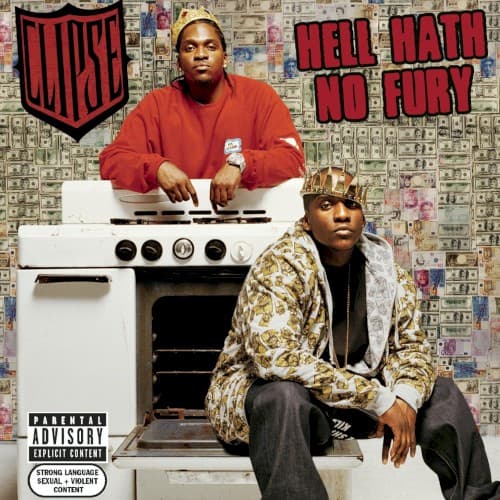
Clipse Hell Hath No Fury — The Album That Made Anger Sound Like Architecture
Three years of label limbo turned a victory lap into a vendetta. Clipse recorded most of Hell Hath No Fury in late 2003 after their debut went gold, then spent the next three years fighting Jive Records for a release date while the momentum died and the hunger curdled. The album that finally arrived in November 2006 sounds nothing like the one they started: where Lord Willin' was club-ready and confident, Hell Hath No Fury is skeletal, furious, and built to make you uncomfortable. Pusha T said they couldn't come back in the same headspace, and the difference is audible in every beat and every bar. This is not coke rap as escapism or aspiration. It is coke rap as the only subject left after everything else has been stripped away, performed by two men who know the waiting game is rigged and have decided to document the consequences with zero mercy for themselves or the listener.
The thesis: Hell Hath No Fury is the most uncompromising drug-dealing album in rap history because it refuses to make the life sound appealing even as it refuses to apologize for living it. Pusha and Malice describe the money, the paranoia, the empty spending, and the moral vacuum with the same flat precision, and Pharrell's production mirrors that coldness with beats that sound like they were assembled in a walk-in freezer. The result is an album that operates on a single theme for forty-eight minutes without ever sounding repetitive, because the writing is sharp enough and the sonic palette is strange enough to keep finding new angles on desperation. It ranks among the best rap albums of the 2000s not because it outgrow its subject but because it committed to it completely and found a form that matched the content. The acclaim was universal and deserved, and the album's reputation has only grown as the years separate it from the commercial context that nearly killed it.
Pharrell's Skeleton Key: Production That Refuses to Comfort
Pharrell produced the album alone, and the result sounds like he was trying to make the opposite of a radio record. The drums are harsh and minimal, the melodies are fractured or absent, and the arrangements leave space where most producers would add hooks or warmth. "Trill" buries the brothers under blown-out bass that rattles the speakers and a single high note that never resolves; "Ride Around Shining" builds around a tense harp plucked over clipped vocal stabs and one strained synth line that sounds like it might snap. "Mr. Me Too" runs on little more than hand claps, a two-note keyboard, and a cowbell, and the emptiness makes every word land harder. When Pharrell does add melodic elements—accordions on "Momma I'm So Sorry," steel drums on "Wamp Wamp"—they sound sinister instead of playful, because the surrounding sonics are too cold to let anything feel celebratory. The interplay works: the chimy, light percussion against the dark melodies, or the doorknocker snares against the spacious arrangements, create a disorienting effect that matches the lyrical content. This is what paranoia sounds like when it has a budget.
Pusha and Malice split writing duties evenly and their approaches complement each other: Pusha sneers through the braggadocio and Malice delivers the same content with a flatter, more disturbing calm. Both are technically precise, with internal rhymes and multi-syllable patterns that never call attention to themselves, and both refuse to glorify the subject even as they refuse to moralize about it. The writing on "Dirty Money" describes compulsive spending as a symptom rather than a reward, and "Keys Open Doors" lays out the mechanics of distribution with the enthusiasm of a man filing taxes. The guest verses stay minimal: Ab-Liva adds a workmanlike third verse to "Ride Around Shining," Slim Thug fits the tone on "Wamp Wamp," and Pharrell's sung hooks on "Mr. Me Too" and "Nightmares" function as texture rather than relief. Bilal's outro on "Nightmares" is the only moment of warmth on the album, and it arrives after forty-four minutes of unrelenting coldness, which makes it feel earned rather than tacked on.
The weaknesses are few but real. The intro "We Got It for Cheap" sets the tone but offers little beyond scene-setting, and the sequencing of "Ain't Cha" and "Trill" back-to-back creates a brief sag in momentum before "Chinese New Year" picks it back up. The unrelenting bleakness is the album's strength, but it also means there is no dynamic range: if you are not in the mood for forty-eight minutes of cold, hard beats and emotionless drug talk, there is no entry point. That is a feature, not a bug, but it limits the audience to listeners who can handle the album's single-minded focus.
The Unrelenting Arc: Forty-Eight Minutes Without Relief
The album moves in a straight line from anger to paranoia to exhaustion, and the pacing never lets up. The opening stretch establishes the defiant tone, the first half delivers the album's closest approximations of bangers, and then the back half spirals deeper into the consequences. There is no comic relief, no victory lap, no moment where the brothers step back and celebrate. Even the brightest melody on the record sounds tense and fragile, and the middle section offers blown-out bass and claustrophobic imagery instead of triumph. The sequencing is deliberate: the album never gives you a chance to catch your breath, and by the time the closing track arrives to examine the toll, the emotional exhaustion feels earned rather than manipulative.
At twelve tracks and forty-eight minutes, the length is exactly right. Every track does work, even the intro, and there is no filler or redundancy. The album's refusal to vary the tone could have made it feel monotonous, but the production is inventive enough and the writing is sharp enough that each track finds a new angle on the same subject. The result is an album that sounds like a single sustained argument rather than a collection of songs, and the unrelenting focus is what makes it work. If the album had been longer or had tried to lighten the mood, it would have lost the intensity that makes it essential.
Where It Stands: The Best Clipse Album and a 2000s Landmark
Hell Hath No Fury is the best album Clipse ever made, and without other releases from the duo rated on this site yet, it sets a standard that will be difficult to match. The combination of Pharrell's most daring production work and the brothers' angriest, most focused writing resulted in an album that sounds like nothing else in their catalog and very little else in rap from any era. It aged better than most 2000s rap because it never chased trends: the beats were too strange for radio in 2006 and they are still too strange now, and the writing was too uncompromising to date itself with references or punchlines that would go stale. Two decades later it still sounds colder and more unforgiving than almost anything trying the same subject matter, and the acclaim it received on release has only solidified as the years separate it from the commercial failure that nearly killed it.
This album is for listeners who want rap that commits fully to a vision and refuses to compromise. It is not for anyone looking for variety, uplift, or easy access. Start with "Trill" to hear the production and writing at their most unrelenting, then "Ride Around Shining" for the fractured beauty Pharrell could build even in the coldest context, then "Mr. Me Too" for the defiance that fueled the whole project. If those three tracks work, the rest of the album will deliver on the promise. Skip it if you need dynamic range or moral clarity; this is an album about the void, performed by men who looked into it and decided to document what they saw with no apologies and no exit ramps. For the next Clipse album, check their debut Lord Willin' to hear what they sounded like before the label battles turned the sound this hard, or Pusha T's solo work for where he took the coldness after Malice left the game. Hell Hath No Fury remains the peak: the moment when all the pieces aligned and the anger found the perfect form.
Track Listing
We Got It for Cheap (intro)
●The intro sets the tone with skeletal drums and a menacing synth line, and the brothers use it to announce their return and their state of mind. It is scene-setting rather than a full track, and the brevity keeps it from overstaying its welcome. The production hints at the coldness to come without fully committing to it yet.
Momma I’m So Sorry
●Pusha and Malice apologize to their mother for the life they live, but the apology is matter-of-fact rather than sentimental, and the accordion-driven beat sounds more ominous than regretful. The writing is specific about the choices and the consequences, and the refusal to wallow in guilt makes the song more effective than a straightforward confession would be. This is the first full statement of the album's thesis: the life is indefensible and they are living it anyway, and the only honest response is to document it without excuses. The sequencing after the intro makes it clear that this is not a redemption arc.
Mr. Me Too
▲The first single is built on almost nothing: hand claps, a two-note keyboard line, a cowbell, and Pharrell's sung hook. The minimalism makes every word audible, and Pusha uses the space to mock imitators and blame Jive Records for the delays in one verse. Malice matches the energy with his own dismissal of copycats, and the song works as both a statement of defiance and a functional banger despite the sparse production. The reference to the label drama is the album's only direct acknowledgment of the three-year wait, and it arrives early enough to clear the air and move on. Pharrell's hook is the most melodic moment on the album so far, and it still sounds cold.
Wamp Wamp (What It Do)
▲Slim Thug adds a regional flavor to the album's coldest stretch so far, and the steel drum melody is the brightest sound on the record, but the drums are still hard and the surrounding atmosphere is still tense. The brothers describe the drug trade with the same flat precision, and Slim Thug fits the tone without softening it. The song was the second single and it makes sense as a radio play: it has a hook and a melody, even if both are too strange to ever feel commercial. The sequencing after two slower, more menacing tracks gives the album a brief surge of energy before it pulls back again.
Ride Around Shining
▲The harp line on this track is one of the most beautiful and unsettling sounds Pharrell ever built: it plucks out a tense melody over clipped vocal groans and a single high note that never resolves, and the whole arrangement feels like it might collapse at any moment. Ab-Liva adds a third verse that matches the brothers' tone, and the song describes the lifestyle with the same combination of precision and emptiness that defines the album. The production is the highlight here: the fractured beauty of the harp against the harsh drums creates the juxtaposition the whole album is built on, and the result is one of the best beats on a record full of them. This is the album at its most gorgeous and its most disturbing, often in the same bar.
Dirty Money
●The sequencing after the harp-driven beauty of "Ride Around Shining" pulls the album back into harsher territory, and "Dirty Money" describes compulsive spending as a symptom of the life rather than a reward. The beat is minimal and aggressive, with hard drums and almost no melody, and the writing catalogs purchases and excess with no enthusiasm. This is the album's clearest statement that the money does not solve anything, and the flatness of the delivery makes the point more effectively than moralizing would. The song sags slightly compared to the surrounding tracks, but it does necessary work in the album's arc.
Hello New World
●Pusha and Malice address the next generation and describe the drug trade as an inheritance, and the beat is built on distorted synths and heavy bass that make the whole track sound like a transmission from a darker timeline. The writing is specific about the mechanics and the consequences, and the lack of sentimentality makes the generational handoff feel more disturbing than celebratory. The production is among the album's most experimental, and the sequencing after "Dirty Money" keeps the momentum building toward the album's darkest stretch.
Keys Open Doors
▲The shortest full track on the album is also one of its most effective: Pusha and Malice describe the distribution chain with the enthusiasm of men filing paperwork, and the beat is skeletal and cold. The brevity keeps the song from overstaying its welcome, and the writing is efficient enough that it does not need a third verse. This is the album at its most workmanlike, and the refusal to dress up the subject makes it hit harder than a more elaborate track would.
Ain’t Cha
●The Re-Up Gang feature is the album's least essential moment: the beat is solid but not remarkable, and the guest verses add little that the brothers have not already said better. The sequencing between "Keys Open Doors" and "Trill" creates a brief sag in momentum, and the track feels like the one moment where the album is padding its length. It is not bad, but it is the closest the album comes to filler, and the difference is noticeable after eight tracks of sustained excellence.
Trill
▲The album's centerpiece is built on blown-out bass that distorts the speakers and a single high note that never resolves, and the production surrounds you with claustrophobic sound that makes the braggadocio feel oppressive rather than triumphant. Pusha and Malice deliver some of their most technically precise writing, with internal rhymes and multi-syllable patterns that land hard against the blown-out low end, and the refusal to offer any melodic relief makes the track feel like a sustained assault. This is the album's thesis in four minutes: the life is all-consuming, the money does not bring peace, and the only honest response is to describe it with no excuses and no exit. The production is among Pharrell's most daring work, and the writing matches it. Pitchfork ranked this at number six in their top tracks of 2006, and the placement was earned.
Chinese New Year
●The penultimate track pulls back slightly from the intensity of "Trill" and offers a mid-tempo beat with a melodic synth line that sounds almost playful, but the writing is still cold and the sequencing keeps the album from offering any real relief. Roscoe P. Coldchain adds a verse that fits the tone, and the song works as a bridge between the claustrophobia of "Trill" and the exhaustion of "Nightmares." The production is inventive without being as immediately striking as the surrounding tracks.
Nightmares
▲Bilal's sung outro is the only moment of warmth on the entire album, and it arrives after forty-four minutes of unrelenting coldness to describe the psychological toll of the life the brothers have been documenting. Pharrell's hook and the sung bridge offer melodic relief, and the production is the lushest on the record, but the writing is still about paranoia and consequences. The sequencing as the closer makes the emotional exhaustion feel earned rather than manipulative, and the song works as a resolution without offering redemption. This is the album acknowledging the cost after spending eleven tracks refusing to apologize for it, and the restraint makes it effective. The track is nearly five minutes long and it earns every second.