The scorecard
6.2/10 · Mixed
- Writing25%
- 6.5
- Production25%
- 6.5
- Delivery15%
- 7.0
- Cohesion15%
- 5.0
- Originality10%
- 5.5
- Replay value10%
- 6.0
Couplet-driven punchlines and cartoon bravado carry most songs, and few verses build beyond a quick idea paired with a quick rejoinder.
A mix of Kane Beatz, Cool & Dre, Boi-1da and Noah 40 Shebib gives the album a glossy, decent surface without a signature sound.
The rasp and rubbery flow still carry Right Above It and I Am Not a Human Being, though the cadence often turns slow and static.
Pooled from leftover Tha Carter IV material and capped by a run of Young Money promos, the record feels more like a stopgap than a sequence.
It deliberately retreats to classic Weezy from the rock-tinged Rebirth, so its main event is familiarity instead of new ideas.
A handful of songs hold up well, but the middle and the closing posse cuts are easy to skip on repeat.
Lil Wayne I Am Not a Human Being: A Good Rapper Marking Time Before Prison
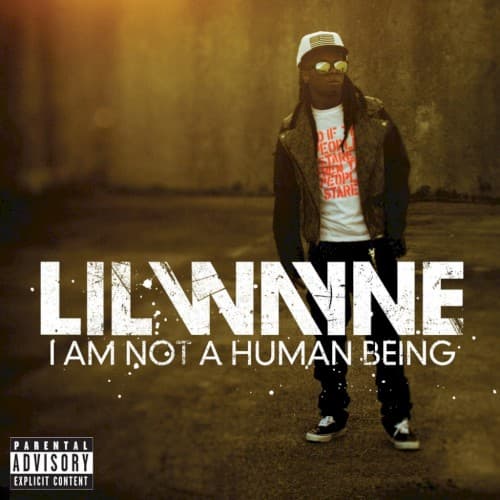
I Am Not a Human Being sounds like a rapper coasting at a very high altitude. Lil Wayne is still funnier and looser than almost anyone on the radio in 2010, and the best songs here, from the title track to the Drake-assisted single, prove the gifts are intact. The problem is that this is a record built from leftovers. It plays like a stopgap, with big personality and not much shape, and it is better as a set of moments than as an album.
That is the thesis, and the circumstances explain a lot of it. The fact sheet notes that the material was recorded before Wayne's eight-month prison term, and that many of the tracks were originally meant for Tha Carter IV before Wayne chose to hold the new songs back and record fresh ones later. So what arrived was a set of songs that were good enough to release but not important enough to build around. The folks who complained that it felt like an EP stretched to album length had a point.
Compared with Rebirth, the rock-tinged experiment that came earlier the same year, this is a retreat to safety. Critics at the time called it a return to classic Weezy, and in terms of voice they were right: the raspy drawl and the bouncing punchlines are all there. What is missing is the sense of risk that made the best Lil Wayne records feel like events. The rapping is competent and often fun, but the wordplay is lighter than what the Tha Carter III era promised, and many verses rely on the same quick setup and payoff.
If you want a fun forty-odd minutes of Wayne on autopilot, it delivers. If you want a statement, look elsewhere.
Punchlines on Autopilot, Beats on a Budget of Ideas
The strongest case for the album is the voice. Wayne's rasp and rubbery cadence give even the thinnest verse some bounce, and the best songs use that elasticity to turn a plain setup into a funny turn of phrase. The title track, produced by Infamous and Drew Correa, is the best example of Wayne playing with sound and syllables, and Popular finds him in an easy, joking mood on a Cool & Dre beat.
But the writing is where the album most clearly runs out of fuel. The fact sheet collects the critical complaints well: couplets over verses, predictable flow structures, a sense of creative languor, and slow, static delivery. Those descriptions fit. Too many songs use the same trick, a quick line and a built-in answer, and the effect is a string of cute punchlines that never deepen. The cartoon gunplay, sex jokes and digestive-system references that Pitchfork noted are all present, and they work best when the beat gives them energy; when it does not, the verse deflates. Wayne also mentioned that no autotune appears on the record, and the raw rap approach is a real contrast to the melodic experiments of the year before, but it exposes how little structure some songs have.
The production is a patchwork of capable names. Kane Beatz, Streetrunner, Cool & Dre, Boi-1da and Noah 40 Shebib each take a share, and none of them is asked to build an identity for the project. The result is decent but unfocused: Right Above It has a polished pop-rap sheen that suits the hit, while a cut like Bill Gates leans on a lean, moody instrumental that sits comfortably behind the rapping. Spin called the production unfashionable, and that is fair; the beats are fine, but few of them would be remembered without the vocal.
Guests are a mixed bag. Drake appears on three songs and helps with the hooks, but the pairing sometimes shrinks Wayne into the supporting role on his own record. Nicki Minaj makes a strong entrance on What’s Wrong With Them. Jay Sean on That Ain’t Me pushes the album toward a soft pop lane that does not suit Wayne's strengths. The weakest part is the closing run of Young Money promo tracks, which, as Christgau put it, are filler.
Taken together, the album is a display for a voice that does not need much help, working with writing that does not ask enough of it.
Hot Middle, Cold Edges: Pacing a Stopgap
The sequence is the album's most obvious weakness. It opens with a run of songs built around Drake and Wayne trading hooks and bars, which gives the first act a glossy, hit-seeking feel but not much tension. From there the record slides into a long middle stretch where the best songs sit, close enough together that you feel the lift: the title track, the remixed single, and the lead single all land in the center, and Christgau's observation that the true classics are all in the middle is the cleanest way to describe the shape.
The back end fades. After the high points, the record spends its last stretch on posse tracks with Young Money teammates, and the switch from Wayne-led songs to promo cuts changes the mood in a way that feels like leftover business. The collective cameos from Gudda Gudda, Jae Millz, Tyga and others are energetic, but they interrupt the album's only real momentum and leave a slightly scattered final impression.
At only twelve songs in the version reviewed here, the length is not the issue; the problem is that the record never builds toward anything. It reads as an assortment rather than an arc, and the fact sheet confirms that the final tracks were not even on the initial digital release and were added after the physical edition came out. That patchwork history shows up in the flow of the album.
A tighter version, ending on the best middle material and dropping the posse cuts, would have felt like a short, confident project. As it stands, the record's high point comes too early in the back half to carry it to the end.
Between Rebirth and Carter IV: A Middle Rung
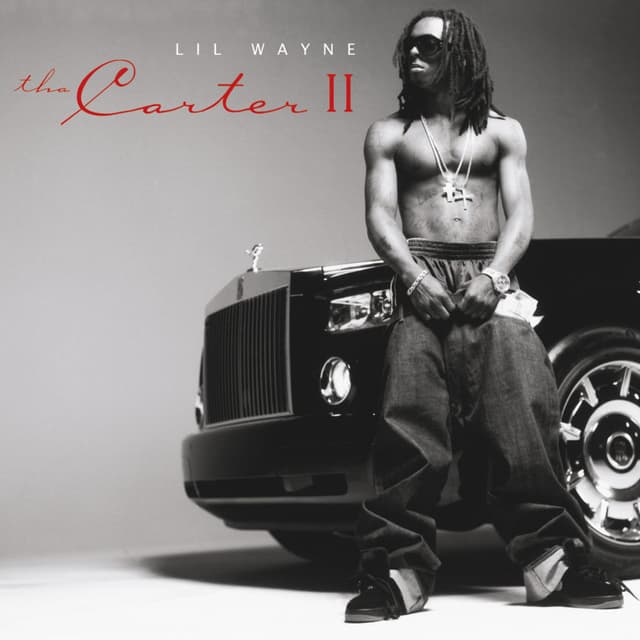
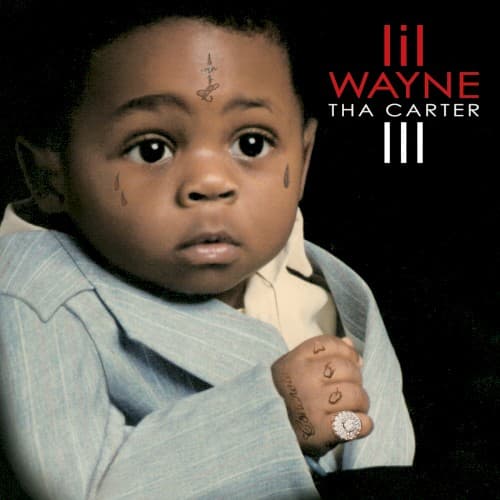
In the catalog, I Am Not a Human Being lands clearly above Rebirth, which scored 3.8 here, because it plays to Wayne's strengths rather than against them. It sits well below Tha Carter II at 7.6 and Tha Carter III at 7.9, where the writing, beats and sequencing were far more ambitious. A 5.9 reflects that placement: the voice and a few songs lift it, but the lack of structure and the thin writing hold it back. It has aged as a footnote to the Wayne story, interesting mainly as the album that reached number one while its artist was in prison.
The album is for fans who like Wayne's casual, punchline-heavy mode and want a lighter listen between the bigger projects. It is also a decent entry for people who liked the Drake collaborations. Skip it if you want a front-to-back album, or if the repetitive couplet style already wears on you; the criticism that it is a stopgap is accurate, and nothing here changes it.
Start with I Am Not a Human Being, the title track, for the cleanest example of the bouncing Weezy voice. Add Right Above It, the Drake single that went top ten, and then Popular for the loosest, most playful verse on the record. After that, the returns drop quickly.
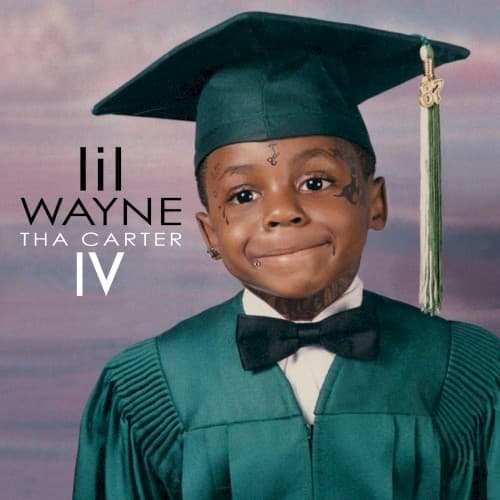
To hear the same voice in a more focused and more ambitious setting, go to Tha Carter III, where the writing and beats are in a different class. For a sense of how far the formula could stretch, Tha Carter II is the better second stop. This album works best as the interval between them: a quick, enjoyable reminder that the voice was fine while the ideas were waiting.
Track by track
Track Listing
Gonorrhea
SolidA Drake feature produced by Kane Beatz and Filthy that opens the album with a cheeky, shock-value title and a loose, bouncy mood. The hook is catchy, and Wayne's delivery is fun, but the song is more a gag than a showpiece and sets a lighter tone than the best material to come.
Hold Up
SolidWith T-Streets and a beat by The Olympicks, this is a mid-tempo cut where Wayne coasts. The verses are serviceable and the hook does the work, but nothing here stays with you.
With You
SolidA Streetrunner production featuring Drake, aimed squarely at radio with a smooth, melodic feel. It is pleasant and well made, though it asks little of Wayne and pushes the album toward a pop lane.
I Am Not a Human Being
StandoutThe best track on the record and the clearest picture of why the album works at all. Produced by Infamous and Drew Correa, it gives Wayne a punchy, unfussy beat and lets his elastic voice do the heavy lifting. The wordplay is looser and funnier here than on most of the project, with ideas stacked quickly and delivery that sits happily around the beat. Christgau singled it out, and it is easy to see why. It captures the personality-forward side of Wayne without the filler around it, and it is the song to play for someone who has never heard the album.
I’m Single (remix)
StandoutProduced by Noah 40 Shebib with Omen, and at more than five minutes it is the longest cut on the record. The moody, spacious beat gives Wayne room for a slower, more playful performance, and Christgau picked it out as one of the album's best. It is one of the few songs that changes the temperature of the album in a way that feels deliberate.
What’s Wrong With Them
StandoutDevelop produced this one, and Nicki Minaj contributes a sharp guest verse. It charted on the UK R&B chart after strong download sales. A brisk, playful song that benefits from the contrast between the two voices.
Right Above It
StandoutThe lead single, with Drake and a Kane Beatz production, became a top-ten hit and debuted at number six on the Hot 100. The beat is slick and hooky, and the two rappers trade confident, quotable lines without breaking a sweat. It is not the album's most inventive song, but it is the most complete as a piece of pop-rap, and it shows how effectively Wayne could be slotted into radio rotation. The hook is simple, the structure is tight, and the performance is polished. A strong single that outshines most of the filler around it.
Popular
StandoutA Cool & Dre production with Lil Twist. Wayne sounds relaxed and amused, and the bright instrumental suits his lighter delivery. Christgau named it among his three picks, and it is one of the more enjoyable mid-album moments, even if the guest is a lightweight.
That Ain’t Me
WeakStreetrunner produces and Jay Sean sings the hook, pushing this toward soft pop. It is competent but out of step with the rest of the record, and Wayne's verses feel secondary to the chorus.
Bill Gates
StandoutA Boi-1da production with additional work from Burnett. The beat is moody and tight, and Wayne's flow fits it naturally, with a more focused delivery than on many cuts. A solid late highlight that deserved a better slot in the order.
YM Banger
WeakA posse cut with Gudda Gudda, Jae Millz and Tyga, produced by Mike Banger. Energetic, but it functions as a Young Money promo and Wayne is just one voice among several. Filler.
YM Salute
WeakAnother crew showcase, with a long guest list including Lil Twist, Lil Chuckee, Gudda Gudda, Jae Millz and Nicki Minaj, and a beat by Mr. Pyro that was originally recorded for a Young Jeezy project. Too many voices and too little focus. Filler.