The scorecard
6.2/10 · Mixed
- Writing25%
- 6.0
- Production25%
- 6.5
- Delivery15%
- 7.0
- Cohesion15%
- 5.0
- Originality10%
- 6.5
- Replay value10%
- 6.0
Verses stay close to short boasts and loyalty lines, and the clearer mix exposes how often songs lean on a repeated hook instead of a developed idea.
The Chopsquad DJ, Zaytoven and self-produced beats share a crisp, consistent mix that finally puts the voice in front, though few of them surprise.
Keef's behind-the-beat swing and sung hooks are the album's best asset, most clearly on Singing To The Cheese and Ain't Missing You.
The producer rotation keeps the first half lively, but the center sags around the five-minute I Just Wanna and the closing run feels abrupt.
A drill originator moving toward melody and self-production in 2015 was a real step away from the template his imitators were still copying.
The strongest handful of tracks hold up, but the mood-dependent middle wears thin on repeat plays.
Chief Keef Bang 3 — The Original Drill Voice Takes His Own Template Apart
Bang 3 works best when Chief Keef stops trying to sound like Chief Keef. The record fans waited on for nearly two years, through announced dates that fell through, a split with Interscope and a leak on August 1, 2015, was supposed to be a rescue mission for the sound of Finally Rich. What arrived is looser, more melodic and more self-directed than that, and its best moments come from the places where the old template is quietly abandoned.
The argument here is that Bang 3 is the strongest case for Chief Keef as a songwriter rather than a mood. Drill made him famous on atmosphere: a flat, threatening voice over bare drums, and a slur that younger rappers copied until it hardened into a house style. By 2015 that style had a thousand imitators, and the open question was what the original would do about it. His answer is to build songs with shape. Hooks repeat on purpose, verses change gears, and a good share of the beats carry his own production credit, which means the odd structural choices are his decisions and not a producer's.
That is also why the album splits opinion. Critics at the time called it polished and mature, and the polish is real: the mix is clearer than almost anything he had released since his debut. But a clean sound exposes thin writing. When a hook is not there to carry a verse, the lyrics fall back on the same few subjects, and the clarity makes the repetition easier to hear.
Its place in the culture is a little strange. This is a Chicago album built partly with Atlanta bounce, with guests from New York and Pittsburgh, released by a rapper who had been dropped by a major label and then outlasted the label's interest. Hearing A$AP Rocky on a Keef record in 2015 was a reminder of how far his influence had travelled. The record answers the question of whether Keef could survive without a machine behind him, and the answer is yes, with caveats.
A Cleaner Mix, a Thinner Pen: How Keef Builds Songs Around the Slur
The first thing the record does is turn up the voice. On the early tapes his delivery sat half buried, the drums did the talking, and the slur read as texture. Here the vocal is in front, and what it reveals is a rapper with a better ear for melody than his reputation allows. He sings through choruses, bends syllables into the beat, and uses the ad-lib as a rhythmic marker rather than a catchphrase. Singing To The Cheese is the clearest example, an arrangement that refuses the standard four-bar grid and still holds together.
The production credits explain the spread. Chopsquad DJ handles several of the opening and middle songs, Zaytoven supplies the bouncing, hook-friendly side of the record, DP Beats and Slam take a track each, and Keef produces a large block himself. The mix is consistent enough that the handoffs between them are hard to hear. That is both the strength and the limit: the record sounds like one artist with one vision, but the beats rarely surprise. The Zaytoven material is the most recognizable and the least challenging for anyone who knows his catalog.
The writing is the limiting factor, and the cleaner sound makes that harder to hide. Keef has never been a narrative writer. He works in short declaratives about money, loyalty and indifference, and across fourteen tracks the same boasts return with different adjectives. Several verses read like placeholders waiting for a hook to arrive. The album is at its best when the hook is the idea and at its weakest when a verse has to carry a song alone, which happens most on the longer tracks.
The guest slots are mostly decoration. A$AP Rocky and Mac Miller both get room, but neither pushes Keef out of his lane, and the features read as friendly collaborations rather than contests. They add variety to the sequence without adding stakes. The one place a guest changes the temperature is the tribute single, where the sung voice beside Keef's gives the song a gravity the rest of the album rarely reaches.
Delivery is the most reliable asset. Keef has a rhythmic instinct few rappers of his generation matched: he lands behind the beat, then catches up, and the lazy swing makes thin lines sound confident. The vocal doubling and sung hooks add warmth the early records lacked, and the best performances here have the looseness of someone who no longer answers to a major label. What the album lacks is a verse that would make a skeptic stop and rewind. It earns respect for craft and for consistency, but it does not produce a moment that a listener quotes back to a friend.
Front-Loaded and Fourteen Songs Deep: Where Bang 3 Peaks and Stalls
As a sequence, Bang 3 is front-loaded and then mostly steady. The opening stretch moves quickly, with short songs and clear hooks, and the first half hour is the best argument for the record. Laurel Canyon starts with a full song instead of an intro or a skit, a confident choice that tells the listener this is an album built from songs, not a mixtape stitched from leftovers.
The producer rotation helps the pacing. Every few tracks the beat changes hands, so the album moves between bounce, something slower and something stranger without ever losing the thread of Keef's voice. That variety keeps the early and middle sections from blurring, which is a real risk when a rapper's delivery stays close to one register.
The middle is where momentum dips. The features arrive there, the songs run longer, and the structure leans on repeated hooks. I Just Wanna is the longest song at just over five minutes, and it spends more time than it needs to. The extra length does not add ideas, only more of the same mood. A tighter running time would have helped the stretch around the center.
The closing run recovers by going back to shorter songs, with the last two both credited to Keef himself. Ending lean, instead of on a big statement, suits an artist whose strength has always been economy. It also leaves the album feeling slightly unfinished, which fits its history.
The length question depends on what you count. The release as sold was a double album, with a second part arriving weeks later, and more than two dozen songs would be a slog. Judged as the fourteen-song first installment, the length is mostly earned: nothing is a disaster, a few songs are slack, and none outstays its welcome by more than a verse. The sag is gentle, never fatal.
Second Only to His Debut as Influence, Ahead of It as Craft
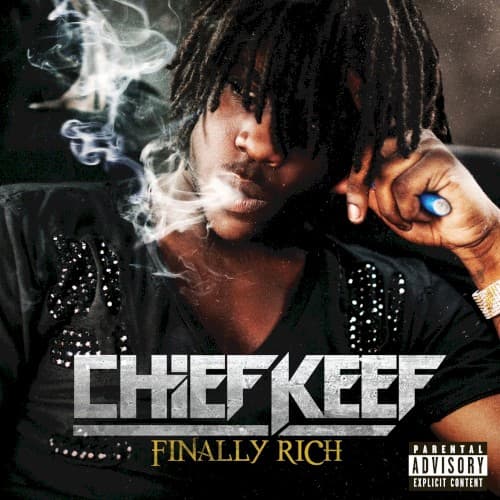
Chief Keef's catalog on this site is thin, so the comparison that matters is with Finally Rich, the record Bang 3 was always measured against. The debut is the more consequential album: it set a template that a generation copied. Bang 3 is the better-made one, and it is the album where the template is taken apart by the person who invented it. Ranking them depends on whether you value impact or craft, and the scores here lean toward craft with reservations about the writing.
Bang 3 is for listeners who already like Keef's voice and want to hear what he does with a cleaner palette, and for anyone curious about how drill's biggest name responded to a decade of imitators. It is also a good entry point for someone who found the early tapes too abrasive, since the melodic hooks and clear mix lower the barrier. Skip it if you want dense lyricism or narrative detail; the writing is the weakest part, and no amount of polish changes that.
A decade on, the album has aged better as a statement of independence than as a collection of songs. The delay, the label exit and the leak are part of what gives it weight, but the music holds up on its own terms mostly where Keef treats the hook as the main event. The tracks that depend on a single mood wear thinner on repeat.
Start with Singing To The Cheese for the most adventurous structure, Ain't Missing You for the emotional center, and Superheroes for the best guest chemistry. If you want the earlier version of this artist, go to Finally Rich next, and listen for how much of its bare drive Bang 3 trades for melody.
The cleanest way to hear Bang 3 is as an argument that Keef's real instrument was never the mumble but the way he leans a hook into a beat, and the first half of this record proves it in under forty minutes.
Track by track
Track Listing
Laurel Canyon
SolidOpening with a full song instead of an intro is the right instinct. Chopsquad DJ keeps the pace measured and puts the vocal in the front position it holds for the whole album. It sets the tone more than it scores a hit: a controlled, solid start rather than a standout.
Cappin
StandoutThe first Zaytoven beat of the set, and the bounce that comes with that credit lifts a hook-driven performance. Keef sounds relaxed, riding the rhythm instead of fighting it. A solid cut that sits comfortably in the first half without being essential.
Unstoppable
SolidA confidence track whose title is its whole premise. Chopsquad DJ keeps the sound tidy and Keef sits upfront in the mix, but the verses do little to separate it from its neighbors. Solid and replaceable.
Singing To The Cheese
StandoutThe most adventurous song on the record and the one critics singled out. Keef produced it himself, and the arrangement drifts off the usual grid, moving forward while seeming to move sideways, yet never comes apart. His sung phrasing is the main instrument here, and it shows how far his melodic sense had developed since the early tapes. It is also a reminder that his best ideas come from structure and sound, not from the verses. If one song is going to change a skeptic's mind about Bang 3, this is the candidate. Start here.
Superheroes
StandoutThe one song that survived from the original 2014 track list when Keef reworked the album, and it has the feel of a track built for a bigger plan. Slam's production gives A$AP Rocky room to work, and the guest verse is the smoothest collaboration on the album, polished where Keef is loose. At just over four minutes it earns its length by contrast between the two voices. The hook is the song's real asset, and the chemistry holds up even when the verses blur together. It is one of the better ways into the first half.
Pick One
SolidDP Beats gives Keef a plain, functional backdrop, and he does what he does on most of the record: a steady cadence, a few lines of attitude, a chorus that repeats until it sticks. Nothing wrong with it, nothing memorable either.
New School
SolidA second Zaytoven production, and the title invites a generational reading that the verses do not really follow up on. The beat has a bounce that suits Keef's drag behind the rhythm, and the song is pleasant without adding anything new to the album's argument.
I Just Wanna
SolidThe Mac Miller feature is the longest song on the album, and the length is the problem. Production is shared between Keef and Chopsquad DJ, and the beat has more room than the lyrics can fill. Miller's presence brings a different tone and a more conversational flow, and the contrast with Keef is the best part. But the song keeps going after the idea has been delivered, and the second half repeats what the first half already settled. A fair attempt at a collaboration that needed an edit, and the sag it causes in the middle of the sequence is hard to ignore.
Facts
StandoutProduced by Keef himself, and a good example of his instincts as an arranger: a steady, uncluttered beat that leaves space for the vocal. The performance is calm, almost conversational, and the hook is easy to remember. A solid track that proves the self-produced material is not a side project.
Ain't Missing You
StandoutThe emotional center of the album and the first single after the Interscope split, written as a tribute to his late cousin and fellow Glo Gang member Big Glo. Jenn Em's singing opens up the song and gives it a warmth that the rest of the record rarely reaches. Keef drops the posturing and sounds like someone who means what he is saying, and the restraint in the verses is more affecting than any amount of volume would be. Alki David and B Howard are credited with the production, and the soft, open arrangement leaves the vocals exposed. It is the most human thing here and an obvious place to start.
Millions
SolidZaytoven again, and again the bounce does half the work. Keef rides a money-themed hook that feels more automatic than inspired, and at a little over three minutes the song is over before it wears out. Competent, not essential.
Yes
WeakChopsquad DJ at a mid-tempo setting, with a hook built around one repeated word. It is easy to forget an exact moment from it, and in this spot in the sequence it reads as filler.
Green Light
StandoutKeef produced this one, and the lean, forward-moving beat gives his voice a clean path. The hook is simple and effective, and the vocal layering adds some body. A good late-album recovery that shows the self-produced songs are among the record's most consistent.
Go Harder
StandoutThe shortest song on the album and a fitting closer for it, produced by Keef. It gets in, makes its point with attitude and a tight hook, and gets out in under three minutes. Leaving on a compact track instead of a big finale suits the artist, and the economy is a reminder of his strengths.
Frequently Asked Questions
Is Chief Keef's Bang 3 good?
Why was Bang 3 delayed for so long?
Who is featured on Bang 3?
Which Bang 3 songs should I hear first?
Styles