The scorecard
8.8/10 · Essential
- Writing25%
- 8.5
- Production25%
- 9.0
- Delivery15%
- 9.0
- Cohesion15%
- 8.5
- Originality10%
- 8.5
- Replay value10%
- 9.0
Two voices trade verses with a drawl-heavy, street-level confidence that keeps the subject matter narrow but never thin, and the best songs hit their points without wasted bars.
Pimp C stacks warm soul, funk and jazz samples (Curtis Mayfield, Isaac Hayes, Bootsy Collins, Wes Montgomery) over slow, deep drums and gives every song its own atmosphere.
Both voices ride the slow tempos with total control, and the interplay between them gives the record a push-and-pull that few duos manage.
The album holds one slow-rolling mood from start to finish and trades singles for consistency, with only the spoken bookends feeling slight.
It folded West Coast production lessons into a Southern frame that sounded like no one else in 1996, and it became a template for Houston.
The sample choices and unhurried grooves reward repeat listening, and the record has only grown in reputation since it received little attention at release.
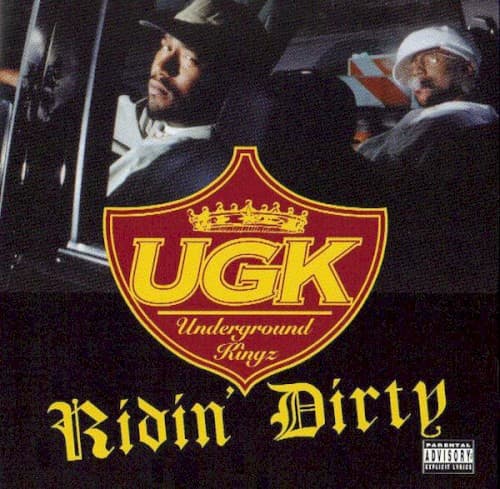
UGK Ridin' Dirty: The Slow Lane Was Never Slower or Heavier
Ridin' Dirty makes the case that in Southern rap, slow is not the same as soft. Everything on this record moves at the speed of a car cruising with the windows down: the drums arrive late, the bass settles low in the chest, and the voices ride the groove rather than chase it. That unhurried pace is the album's whole argument, and it is a convincing one. This is a record that sounds heavier at 80 beats a minute than most of its rivals do at 100, and it manages that without a single overstuffed moment.
The thesis here is simple: Ridin' Dirty is the best case for Southern rap as a serious, fully formed album form in the mid-1990s, and its quality comes less from any one hit than from the way production, voices and mood lock together. It had no music videos and no official singles, and it still ended up as the duo's best-selling record, which tells you it spread through car stereos and word of mouth rather than through any marketing push. National critics barely noticed at first. Their reappraisal came later, and it has not gone away.
The context matters because the fact sheet places the album as the third by the duo, in a year when the Houston scene was building its own identity. Scarface, a Houston rapper, introduced Tupac Shakur to the group, and Shakur praised the record before his death. That is a useful marker: a West Coast star hearing a Southern record and taking it seriously. The rest of this review explains why that response made sense, where the album is thin, and why it keeps climbing in the ranks of Southern rap albums, ahead of the more commercially visible Country Grammar in the ways that matter to heavy listeners.
Soul Samples Poured Over Slab-Speed Drums
The production is the main event. Pimp C builds each beat from classic soul, funk and jazz material, and the fact sheet lists the sources: the Isley Brothers, Curtis Mayfield, Bootsy Collins, Isaac Hayes, George Duke, the Fatback Band, even Pink Floyd and the jazz guitarist Wes Montgomery. What stands out is how gently these records are handled. Nothing is chopped into a nervous collage. Instead, a warm chord or a bass figure is allowed to loop at a slow pace until it becomes a mood, and the drums sit underneath it with a heavy, relaxed knock.
Critic Tom Breihan noted that Pimp C absorbed lessons from producers such as Dr. Dre and DJ Quik, and you can hear that in the polish and the musicianship. But the groove is pure Southern: the space between the kicks is wider, and the bass is allowed to dominate.
The writing and the delivery fit that sound exactly. The duo trade verses in drawls that stretch syllables across the bar, and the rhymes are direct, confident and rooted in the street life the music is built to soundtrack. The lines work because they are compact; neither voice wastes a bar explaining what the beat already says. The contrast between the two voices is the other asset. Each voice has its own grain and timing, and the pairing keeps a record of near-constant tempo from feeling static. Instead of a lead and a sidekick, you hear two equals who know when to give way.
The weaknesses are real, and they are the flip side of the strengths. Because the album commits so fully to one tempo and one palette, there are stretches where the songs blur, and a listener who wants variety will find the record repetitive on a single sitting. The subject matter returns to the same ground, and the hooks are more atmosphere than melody; there is nothing here with the sticky pop appeal of a radio single, which helps explain the lack of official singles and the slow start in the charts. The spoken bookends add little beyond a bit of framing, and a couple of the middle tracks are good rather than great. None of that undermines the record, but it explains why it works best as an album played at volume rather than as a collection of songs to shuffle.
In the context of 1996, the combination is rare. Southern rap at the time was often associated with regional party records or hard, raw sounds from specific cities. Ridin' Dirty offered a third thing: a grown, soulful, carefully produced version of the same region, one that could stand next to anything from either coast. That ambition, not the individual songs, is what separates it from its peers.
One Long Drive With a Few Perfect Stops
Ridin' Dirty is the rare album that plays better as a single drive than as a playlist. The sequence opens with a short spoken scene-setter, then settles into its first big statement with "One Day", where an Isley Brothers sample sets a reflective, almost wistful tone before the harder material arrives. From there the album moves through a run of dense, bass-heavy tracks that rarely change gear, and the effect is cumulative. By the time the middle of the record arrives, the groove has become hypnotic, and the small variations between songs, a different sample here, a shift in voice there, feel like events.
The pacing is a strength and a limit at once. A record that holds one tempo for forty-odd minutes has no real surprises, so the peaks come from the quality of individual beats rather than from changes of pace. The best moments are the ones where a sample lands with unexpected warmth, and the album saves some of these for its second half. The closing run feels like the summit: the title track, built on Maynard Ferguson and Wes Montgomery, arrives as a kind of summation, a jazz-tinged groove that pulls the album's themes into one slow, confident statement. If anything sags, it is the stretch right before it, where two or three songs share a template and the energy settles into a plateau.
The length is earned. At thirteen tracks, including two short spoken ones, there is little excess, and the record ends when it should. The sequencing sensibly leans on mood rather than momentum, and it resists the temptation to stack guest features or radio bait, which makes the whole feel more like a statement than a product. For an album with no official singles, this sequencing is the whole strategy: it asks you to commit to the mood, and it pays you back if you do.
A Southern Classic That Took Its Time
No other UGK albums are rated on the site yet, so this verdict cannot place Ridin' Dirty within a catalog ranking. What can be said is that it is the group's best-selling record, with over 850,000 copies sold, and that its reputation has grown well beyond the modest reception it first received. By the measures that matter here, production, cohesion and replay, it belongs near the top of any list of Southern rap albums, and it is easy to see why the Houston scene treated it as a foundation.
This album is for listeners who want Southern rap at its most soulful, for anyone interested in how sampling could be used with restraint, and for people who like a record that rewards volume and patience. It is less suited to listeners who need quick hooks, big features or a wide range of tempos; for a more radio-ready take on the Southern sound, try Country Grammar, which trades the weight here for pop appeal. It has aged better than most records from its year, because its sound was never tied to a passing trend: the drums are slow, the samples are classic, and the voices are timeless in their ease.
Start with "Ridin' Dirty" for the title-track summation, then "Pinky Ring" for the Curtis Mayfield flip, and then "3 in the Mornin'" for the Isaac Hayes and George Duke blend. Once you have those, "One Day" and "Diamonds & Wood" fill in the rest of the picture. Next, hear Scarface, the Houston rapper who helped carry the group to Tupac Shakur, and then Dr. Dre for the West Coast production school that Pimp C studied and then bent to a slower pace. The best sign of the record's durability is that the first full listen still feels like a long drive that you do not want to end.
Track by track
Track Listing
Intro
SolidA short spoken opening that frames the album as a ride. It sets mood and nothing more.
One Day
StandoutThe first full song and the album's most reflective moment. Pimp C builds it on an Isley Brothers sample, and the soft chords give the heavy drums something warm to push against. The tempo is slow, the vocals are unhurried, and the mood is more thoughtful than menacing, which makes it a smart opener for a record that otherwise leans hard. It establishes the template: let the sample breathe, keep the drums low, let the voices tell the story. The hook is not flashy, but the atmosphere is the point. A strong start that tells you what kind of album this is.
Murder
SolidA darker, more direct track where the beat stays spare and the voices carry the threat. It fits the album's mood but offers fewer melodic details than the sampled highlights around it.
Pinky Ring
StandoutA Curtis Mayfield sample from Future Shock supplies the foundation, and Pimp C turns it into a slow, strutting groove. The drums are heavy and patient, the bass sits deep, and the vocals lean back into the pocket. Mayfield's material is famous for its nervous urgency, so slowing it down and letting it breathe is a bold choice that pays off. The result sounds expensive and menacing at once, an example of how Southern production could borrow from soul and make it feel new. One of the clearest demonstrations of the duo's sound.
Diamonds & Wood
StandoutSamples from Bootsy Collins and a track by .380 give this song a rubbery, funk-influenced bounce that stands out from the slower material around it. The vocals are relaxed, the rhythm is playful, and the whole thing feels like a street-level party. It also shows how well the duo handles lighter moods without losing weight. A highlight for anyone who likes the funk side of Southern rap, and a good pick for sampler-minded listeners.
3 in the Mornin’
StandoutIsaac Hayes and George Duke samples combine into a late-night, hazy groove, and the song feels built for exactly the hour in its title. The drums knock softly, the chords hang in the air, and the voices keep a low, confiding tone that turns the song into a mood piece rather than a showpiece. It rewards volume and headphones, and it ranks among the best examples of the album's atmosphere. A key track for anyone who wants the record's quieter, more nocturnal side.
Touched
SolidA steady mid-album cut that keeps the groove going without adding much new. Solid and in character, but not one of the stronger pieces of writing or production.
Fuck My Car
SolidA brisk, bass-driven track with a bounce that breaks up the slower run around it. The attitude is cheeky, and the beat is lively, though the idea is slighter than the best material here.
That’s Why I Carry
SolidAnother dense, street-level song that matches the album's mood. The beat stays heavy and the vocals stay controlled, but it blends into the stretch around it rather than standing out.
Hi Life
StandoutA smooth, easygoing track that leans into the album's relaxed side. The groove is warm and the delivery is loose, making it a pleasant stop in the second half even if it is not a peak.
Good Stuff
StandoutSamples from the Fatback Band and Pink Floyd's Money meet in a loose, funk-inflected groove. It is one of the more playful beats on the record, with a light bounce that suits the title, and the voices sound relaxed and confident. It does not hit as hard as the best tracks, but the sample combination is inventive and keeps the second half from sagging.
Ridin’ Dirty
StandoutThe title track is the album's summation and its high point. Samples from jazz trumpeter Maynard Ferguson and guitarist Wes Montgomery give the beat a smoky, jazz-tinged depth that sets it apart from everything else on the record, and the drums lock into a slow, heavy groove beneath them. The voices ride the pocket with total control, never rushing, never straining, and the mood is a perfect blend of menace and calm. It sounds like the album's thesis in one song: slow, soulful, heavy and confident. If you play only one track, play this one.
Outro
SolidA short closing piece that reuses a Bootsy Collins sample to bring the album full circle. A neat bookend, though not essential.
Frequently Asked Questions
Is UGK's Ridin' Dirty a good album?
What are the best songs on Ridin' Dirty?
Did Ridin' Dirty have any singles?
Styles