Chief Keef: The Teenager Who Put Chicago Drill on the Map
Chief Keef was sixteen when his videos started spreading from Chicago's South Side, and within a year the rap industry was fighting over him. Born Keith Farrelle Cozart on August 15, 1995, he grew up in the Parkway Garden Homes in Washington Park and was raised largely by his grandmother, Margaret Carter. He says he began rapping at five, started in earnest in 2008, and released his first mixtape, UF Overload, in 2009.
His fifth mixtape, Back from the Dead (2012), produced "I Don't Like" with Lil Reese, and that single changed things. Kanye West remixed it with Pusha T, Jadakiss and Big Sean, a bidding war between major labels followed, and Keef signed with Interscope in 2012 with a promised imprint, Glory Boyz Entertainment. He is now widely credited with popularizing drill among mainstream audiences and is considered a progenitor of the genre.
Few artists have had such a large effect on rap while releasing so inconsistently. His official albums are fewer than his fans would like, but his sound has traveled far beyond Chicago.
Slurred Hooks, Ad-Libs and Mood Over Meaning: The Chief Keef Sound
Keef's style is built on melody, repetition and texture. His delivery is slurred and sing-song, and he leans hard on ad-libs, especially his signature "aye", which became a rhythmic part of his songs. Critics have pointed out that he is always more concerned with vibe than meaning. That is not a knock: on "Love Sosa" the mood carries the whole song, and you feel the cold, bored swagger even when the words are hard to parse.
The early drill sound came together around producer DJ Kenn, a Japanese immigrant who worked on many of Keef's earliest songs and was involved with the Glory Boys Entertainment collective. The beats were stark and dark, a sound that came to define the genre. As he matured Keef began producing himself: he made 16 of the 20 songs on Back from the Dead 2 in 2014, and Pitchfork found that he showed promise in the new role. Later work such as Glotoven (2019) with Zaytoven paired his voice with producer Zaytoven, and he has since earned production credits for other artists, including Lil Uzi Vert's "Chrome Heart Tags".
The pull of his music has always been atmosphere. Rolling Stone described Back from the Dead 2 as a bleak and lonely record with darkly psychedelic shapes, and that phrase fits much of his best material.
From Finally Rich to Almighty So 2: Chief Keef's Rise, Fall and Independent Return
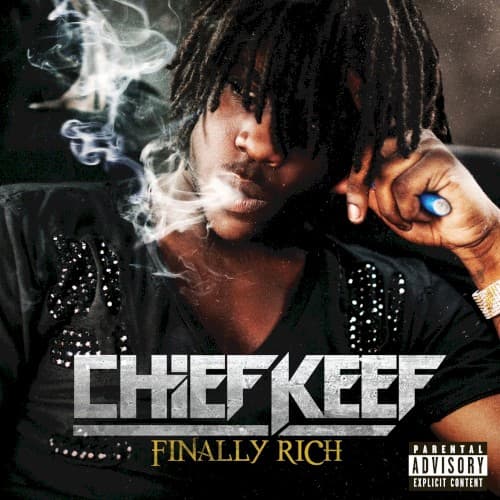
The Glory Road and Bang, both released in 2011, built his local reputation. "I Don't Like" took him national, and his Interscope deal was reportedly worth six million dollars across three albums, with an extra advance to start Glory Boyz Entertainment. Finally Rich, his debut studio album, arrived on December 18, 2012 with guests including 50 Cent, Wiz Khalifa, Young Jeezy and Rick Ross. Its singles "I Don't Like" and "Love Sosa" were re-released commercially, and "Love Sosa" went on to quintuple platinum certification. Our review of Finally Rich reads it as a debut with strong moments and real unevenness, which matches its moderate critical and commercial reception.
Keef also appeared on "Hold My Liquor" from Kanye West's Yeezus in 2013, a performance that earned praise from Lou Reed. The 2013 mixtapes Bang, Pt. 2 and Almighty So drew mixed to negative reviews, and Keef later said he was disappointed in both. Interscope dropped him in October 2014, and Finally Rich remains his only major-label release.
The independent years were more creative than the industry expected. Back from the Dead 2, Big Gucci Sosa with Gucci Mane, and Nobody, which received a 7.0 from Pitchfork, showed him sharpening his production and writing. A 2015 benefit concert by hologram, organized after the killing of a Glo Gang member, drew pushback from Chicago officials and was cut short by police in Hammond, Indiana.
Dedication in December 2017 was called his most satisfying album to date by The Guardian. After that came a long run of mixtapes, then 4Nem (2021) and Almighty So 2 (2024), both of which entered the Billboard 200 as independent releases. His highest-charting song is "Bean (Kobe)" with Lil Uzi Vert, which reached number 19 on the Hot 100, and he appeared on Drake's "All the Parties" in 2023. He released the mixtape Skeletor in April 2026.
Chief Keef's Legacy: The Blueprint Behind Drill, Mumble Rap and SoundCloud's Rise
Chief Keef is credited as a catalyst for Chicago drill and for the melodic, slurred styles that followed, and he is credited as an influence on 21 Savage, YoungBoy Never Broke Again, Lil Uzi Vert, Playboi Carti, Lil Pump, XXXTentacion, Juice WRLD, Polo G and others. His heavy use of ad-libs became a template, and his sound was a major influence on the SoundCloud rap subgenre. Even rappers who came from different regions, like Kodak Black, name him as an influence.
He also changed what a rap star could look like. Pitchfork's David Drake wrote that Keef sits at street rap's aesthetic center rather than its margins. Rolling Stone said he personified Chicago drill. In 2023 boxer Gervonta Davis walked out to "Love Sosa" for a fight, proof that the song has outlived its first moment.
The record is not spotless. His output has been uneven, there are long stretches of weak mixtapes, and critics such as Lupe Fiasco and Rhymefest debated his message early on. But the case for his importance rests less on any single album than on the way a generation of artists borrowed his tone.