The scorecard
7.7/10 · Great
- Writing25%
- 7.0
- Production25%
- 8.0
- Delivery15%
- 8.0
- Cohesion15%
- 8.0
- Originality10%
- 8.0
- Replay value10%
- 7.5
Stefan Burnett's verses work as sound and fixation rather than argument, and the best of them, on Hot Head and BB Poison, turn a few obsessive images into hooks, but the pages of repeated paranoia blur together by the back half.
Zach Hill and Andy Morin build every track around Nick Reinhart's guitar and a hard, dry low end, so the distortion has a skeleton instead of just volume.
Burnett's shouting has real range here, from clipped chant to near-melody, and Clementine Creevy's guest vocal on the opener shows how much a second voice helps.
Thirteen tracks in roughly 38 minutes with no skits is tight, though the middle stretch repeats the same tempo and attack.
It sharpens an established sound toward songcraft and guitars instead of inventing a new one, which makes it less startling than the group's earliest records but easier to return to.
Short songs with identifiable hooks and a closer that earns its place make this one of the more replayable entries in the group's catalog, though that is a judgment on its first years of life.
Death Grips Bottomless Pit — The Noise Band Learns to Write Hooks
Bottomless Pit makes its case in the first three minutes. Giving Bad People Good Ideas opens with a guest singer, Clementine Creevy, and a hook you could hum, which is not what anyone expected from a group whose reputation was built on being impossible to like politely. By the time Hot Head arrives, a lurching, bass-heavy track the group released ahead of the album, it is clear that the point of this record is songcraft: the same violence as before, now aimed with intent.
That is the thesis here, and it cuts against the usual way Death Grips are discussed. The group is treated as a provocation that happens to have beats, a thing to be survived. This fifth album is better understood as the moment the provocation got organized. Nick Reinhart's guitar appears on every track, Zach Hill's drumming and Andy Morin's keyboards give each song a recognizable frame, and Stefan Burnett's vocals are shaped into refrains instead of being hurled at the wall. Pitchfork's critic made a similar point, praising the record for renewing a focus on songcraft over chicanery, and I think that is the right axis to judge it on.
The stakes are larger than they look, because this is an album that belongs to the playlist era without bending to it. Its songs are short, mostly under three and a half minutes, and nearly every one has a front door: a riff, a chant, a drum figure you can recognize in seconds. Hot Head and Bubbles Buried in This Jungle both found second lives on television, which tells you the writing travels outside the album context. A group this abrasive had no business producing that kind of portability.
The record is not flawless, and the case against it is simple. Once the songs have each established their attack, the middle of the album starts to feel like variations on a theme, and Burnett's lyrical obsessions loop in ways that reward the sound more than the sentences. Even so, this is the Death Grips album that most clearly proves the noise was a choice. It is a sharper, more repeatable piece of work than its reputation as a difficult group suggests, and the strongest argument for starting here instead of with the earliest, rawest material.
Guitar as a Structural Beam in a Burning Room
The production decision that defines this album is putting guitar everywhere. Reinhart plays on every track, and where earlier Death Grips records leaned on programmed menace and sampled shrapnel, these songs are built like punk and industrial rock records that happen to have a rapper in front. The effect is a more physical, less synthetic sound. Hill's drums hit like a live band in a small concrete room, and Morin's keyboards and programming fill the gaps with hostile textures that never fully swallow the rhythm section.
That structure is what separates this record from a pile of distortion. The low end on tracks like Hot Head and BB Poison is thick but defined, so the distortion sits on top of something solid. The mix leaves room for silence and sudden stops, and those gaps make the loud parts hit harder. This is a production style that understands contrast, which is the most useful thing a loud album can understand.
Burnett's delivery is the other half of the argument. He still shouts, but the shout is now a controlled instrument with several settings: a clipped, rhythmic bark, a half-sung drone, a rising whoop that works as a refrain. On Bubbles Buried in This Jungle the pressure drops and he sounds almost reflective, and the contrast makes the album's heavier moments land more convincingly than a straight run of aggression would. The Creevy feature on the opener is a smart structural move for the same reason, because a second voice resets the ear before the assault begins.
The writing is where the record is most open to challenge. Burnett writes in compressed images of paranoia, appetite and self-destruction, and the verses are more convincing as sound than as statement. A few lines register as genuinely striking, but across thirteen tracks the same preoccupations return in similar shapes, and by the time the album reaches its second half the effect is cumulative rather than revelatory. That is a real weakness, although it is a weakness the group has turned into a method: the repetition is part of how the music hypnotizes.
The other limitation is range. The tempo and attack sit within a narrow band for most of the record, and the production, for all its definition, rarely changes its basic palette. A listener looking for the kind of stylistic detours that more eclectic rap albums offer will not find them here. What they will find is an unusually coherent piece of design, a record in which the guitar, the drums, the electronics and the voice all point the same direction and the songs are short enough that the direction never goes stale. That coherence is the album's real achievement, and it is more difficult to pull off than the noise suggests.
Thirty-Eight Minutes With No Exit Ramps
As a sequence, Bottomless Pit is built for momentum. There are thirteen songs, no skits, no interludes that exist only to fill space, and nothing that runs past four and a half minutes. The album's total running time sits around 38 minutes, which is short by the standards of the streaming era, where bloated tracklists are common, and the discipline shows. Each track starts quickly and ends before it wears out, so the album never asks you to endure a bad stretch.
The opening run is the strongest, because it is where variety is concentrated. A melodic opener, a heavy single, and then a stretch of jagged, shorter songs establish the full range of what the record can do. Hot Head is the clearest case for the album's ambitions: it is a song that works equally well inside the album and as a lone track dropped into a playlist or a television episode, which is a quiet sign of how well it is built.
The middle is where the sequencing is weakest. After the early variety, a run of songs at similar tempos and intensities blurs the individual identities of the tracks, and a listener dipping in from a playlist is more likely to remember the beginning and the end than anything between. This is a common fault of albums built from similar-sounding material, and it is the clearest reason the record falls short of the best work in its field.
The closing stretch recovers the shape. The final tracks bring a more atmospheric and open feel, and the title track ends the album on a note that feels like a conclusion rather than a cutoff. The length is earned in a literal sense: nothing here outstays its welcome, and the album stops while you still want more. In an era when many rap records are padded to chase streaming totals, finishing under forty minutes with a clear arc is itself a statement. The sequence is not perfect, but it respects the listener's time more than most of its peers do.
The Best Door Into a Difficult Catalog
Within the Death Grips catalog, Bottomless Pit sits in the upper tier for a specific reason: it is the album that treats songs as the goal. Metacritic's aggregate of 80 out of 100 from eleven critics reflects broad agreement, and Pretty Much Amazing went further, calling it the best release from one of the most exciting artists of the 2010s. I would not go that far. The group's earliest work is rawer and more shocking, and the sheer novelty of that first material is difficult to beat. But if the question is which record is easiest to love and hardest to dismiss, this is the one.
It is for listeners who like their rap abrasive but want structure, and for rock and punk fans willing to meet a rapper halfway. It is also a good entry point for anyone who has bounced off the group before because the earlier records felt like pure assault. Skip it if you want conventional lyricism, narrative or melody on the terms of mainstream rap, because the writing is more textural than argumentative and the album makes no apologies for that.
How it has aged is mostly a matter of how well its hooks survive. The answer so far is well: Hot Head and Bubbles Buried in This Jungle have both lived on in television, and the sound has not dated the way some contemporary experimental records have, perhaps because it is built on live drums, guitar and plain, dry mixing rather than on production trends of 2016.
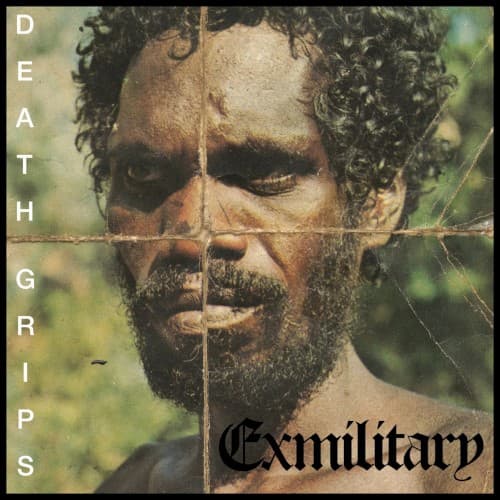
Start with Hot Head for the album's force, Giving Bad People Good Ideas for its sense of melody, and Bubbles Buried in This Jungle for the slower, stranger side. To hear where the group began, go to Exmilitary, a rougher and more raw statement that shows how much more disciplined this record is. For a rap record that treats noise in a related spirit, try something from clipping., where the production leans on harsh sound in a similar way. The closing title track is the best proof in the set that a record this abrasive can still end on a feeling of calm.
Track by track
Track Listing
Giving Bad People Good Ideas
StandoutThe opener is the most conventionally melodic thing the group had released in years, built around a hook sung by Clementine Creevy. It resets the listener's expectations: before the noise arrives, here is proof that the band can write a refrain. It works as a thesis statement for the album, although its melodic ease also makes the heavier tracks that follow sound tougher by comparison.
Hot Head
StandoutThe album's most direct statement. The bass is thick, the pace lurches forward with controlled aggression, and Burnett's delivery turns a handful of repeated phrases into an unmistakable hook. It is the best argument that Death Grips can write a single, and its later use on television shows how well it works outside the album. The version on the record carries a different intro, added bass guitar and a lower mix than the single, a change that makes it sit more comfortably in the sequence.
Spikes
SolidA short, jagged track that keeps the energy high without offering much new. The attack is relentless and the textures are harsh, but it is more a mood piece than a song, and it sounds like a link between the stronger tracks around it.
Warping
SolidWarped, stuttering production gives this one its identity, and the shortness keeps it from outstaying its welcome. Burnett's delivery is compressed and rhythmic, and the track earns its place as a palate-resetter rather than a highlight.
Eh
StandoutA compact, bouncy track built on a hook that is deliberately almost silly, which is the secret of its appeal. It is one of the album's more playful moments, and its video has been a well-known part of the album's rollout. The simplicity makes it one of the most memorable songs in the first half.
Bubbles Buried in This Jungle
StandoutThe tempo drops and the pressure eases, and the track becomes the album's strongest argument for atmosphere. Burnett sounds reflective rather than combative, and the arrangement leaves space around the guitar and keyboards. The song later appeared in several episodes of Westworld, which fits: it is the record's most patient and best-suited-for-screens piece, and a welcome change of register.
Trash
SolidA solid mid-album entry that leans on riff-driven aggression. It does the job and keeps the pace up, but it does not stand out strongly from its neighbors, which is a symptom of the middle stretch's sameness.
Houdini
StandoutFast and breathless, with Burnett's delivery tightening into rapid, rhythmic bursts. It is one of the album's better demonstrations of pure momentum, and its short length keeps it from wearing out. Not a standout, but a strong example of what the record's tighter songwriting can do.
BB Poison
StandoutA heavy, distorted track that stands among the album's most forceful, with a low end that gives Burnett something solid to push against. The song's central phrase, previewed in a tweet months earlier, became one of the record's early teasers. It is a high point for the album's blend of punk energy and rap rhythm, and it makes the argument for the production style more clearly than almost anything else here.
Three Bedrooms in a Good Neighborhood
SolidA dense, tense track that works the album's central formula one more time. It is effective on its own terms but, coming this late in the album, it sounds like a repeat of ideas already established, and it lacks a distinctive hook to separate it from the pack.
Ring a Bell
SolidThe shortest song on the album, and it plays like a burst of aggression rather than a fully developed track. It is brisk and forgettable, a quick shot of volume before the closing run.
80808
StandoutThe title points at the drum machine sound that underpins the track, and the song leans on a heavy, programmed low end more than the guitar-first tracks around it. It is a welcome change in texture late in the running order, and Burnett's delivery here is among his most rhythmically precise, though it lacks the immediate hook of the album's best material.
Bottomless Pit
StandoutThe title track closes the album on a more atmospheric and open note than the aggression that came before, which gives the record a sense of completion. It is a fitting final statement, a track that earns its closing position by changing the mood instead of repeating it. It leaves a stronger impression than a straight run of noise would have, and it is a better ending than most records this abrasive bother to attempt.
Frequently Asked Questions
Is Death Grips Bottomless Pit a good album?
Is Bottomless Pit a good place to start with Death Grips?
Who is featured on Bottomless Pit?
Styles