
Death Grips: The Sacramento Trio That Treated Rap Like Noise Rock
Few groups have made hip-hop sound as dangerous as Death Grips, and fewer still have made their own absence part of the act. The Death Grips artist profile starts in Sacramento in the summer of 2010, when drummer Zach Hill, engineer and sampler Andy Morin and vocalist Stefan Burnett, who goes by MC Ride, began recording together. Burnett was Hill's next-door neighbor. Morin had already helped record Hill's solo album Face Tat. Their first song, "Full Moon (Death Classic)", was cut on December 21, 2010.
What came out of that room did not fit a lane. The band pulled from punk, industrial, electronic music and noise, and critics have filed the result under experimental hip-hop, industrial hip-hop and punk rap, none of which quite holds. Ride barks, screams, whispers and talks his way through tracks that feel closer to a panic attack than a verse. Hill's drumming is fast, ragged and physical, and Morin's sampling gives it a hostile digital shell.
The story is also a story about business and nerve. Death Grips signed to Epic Records in 2012, leaked their own second album in breach of the contract and got dropped. They announced a breakup on a napkin in 2014 and then kept releasing music. They skipped a festival slot on purpose and called the empty stage the performance. Fans either find that infuriating or thrilling, and the group clearly knows it.
For a newcomer the entry point is simple: start with Exmilitary, then The Money Store, then decide how far down the hole you want to go.
Barked Vocals, Battered Drums and a Lo-Fi Digital Menace
The sound of Death Grips rests on three people doing three different kinds of violence. Ride is the voice, and he keeps changing it: a shout, a scream, a flat spoken-word mumble, a whisper that sounds worse than the shout. His lyrics are bleak and cryptic, and the delivery matters more than any single line. If you hear him cold, the first impression is pure aggression, and it can be a lot to take in on a first listen. A second pass tells you more. Spend a week with the records and the paranoia and the strange humor start to come through.
Zach Hill is the engine. He is a noisy, fast and unconventional drummer, and critics have credited him as the creative force behind the project even though he is not the frontman. Morin's role is just as important and harder to hear. His sampling is unorthodox, his synthesizer lines are improvised, and he keeps the whole thing glued together with distortion. The production on The Money Store leans toward the abrasive and chaotic; on Government Plates the group pushes further from rap and plays with electronic dance music from several eras, a shift noted at the time by The New York Times.
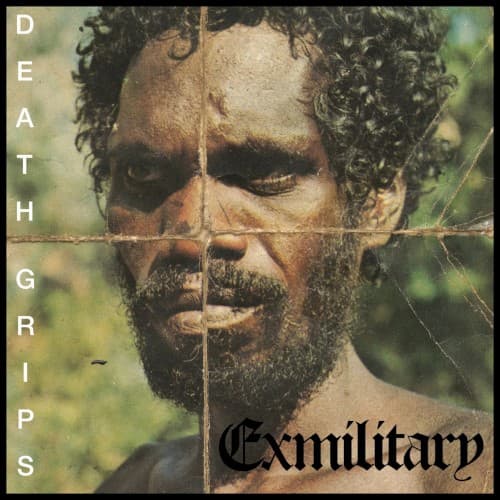
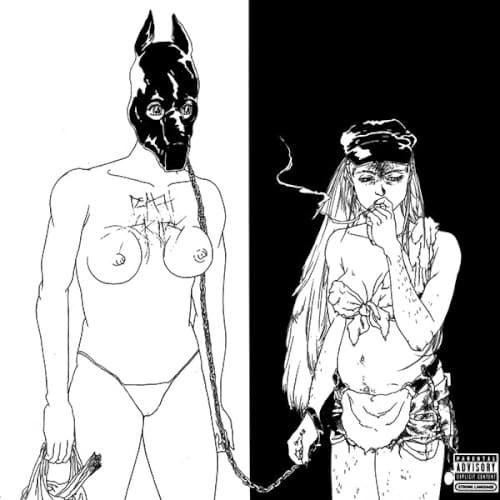
Live, the group is something else again. Hill has been known to drum to the point of injury, even performing in handcuffs. Ride's stage persona is intense and chaotic, and Morin samples live while dancing hard. Between songs they stretch into long improvised bridges. Their visual identity is lo-fi on purpose, from low-budget videos to cover art that has caused real controversy, and the whole package reinforces the idea that nothing here was designed to be comfortable.
From Exmilitary to Bottomless Pit: A Career of Leaks, Walkouts and Surprise Drops
The first release was Exmilitary, given away free on April 25, 2011, after a self-titled EP in March. Pitchfork gave it a 7.5, and other outlets were just as warm. We rate it 8.1/10, and it still plays as the purest version of the band: raw, loud and uninterested in being liked. Later that year they released the vocal and instrumental stems as Black Google, a very Death Grips way to let people take the record apart. Their meeting with Epic Records in October, the story goes, was sealed after Burnett left graffiti in the Sony Music bathroom, and a deal was reportedly struck within five hours.
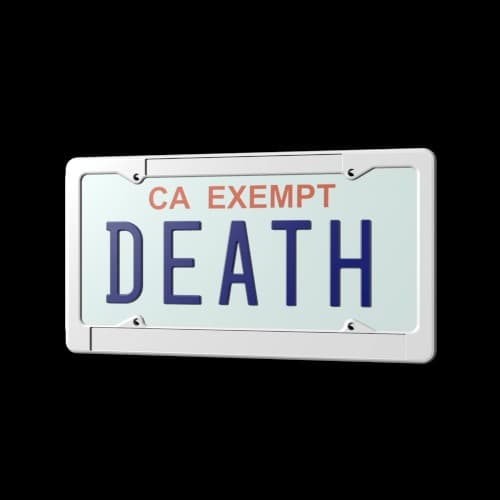
The Money Store arrived in April 2012 and debuted at number 130 on the Billboard 200. The Los Angeles Times described it as punk rock with a hip-hop face-lift, and we gave it 8.2/10, the highest score of the four albums we have reviewed. Then came the break. In October 2012 the group put No Love Deep Web online for free download, ahead of the label's own plan to release it in 2013. A scheduled international tour was canceled to finish it. Epic dropped them. They launched their own label, Third Worlds, with a relationship through Harvest, and Government Plates followed as a free download in November 2013. We rated that one 7.2/10, the weakest of our four, though it remains the most openly electronic of them. The guitar on "Birds" was recorded by actor Robert Pattinson on an iPhone, sampled by Hill.
The next stretch was chaotic even by their standards. Death Grips skipped a Lollapalooza slot in August 2013, setting up a printout of a fan's suicide note and playing a pre-recorded playlist the night before. They later said the empty stage was the show. In July 2014 they announced a breakup on a napkin, along with the first half of the double album The Powers That B. Björk had recorded original vocal samples for the project. In 2015 they released the instrumental album Fashion Week, which reached number 72 on the Billboard 200, and then the rest of the double album.
Bottomless Pit, released in May 2016, landed after a long run of surprise drops and was preceded by an odd 2016 interview video in which the group's songs replaced all the audio. We rate the album 7.7/10, a solid return that sits between the two extremes of the catalog. A 2017 autumn tour with Ministry and the 22-minute Steroids megamix followed. Year of the Snitch arrived in June 2018, with credits to Lucas Abela, Andrew Adamson and Justin Chancellor of Tool. A 30-minute mix, Gmail and the Restraining Orders, came out in 2019 for Warp Records' 30th anniversary.
The pace has slowed since. The early 2020s brought mostly re-releases to streaming services, a run of festival bookings in 2023, and some previously unreleased material on their website. In 2025 a leaked message between a fan and Morin sparked breakup rumors, which Hill and Burnett dismissed, and in November 2025 the band said it was recording a new album.
Why Death Grips Still Matters to Anyone Pushing Hip-Hop Past Its Edges
Death Grips never sold like a rap act, and that was never the point. Their influence runs through noise-friendly rap, internet-era underground music and the way unreleased drops and cryptic posts became a marketing language of their own. The band proved that a free download could be an event and that a record label contract could be a prop in the story.
Their reach crossed genres. Björk invited them onto her remix album Bastards after sending an artist-to-artist note of support. Sergio Pizzorno of Kasabian has cited them as an influence on the album 48:13, and a collaborator of David Bowie, Donny McCaslin, has said Bowie was inspired by Death Grips while working on Blackstar. Not many rap groups can claim a line from a Bowie session to a Sacramento garage.
There are limits, and an honest profile should name them. The band can be exhausting, the records from the middle of the decade are uneven, and the stunts sometimes overshadowed the music. Still, the best of the catalog holds up. Listeners who like abrasive rap from the 2010s, whether Danny Brown, JPEGMAFIA or the louder corners of Run the Jewels, will find a useful point of comparison here, even if those artists sound nothing alike. Death Grips earned their cult the hard way, by never asking for a bigger audience.