Scorecard: 8.1/10 · Great
How we score- Writing(25%)
- 7.5
Elliott moves between braggadocio, sex talk and vulnerable moments with uncommon ease, writing hooks that stick without sacrificing specificity or wordplay.
- Production(25%)
- 9.5
Timbaland invents a new language: those inhale-hiccup sounds, off-center percussion, negative space used as melody—this is the album that changed what rap beats could be.
- Delivery(15%)
- 8.0
Elliott's sing-song flow and willingness to play with pitch and rhythm make every verse sound like no one else, though some guests feel flat next to her.
- Cohesion(15%)
- 6.5
Front-loaded with the best material, then wanders through slower numbers that test patience; at seventeen tracks the back half sags noticeably.
- Originality(10%)
- 9.0
Nothing in 1997 sounded remotely like this—the production was alien, the persona was sui generis, and even the skits broke format.
- Replay value(10%)
- 7.5
The first half holds up as required listening; the second half rewards selective play rather than full album runs.
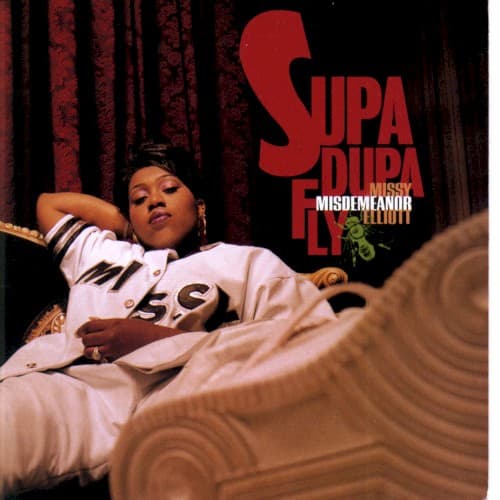
Missy Elliott Supa Dupa Fly — When Future Sounds Arrived in a Trash Bag Suit
The thesis of Supa Dupa Fly is that a woman could step into late-nineties rap not as a guest or a hook but as the architect of the whole sound, and that the sound itself could be rebuilt from scratch. Missy Elliott and Timbaland delivered on both claims with an album that sounded like nothing before it and made most of its competition feel like variations on the same template. The production here invents a vocabulary: beats built from breathing sounds and off-kilter percussion instead of loops, hooks that use silence as punctuation, arrangements that feel liquid where everyone else was locked to a grid. Elliott matches it with a persona that refuses to choose between rapper, singer, comedian and director—she does all of it in the space of a bar, moving from punchlines to melody to vulnerability without signaling the shifts.
The album works because both halves of the partnership understand that strangeness is only useful if it serves songs people will actually play, and the first half delivers those songs in a run that few debuts match. The second half tests that confidence with slower tempos and longer stretches between peaks, and the album is too convinced of its own sprawl to edit itself down.
What holds up is the invention: this is the sound that bent rap production toward the possibilities Timbaland opened, and Elliott's willingness to be weird, sexual, funny and insecure in the same verse set a template that still gets borrowed without credit.
Hiccup Beats and a Voice That Moves in Three Directions at Once
Timbaland's production here is the most important sonic shift in rap since sampling went wide. He builds tracks out of negative space and sounds that mimic biological functions—hiccups, inhales, tongue clicks—turning the body itself into percussion. The Rain uses a slowed vocal gasp as the central melodic element and layers it over drums that never land where you expect them to. Sock It 2 Me stutters and jerks, the beat folding in on itself while Elliott rides it like she knows exactly where the holes are.
Hit 'em Wit da Hee moves at half-speed with a bassline that feels submerged, everything muffled and aquatic. These are not beats you can build by raiding a crate; they are compositions that require rethinking what rhythm is for. The consistency is startling: nearly every track has that alien Timbaland signature, which gives the album a unified sonic profile but also means the few that miss the mark feel like experiments that did not finish cooking.
Elliott writes with a directness that most rappers avoid, turning sex talk and bragging into scenarios rather than clichés. She is specific: Pass da Blunt is about the mechanics of rotation and getting skipped, not just weed as a signifier. Best Friends tells a jealousy story that names the feeling plainly instead of dressing it up. She moves between singing and rapping without treating them as separate modes, letting melody creep into her flow and letting her flow snap the melody back into time.
The vocal performance is elastic—she will stretch a word across three syllables, chop a phrase into staccato bursts, then drop into a sing-song hook that sounds like a schoolyard taunt. It works because she never oversells it; the weirdness is casual, like this is just how she talks.
The writing sags when it reaches for ballad territory without the lyrical architecture to hold the slower tempo. Why You Hurt Me wants to be vulnerable but settles for vague hurt feelings, and I'm Talkin' moves through verses without landing on anything sharp enough to justify the length. The guests are uneven: Busta Rhymes delivers what you expect on the intro and outro, Aaliyah glides through Best Friends, but several features feel like contractual obligations rather than creative partnerships. The album is front-loaded by design, and that design exposes how much the back half depends on momentum that has already been spent.
A Debut That Sprints for Five Songs Then Coasts on Fumes
The opening stretch runs hardest through the first three full songs, where Elliott and Timbaland sound like they are inventing a genre in real time. That sequence does not waste a second, and the next two tracks keep the energy high. Then the album slows things down deliberately, and it never quite recovers the momentum.
The middle is spotty: one track has ideas but meanders, another works because of a guest but takes too long to get where it is going, and two feel like filler disguised as album tracks. By the time the closing run arrives the album has been asking for patience for twenty minutes, and even the stronger moments in the back half feel like they would work better if they were not competing for attention with ten other tracks. The sequencing assumes you will sit through the whole hour-plus as a statement, but the statement is made by track eight.
The interludes do not break the flow because the flow is already broken. What the album needed was an edit that trusted the first ten tracks to do the work.
The Debut That Launched a Decade and Then Kept Going for Ten More Songs
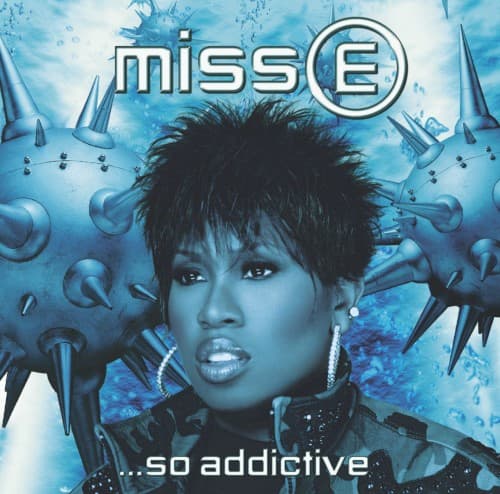
Supa Dupa Fly is the most important debut in Elliott's catalog and the one that changed what rap production could sound like, but it is not her best album—Miss E... So Addictive takes these ideas and tightens them into a more consistent listen. This one is essential for the first half and for understanding where the next decade of experimental rap production came from, but it is too sprawling to work as a front-to-back experience. The back half has moments, but they are buried under songs that would have been B-sides on a more ruthlessly edited project.
If you are starting with Elliott, begin here for the history, but know that the best material is clustered up front. Hit 'em Wit da Hee, Sock It 2 Me and The Rain are required listening, the three songs that every producer spent the next five years trying to reverse-engineer. Beep Me 911 and Pass da Blunt show the range, and Best Friends is worth it for the Aaliyah feature. Skip the back third on first listen unless you are committed to hearing the whole vision.
If you want Elliott at her tightest, Miss E... So Addictive is the better record; if you want to hear the moment the sound changed, Supa Dupa Fly is where it happened. The album is for fans who want to hear invention in progress and are willing to sit through the experiments that did not quite land. It aged into a document of a specific moment when two artists were throwing everything at the wall, and what stuck changed the genre.
Track Listing
Busta’s Intro
●Busta Rhymes hypes Elliott with the expected energy, shouting over minimal percussion. Does its job in under a minute.
Hit ’em Wit da Hee
▲The album's opening argument: Timbaland builds a beat that sounds submerged and waterlogged, bassline so low it feels like pressure on your chest, and Elliott rides it with a flow that snaps between singing and rapping without warning. She brags about her skills and her crew, turning punchlines into hooks, and the production gives her room to breathe by leaving space where other producers would have stacked samples. The hook is absurd and sticky, nonsense syllables that work because Elliott sells them with total commitment. This is the sound that made people rewind the tape to figure out what they just heard, and it still sounds stranger and sharper than most of what followed.
Sock It 2 Me
▲A freak-show beat that stutters and jerks, drums falling off-time deliberately while Elliott and a guest trade verses about sex in space-age metaphors. The production is all hiccups and pregnant pauses, and Elliott matches it by playing with her pitch and cadence, stretching syllables and chopping phrases mid-word. The hook is another earworm built from playground taunts, and the whole track feels like a transmission from a future that never quite arrived. It is weird enough to alienate casual listeners and tight enough to work as a single, which is the balance Elliott and Timbaland hit better than anyone in 1997.
The Rain (Supa Dupa Fly)
▲The centerpiece and the reason the album matters. Timbaland takes a vocal sample, slows it until it sounds like a gasp, and uses it as the melodic spine while drums clatter around it in patterns that defy normal pocket. Elliott raps about her come-up and her style, unbothered and conversational, letting the beat do the heavy lifting while she glides through the spaces it creates. The video became as iconic as the song, but the song itself is why the video worked—this is a complete artistic statement, the production and the persona locked together so tightly you cannot imagine one without the other. It holds up because nothing about it tries to sound like what was on the radio in 1997, and nothing since has sounded quite like this either.
Beep Me 911
▲A slower tempo, more melodic than the tracks before it, with Elliott singing as much as rapping over a beat that feels like it is dissolving in real time. She writes about urgency and desire, the verses moving between plea and command, and the production matches the mood by staying minimal and aquatic. It works as a breather after the chaos of the opening run, though it is a breather that still sounds like no one else. The hook is simple and effective, one of the more traditionally structured songs on the album, which makes it feel almost conventional by comparison—and it still sounds alien.
They Don’t Wanna F*** Wit Me
●Straight braggadocio, Elliott claiming her space and daring anyone to test her. The beat is spare, just drums and a looped vocal fragment, which lets her voice dominate. She is funny and sharp, turning threats into punchlines, and the confidence is absolute. The track does not reinvent anything the way the earlier songs do, but it shows Elliott can command a stripped-down beat with just her presence. It is filler by the standards the album has already set, but it is filler with personality.
Pass da Blunt
●A weed song that slows the tempo to a crawl and lets the guest verses drag the energy down with them. Elliott's hook is strong, but the verses feel obligatory, and the production is too patient for the subject matter. The album needed a gear shift here, and this is the track where the momentum starts to leak. Not bad, but not essential either.
Bite Our Style (interlude)
●Elliott and her crew clown on biters over minimal instrumentation. Short, funny, makes its point.
Friendly Skies
●A smooth track about travel and relationships, with Elliott singing more than rapping and the production staying mellow. The verses meander, and the song never finds a strong enough hook to justify its length. There are ideas here about freedom and escape, but they do not land with the specificity Elliott shows elsewhere.
Best Friends
▲Aaliyah elevates this into something worth repeated listens. Elliott writes about jealousy and betrayal, the narrative clear and sharp, and Aaliyah's vocal on the hook provides the melodic anchor the song needs. The production is restrained, letting the voices do the work, and both artists sound relaxed and natural trading lines. It is one of the stronger slow songs on the album because the writing is specific enough to hold the tempo, and the chemistry between Elliott and Aaliyah is audible.
Don’t Be Commin’ (In My Face)
▼Elliott warns off fake people and hangers-on over a beat that sounds unfinished. The verses are solid but the production feels thin, like a sketch that never got fleshed out. Forgettable.
Izzy Izzy Ahh
▼A track that tries to recreate the strangeness of the opening run but settles for quirk without structure. The beat is busy and the hook is annoying rather than catchy. Filler.
Why You Hurt Me
▼A ballad that wants to be vulnerable but leans on vague feelings instead of specific hurt. Elliott sings more than raps, and the production is soft and slow, but the song never builds to anything. It drags.
I’m Talkin’
▼Elliott talks her way through verses that do not cohere into a point. The beat is fine, the flow is fine, but there is no reason for this song to exist. Skippable.
Gettaway
●A late-album attempt to recover some energy, with Elliott rapping about escape and independence over a beat that bounces harder than most of the back half. It works on its own terms, but by this point the album has been asking for patience for too long. Solid, but arriving too late to save the sequencing.
Busta’s Outro
●Busta Rhymes closes the album with more hype-man energy. Unnecessary, but brief.
Missy’s Finale
●Elliott thanks her listeners and her crew over minimal production. A victory lap that assumes you made it this far and still care. Most will have checked out by now.