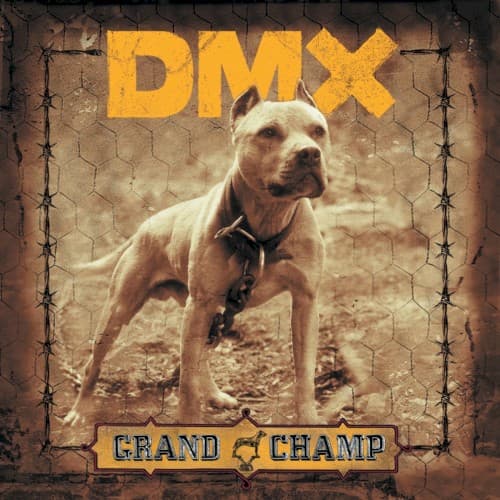
The scorecard
5.7/10 · Mixed
- Writing25%
- 5.5
- Production25%
- 6.0
- Delivery15%
- 7.0
- Cohesion15%
- 5.0
- Originality10%
- 4.5
- Replay value10%
- 5.5
The verses on "The Rain" and "Thank You" find a human register, but most of the album recycles street-threat boilerplate without a new image or story.
Kanye West's "Dogs Out" and the Swizz Beatz cuts hit hard, yet the list of a dozen different producers leaves the record without a consistent sonic identity.
The growl and the sudden softening are still instantly his, and he carries "Where the Hood At" on sheer force, but the energy is more routine than on his earlier records.
Nineteen listed tracks with guest-heavy filler, a pop duet and a gospel closer pull in different directions, so the album plays like a pile of singles-in-waiting.
It reaches for hits that were already working for him and for peers, and almost nothing here sounds new next to his own late-90s run.
Four or five songs earn repeat plays, while the guest-driven middle fades quickly from memory.
DMX Grand Champ: A Number One Album That Sounds Like a Holding Pattern
Grand Champ opens by announcing a champion and then spends most of its length acting like a contender. That mismatch is the whole story of the record. DMX, in 2003, still had the voice, the reputation and the sales to open at number one, and he did exactly that, moving 312,000 copies in its first week. What he did not have was a clear idea of what the next album should be for.
My thesis is that Grand Champ is a competent, well-made fan service record whose best songs are very good and whose structure is the problem. It does not fail on voice. It fails on direction. The tracklist is built like a compilation: a dozen different producers, a long guest list, a pop-leaning duet, a spiritual closer and a handful of hard street records, all arranged as if no single song was allowed to define the album. The fact sheet notes mixed reviews from critics, and the most useful sentence in that coverage is the one that calls it a sequel built to satisfy fans and move units. That is accurate, and it is also the ceiling.
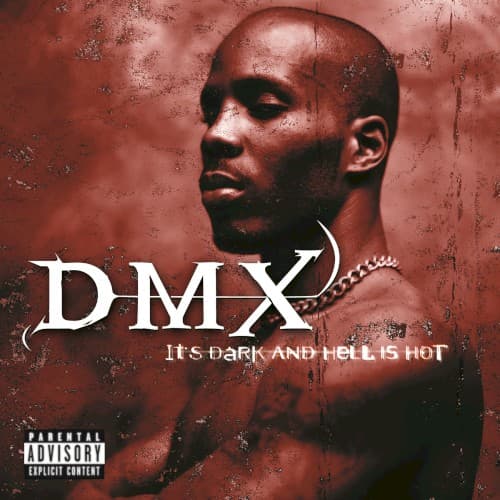
The stakes are real because the earlier work set a high bar. It's Dark and Hell Is Hot is rated 7.9 on this site, and it earned that by making a rapper's internal war feel dangerous. Here the war is mostly a brand. DMX still prays, still barks, still threatens, but the pieces arrive in the order the formula demands rather than the order the songs require. The result is an album that is pleasant to dip into and difficult to defend as a whole. The rest of this review is about the dips worth taking.
Twelve Producers, One Growl, No Center
The first thing to understand about the sound is that there is not one. The credits run through Kanye West, Swizz Beatz, No I.D., Rockwilder, Dame Grease, DJ Scratch, Ron Browz and the production team Tuneheadz, among others, and the listener hears every one of those hand-offs. A record assembled this way can still hold together if the voice is the anchor, and DMX does his best to be that anchor. The growl, the abrupt drop into a whisper and the ad-libs that sound like arguments with himself are all intact. But a voice cannot fix a mix of tempos and moods that never settle into a plan.
The best beats are the ones that give him something to push against. Kanye West's production on "Dogs Out" is built around a soul sample from a girl-group-style ballad, and the sweetness of the loop against DMX's roughness is the sharpest contrast on the record. Swizz Beatz delivers the stripped, stomping style that suits DMX best, and No I.D. gives "We Go Hard" a sample-based warmth that lets Cam'ron slide in comfortably. These are the moments when the producer treats the rapper as a texture to be framed rather than a feature to be accommodated.
The weaker beats are the ones that sound like they came from a catalog. Some of the mid-record productions are loud and serviceable and then gone, with no hook in the arrangement for the ear to hold. When the beat fails to set a mood, DMX has to supply all the personality himself, and across nineteen songs that is a heavy lift.
The writing is the larger weakness. At his peak he found images that made menace feel specific, and the conflict between sinner and believer gave the songs an engine. Here the subject matter is often generic: toughness, loyalty, warnings to rivals, and the occasional sermon that arrives without a lived-in scene. A song like "Where the Hood At" works as a rallying cry, but it works because of the energy, not the argument. The rhymes are mechanically sound and rarely surprising, and the guest verses often match the same register instead of offering contrast. That sameness is the album's recurring flaw.
It is not all filler. The record has real moments of vulnerability, particularly when he lets the preacher take over from the bruiser, and those moments are where his writing regains a reason to exist. They are just spaced too far apart. The sample credits in the fact sheet show a taste for soul and funk loops, and that taste is the right instinct; the execution is simply inconsistent.
A Strong Start, a Guest-List Middle, a Prayerful Exit
The sequencing makes a decent first impression. The opening stretch runs from the intro into a run of songs that include the lead single and the Kanye West cut, and for a few tracks the album sounds focused: hard beats, direct bars, a sense of momentum. If the whole record kept that pace and shape, the rating would be a point higher.
Then the guest list takes over. A run of songs with long guest lists brings in name after name, and the middle of the album becomes a rotation of features rather than a progression. The problem is not that the guests are bad. The problem is that each song asks the listener to recalibrate around someone else's voice, and the album loses the through-line of a single narrator. There is a posse-cut energy without the posse-cut payoff, because the cohesion is missing.
The pacing recovers somewhat near the end, when the record leans into softer, more reflective material and then closes on a short spiritual interlude. That shift is the right instinct, and it echoes the structure of his earlier records, where the prayer arrives as an admission rather than a decoration. But it comes after a long, uneven stretch, and by then the sequence has already made its argument that this is a collection rather than a statement.
The length is not earned. Nineteen songs is long for a record whose ideas could fill about twelve, and the fact sheet's note that critics found it mixed lines up with what the pacing suggests: the best songs are good enough to survive a cut, and the others would not be missed. A tighter version, built on the best producers and fewer guests, would have been a stronger album with a clearer identity. As it stands, the shape is a sandwich with the good parts on the outside and the filler in the middle.
Best Treated as a Playlist, Not a Statement
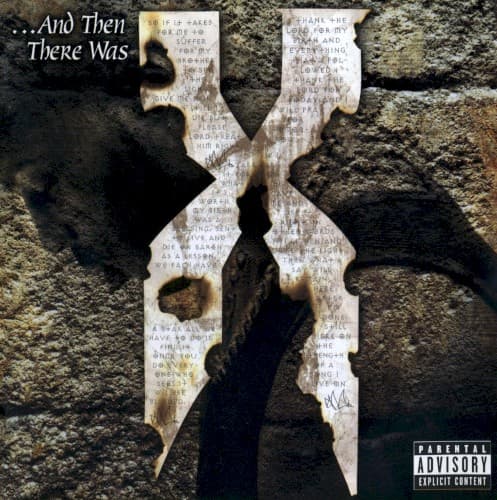
In the catalog, Grand Champ ranks well below It's Dark and Hell Is Hot, which sits at 7.9 here, and below the commercial peak of ...And Then There Was X. It is a platinum-selling, number-one record, and the fact sheet marks it as his final album to be certified by the RIAA, which makes it a hinge point: the last time the label machine fully worked for him. That context makes it historically interesting, but it does not make it a better album than the ones that came before.
Who should listen? Fans who want more of the voice and are happy with a mixed bag will find enough to enjoy, and listeners who enjoy producer-driven sampling should hear what Kanye West and No I.D. do with him. Newcomers should skip it and start earlier in his catalog, where the writing is stronger and the persona is fresher. Anyone who prefers albums to playlists will find the sequencing frustrating.
It has aged a little better than the reviews of the time suggested, mostly because the best cuts hold their own against his catalog and the guest-heavy sprawl is easier to forgive now that the market no longer expects a cohesive album from a star of this size. But the weaknesses are also clearer: the lack of a unifying idea, the generic subject matter and the long middle stretch.
Play "Dogs Out," "Where the Hood At" and "The Rain" first, because they cover the producer-driven bounce, the rallying cry and the more human register. After that, go to the earlier 8.3 record for the full version of the conflict this album only sketches. If you want the commercial peak of the same formula, ...And Then There Was X is the better place to hear it done with more conviction. Grand Champ is a good DMX record in the way a good closing act is a good show: the voice is there, and the surprise is gone.
Track by track
Track Listing
Dog (intro)
SolidA short intro that sets the animal imagery and little else. It is scene-setting, not substance.
My Life
SolidA mid-tempo opener with a reflective bent. DMX sounds engaged, and the song gives the album a human tone early, but the writing stays on the surface and the hook does not stay with you.
Where the Hood At
StandoutThe lead single and the album's loudest rallying cry, built on an interpolation and a heavy, chant-ready beat by Tuneheadz. It reached the top 70 on the Hot 100 and the UK top 20, and it works on energy rather than on the quality of its rhymes. The hook is blunt and effective, and DMX's delivery turns a simple call-out into a crowd-moving moment. It is the best argument that he could still command a room, even if it is not the best argument for the album.
Dogs Out
StandoutKanye West flips a soul-pop sample into a warm, bouncing loop, and DMX's gravel makes the contrast the whole point. The production is the star here, and the rapper has the sense to ride it rather than fight it. One of the album's real peaks and the track most likely to surprise someone who expects a pure bruiser.
Get It on the Floor
SolidA Swizz Beatz production with Swizz himself on the hook, as the second single. It is club-minded and rhythmic, with a stripped-down arrangement that fits DMX's voice. Fun and functional, though it did not break through on the charts in the way the label hoped.
Shot Down
SolidWith 50 Cent and Styles P as guests, the song is built for heat, and the three voices trade intensity well. The beat is serviceable and the verses are tough, but it plays like a roll call of names more than a song with its own shape.
Bring the Noize
SolidTuneheadz supply a loud, brash beat and DMX delivers aggressive bars to match. It is a straight energy track with little to chew on lyrically, and it fades from memory quickly.
Untouchable
SolidAt six minutes, it is the longest song and a sprawling posse cut with a long list of guests, built around an interpolation. It has moments of real chemistry, but the length is not justified by the ideas, and the parade of voices makes it feel more like a label roll call than a destination track.
F*** Y’all
SolidA hostile, sample-based track produced by Ron Browz, with a raw delivery that is the strongest part of the song. It is a pure attitude piece and works as a burst of venom, though it repeats ground he has covered before.
We’re Back
SolidEve and Jadakiss join DMX for a Tuneheadz-produced posse-style track. The chemistry is decent and Jadakiss brings a sharper pen than most of the album, but the song is a comfortable returning-to-form announcement rather than a new idea.
Rob All Night (If I’m Gonna Rob)
SolidRockwilder's production gives this a bouncy, playful menace, and DMX has fun with the premise. It is lighter than most of the record and a welcome change of pace, though the storytelling stays thin.
We Go Hard
StandoutNo I.D. supplies a sample-driven beat with a warm, soulful loop, and Cam'ron slides in with his laid-back slyness. The mix of DMX's intensity and Cam's ease is one of the album's better pairings, and the production is among its most tasteful. A highlight in a sagging middle.
We ’Bout to Blow
SolidA Dame Grease beat built on a sampled novelty-funk record, with Big Stan on the hook. It is energetic and a little unhinged, which suits the song, but it feels like a leftover idea.
The Rain
StandoutDJ Scratch builds a soulful, moody backdrop from a sampled vocal, and DMX writes with more patience than anywhere else on the album. The song takes its time, finds a real image and lets the weather work as a mood. This is the cut where the writing actually matches the production, and the best case for what a more focused version of the record could have been. It is quieter than the singles, and it lasts longer for that reason.
Don’t Gotta Go Home
SolidA duet with Monica, produced by a team of four. The pop-leaning hook is smooth and the song is a sincere attempt at a romantic crossover, but the transition from the heavier material is abrupt, and DMX sounds less comfortable here than on his own turf.
A’Yo Kato
WeakSwizz Beatz again, with Magic and Val on the track. It is rhythmic and minimal in the label's house style, and there is not much to say beyond that. Filler that plays well in the moment.
Thank You
StandoutPatti LaBelle sings the hook over a sample-based track that blends a Biz Markie reference with a gospel-soul feel. DMX turns the song into an expression of gratitude, and the sincerity lands. It is one of the album's most emotionally direct songs, and it works because he drops the persona and speaks plainly.
The Prayer V
StandoutA short spoken prayer produced by DMX himself. It keeps a series tradition alive, and its brevity is part of its effect. It is a quiet reset before the last song, and it carries more weight than its length suggests.
On Top
SolidMac G produces the closer, with Big Stan again on the hook. It ends the album on a confident note, but it reads as an afterthought and does not resolve any of the record's questions. Pleasant, not essential.
Frequently Asked Questions
Is DMX's Grand Champ a good album?
How did Grand Champ perform commercially?
Who produced Grand Champ?
Styles