The scorecard
7.2/10 · Good
- Writing25%
- 7.0
- Production25%
- 7.5
- Delivery15%
- 8.5
- Cohesion15%
- 6.5
- Originality10%
- 6.5
- Replay value10%
- 7.0
Plainspoken imagery about loyalty, faith and rage lands hard on Slippin' and Dogs for Life, but many songs repeat a single stance for four minutes.
Swizz Beatz's clanging synth-and-drum bounce gives the album a distinct identity, though his dominance makes the middle blur and only the Grover Washington Jr. sample on Slippin' truly opens the sound.
The growl-to-whisper range and raw, cracking intensity on Slippin' and Ready to Meet Him were unmatched among chart rappers in 1998, though the stance can feel repetitive across some of the longer middle tracks.
Two skits and a repetitive middle stretch break the momentum, though the turn from aggression to confession to prayer gives the end a real arc.
The prayer-and-threat persona was distinct for its moment, but it extends the debut's ideas more than it expands them.
Slippin', Blackout and Ready to Meet Him still reward repeat listens, while the weaker Swizz-driven cuts fade into the background.
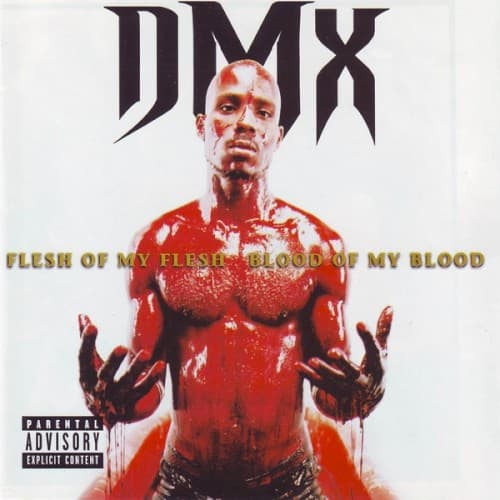
DMX Flesh of My Flesh, Blood of My Blood: The Character Gets Built
The usual story about Flesh of My Flesh, Blood of My Blood is that it was the hurried follow-up, a quick strike on a debut that had just redrawn the map of street rap. That story gets the calendar right and the music wrong. This is the record where DMX stops being a startling new voice and becomes a fully built character: the barking aggressor, the broken man who prays, and the loyalist who treats dogs as a moral code. The debut introduced those pieces. This album turns them into a system.
The numbers explain why it mattered at the time. It arrived seven months after It's Dark and Hell Is Hot, opened at number one with more than 670,000 copies in its first week, held the top spot for three weeks and eventually went triple platinum. In the same calendar year DMX became only the second artist to land two number-one albums, after the late Tupac Shakur. It took a Britney Spears debut to dislodge him, which says plenty about the end of 1998: glossy pop at one pole and, at the other, a rapper who sounded like he was shouting up from the bottom of a stairwell.
The argument here is that the album is the clearer document of what Ruff Ryders actually sounded like, and the weaker record. Swizz Beatz handles most of the beats and gives the project a clanging, stripped-down signature of synths and hard drums that the debut only hinted at. That signature is also the problem. Where the debut had stranger rooms to walk through, this one tends to stay in the same corridor and bang on the walls.
DMX's voice is strong enough to make that thrilling for long stretches, and the guest list is smart enough to break the pattern when it needs to. It is still the reason this album sits below its predecessor, rated 7.9 on this site, and the reason a fair verdict says great performer, good album. Read it as a statement of style and not as a classic arc, and it earns most of its reputation.
A Growl That Answered the Shiny Suits
The first thing to understand is how little the rest of the genre sounded like this in 1998. Rap at the top of the charts was polished, sample-heavy and built for the club, and DMX answered with a voice that growled, begged and prayed within the same song. His delivery is the album's real engine: a rasp that seems to start in his chest, short bursts of breath used like punctuation, and a habit of dropping from a bark into a near-whisper to make a threat sound more personal. Nobody else was willing to sound that exposed on a hard record, and it is the reason the album held up as a template for later street rappers who wanted a voice with both menace and wounds.
The production is where the case against the consensus starts. Swizz Beatz produces most of the record, along with PK, Irv Gotti and Dat Nigga Reb, DJ Shok and Dame Grease. His sound is distinct and instantly recognizable, built on skeletal synth lines and drums with a heavy bounce. It gives the project an identity that few big-budget rap albums of the period could claim.
But the identity is narrow. A record that leans on one producer's palette this heavily can feel like a long sequence of variations on a single beat, and several of the middle tracks do. The tracks that break the pattern, the ones built on samples from Taana Gardner and Grover Washington Jr, are noticeably the ones with room to breathe.
The writing is better than its reputation and weaker than the performance. DMX is a vivid, plainspoken lyricist who finds a repeated phrase, leans into it, and lets the voice do the rest. His best verses are about loyalty, faith and rage, held together by a personal sense of being at war with himself, and they gain force because they are not decorated. The weakness is that he often repeats a hook and a stance for the whole length of a song instead of developing it. On the lower-tier cuts, the effect is a lot of shouting around not much new information.
The guest list reflects the Ruff Ryders world as it was then. Jadakiss and Styles P of The LOX, Drag-On, Mary J. Blige, Marilyn Manson and Jay-Z all appear, and the best of them are used to change the temperature of the record instead of to pad it. The Blige duet is the clearest example of how the album uses a melodic voice to soften his edges, and the Manson collaboration stretches the horror-movie side of his persona. The record can feel like a family reunion that has run long.
The most concrete weakness is the skits and the filler. Two skits fall in the first three tracks, and on a 16-track album they spend time on atmosphere that adds no music. A debut that arrived in the spring and a follow-up at the end of the year is also the sort of schedule that explains why a few songs sound like extensions of ideas already finished on the first record. It is not a big flaw, but it limits how far the album can climb.
From Loud Roll Calls to a Seven-Minute Prayer
The sequence opens on attitude and spends its first third establishing the stance. After the intro, the record moves quickly into the hardest material, and the Swizz Beatz bounce gives the early tracks a lot of momentum. The pacing is the album's most useful quality: songs are long, often over four minutes, but the beats are propulsive enough that the length rarely feels like a drag.
The middle is where the structure shows its seams. The album runs through posse cuts, a duet, a horror-movie sequel and a couple of introspective turns, and the transitions between them are rough. The change from a loud group record into a quiet, melodic confessional lands harder than it should, partly because the rest of the album gives you no signal that a change is coming. That is not a fatal flaw. It makes the record feel like a live set more than a planned arc, and that suits an artist whose power came from unpredictability. But it keeps the album from building an emotional line the way the debut did.
The final stretch is the best-judged part. After a long run of aggression, the record turns toward confession and then toward prayer, and it closes on Ready to Meet Him, a seven-minute track that lets the volume drop and the spiritual side of the persona take over. The idea of ending a violent record with a prayer was already part of his identity, and here it works as a release rather than a gimmick. The only other track worth singling out for sequencing is the title song, which arrives late enough to feel like the point the whole album has been circling.
Is the length earned? Mostly. At 16 tracks, two of them skits, the album is longer than it needs to be in the middle and shorter than it feels at the end. A tighter edit would drop a couple of the bouncier Swizz tracks and keep the stretch that moves from heartbreak to prayer. What survives is a record whose best sequence of songs is memorable, and whose weakest sequence is still carried by a voice that sounds like it is about to break.
The Persona Locked In, the Depth Held Back
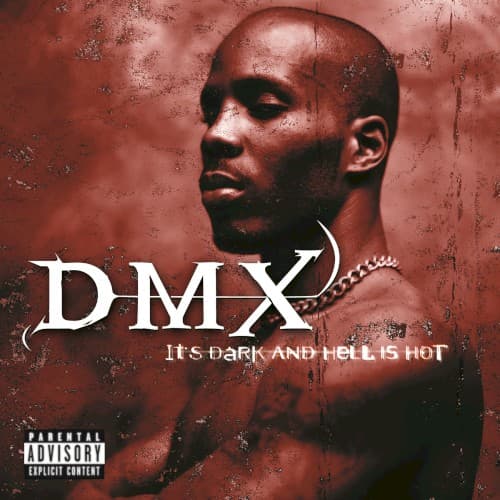
Flesh of My Flesh, Blood of My Blood sits just below It's Dark and Hell Is Hot, and the gap is deliberate. The debut had more range, a stranger sense of space and a clearer emotional line, which is why it rates 8.3 on this site. This album is the sharper statement of style and the more commercial one, and it gives up some depth for it. Its position in the catalog is as the record that fixed the DMX persona in place, and that is a real distinction, even if it is not the same as being the best.
The lineage runs in both directions. The album learned from the Wu-Tang and Mobb Deep era of dark, hard New York rap, and it answered the shinier mainstream rap of the moment by refusing to polish anything. Ruff Ryders and Swizz Beatz went on to influence a decade of street rap, and the combination of a prayer and a threat in one voice is still audible in the way later rappers handle pain.
It is for listeners who want to hear DMX at the peak of his commercial reach, for fans of Jadakiss, Styles P and the rest of the crew, and for anyone curious how 1998 street rap sounded when it was selling like pop. It is not for listeners who need dense lyrical construction or varied production, and it is not the right entry point for someone who has never heard the debut.
Time has been kind to the best of it. The posse cuts and the confessional songs have survived as touchstones, while some of the middle has settled into the background of his catalog. Triple-platinum sales and three weeks at number one kept it in the culture, but what keeps it relevant is the voice.
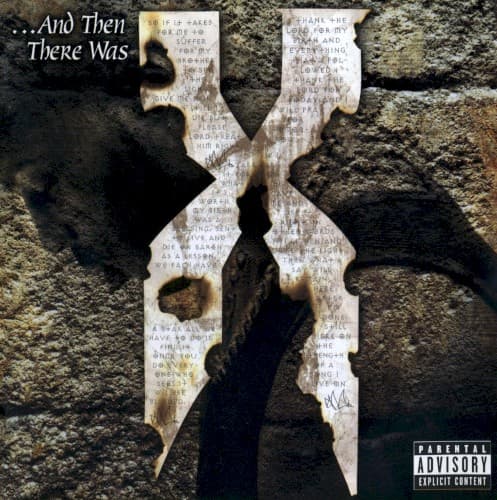
Start with Slippin', the melodic and downcast center of the record, then Blackout for the Jay-Z and LOX meeting, and Ready to Meet Him for the prayer. For what to hear next, go to the debut It's Dark and Hell Is Hot first, and then to ...And Then There Was X, which is the better follow-up for hearing what he could do with a sharper focus. The record is best remembered as the one on which DMX proved he could be loud and honest at the same time, and the proof is in the last seven minutes.
Track by track
Track Listing
My Niggas (skit)
WeakA short spoken intro produced by Swizz Beatz that sets a street-corner mood and little else. It is atmosphere, not music, and it is the first of two skits that delay the album.
Bring Your Whole Crew
StandoutA brisk, aggressive opener in the true sense, produced by PK, with additional vocals from Anthony Fields. DMX goes straight to the bark and the song reads as a roll call: loud, rhythmic and meant to be shouted along with. The beat is uncomplicated and his voice does the arranging. It is not deep, but it announces the album's energy with no wasted motion and fits the record's mission.
Pac Man (skit)
WeakUnder a minute of skit that adds a beat of humor and no music. It is filler, and the album would lose nothing without it.
Ain’t No Way
StandoutSwizz Beatz produces, and he also supplies additional vocals, so the track has the shouted, chant-like hook that defines the Ruff Ryders sound of the period. DMX uses a tight, rhythmic flow to ride the clanging synth bed, and the record feels like a club track filtered through a street fight. At nearly five minutes it goes on a little long, but the energy holds up and the chorus is easy to remember.
We Don’t Give a Fuck
StandoutThe posse cut with Jadakiss and Styles P, produced by Irv Gotti and Dat Nigga Reb. It shows the strength of the Ruff Ryders family, with three distinct voices trading hard verses over a menacing beat. The LOX members are lyrically denser than the headliner here, which makes DMX's raw blunt force stand out more. It is a fun group record and one of the better ones on the album.
Keep Your Shit the Hardest
SolidAnother Swizz Beatz production in the same hard register, and the title is the whole thesis. The performance is strong, but the song is closer to a repeat than a new idea and it sits in a stretch of the album that begins to blur.
Coming From
StandoutThe Mary J. Blige duet, produced by PK, is the album's clearest attempt at a softer color. Her voice gives the hook a gospel-tinged warmth, and DMX responds by lowering his guard and talking through where he came from. The contrast is the point: a rapper known for volume shows he can hold a long, five-minute song through tone alone. It is a risk that mostly pays off, and the album needs it as a break from the pounding rhythm around it.
It’s All Good
SolidBuilt on a sample of Taana Gardner's Heartbeat, produced by Swizz Beatz, this is the album's most openly danceable moment. The disco-leaning groove is a welcome change of texture, and DMX plays along with a lighter, more playful voice. It is an interesting detour that does not fully convince, since the swagger feels borrowed from the beat.
The Omen
StandoutThe collaboration with Marilyn Manson interpolates Damien, the horror-flavored song from his debut, and extends the character into a sequel. Swizz Beatz gives it a darker, slower pulse than most of the record. It plays with the idea of the devil as an internal voice, which suits his persona, and the guest adds a theatrical menace. It is a strange but effective piece of continuity and one of the album's most distinctive moments.
Slippin’
StandoutThe emotional center of the album, produced by DJ Shok over a Grover Washington Jr sample, with additional vocals by Tamyra Gray. DMX drops the bark and tells a story of falling and trying to get back up, with the voice cracking in a way that sounds uncalculated. The sample gives it a smooth, soulful floor that makes the pain sound more intimate. It runs five minutes and does not feel long. It is the record's best argument that DMX could do more than yell.
No Love 4 Me
SolidWith Drag-On and Swizz Beatz on the track, this is a crew record with a heavy, rolling beat. It is competent and energetic, though it does little the earlier posse cut did not already do.
Dogs for Life
StandoutDame Grease produces this one, and it leans hardest into the dog imagery that defines the persona: loyalty, appetite and menace folded into one image. The beat is spare enough that the performance does the heavy lifting, and DMX gives it a protective, almost tender edge underneath the growl. It is a good snapshot of what made him distinct, with a different producer in the chair than most of the album.
Blackout
StandoutThe Swizz Beatz production brings together The LOX and Jay-Z, and it plays like a summit of New York rap in 1998. Each voice has a different texture, and the song moves fast on a loud, simple beat. Jay-Z's appearance matters historically as much as musically, since it places the biggest name of the moment on a Ruff Ryders record. It is lean, quick and entertaining.
Flesh of My Flesh, Blood of My Blood
StandoutThe title track, produced by Swizz Beatz with additional vocals from him, arrives late enough to work as a mission statement. DMX sets his loyalty to blood and family against a hostile world, and the heavy beat gives the song the feel of a vow. It is not subtle, but it does not need to be. It carries the album's central idea in a form that is easy to remember.
Heat
SolidA Swizz Beatz track with his additional vocals, built for volume. It is aggressive and well-performed, but by this point in the album the formula is familiar, and it works more as a reminder of the sound than as a fresh statement.
Ready to Meet Him
StandoutListed as Prayer II/Ready to Meet Him on the credits, this seven-minute closer produced by Swizz Beatz turns the album into a confession. The beat steps back, the volume drops, and DMX speaks to God in a way that sounds neither staged nor safe. Ending a record this violent on a prayer was already part of his identity, and the length gives it the room to feel real. It is the best proof that the aggression on this album is a cover for something much more vulnerable.