The scorecard
6.6/10 · Good
- Writing25%
- 6.0
- Production25%
- 7.5
- Delivery15%
- 7.5
- Cohesion15%
- 6.0
- Originality10%
- 5.5
- Replay value10%
- 6.5
Snoop's deadpan keeps the pimp, ride and weed material entertaining, but the verses stay on stock topics and many hooks are borrowed from funk and R&B records, as with the Cameo and Rolling Stones interpolations.
Dr. Dre's drums and mixing give the record a unified low end, and Timbaland's stop-start beat on “Snoop Dogg (What’s My Name, Part 2)” adds a lively contrast, though the Meech Wells and Carlos Stephens cuts are plain.
The half-sung drawl is as smooth as ever on “Lay Low” and “Set It Off”, but he rarely pushes beyond his comfort zone and leans on Kokane for hooks on eight songs.
Dre's mix ties most of the record together, but nineteen tracks, a throwaway skit and a stretch of near-identical mid-tempo cuts in the second half drag the pacing.
It updates G-funk with Timbaland and Storch beats but mostly reuses the template Snoop and Dre built in the nineties.
The singles and the Dre-led first half hold up well, while the back half rarely demands a second visit.
Snoop Dogg Tha Last Meal — A Farewell Contract and a Very Relaxed Goodbye
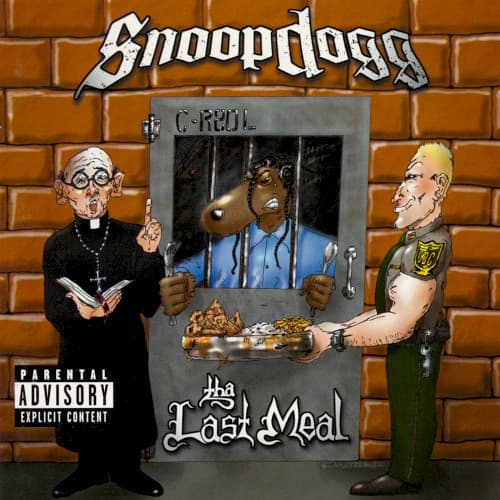
Tha Last Meal is an album about a contract ending that sounds like a man putting his feet up. Snoop Dogg told Rolling Stone that the title meant his label would never eat off him again, and he named Priority Records as the target rather than Master P and No Limit. The music inside never matches that bite. What it delivers instead is a polished, very comfortable collection of G-funk updated for 2000, and that comfort is both the album's appeal and its ceiling.
The thesis is simple: this is the most listenable of Snoop's No Limit-era albums because Dr. Dre is back behind the board, and the best songs are the ones where the drums, not the writing, set the terms. Rolling Stone called it his strongest record since Doggystyle. That is a fair relative judgment, since the albums in between were looser and more uneven, but it should not be mistaken for a return to form. Tha Last Meal is a professional record by an artist who knows exactly how much effort a platinum album needs, and it spends exactly that much.
The stakes were commercial rather than artistic. By late 2000 Snoop Dogg had enough momentum to chart in the top ten, and the album was certified platinum within about two months. The real question was whether he could still sound like a leader rather than a guest on his own project, and the answer is mixed. On the singles and the Dre cuts he does. On the stretch in the middle, where Kokane supplies hooks on song after song and the beats thin out, he sounds like a star on autopilot.
That contrast is where the album lives. It is smooth, lightly funny and often very well made, but it is also nineteen tracks long, and the length exposes how little ambition is hiding behind the sheen. A good West Coast record from the period, not a necessary one.
Dre at the Board, Timbaland at the Door, Kokane on the Hook
The album's biggest asset is Dr. Dre's mixing credit. He is listed as mixer on most of the first half and several later tracks, and the effect is a consistent, heavy low end that keeps beats from very different producers in the same room. Dre and Mike Elizondo produce a few of the strongest tracks themselves, and their sound is the classic Dre blend of slow, bass-led thump, sparse keys and drums that hit like a dropped weight. Spin described Dre's laconic, by-the-pound thump as the thing that anchors most of the album, and that is accurate: remove it and what remains is a smooth but unremarkable set.
Timbaland is the other side of the production. His stop-start rhythms and bright, bouncy sounds are more modern than anything else on the record, and the tension between his tracks and Dre's is the most interesting part of the sound. Spin was dismissive about the obvious-single quality of his beats, and the criticism has some force, but a Timbaland beat under a Snoop vocal is a combination that works precisely because it is easy to enjoy. The rest of the credits are more mixed. Scott Storch, Battlecat, Soopafly, Jelly Roll and Meech Wells fill out a record that stays in a West Coast pocket, but the quality drops on the smaller credits and the second half leans too heavily on mid-tempo grooves.
One feature of the writing is worth noting: the album borrows a lot. Interpolations of Cameo, Kid 'n Play, the Rolling Stones, the Parliament-Funkadelic catalog and a funk-era bass line appear across the tracklist. That is part of the West Coast tradition, and G-funk always built its hooks from other people's records, but here the borrowed material often does more work than the verse on top of it. The better tracks make the borrowing sound like a choice. The weaker ones sound like a shortcut.
Snoop's own performance is professional and a little sleepy. His drawl is intact, his timing is excellent, and he rarely says anything that could not have been said on his previous record. Kokane appears on eight songs, usually on hooks, and while the voice fits the mood, repetition turns him from a signature into a crutch. Guests like Nate Dogg, Ice Cube and MC Ren raise the temperature when they appear, which says something about how much of the album's energy comes from outside the host.
The weakness is not any one song but the cumulative effect: a lot of competent cuts with the same pace, the same pimp-and-ride subject matter and the same chorus shape. The album is easy to like and hard to remember.
A Strong Opening Stretch, a Long Middle and a Farewell That Fits
The sequence is front-loaded with Dre. A brief intro hands off to a run of tracks that mix his production credits, a Timbaland single and the first guest features, and the early stretch is where the record feels most like an event. The first half of the album is easily the more convincing, and one posse cut in particular, “Set It Off”, shows what the project could have been if every guest list had been used with the same care: four voices from different corners of West Coast rap, each given a clear lane.
The middle is where the record loses its shape. A skit built on a television courtroom theme and a short solo track mark the halfway point without adding momentum, and what follows is a procession of mid-tempo songs with similar tempos and similar hooks. The longest cut on the album arrives in this stretch, at nearly six minutes, and it does not justify the space. Nineteen tracks is simply too many for a sound this uniform, and the album would have been stronger at fourteen or fifteen.
The back end recovers a little. A couple of the later tracks borrow well-known funk bass lines and land them with confidence, and the closing track, “Y’All Gone Miss Me”, suits the album's farewell theme with its title and its easy, unbothered tone. It is not a grand finale, but a record this relaxed does not need one.
Pacing is the main reason the album ranks below its best moments. A smart sequence would have put the Dre tracks, the Timbaland tracks and the posse cut in alternating order and cut most of the Kokane-hooked mid-tempo material. As it stands, listeners who start at track one get the best version of the record and then slowly lose the thread, and many will leave before the end.
Better Than the Reputation, Smaller Than the Hype
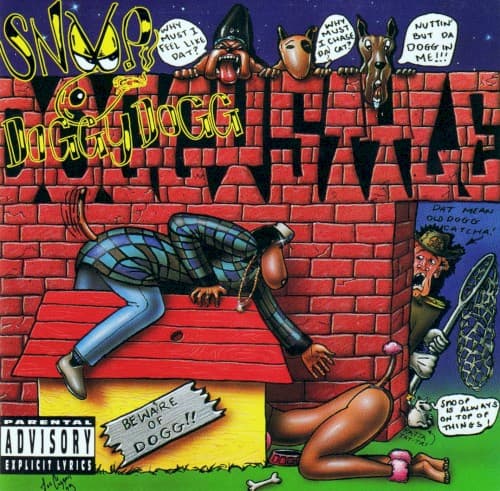
In Snoop Dogg's rated catalog Tha Last Meal sits well below Doggystyle (8.7), which has a narrative eye, a distinctive sound and a cohesion this record never attempts, and comfortably above BODR (5.3), which has neither the beats nor the focus. The 6.9 here reflects a record with good production and a serviceable performance wrapped around thin writing and an indulgent length. Fans of the debut will hear a smoother, more compromised version of the same instincts, and that is about right.
It is for listeners who want polished West Coast funk from the turn of the millennium, who like Dre and Timbaland beats, and who enjoy a relaxed Snoop more than a hungry one. It is less suited to anyone who wants vivid writing, risk or a consistent album from front to back. The last third can be skipped without much loss.
It has aged reasonably well. The Dre-led tracks still sound heavy, the singles still bounce, and the borrowed hooks have become part of its charm. The weaker songs date it mainly because they sound like every other late-nineties and early-2000s guest-heavy rap album.
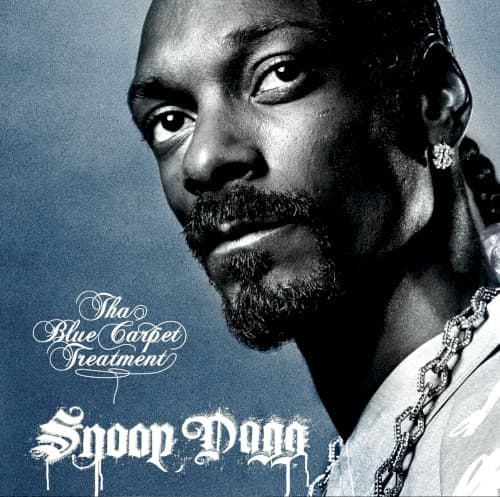
Start with “Snoop Dogg (What’s My Name, Part 2)” for the Timbaland single, “Lay Low” for the Dre production and the Nate Dogg hook, and “Set It Off” for the cross-generational posse cut. For what to hear next, go to Doggystyle for the original template, or to Tha Blue Carpet Treatment, a later Dre-assisted Snoop record with a longer guest list and a sharper edge. Tha Last Meal is the record where Snoop proves he can make a good album without trying, and the most interesting thing about it is how little that costs him and how little it earns him.
Track by track
Track Listing
Intro
SolidA short Dre-produced opener built on an interpolation of “I Want to Be Free”, with a chorus of backing vocals. It sets a smooth, funky tone and little else.
Hennesey N Buddah
SolidDre and Mike Elizondo produce, and Kokane supplies the hook on a song whose subject is in the title. The groove is slow and heavy, but the writing is generic and the chorus is a placeholder.
Snoop Dogg (What’s My Name, Part 2)
StandoutTimbaland's stop-start drums and an interpolation of “Double Dutch Bus” make this the most playful track on the record. Spin heard it as an obvious single, and that is fair, but the obviousness is the strength: the hook is catchy, and Snoop's relaxed delivery against the busy rhythm is the best sound the album finds. It was a single and a Source Awards video nominee, and it works because Snoop treats the beat as a toy instead of a challenge. The verses are mostly a self-introduction, which suits the song, and the track serves as the record's calling card and its liveliest tempo change.
True Lies
SolidAnother Dre and Elizondo production with Kokane on the hook. The beat is heavy and clean, the performance is steady, and the song is a notch below the tracks around it because nothing in the writing stands out.
Wrong Idea
StandoutJelly Roll builds the beat around a Cameo sample, and Bad Azz, Kokane and Lil' ½ Dead join in. It was a single and it shows: the groove is warm and the chorus is easy, with a posse feel that suits Snoop's Doggy Style label period. Good, not great, and the guest verses are about as sharp as Snoop's own.
Go Away
SolidMeech Wells produces and Kokane returns on the hook, with live-sounding bass credited to Jimmy Roach. A smooth, slow track that does not add much to what came before it.
Set It Off
StandoutTimbaland's beat carries MC Ren, The Lady of Rage, Nate Dogg and Ice Cube in a posse cut that spans several chapters of West Coast rap. Each guest gets a clear lane, and Snoop is a generous host rather than a hog. The result sounds like a reunion, and it highlights what the album lacks elsewhere: voices that push Snoop to sharpen up. Timbaland's bounce is lighter than the Dre sound, so the track feels like a different record's highlight dropped into this one, which is a compliment. It is one of the three songs that make the album worth owning.
Stacey Adams
SolidBattlecat produces with Kokane on the hook. It is a clean, funky mid-tempo song about style, and it is pleasant without being memorable.
Lay Low
StandoutDre and Elizondo produce, and Master P, Nate Dogg, Butch Cassidy and Tha Eastsidaz come along. The beat is the album's best Dre moment: a low, rolling groove with just enough menace, and Nate Dogg's hook gives it a lift that Snoop's own choruses rarely get. It was a single and it earns the slot, and the guest list is large without feeling crowded. Master P's presence is a nod to the No Limit relationship, and his verse is serviceable, but the song belongs to the beat and the hook. If you want a single track that explains why the album exists, this is it.
Bring It On
SolidClarence “Jimmy” Roach produces around an interpolation of “I Need a Freak”, with Suga Free and Kokane as guests. The Suga Free spot adds some personality, but the track is otherwise middle-of-the-road.
Game Court (skit)
WeakA skit based on a television courtroom theme. It runs over two minutes and delivers one joke.
Issues
SolidA short, solo Meech Wells production mixed by Dre. Compact and competent, with a plain beat and no guests, it is a respite from the hooks around it.
Brake Fluid (Biiitch Pump Yo Brakes)
WeakScott Storch produces with Kokane, using an interpolation of “Girl Callin'”. At nearly six minutes it is the longest cut on the album, and it does not earn the length. Filler with a good groove.
Ready 2 Ryde
SolidScott Storch again, with Eve on a guest spot. The Eve verse is a welcome change of voice, and the beat is brighter than the tracks near it. Light and likeable, but forgettable once it ends.
Loosen’ Control
StandoutSoopafly builds the beat on a sample of Kid 'n Play's “Funhouse”, with Butch Cassidy on the hook. It was a single, and the bounce is infectious in a way the surrounding tracks are not. The old-school hip-hop sample gives it a different flavor from the funk interpolations elsewhere, and Snoop sounds loose and engaged.
I Can’t Swim
SolidJelly Roll and Casey Wilson produce around an interpolation of “Aqua Boogie”, with live bass credited to Jimmy Roach. The P-funk lineage is audible and the groove is solid, but the song is more atmosphere than substance.
Leave Me Alone
SolidBattlecat blends interpolations of “She's Strange” and “Early in the Morning”. A smooth, well-made track whose borrowed hooks do most of the work.
Back Up Off Me
WeakCarlos Stephens produces, with Master P and Mr. Magic as guests. At over five minutes it is another overlong cut in the weakest part of the album, and the No Limit cameo feels more like an obligation than an idea.
Y’All Gone Miss Me
StandoutScott Storch and Kokane close the album with an interpolation of the Rolling Stones' “Miss You”. The title fits the farewell theme, and the groove is relaxed and confident. A low-key, appropriate ending rather than a high point.
Frequently Asked Questions
Is Tha Last Meal a good Snoop Dogg album?
Who produced Tha Last Meal?
How well did Tha Last Meal sell?
What are the best songs on Tha Last Meal?
Styles