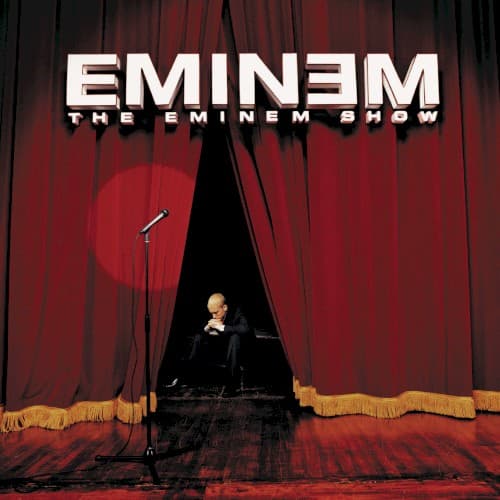
The scorecard
8.1/10 · Great
- Writing25%
- 8.5
- Production25%
- 8.0
- Delivery15%
- 9.0
- Cohesion15%
- 7.0
- Originality10%
- 7.5
- Replay value10%
- 8.5
White America's political commentary and Cleanin' Out My Closet's family confrontation show Eminem writing with purpose instead of shock, though Superman and Drips slide back into cartoonish misogyny.
Eminem's self-production on most tracks builds rock-inflected beats that serve the rapping—Sing for the Moment's Aerosmith flip and Till I Collapse's Queen interpolation both land—but the guitar-driven approach flattens some moments into sameness.
Peak technical command: the multi-syllabic patterns on Business, the controlled fury on Soldier, the shifts between reflection and rage on Say Goodbye Hollywood all show complete mastery of flow and cadence.
Twenty tracks with four skits is too many; Drips is filler, the D12 guest verse on When the Music Stops drags, and the back half sags after Sing for the Moment before Till I Collapse rescues it.
The rap-rock fusion was already a cliché by 2002, but Eminem uses it as texture rather than gimmick, and the shift from Slim Shady antics to actual introspection marked new territory for him even if the sonic palette was borrowed.
Without Me, Till I Collapse and Cleanin' Out My Closet have stayed in rotation for over two decades; the weaker cuts are skippable but the core songs have proven durable enough to define an era.
Eminem The Eminem Show — The Moment He Chose the Catalog Over the Circus
The Eminem Show is the sound of an artist deciding whether to keep feeding the spectacle or build something that lasts. By 2002, Eminem had two classics and a target on his back: protests, boycotts, lawsuits, divorce, and the threat of jail time all compressed into the year before this album. He could have cranked the shock value higher or collapsed under the weight. Instead, he stepped back from the Slim Shady character, took over most of the production himself, and made an album about what fame actually costs when the cameras never turn off.
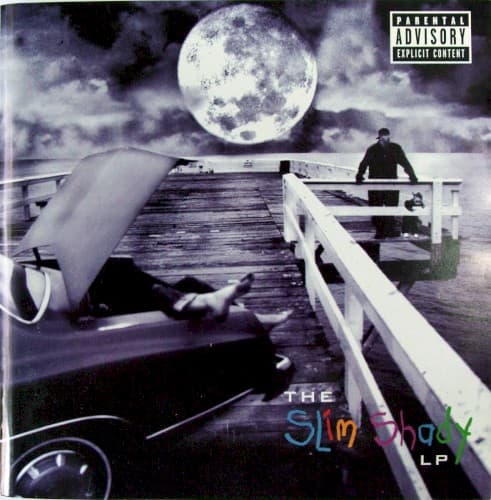
The thesis here is straightforward: The Eminem Show is Eminem's most complete album, the one where technical skill, thematic focus, and commercial instinct aligned before the catalog split into fan service and miscalculation. It is not as raw as The Marshall Mathers LP or as hungry as The Slim Shady LP, but it is the album where he proved he could sustain excellence without relying on controversy as fuel. The trade-off is audible: less spontaneity, more control; fewer risks, better execution. White America opens with a clear-eyed look at his place in the culture wars, Cleanin' Out My Closet confronts his mother without cartoons, and Till I Collapse builds an anthem out of pure technical endurance.
The weaknesses are also structural: twenty tracks is too many, the skits interrupt momentum, and songs like Drips and Superman revert to the same misogyny he claimed to be moving past. But the core of the album—roughly twelve songs that balance introspection, political commentary, and craft—holds up as well as anything in his catalog.
The Eminem Show was the best-selling album of 2002 worldwide and has moved twenty-seven million copies, making it the best-selling hip-hop album of all time. It won Best Rap Album at the Grammys and swept the MTV Video Music Awards.
The question is whether it earned that success by being his best work or by arriving at the exact moment when Eminem became socially acceptable? The answer is both, and the album's tension between ambition and accessibility is what makes it worth revisiting.
The Year Eminem Learned to Program a Drum Machine and Decided He Was Done Apologizing
Eminem produced most of The Eminem Show himself, with Jeff Bass co-producing the singles and Dr. Dre handling only three tracks: Business, Say What You Say, and My Dad's Gone Crazy. This was a deliberate shift. Eminem told Rolling Stone he had learned to program a drum machine and wanted to prove he could build the sound himself instead of just writing over someone else's beats.
The result is a production approach that leans harder into rock textures than anything he had done before—guitar riffs, live drums, and anthemic structures that borrow from Aerosmith, Led Zeppelin, and Queen. Sing for the Moment samples Dream On and reinterprets its guitar solo; Till I Collapse interpolates the stomp-clap intro from We Will Rock You. The rap-rock fusion works because Eminem uses it as atmosphere rather than gimmick, letting the guitar anchor the beat instead of overwhelming it. White America rides a menacing guitar loop that matches the song's sarcasm; Square Dance pairs banjo plucks with a military snare that underscores the absurdity of the culture war Eminem found himself in.
The writing is where the shift from Slim Shady to Marshall Mathers becomes most obvious. Eminem toned down the shock value and aimed for specificity: White America calls out Lynne Cheney and Tipper Gore by name, Cleanin' Out My Closet details his mother's alleged Munchausen syndrome by proxy, and Say Goodbye Hollywood reflects on the cost of fame with none of the slapstick that defined The Marshall Mathers LP. The political commentary is blunt but effective—references to September 11, Osama bin Laden, and George W. Bush land because they frame Eminem's own vilification in the context of a country looking for enemies.
The problem is that Eminem did not fully commit to the maturity he claimed. Superman is five minutes of the same bitter misogyny he had been writing since The Slim Shady LP, Drips is a crude sex skit featuring Obie Trice that adds nothing, and My Dad's Gone Crazy ends the album with his daughter Hailie repeating the line in a way that reads as calculated rather than spontaneous. The moments where he slides back into shock tactics feel like insurance, as if he was not sure the introspection alone would hold the audience.
Delivery-wise, this is Eminem at his technical peak.
The multi-syllabic chains on Business, the controlled aggression on Soldier, the way he shifts cadence mid-verse on Without Me—all of it shows a rapper in complete command of his voice. The guest appearances are minimal and mostly weak: D12's verse on When the Music Stops drags, Obie Trice on Drips is forgettable, and even Nate Dogg's hook on Till I Collapse feels like an afterthought. Dr. Dre raps on Say What You Say but the track is a diss aimed at Jermaine Dupri that has aged into irrelevance. The strength of the album is Eminem alone, which is both a flex and a limitation—there is no counterweight, no outside perspective to challenge him.
An Album That Peaks Twice and Drags in the Middle
The Eminem Show is sequenced like a double album that needed to be a single. The opening stretch is as sharp a three-song run as Eminem has ever sequenced, but then the pacing starts to wobble. The first half loses momentum after the initial burst, and the album does not recover until the middle section.
The back half is where the length becomes a problem. The creative peak arrives in the middle stretch, but it is followed by tracks that feel like steps backward. The emotional breather works in isolation but not as a highlight, and the posse cut that should build energy instead flatlines with weak guest performances.
The album rescues itself in the final stretch. The penultimate track is the closer the album needed: a relentless anthem built on technical endurance, listing peers and daring anyone to outlast him. The playful outro tries to end on levity but mostly just reminds you that the album is seventy-seven minutes long.
The sequencing choices make sense in theory—skits to break up the intensity, lighter tracks to balance the darkness—but in practice the flow sags. The album would have been tighter at fifteen tracks. The peaks are high enough to carry the weight, but the filler is real and the skits do not earn their place.
The Last Time Eminem Trusted His Instincts Before the Catalog Split
The Eminem Show is Eminem's third classic in a row and the last album where he sounded fully in control of his vision. It sits between The Slim Shady LP's hunger and The Marshall Mathers LP's chaos as the most intentional statement in his catalog, the one where he chose maturity over spectacle and proved he could sustain a career without relying on controversy. It is not his most daring album—that is still The Marshall Mathers LP—but it is his most complete, the one where writing, production, and performance all aligned without sacrificing commercial appeal.
The weaknesses are structural: too long, too many skits, and a handful of tracks that revert to shock value when the introspection runs out. But the core songs—White America, Cleanin' Out My Closet, Without Me, Sing for the Moment, Till I Collapse—are as strong as anything Eminem has recorded, and they have aged better than most of his post-2002 catalog.
The Eminem Show is for fans who want Eminem at his technical peak, writing with purpose instead of provocation. Skip it if you prefer the raw chaos of The Marshall Mathers LP or the dark humor of The Slim Shady LP; this is the album where he decided to build a legacy instead of burning it down. It has aged into the album that casual fans point to as his best, and while the fanbase will always debate whether it tops The Marshall Mathers LP, the case is strong enough that the argument matters.
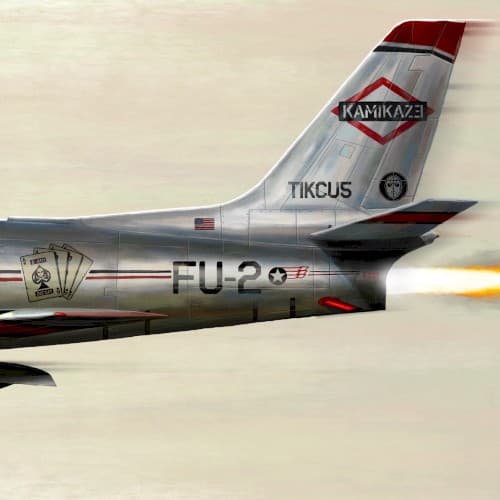
Start with Without Me for the humor, Till I Collapse for the technical flex, and White America for the politics. If those three tracks land, the rest of the album is worth the length. Follow it with The Marshall Mathers LP to hear the rawer version of the same artist, or skip ahead to Kamikaze to hear what happens when he tries to recapture this focus fifteen years later. The Eminem Show is the sound of an artist who knew exactly what he had and played it smart.
Everything after this is the sound of him trying to figure out what comes next.
Track by track
Track Listing
Curtains Up (skit)
SolidThirty seconds of crowd noise and stage setup that frames the album as a performance. It works as a concept but does not justify replaying.
White America
StandoutThe strongest opening track in Eminem's catalog and the clearest statement of the album's thesis. Over a menacing guitar loop and hard drums, Eminem dissects his role as the white rapper that Middle America's kids bought while their parents tried to ban him, calling out Lynne Cheney and Tipper Gore by name. The writing is sharp—he frames his own vilification in the context of post-9/11 paranoia and the culture war over explicit lyrics, turning his critics' arguments against them without resorting to shock tactics. The production, handled by Eminem and Jeff Bass, builds tension without release, and the delivery is controlled fury. The line about burning the flag and replacing it with a parental advisory sticker sums up the whole album's approach: using the controversy as material instead of just feeding it. This is Eminem writing with purpose, and it sets the tone for everything that follows.
Business
StandoutThe only Dre-produced single on the album, and it sounds like it: bouncy, cartoonish, built for radio. The hook is a parody of Dre's own production tics, and the verses are Eminem in full charisma mode, rapping circles around the beat without saying much. It works as a palette cleanser after White America but does not have the weight of the album's best songs.
Cleanin’ Out My Closet
StandoutThe emotional center of the album and the song that convinced fans Eminem was done hiding behind Slim Shady. The production is sparse—piano, hard drums, and a simple hook—so the focus stays on the writing, which is a direct confrontation with his mother over alleged abuse and Munchausen syndrome by proxy. The specificity makes it hit: no cartoons, no exaggeration, just anger and hurt laid out plainly. The delivery is restrained, which makes the moments where he raises his voice land harder. The song has aged into one of Eminem's defining tracks, and while he later apologized for it on Headlights, the rawness here is what made it resonate. The line welcoming the listener to The Eminem Show was where the album title came from, and the metaphor holds: this is the moment he decided to perform his real life instead of inventing a character.
Square Dance
SolidA political screed over banjo plucks and military snares that satirizes the war on terror and American jingoism. The production is cluttered—too many ideas fighting for space—and the writing is more scatter-shot than White America, but the energy is high and the verses are technically sharp. It works as a statement but not as a song you return to.
The Kiss (skit)
SolidEminem arguing with a woman, shouting profanity, and setting up the next track. Fifteen seconds of setup for a song that does not need it.
Soldier
SolidA continuation of The Kiss that builds into a posse-cut concept where Eminem raps alongside himself. The production is aggressive—distorted guitars and pounding drums—and the verses are sharp, but the concept does not justify the execution. It is a solid album track that would have been stronger at three minutes instead of four.
Say Goodbye Hollywood
SolidEminem reflecting on the cost of fame over moody production that borrows from Elton John's Goodbye Yellow Brick Road in tone if not in sample. The writing is introspective—lines about losing friends, dealing with hangers-on, and questioning whether the success was worth it—and the delivery is more subdued than most of the album. It is one of the few tracks where Eminem sounds tired instead of angry, and that makes it stand out in the sequencing even if it is not a highlight.
Drips
WeakA crude sex skit featuring Obie Trice that adds nothing to the album and was removed entirely from early clean versions. The production is basic, the hook is grating, and the verses are the same bitter misogyny Eminem had been writing since The Slim Shady LP. Filler.
Without Me
StandoutThe lead single and the most successful song on the album, a cartoonish return to the Slim Shady persona that mocks Moby, Limp Bizkit, Lynne Cheney, and anyone else Eminem felt like targeting. The production, handled by Eminem, Jeff Bass, and DJ Head, is bouncy and immediate—video-game synths, a sing-along hook, and a beat that moves. The writing is sarcastic and self-aware, framing Eminem as the necessary villain that pop culture needs, and the delivery is playful in a way that most of the album is not. It works as a single and as a commercial peak, but it sits awkwardly in the album's arc, undercutting the seriousness of the songs around it. Still, it is undeniable: the hook is sticky, the verses are packed with wordplay, and it has stayed in rotation for two decades.
Paul Rosenberg (skit)
SolidEminem's manager leaving a voicemail about the album's content. Twenty-two seconds of nothing.
Sing for the Moment
StandoutThe creative peak of the album and the best example of Eminem's rap-rock fusion working. The track samples Aerosmith's Dream On—both the piano and the guitar solo—and uses it to build a six-minute argument for hip-hop's cultural importance and Eminem's role in it. The writing is sharp and layered: verses about kids using his music as an outlet, the hypocrisy of parents blaming rappers for systemic failures, and Eminem's own frustration with being blamed for everything. The production, handled by Eminem and Jeff Bass, builds in waves, using the Aerosmith sample as texture instead of crutch. The delivery is controlled—no shouting, just clear multi-syllabic chains that stack rhymes without forcing them. The guitar solo reinterpretation in the bridge is a risk that pays off, and the song ends with a sense of resolution instead of just fading out. This is the song that proves The Eminem Show could be more than a commercial product, and it has aged better than almost anything else on the album.
Superman
WeakFive minutes of bitter misogyny dressed up as a club track, featuring Dina Rae on the hook. The production is slick—synths, a bassline that bounces—but the writing is a step backward, recycling the same complaints about women that Eminem had been making since his debut. It works as a technical showcase but adds nothing thematically, and it undercuts the maturity the album claims to represent.
Hailie’s Song
SolidAn acoustic interlude where Eminem sings over guitar and keys, reflecting on his daughter and his gratitude for stability. The production is simple, the melody is fine, and the sentiment is genuine, but the execution is awkward—Eminem is not a singer, and the Auto-Tune does not hide it. It works as a breather in the sequencing but not as a standout.
Steve Berman (skit)
SolidA Dre-produced skit where Eminem's fictional label executive complains about the album. Thirty-three seconds of setup that does not land.
When the Music Stops
WeakA posse cut with D12 that should build energy but instead drags with weak guest verses. Eminem's verse is sharp, but the rest of the group does not match his level, and the production is cluttered. It is the album's clearest example of filler that could have been cut.
Say What You Say
SolidA Dre-produced diss track aimed at Jermaine Dupri, with Dr. Dre rapping alongside Eminem. The production is crisp, the verses are technically solid, but the target is irrelevant and the song has aged into a footnote. It works as a showcase for both rappers' technical skill but not as a song with staying power.
Till I Collapse
StandoutThe best closer Eminem has ever recorded and the song that has outlasted everything else on the album in cultural impact. The production is minimal—a looped guitar riff, hard drums, and the stomp-clap from Queen's We Will Rock You—so the focus stays on the rapping, which is relentless. Eminem lists his peers (Jay-Z, Nas, Tupac, Biggie, among others) and builds an anthem out of pure endurance, daring anyone to outlast him. Nate Dogg's hook is simple and effective, and the verses are packed with multi-syllabic chains that never sacrifice clarity for complexity. The song has become a motivational staple in sports arenas and workout playlists, and it has aged better than almost anything else in Eminem's catalog. This is the track that proves the technical skill on The Eminem Show was not just for show—it was built to last.
My Dad’s Gone Crazy
SolidA playful Dre-produced outro where Eminem raps about his chaotic life while his daughter Hailie repeats the title line. The production is bouncy, the verses are technically solid, but the concept feels calculated rather than spontaneous. It works as a lighter closer but mostly just reminds you that the album is too long.
Curtains Close (skit)
SolidOne minute of Eminem as the Ken Kaniff character, ending the album with a crude joke. It does not earn its place.