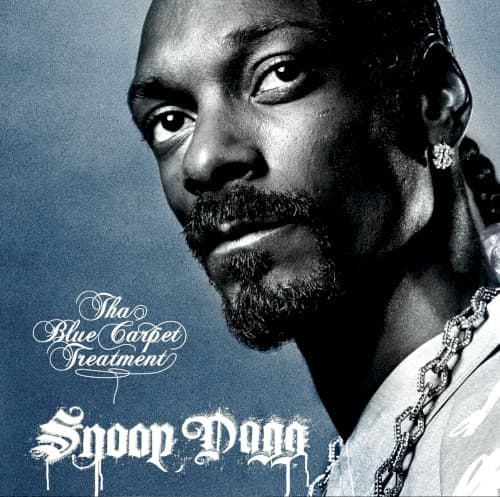
The scorecard
7.0/10 · Good
- Writing25%
- 6.5
- Production25%
- 8.0
- Delivery15%
- 7.5
- Cohesion15%
- 6.0
- Originality10%
- 6.0
- Replay value10%
- 7.0
The rhymes lean on stock gang, car and loyalty imagery and use ghostwriters on three songs, but the best verses tighten Snoop's style with compressed syllables and harder downbeat hits than he'd delivered in years.
Dr. Dre's heavy drums on the tracks he is credited on, the sparse menace of the Neptunes on “Vato” and Rick Rock's candy-coated beat on “Candy (Drippin’ Like Water)” give the album real range inside one mood.
Snoop tightens his drawl into clipped, consonant-heavy runs on “Think About It” and sounds hungrier than on his mid-decade singles, though his hooks still lean on guests.
The first six tracks are a strong run, but twenty-one songs and a soft back half of R&B detours and skippable cuts undercut the back-to-basics brief.
It deliberately revisits G-funk and gangsta rap rather than adding to them, and its best ideas, like the Digable Planets flip on “Candy (Drippin’ Like Water)”, are borrowed in the right way.
The top ten tracks hold up two decades on, but the length and the filler mean most listeners will build a shorter playlist.
Snoop Dogg Tha Blue Carpet Treatment — A Veteran Rapping Like He Has Something to Prove
The best moment on Tha Blue Carpet Treatment comes when Snoop Dogg stops entertaining and starts rapping like a man with something to prove. On “Think About It” he snaps off consonants in tight, clipped bursts over a spare soul loop, and the performance has a target: the fact sheet describes the song as a message to his older son, who had not named him a favorite rapper, that Snoop can still do the old-school gangster thing whenever he likes. Little else on the record is that pointed, but the whole album is built on the same impulse.
That impulse is the thesis. This is Snoop's most focused album since Doggystyle, and it gets there through a brief rather than a reinvention. He told MTV he was going back to the 'hood after years of pop and R&B detours, and the record behaves accordingly: Long Beach on the cover, Dr. Dre producing for him again for the first time since 2000, a Neptunes beat that sounds menacing instead of glossy. The clarity of that idea is what keeps a very crowded guest list from swallowing the host.
The stakes are bigger than one comeback. By 2006 Snoop Dogg had a reputation as a rapper whose albums stranded a few great singles among filler, and the open question was whether the voice still had edge or only charm. The answer here is both, in uneven proportion. The charm is constant, the edge shows up on roughly half the songs, and the rest are the price of an album that runs twenty-one tracks when fourteen would have hit harder.
The argument that follows is that the record's strengths are real, specific and mostly produced rather than written, and that its flaws are the familiar Snoop ones: overextension, a blurry middle, and hooks that depend on the guest more than the host. It is a good record that is one editing pass away from a very good one, and the distance between those two is the most interesting thing about it.
Dre's Thump, the Neptunes' Menace and a Pen for Hire
The album's strongest argument is its production, and the strongest thing about the production is range held inside one mood. Dr. Dre is credited on “Boss’ Life” and “Round Here”, and his drums bring the dry, heavy bounce that made the early Snoop records feel unhurried even at speed. The Neptunes, on “Vato” and “10 Lil’ Crips”, supply the opposite flavor: sparse, percussive, slightly sinister, with room around every sound. Battlecat's work on “L.A.X.” is the most traditional G-funk on the record, built on a Zapp sample Snoop had already used once in the mid-nineties, and it is comfortable rather than surprising. Rick Rock's “Candy (Drippin’ Like Water)” is the outlier, a sugary beat with a jazz-rap sample underneath that Rolling Stone fairly called singular.
What holds these producers together is a refusal to chase the moment. Apart from a few R&B-leaning cuts the sound stays Californian: live-feeling bass, whining synth leads, low-mixed backing vocals. That is an earned position rather than a borrowed one, because the album sounds like a man returning to his own tradition instead of imitating it. The sampling is smart in the same way. Digable Planets, Nile Rodgers, Roy Ayers and Stevie Wonder are not obvious West Coast sources, and they widen the palette without leaving the neighborhood.
Snoop's voice is the other constant. His power has always come from understatement, the half-sung drawl, the late landing on the beat, the way a threat sounds like a joke until the second listen. On his best verses here he tightens that style, compressing syllables and hitting the downbeat harder than he had in years. Guests are mostly well chosen. Ice Cube brings gravity on a Long Beach anthem, The Game plays the eager younger man, and Nate Dogg's hooks supply the sweetness Snoop's own choruses lack.
The writing is where the record is thinnest. The fact sheet credits ghostwriters Stat Quo and The D.O.C. with the lyrics on “That’s That Shit”, “Boss’ Life” and “Imagine”, and the results are professional, but the verses recycle gang loyalty, cars and women in images that a hundred West Coast albums have already used. Compare the narrative detail of Doggystyle, which gave the swagger weight; here the swagger is the content. The hooks are the second weakness. Too many choruses are left to the guest, and Snoop, who has written some of the most singable hooks in rap, too often hands them off.
The third problem is tone. A record that announces a return to the 'hood sits oddly beside a pop-leaning Akon cut and a handful of mid-tempo songs that could have appeared on any 2006 album. They are not bad, but they dilute the thing that makes the best tracks feel purposeful. When the brief holds, this is a convincing record; when it loosens, it is just a pleasant one.
Five Strong Openers, a Soft Middle and a Late Recovery
The sequencing is front-loaded in a way that flatters the album on a first listen. After a short George Clinton intro, tracks two through six run through the whole thesis in twenty minutes: the clipped rapping, the Nate Dogg hook, the Neptunes menace, the radio single and the posse cut. A listener who stopped at track six would call this one of the best West Coast records of its decade. The problem is that the remaining fifteen tracks cannot keep that pace.
The soft spot begins around the middle, where a reggae-tinged guest feature, a second Neptunes beat and a string of mid-tempo songs arrive without much to separate them. Dre's two production credits and the Ice Cube cut provide lift, but the momentum drains through the stretch of tracks thirteen to eighteen. That section has the weakest hooks, the most interchangeable beats and the least memorable verses, and it is where the album's twenty-one-track length stops feeling generous and starts feeling like inventory. The fact sheet notes that cut songs were moved to a separate mixtape and a bonus disc; a few more of these could have followed them.
The finish is better than the middle. “Imagine” restores some of the early-album purpose with a Dre verse and an old-school feel, and “Conversations” closes with a Stevie Wonder sample and a gentler mood. Neither is a great song, but both give the record a shape, a late loosening that feels like a deliberate exhale rather than a trail-off.
The length is partly earned and partly not. The album's pleasures are variety and generosity, and a double-digit number of tracks carry genuine ideas. But a Snoop album has always been a vibe, and vibes are hurt by repetition. Fourteen tracks, cut from the middle and the R&B detours, would have given a tighter and more impressive record, one that kept the best of the guests and none of the filler.
Snoop's Second-Best Album in the Rated Catalog, and Not Close to the First
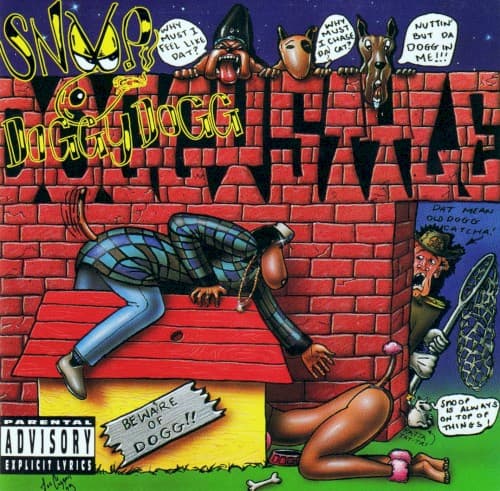
In Snoop Dogg's rated catalog this sits clearly second. It is a long way below Doggystyle (8.7), which has a narrative eye, a production identity and a cohesion that this record only borrows, and it is far above BODR (5.3), which has neither the guests nor the discipline. The 6.8 here reflects an album with an 8-level production side and a 6-level writing side, plus a sequence that wastes some of its own good ideas. Fans who treat it as a Doggystyle sequel will be disappointed; fans who treat it as the best Snoop album of the decade after that debut will not be.
It is for listeners who want modern-sounding West Coast gangsta rap with real drums and bass, for anyone curious about the Dre-and-Snoop reunion, and for people who like a guest-heavy posse record done with taste. It is less suited to listeners who want sharp writing, narrative or any attempt at depth, since the ghostwritten verses and the hook-handing habit keep it on the surface. Anyone who only wants the highlights should build a playlist.
After two decades the high points have aged better than the filler. The Neptunes and Rick Rock tracks still sound distinct, the Dre production is still heavy, and the best verses still land. The R&B cuts and the middle stretch sound more like 2006 than the rest.
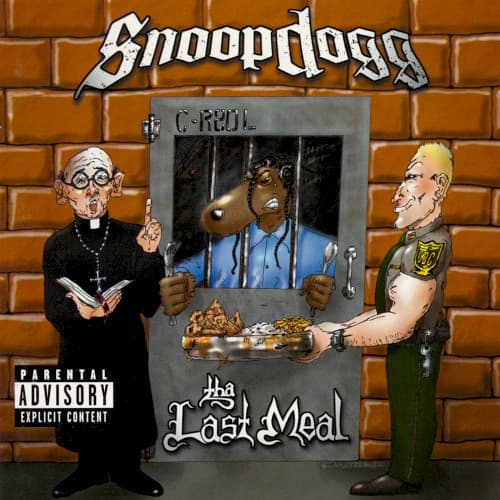
Start with “Think About It” for the rapping, “Vato” for the beat and “Candy (Drippin’ Like Water)” for the guest list and the hook. For what to hear next, go to Tha Last Meal, an earlier Snoop album from the Dre era that makes a useful comparison for how much tighter the rapping is here, or back to Doggystyle for what all of this is reaching toward. The best argument for this album is still the sound of Snoop sharpening his voice for a son who wasn't sure he was worth the trouble.
Track by track
Track Listing
Intrology
SolidA sub-two-minute opener with George Clinton, produced by DJ Battlecat and built on a Jay-Z sample. It sets the P-funk lineage and the back-to-basics mood, then gets out of the way.
Think About It
StandoutThe record's most convincing verse. Frequency's beat, built on a sample of The Impressions' “I Need You” and made, per the fact sheet, in a dorm room well before the album, leaves almost no clutter, and Snoop fills the gaps with crisp, consonant-heavy runs that land harder than anything on his mid-decade singles. Rolling Stone singled out the same quality. The song doubles as an argument aimed at his older son, which gives the bragging a target and makes it sound motivated rather than ritual. It is short on hook and long on rapping, which is the right trade for an opening statement, and it sets a bar the rest of the album cannot always meet.
Crazy
SolidNate Dogg sings the hook over Fredwreck's production, with a Cameo interpolation underneath. It is smooth, familiar West Coast comfort food: the voice and the bass line do the work, and Snoop's verses are serviceable rather than sharp.
Vato
StandoutThe Neptunes at their most restrained: a dark, tense bounce with big gaps that Rolling Stone also called excellent. B-Real's nasal rasp is a good counterweight to Snoop's drawl, and putting a Cypress Hill voice on a Long Beach record fits the video's stated aim of calling for unity between Black and Latino communities in Los Angeles. The verses are more gangster posture than sociology, so the message mostly lives in the casting and the title. Even so, it is one of the few guest spots that changes the temperature of a song instead of filling a verse, and the beat is the reason to return.
That’s That Shit (R. Kelly)
SolidThe biggest song on the album per the fact sheet, produced by Nottz around a Nile Rodgers sample, with an R. Kelly hook and ghostwritten lyrics. It is slick and built for radio, and Rolling Stone read it as the pop-leaning counterweight to the harder cuts. Effective, but the least personal thing on the record.
Candy (Drippin’ Like Water)
StandoutRick Rock builds a minimalist, sing-song beat from a Digable Planets sample and a Cameo interpolation, and E-40, MC Eiht, Goldie Loc, Daz Dillinger and Kurupt each take a turn. The A.V. Club called it insanely catchy and heard hyphy and jazz-rap in it; both readings hold, and the chorus is genuinely hard to shake. The sheer number of voices is a risk, and some verses are just place-holders, but the beat is so spare that even slight verses sound deliberate. It is the best argument that Snoop's willingness to say yes to everyone sometimes pays off.
Get a Light
SolidDamian Marley's guest spot gives the song a reggae-leaning lilt, and the premise is in the title. Pleasant and low-stakes, but it adds little that Snoop has not done before.
G********n’ 101
StandoutA brawny head-nodder, as Rolling Stone put it, with The Game as the eager younger voice and production credited to Martin. Snoop plays the elder statesman, and the contrast works: the track has more edge than anything in the stretch around it.
Boss’ Life
StandoutDre's production here is tricked-out funk in Rolling Stone's phrase, built from a Controllers sample and a Busta Rhymes sample, with Akon on the hook. It is heavy and expensive-sounding, the clearest case of Dre bringing out Snoop's best bounce, and the beat carries more personality than the ghostwritten verses. The weakness is that the lyrics are the usual money-and-status boasts, so it succeeds on groove alone. That is enough: it is one of the record's most replayable tracks.
L.A.X.
StandoutIce Cube joins Snoop over a Battlecat beat that combines the Zapp bounce Snoop used in the nineties with a Notorious B.I.G. sample. It is the album's clearest nod to the Cali-anthem tradition, and Ice Cube's gravel gives it weight. The beat is familiar by design, which is both its charm and its limit.
10 Lil’ Crips
SolidA second Neptunes beat, leaning on the album's Crip-blue title concept. The title is a bit of a novelty, and the track is more interesting as a sound than as a statement.
Round Here
SolidDre production around a sample of Dido's “Thank You”, the same one Eminem used on “Stan”, which the fact sheet says Snoop did not know when he recorded. That association is hard to shake, and it pulls the song toward a mood it cannot fully claim. The drums are heavy and the track is competent.
A Bitch I Knew
WeakRhythum D's production is fine, but the premise is the oldest in the genre and the track adds nothing. Filler, and the album's softest low point.
Like This
SolidSoopafly builds a warm, loose groove from a Roy Ayers sample, with Western Union and LaToiya Williams on the hook. It is easy listening with a West Coast accent, nice in the car and gone from memory afterward.
Which One of You
WeakA 1500 production with Nine Inch Dix, recorded during the sessions. Generic mid-tempo posturing with nothing that separates it from the tracks around it.
I Wanna F*ck You
WeakAkon produces and sings this one, and the fact sheet notes a clean radio version. It is exactly the kind of pop detour the album's mission statement says Snoop is leaving behind, and it is slick enough to sound like a contract obligation.
Psst!
SolidJamie Foxx appears on a short cut that works as a light change of pace. It is brief and forgettable.
Beat up on Yo Pads
WeakThe football-pads title suggests it is the pee-wee football pep talk the A.V. Club described. A novelty that wears thin quickly; the idea is more fun than the song.
Don’t Stop
SolidWarzone and Kurupt join Snoop on a Goodman production. It is a competent Dogg Pound-style closer to the weak stretch, and it recovers a little energy, but it does not carry much of its own.
Imagine
StandoutThe most nostalgic cut, with Dr. Dre rapping a verse and D'Angelo on the hook, and Entertainment Weekly named it the standout. The fact sheet says it was first slated for a Busta Rhymes album before the sample could not be cleared, and the lyrics are credited to ghostwriters, but the old-school bounce and Dre's presence give it a real sense of occasion. Snoop and Dre trading verses still lands, and even though the song is long, it never drags. The album's best late-sequence moment, and a reminder of why the reunion was the sales pitch.
Conversations
StandoutA closing slow-down with Stevie Wonder, built on a sample of his “Have a Talk with God”. It is a gentle landing after an album of excess, and it works more as a curtain call than as a song.
Frequently Asked Questions
Is Tha Blue Carpet Treatment a good Snoop Dogg album?
Does Dr. Dre produce Tha Blue Carpet Treatment?
How many copies did Tha Blue Carpet Treatment sell?
Which tracks should I start with on Tha Blue Carpet Treatment?
Styles