The scorecard
6.9/10 · Good
- Writing25%
- 6.5
- Production25%
- 8.5
- Delivery15%
- 7.0
- Cohesion15%
- 5.5
- Originality10%
- 6.0
- Replay value10%
- 6.5
King Mez and other co-writers provide solid gangster narratives and social commentary, but the attempts at depth often dissolve into formulaic threats and money talk without real weight.
Focus..., Dem Jointz, DJ Dahi and others build dense, layered beats that reach for The Chronic's ambition, with global samples and live instrumentation that consistently land despite occasional overreach.
Dre's own rapping is sparse and competent; the parade of guests from Kendrick to Anderson .Paak to Snoop carry the vocal energy, with .Paak's hooks standing out across multiple tracks.
Sixteen tracks at 65 minutes with no unifying thread beyond vague Compton mythology; the album lurches between street tales, introspection, and legacy-burnishing without earning its length.
Leans on The Chronic playbook with international samples and G-funk flourishes, adding modest updates through 2010s polish and global textures even as the best moments come from collaborators.
The production holds up consistently, especially on Genocide, Animals, and Medicine Man, though the bloat and guest-heavy structure still push most listeners toward selective track extraction.
Dr. Dre Compton — The Grand Finale That Came Sixteen Years Late
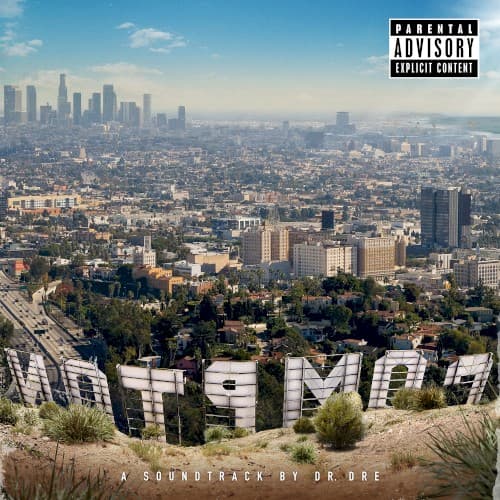
Compton arrives as the album Detox was supposed to be: Dr. Dre's victory lap, his proof that he still runs the West Coast sound, his chance to crown a new generation while reminding everyone who built the throne. Released in 2015 as a soundtrack companion to the Straight Outta Compton biopic, it carries the weight of sixteen years since 2001 and the ghost of the most famous unfinished album in rap history. The thesis is audible within three tracks: this is Dre trying to make The Chronic again, with 2010s polish and a roster of guests doing most of the rapping, and the attempt is half-successful. The production is expensive and ambitious, pulling from Turkish psych-rock, Thai funk, Italian prog, and Gap Band interpolations to build beats that sound like nothing else in 2015 mainstream rap. But the album cannot decide whether it wants to be a street record, a meditation on legacy, or a reveal for Anderson .Paak and King Mez, and at sixteen tracks it refuses to choose.
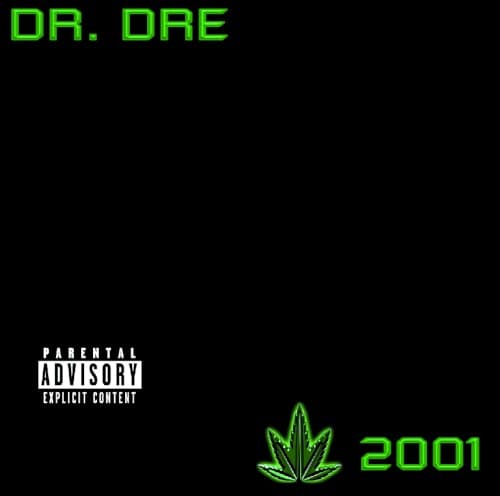
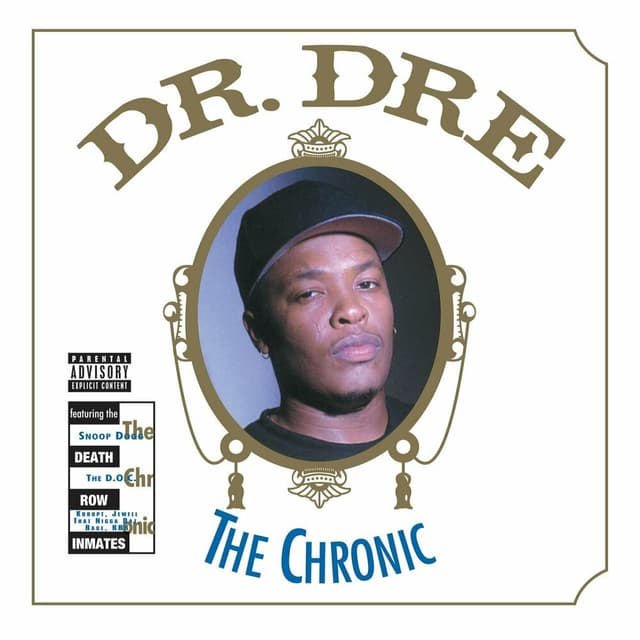
The stakes are clear: after The Chronic invented G-funk and 2001 refined it into a sleeker, harder form, Compton has to justify why Dre came back at all. The answer the album offers is that he still builds better beats than almost anyone and that he knows how to curate talent. The answer it cannot give is what Dre himself still has to say. He raps on fewer than half the songs, and when he does appear his verses sound written by committee and delivered with workmanlike competence.
The album works best when it leans into the guest performances and the ornate, overbuilt production, and worst when it tries to position Dre as a street narrator or sage elder. What holds it together is the sound: expensive, maximal, and rooted in the West Coast tradition even as it reaches for global textures. What keeps it from greatness is that it has no center and no reason to be this long.
Beats Built Like Film Scores, Raps That Cannot Keep Up
The production on Compton is its strongest argument. Dre, Focus..., Dem Jointz, DJ Dahi, Cardiak, DJ Premier and others construct tracks that layer live instruments, obscure samples, and digital manipulation into dense, visual arrangements. The best beats here do not sound like trap, do not sound like the radio, and do not sound like anyone else in 2015 was making. They sound like Dre spent real money and real time, which he did.
But the writing cannot match the production. King Mez and other co-writers handle much of the album's lyrical content, and the results are competent gangster narratives without much specificity or insight. Talk About It and All in a Day's Work offer boilerplate hustler talk. Deep Water tries for social commentary about systemic violence but settles for vague gestures at broken communities and survival.
For the Love of Money cribs a Bone Thugs hook and delivers exactly the message the title promises. When the album reaches for depth, as on the spoken-word Intro or the reflective Talking to My Diary, it offers therapy-session platitudes rather than actual insight into Dre's career or Compton's history. The rapping is technically fine—flows are clean, deliveries are confident—but there is no writing here that could not have been plugged into a dozen other West Coast albums.
Dre's own rapping is the weakest link. He appears on fewer than half the sixteen tracks, and when he does his verses sound cautious and ghostwritten, lacking the swagger of The Chronic or even the controlled menace of 2001. On It's All on Me he delivers motivational-poster bars about self-reliance. On Issues he trades verses with Ice Cube and Xzibit and sounds like the least convincing of the three.
His flow is competent but his presence is not, and the album knows it: the best songs either keep him off the mic entirely or bury him in a crowd of guests. The vocal performances that work belong to Anderson .Paak, who provides sung hooks and ad-libs across half the tracklist with an elastic, soulful energy, and to Kendrick Lamar, who delivers two of the album's most focused verses. The guests do not just outshine Dre; they make the album listenable.
Sixteen Tracks Chasing Five Great Beats
At sixteen tracks and 65 minutes, Compton has no sense of pacing or restraint. The album opens with a minute-long news-report intro that sets a tone of gravitas it never earns, then moves through three strong songs before the momentum starts to fracture. The middle section runs long and outstays its welcome, with half-formed ideas stitched together and passable posse cuts that add nothing. By the time the album reaches the closing run, it feels like Dre is running out the clock on a contract rather than building toward a conclusion.
The peaks are real but scattered across the runtime. The three strongest moments justify the album's existence with sharp beats, focused performances, and no wasted time. The rest of the tracklist is either solid but unremarkable or outright filler. The album would have been stronger at ten or eleven tracks, cutting the skits, the too-long interludes, and the songs where Dre sounds like a guest on his own record. As it stands, Compton plays like a compilation with great production and no editor.
The Third-Best Album in a Three-Album Catalog
Compton ranks below both The Chronic and 2001 in Dre's catalog, and it is not close. The Chronic invented a sound and carried cultural weight beyond the music itself, while 2001 refined that sound into something harder and more commercial without losing the craft—the same trajectory Dre helped guide with Doggystyle years earlier. Compton has neither the innovation of the first nor the focus of the second.
It is an expensive, well-produced album with strong moments and no reason to be this long, made by a producer who still knows how to build beats and a rapper who no longer sounds like he wants to be on the mic. The best case for the album is that it introduces Anderson .Paak and delivers a handful of tracks that belong in Dre's catalog. The case against it is that everything else feels like obligations being met.
This is an album for Dre completists and for listeners who want to hear what West Coast maximalism sounded like in 2015 when someone spent real money on it. Casual fans should start with the three strongest tracks and maybe add a couple more if they want additional context. Skip it if you are looking for a cohesive statement or if you expect Dre to rap with the authority he had on his first two albums. Compton is not a disaster and not a classic. It is a competent third album by a producer who had already said everything he needed to say.
Track by track
Track Listing
Intro
SolidNews footage from Compton Black City over ominous production sets a tone of gravity and history that the album never follows through on. Functions as scene-setting but adds no musical value.
Talk About It
StandoutKing Mez and Justus trade verses over a DJ Dahi beat that blends minimal piano with heavy bass. The rapping is competent hustler talk without much personality, but the beat is clean and the hook from Marsha Ambrosius provides melodic relief. A solid opener once the actual music starts.
Genocide
StandoutThe album's first essential track. Dem Jointz flips Gap Band into a tense, minor-key beat and Kendrick Lamar delivers a focused verse about systemic violence and survival. The writing here is specific and angry in a way the rest of the album only gestures at. Marsha Ambrosius and Candice Pillay provide a mournful hook that gives the track emotional weight without melodrama. This is what the whole album should have aimed for.
It’s All on Me
SolidBink and Dre sample a gospel choir and build a soulful, mid-tempo beat. Justus and BJ the Chicago Kid handle the sung elements while Dre delivers a verse about self-reliance that sounds more like a motivational speech than a rap. The production is strong but the writing is generic.
All in a Day’s Work
SolidAnderson .Paak and Marsha Ambrosius carry the hooks over a DJ Khalil and DJ Dahi beat that layers vocal samples and bass into a dense arrangement. At over five minutes the track drags, with verses that cycle through the same hustler narratives as Talk About It. .Paak's contributions are the only reason to return.
Darkside / Gone
WeakTwo incomplete ideas forced into one track. Darkside features Eazy-E radio excerpts and a haunted minor-key beat that never develops. Gone flips a Wings sample into a psychedelic funk track that sounds more promising but ends before it goes anywhere. The seam between them is obvious and awkward.
Loose Cannons
SolidXzibit and Cold 187um return for a posse cut over a Janko Nilovic sample. The beat is solid and the rapping is competent, but the track adds nothing that Dre had not already done better on 2001. Feels like a reunion for its own sake.
Issues
StandoutIce Cube, Anderson .Paak, and Dem Jointz join Dre over a Focus...-produced beat that samples Turkish psych-rock into a hypnotic loop. Cube and Xzibit sound engaged, .Paak provides a strong hook, and Dre delivers his weakest verse on the album. The production and the guests make it work despite him.
Deep Water
StandoutKendrick Lamar, Justus, and Anderson .Paak trade verses over a Focus..., Cardiak, DJ Dahi, and Dem Jointz beat that blends live bass and atmospheric production into a moody, cinematic track. Kendrick's verse is sharp and specific about Compton street life, and the hook is memorable. At over five minutes it could be tighter, but the performances justify the length more than most tracks here.
One Shot One Kill
SolidJon Connor handles the rapping with Snoop Dogg on the hook over a Focus... and Trevor Lawrence beat. Connor delivers a capable but unmemorable verse about precision and violence. Snoop sounds bored. The beat is clean but the track has no reason to exist.
Just Another Day
WeakThe Game raps over a Thai funk sample from Thepporn Petchubon. The beat is intriguing but the writing is rote street narrative with no stakes or detail. The shortest full track on the album, and it still feels like filler.
For the Love of Money
SolidCardiak flips a Bone Thugs hook and Italian prog elements into a slow, bass-heavy beat. Jill Scott, Jon Connor, and Anderson .Paak contribute vocals, but the track delivers exactly what the title promises: generic warnings about greed and materialism. Well-produced but predictable.
Satisfiction
SolidSnoop Dogg, Marsha Ambrosius, and King Mez join over a Dem Jointz beat that blends funk and soul into a smooth mid-tempo track. The rapping is competent, the hook is fine, and nothing about it stands out. This deep into the tracklist it registers as background music.
Animals
StandoutThe album's second essential track. DJ Premier and BMB SpaceKid build a head-nodding beat with scratching and a hypnotic loop. Anderson .Paak provides the hook and Dre delivers one of his better verses, though even here the writing is more competent than memorable. The beat and .Paak's performance make this one of the few tracks that earns repeat listens.
Medicine Man
StandoutEminem delivers a blistering verse over a slow, menacing Dem Jointz and Focus... beat. The production is cinematic and oppressive in the best way, and Eminem's performance is the most engaged guest spot on the album. Dre's verse is passable but overshadowed. This is the third track that justifies the album's existence.
Talking to My Diary
WeakThe closing track features Slim the Mobster, Anderson .Paak, and others over a DJ Silk and Mista Choc beat. Dre offers reflections on his career and legacy, but the writing is therapy-session cliches rather than real insight. The beat is atmospheric and the sentiment is clear, but the execution is too vague to land. A weak ending to an overstuffed album.
Frequently Asked Questions
Is Dr. Dre's Compton album worth listening to?
How does Compton compare to The Chronic and 2001?
What are the best songs on Compton by Dr. Dre?
Why did Dr. Dre make Compton instead of Detox?
Styles