The scorecard
7.0/10 · Good
- Writing25%
- 7.5
- Production25%
- 7.0
- Delivery15%
- 6.5
- Cohesion15%
- 7.5
- Originality10%
- 6.5
- Replay value10%
- 6.5
The storytelling on "Neighbors" and the closing title track is specific and controlled, though the more sermon-like verses on "Change" state ideas without adding fresh imagery.
Warm, soulful and consistent, with a J Dilla flip on "Change" and a strong closer, but the beats sit at one temperature and rarely surprise.
Cole's low, conversational flow suits the material and "Immortal" shows real force, but the hooks are thin and the cadence changes little across ten songs.
Ten songs, no filler, and the two-part "She's Mine" suite spread across the running order gives the sequence a clear thread.
Inhabiting other voices and keeping the sound subdued is a step away from his earlier records, but the template of a soulful, earnest narrator is familiar.
Strong front to back and the story songs reward return visits, though a lack of big moments means few tracks pull you back individually.
J. Cole 4 Your Eyez Only: A Loud Career Answered in a Quiet Voice
The most telling thing about 4 Your Eyez Only is how little it wants to be played in a car. J. Cole's fourth album is built for headphones and long attention spans: ten songs, a slow walking pace, a closer that runs almost nine minutes, and hardly a track that works as a standalone event. Its bet is that a rapper at the top of the charts can get more from restraint than from dominance. The record mostly proves the point, and it also shows what restraint costs.
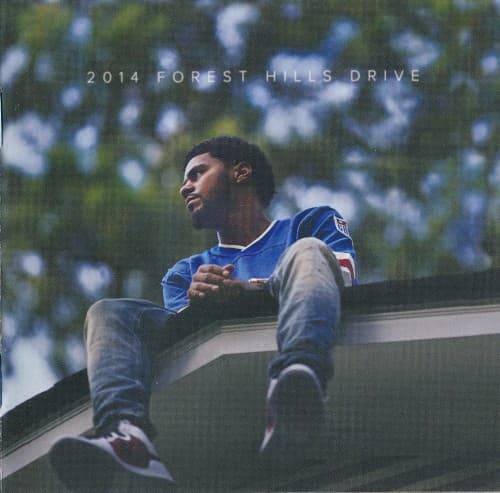
My claim is that this is J. Cole's most disciplined album and his least explosive one. It arrived exactly two years after 2014 Forest Hills Drive, on a new label, a week after a surprise pre-order and a few months after he hinted at retirement on someone else's record. The expectation was a victory lap or a farewell. What he delivered is a quiet, serious set about incarceration, racial discrimination, gang violence, depression, fatherhood and love, almost entirely without the swagger that made the previous record feel like an event.
That choice produces the album's best and worst qualities at once. When Cole writes from inside a scene, with a specific house, a specific street or a specific chore, the songs land harder than anything in his earlier catalog. When he writes toward a theme, the verses turn into earnest summaries of ideas the listener already agrees with. The album is also unusually even: there is no embarrassing single and no obvious throwaway, but there is also no moment that grabs you by the collar. Whether that trade is worth making depends on what you want from a Cole record. This review argues that the highs are high enough, and the sameness real enough, that it lands just short of the album before it.
Small Details, Wide Camera: How Cole Writes and Sounds Here
Cole's writing here is at its most controlled. Earlier records leaned on punchlines, status anxiety and a narrator who wanted credit for being honest. This one lowers the volume and widens the camera. The verses keep returning to small, physical details, which is where the album earns its seriousness: a domestic routine described patiently says more about a relationship than a dozen declarations of devotion. He also borrows other voices, a device that lets him write about danger and loss without making himself the hero of every story, and the result sounds like a writer rather than a spokesman.
His delivery matches. The flow is lower, slower and more conversational than on his earlier records, with long sentences that run over the bar line rather than snapping shut on a rhyme. He rarely raises his voice, and the few times he does, the contrast carries real force. The singing and humming that surround the rapping are modest, sometimes fragile, and mostly used as texture. Guest vocals arrive in small doses, a detail that keeps the record feeling like one person's room rather than a roster.
The production is mostly Cole's own work with a large support team, including Vinylz, Boi-1da, Cardiak, Frank Dukes, Ron Gilmore, Elite and others per the credits, and it holds a consistent palette: warm keys, dry drums, soul and jazz fragments, and plenty of empty space. The J Dilla sample on one song and the Japanese fusion sample on the closer show where his ear lives. The sound serves the rapping carefully, never crowding it, and that discipline is a strength.
It is also the weakness. Because almost every beat sits at the same temperature, the record asks the listener to supply the drama, and some of the verses cannot carry that load. The more sermon-like songs state their positions clearly but add little image or surprise; the ideas are right, and the writing is merely competent. A few hooks are sung in a thin, hesitant register that suits the mood but not the melody, so the choruses fade from memory faster than the verses. Cole also leans on repeated phrasing across tracks, which makes the earnest passages feel more like a formula than a discovery.
Against his peers, the album sits between two poles. It lacks the formal invention of Kendrick Lamar and the pop reach of Drake, which is the very gap one critic in the fact sheet described, and it is more candid than either about ordinary life. As a body of work it feels like a writer's album: patient, sincere, and a little short of electricity.
A Slow Walk Toward a Nine-Minute Finish
As a sequence, the record is a slow burn that runs on mood rather than escalation. The opening is brief and ceremonial, and the first real songs establish the sound quickly. The early stretch is the most conventional, with a hit-minded single and a nostalgic home-turf cut, and those tracks serve mainly to get the listener in the door before the album turns inward.
The center is where it pulls itself together. The two-part love suite is split across the running order, with the first half early and the second half placed late, a structural choice that turns a pair of songs into a thread tying the whole album together. Between them sit the weightiest songs on the record, and the pacing there is the album's best sequencing idea: a political-minded track, a story about harassment, and a domestic portrait follow one another with enough space between them that each registers separately.
The sag is mild but real. Around the middle the tempo and the beat textures begin to blur, and a listener who has not fully committed to the record can drift for a track or two. With only ten songs, a drift matters more than it would on a bloated release. The length overall is earned; trimming anything would remove one of the few places the album breathes.
The closer is the sequence's anchor. At nearly nine minutes, it asks more patience than anything else on the record and repays it more fully than the rest of the running order, ending the album on a longer, more narrative note rather than another mood piece. It is the sort of finale that makes the quieter songs before it look like preparation, and it explains why this album plays better front to back than as a playlist. Start at track one and let the pace do its work; shuffle it and the restraint reads as monotony.
Just Behind the Peak: Where This Record Sits in Cole's Catalog
Among Cole's albums, this sits just behind 2014 Forest Hills Drive and ahead of Born Sinner and KOD. It beats the latter two on cohesion and seriousness, and it loses to its predecessor on memorability and sheer range of moods. That ordering is deliberate: the writing here is more mature, but a mature album that rarely surprises will not outrank one that did.
It is for listeners who like Cole when he slows down, who care about narrative detail more than punchlines, and who are willing to hear a record in sequence. Fans of conscious rap, and of soulful, sample-driven production, will find the most here. Anyone who came for the competitive Cole, the one who raps like he is trying to win, should skip to the earlier albums, because this one barely tries to win anything.
The album has aged reasonably well. Its subject matter has not dated, and its subdued production sounds less like a trend than the louder records of the same year. The lack of a breakout moment has also helped, since nothing on it has worn out from overuse. What it has not done is grow: the record sounds the same on the tenth listen as on the third, which is a point for consistency and a mark against depth.
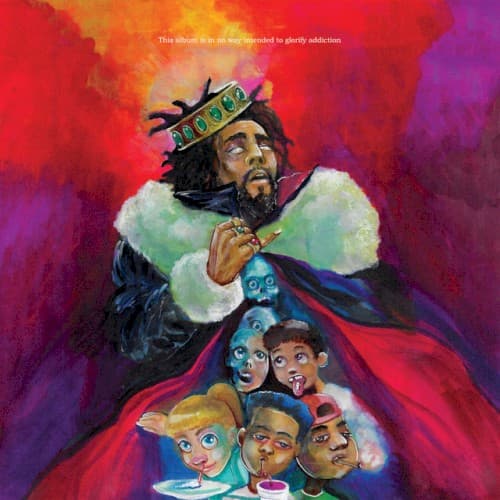
Start with "Neighbors" for the clearest example of his storytelling, "Deja Vu" for the most accessible side of the album, and the title track if you want to know whether the whole thing is worth your time. After that, go back to 2014 Forest Hills Drive for the same earnestness with more personality, or forward to KOD to hear him trade narrative patience for a harder sermon. If the closer works on you, the rest of the record will too, and if it does not, nothing earlier is going to change your mind.
Track by track
Track Listing
For Whom the Bell Tolls
SolidA brief, ceremonial opener at about two minutes, with background vocals and a spare beat. It sets a somber tone and does little more; think of it as a doorway rather than a song. Nothing in it needs defending, and nothing in it needs revisiting, so skipping it on repeat plays costs you nothing.
Immortal
StandoutBuilt on a piano sample from Frank Dukes and shaped by Cardiak, this is the album's most forceful rap performance, with Cole pressing harder on the bar line than anywhere else here. The writing is blunt about the street economy and the people it consumes, and the beat keeps just enough menace to match. It is one of the few moments where the record raises its voice, and it is stronger for it.
Deja Vu
StandoutThe lead single, built over a sample of a late-1990s R&B record and produced by a large team including Vinylz and Boi-1da. It is the album's most radio-ready track, with a bouncing, nostalgic groove and a relaxed flow about a shaky romance. It is pleasant and well made, with a hook that sticks easily, though it is lighter than the songs around it and more conventional than the album's best work. It works as the entry point for casual listeners and as a breather before the heavier material, but it is not where the record makes its case.
Ville Mentality
SolidA homecoming track with a smoky beat and background vocals that treats his hometown with a mix of loyalty and caution. The mood is right, but the verses cover familiar ground, and the song slips by without leaving a mark. The sound is cozy and the performance is assured, yet the writing stays on well-worn ground, so it plays as a pleasant interlude between the more specific stories on either side. Solid, not essential.
She's Mine, Pt. 1
StandoutThe first half of the love suite is soft, spare and sincere, with a gentle beat and a vocal-forward hook. The writing is warm and direct about devotion, which gives the album a hopeful counterweight. It works mostly as setup for the second half, and its restraint is the point: the song keeps the arrangement small so that the feeling, rather than the production, does the persuading. The hook is simple, maybe too simple, but the sentiment is believable.
Change
StandoutAt over five minutes, this is the album's most ambitious political track, built on a J Dilla sample with additional vocals from Ari Lennox. Cole raps about violence, retaliation and the pull of cycles that are hard to break, and he writes with more compassion than anger. The beat has a restless sway that fits the topic. The verses are strong, though the song reaches for a message a little more openly than the best material does, and the last third can feel like it is circling.
Neighbors
StandoutBuilt from the instrumental of an earlier Cole song, this is the album's clearest storytelling cut. It deals with harassment by neighbors and police, and it works because the incident is kept small and specific rather than turned into a lecture. The beat is tense and restrained, the delivery calm, and the anger arrives through understatement. It is the best single argument for the record's method.
Foldin Clothes
StandoutA domestic love song built on a talk-box hook and background vocals from Steve Lacy, running past five minutes. The subject, simple household routine as proof of commitment, is charming and rarely heard in rap at this level. The groove is warm and slightly loose. It stretches a little long, but the intimacy is real.
She's Mine, Pt. 2
StandoutThe second half of the suite shifts into fatherhood, with a slow beat and a vulnerable tone. It is more emotionally direct than the first part and pays off the album's larger hopes. The performance is sincere to the point of being a little exposed, which is part of its appeal and its risk.
4 Your Eyez Only
StandoutThe nearly nine-minute closer, with a sample from Yuji Ohno and additional vocals from Chargaux, carries the record. Cole speaks in a borrowed voice and lets a story unfold at length, with a patience that few rappers risk at this scale. The beat shifts as the narrative does, and the final stretch lands with real weight. A few passages run long, but this is the one track that makes the album's slow pace feel like a plan.
Frequently Asked Questions
Is 4 Your Eyez Only J. Cole's best album?
What is 4 Your Eyez Only about?
Which songs should I hear first from 4 Your Eyez Only?
Genres