The scorecard
7.2/10 · Good
- Writing25%
- 6.5
- Production25%
- 8.5
- Delivery15%
- 7.0
- Cohesion15%
- 5.5
- Originality10%
- 8.5
- Replay value10%
- 7.5
Ideas about faith, fame and family surface in Ultralight Beam and Real Friends, but the verses on Highlights and Freestyle 4 are scattered and the self-reference often replaces craft.
The gospel choir and bare piano of Ultralight Beam, the cut-up Nina Simone on Famous and the stacked house samples on Fade show a producer building rooms the vocal can move through.
Kanye's voice is exposed and effective on Real Friends and FML, while the guest vocals from Chance the Rapper, Rihanna and Kendrick Lamar carry key moments.
Short fragments like Frank's Track and I Love Kanye interrupt the flow instead of linking it, and nineteen tracks from a crowd of producers collide as often as they cohere.
A gospel-trap album that treats sketches, a Desiigner interlude and a choir as equal building blocks had no direct model in 2016 rap.
The gospel opening and sample-heavy tracks have been widely imitated and the best songs return well, though the full album includes sketches that read as unfinished; as a recent-era record this is a projection.
Kanye West The Life of Pablo — A Record Built in the Open
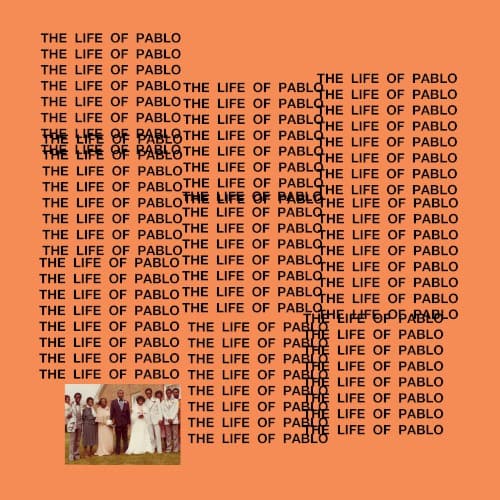
The Life of Pablo is an album that sounds like a studio with the doors left open. Ultralight Beam begins with a small child's voice, a choir enters, a sparse bed of keys carries a guest verse from Chance the Rapper, and nobody tidies the room afterward. A few songs later a teenage rapper's breakout single is folded into a confessional dance track, and a contemporary-classical composer's vocoder turns the whole thing into something else. The claim of this review is that the mess is the method. Kanye West treats an album as a working surface, and the producers who touch it are co-authors of a document that keeps changing.
That approach is why the album matters and why it is hard to score. West recorded it between 2013 and 2016, changed the title several times, previewed an early version at Madison Square Garden, and kept revising the songs after release. A reworked Famous, a split Wolves and a later round of tweaks turned the record into something closer to software than a fixed object. The fact sheet notes that it became the first album to reach number one on the Billboard 200 primarily through streaming, which fits a record that was always more process than product.
The production, led by West with executive producers Rick Rubin and Noah Goldstein, is the reason to care. Mike Dean's synthesizers, Metro Boomin's drums, Hudson Mohawke's maximalism and Madlib's loops share the same album, and the best songs find ways to make those contrasts work. The worst songs sound like four different ideas that were never reconciled.
As a Kanye West record it is the most openly unfinished thing he released at the time, and the unfinished quality is where its best ideas live. It is also where its limits are, because a record that treats every sketch as a finished thought will eventually include some that are not.
Choirs, Chopped Soul and Beats That Refuse to Settle
The most useful way to hear this album is as a series of arrangement decisions. Ultralight Beam is the clearest example. The drums are barely there, the bass is a low hum, and the choir and the guest voices are placed close to the front of the mix. The result is a room rather than a beat: you hear the space around the singers as much as the singers themselves. Few rap productions of the period leave this much air.
The sample treatment is the second thing to listen for. West and his collaborators take material from soul, reggae, Persian pop, house and library records, and then cut it into pieces small enough to serve as rhythm. Famous layers a Nina Simone line, a dancehall classic and an Italian soundtrack sample so that all three feel like fragments of one source. Feedback uses a vocal sample from Persian pop as a distorted, almost mechanical lead. Fade stacks several house tracks until the low end becomes the main melody. Each of these songs treats the sample as raw material rather than a hook.
The drums are the third element. Metro Boomin and Southside bring the contemporary trap pattern to a handful of songs, and West lets them sit unmodified rather than dressing them up. On the better tracks the contrast with the older soul loops is the point. On the weaker ones, the drums and the samples feel like two separate sessions pasted together.
The weaknesses are structural. The mix often changes character from song to song, so that a quiet confessional moment is followed by a loud, compressed one with no transition between them. The album also leans heavily on short fragments, and the interludes feel less like deliberate pacing than leftover material. Several guest spots, including some of the late features, add names without adding ideas.
The writing is the weakest element. West's verses move abruptly between bragging, anxiety and faith, and they are most effective when they stay on a single subject for long enough to build an image. On the stronger tracks the writing works with the production, matching its fragmentation with a sense of someone talking himself through a problem. On the weaker ones it settles for provocation. The best vocal performances come from the guests, who benefit from the clear space the production gives them.
A Playlist Disguised as an Album, and the Arguments It Wins
The sequence is a case for and against fragmentation. The opening is as strong as any in his catalog: a gospel prayer, a pair of linked songs, then a hit with a very large sound. That first stretch moves quickly and every piece belongs.
The middle is where the structure loosens. Short songs, interludes and half-sketches arrive in rapid order, and the album gets harder to follow. Some of these pieces are strong ideas that last ninety seconds and stop; others sound like transitions that never found a destination. The effect is a stretch of listening in which the album seems to hold its own attention loosely. A listener who wants songs will skip ahead, and a listener who wants texture will be rewarded.
Then the second half brings back the momentum. The longer songs, which include a loop-driven track that began its life years before the album, give the record weight. By the time the last few songs arrive the album has found its footing again, and the final stretch is the part most likely to send you back to the beginning. That is a good outcome for an album designed to be revisited.
The length is only partly earned. Nineteen tracks is a lot for a record that includes several under one minute, and the running time is mostly padded by those short pieces. A tighter sequence would lose the interludes and keep the dense, strong songs. The case for keeping them is that the looseness is deliberate, and that the record's identity depends on the sense that anything could happen. Whether that makes for a better album or merely a more interesting one depends on how you listen. As a sequence it has more peaks than most albums, and also more dead air.
Brilliant Parts, Unsettled Whole: Where Pablo Lands
In Kanye West's catalog, The Life of Pablo sits below the four albums this site rates at or above 8.1 (The College Dropout, Late Registration, Graduation and Yeezus) and well below My Beautiful Dark Twisted Fantasy at 8.7. It lands just under 808s & Heartbreak at 7.3 and far above ye, Jesus Is King and Donda. The reasoning is straightforward: the production ideas are among the best of his career, but the writing is uneven and the sequence lacks the discipline of his earlier work.
It is for listeners who care about how records are built. If you like hearing samples reshaped, vocals placed in unusual spaces and a producer's name appearing five times on one song, this album will hold your attention. It is also for anyone curious about how streaming and post-release updates changed the idea of an album. Skip it if you want lyrical consistency, a clear narrative or a finished-sounding mix. The looseness that makes it interesting will frustrate anyone who wants a start-to-finish statement.
It has aged well in the places that matter. The gospel opening still sounds unlike almost anything else in rap, and the sample-heavy tracks have been widely imitated. The record's habit of revising itself after release now looks like an early example of a common practice. The weaker material has aged less well, particularly the sketches and filler that read as unfinished rather than daring.
Start with Ultralight Beam for the arrangement, Famous for the sample work and Fade for the low end. Then go back to My Beautiful Dark Twisted Fantasy to hear the same impulses with more discipline, and Yeezus to hear the harder, sparser side of his production. The Life of Pablo works best as a record you return to for its best three songs and then wander through for the rest.
Track by track
Track Listing
Ultralight Beam
StandoutThe album's best arrangement. A child's voice opens the song, a choir and a sparse keyboard bed fill the space, and the drums arrive so quietly that the voices feel like the rhythm. Kirk Franklin and Kelly Price add gospel weight, and Chance the Rapper's guest verse is the emotional peak, setting a joyful tone that the rest of the record rarely returns to. The mix leaves room around every voice, which is the point: the production sounds like a room full of people rather than a stack of tracks. It is also the song that best explains the gospel claim the album makes about itself.
Father Stretch My Hands, Pt. 1
StandoutBuilt on a gospel sample from Pastor T. L. Barrett, with Kid Cudi and Kelly Price on vocals and Metro Boomin among the producers. The sample is looped with confidence and the beat drops in at the right moment, giving the song the sense of a service becoming a club track. The writing is blunt, but the arrangement sells it.
Pt. 2
StandoutA sharp turn into a trap beat built from Desiigner's breakout single, followed by a meditative vocoder passage from Caroline Shaw. The seams between the sections are audible and deliberate. The song is the clearest example of the album's strategy: two unrelated ideas, joined and left to argue.
Famous
StandoutA dense collage of samples from Nina Simone, Sister Nancy and an Italian film composer, with Rihanna carrying the hook and Swizz Beatz adding vocals. Hudson Mohawke, Havoc, Charlie Heat and others share production credit, and the layering is precise: each source is treated as a different instrument. The low end is heavy and the high end is clean. The writing is the weaker part, since the song's notoriety rests on a provocative line rather than craft. As a production, it is one of the best on the album.
Feedback
SolidA distorted, abrasive beat that samples a Persian pop vocal and turns it into a machine-like lead. The song is short and aggressive and recalls the sound of Yeezus. It is a good palate cleanser, but it is more a sketch than a statement.
Low Lights
SolidA brief gospel-flavored interlude built on a sampled a cappella. It sets a mood and ends before it can develop.
Highlights
SolidA bright, synth-driven track with Young Thug on vocals and production help from Southside and Mike Dean. The hook is strong and the sound is clean, but the verses wander and the song is heavier on self-reference than on ideas.
Freestyle 4
SolidA dark, sparse production built on a Goldfrapp sample with Desiigner in the background. The atmosphere is effective and the writing is crude. It works as a mood and not as a song.
I Love Kanye
SolidA 44-second a cappella skit. Funny once and forgettable afterward.
Waves
StandoutA bright, uplifting record with Chris Brown and Kid Cudi on the hook, built on a sample from a vintage hip-hop track and sharpened by Metro Boomin and Hudson Mohawke. The mix is airy and the chorus is memorable, which makes it one of the album's most accessible moments. It sounds like the kind of song the rest of the record keeps declining to write.
FML
StandoutThe Weeknd sings a moody hook over a beat that interpolates a Section 25 song. West's delivery is subdued and exposed, with the production kept dark and minimal. It is one of the stronger examples of the album's confessional side, and the restraint helps.
Real Friends
StandoutA bare, melancholy beat from Boi-1da, Frank Dukes and others, with Ty Dolla Sign on the hook and an interpolation of a Whodini song. West writes about distance from family and friends in plain terms, and the production gives him space to be vulnerable. One of the best vocal performances of the album, and a quiet counterweight to the louder songs around it.
Wolves
SolidCashmere Cat and Sinjin Hawke build a spacious, shimmering beat with Vic Mensa and Sia on vocals. The atmosphere is strong, but the song feels like a collection of parts. Interesting without being fully resolved.
Frank’s Track
SolidA 38-second Frank Ocean vocal fragment. Pretty, but it is a piece rather than a track.
Siiiiiiiiilver Surffffeeeeer Intermission
SolidA short interlude featuring Max B and French Montana. Atmospheric and not much more.
30 Hours
SolidA long, loop-based track pulling from Arthur Russell and Isaac Hayes and interpolating two Nelly songs. The groove is easy and the writing rambles pleasantly. It adds mood and is not a standout.
No More Parties in LA
StandoutMadlib's production is the heart of this song: a chopped soul loop with a sample from Johnny Guitar Watson, plus a funk bass and a Ghostface Killah vocal sample. The beat is warm, busy and constantly shifting, which gives the long runtime momentum. Kendrick Lamar's verse brings a tight, fast energy that contrasts with West's looser rhythm. The song was begun years before the album, and the sample work shows. It is the album's best argument for the old school craft of loop-based production inside a modern record.
Facts (Charlie Heat version)
SolidMetro Boomin and Southside supply a trap beat with Street Fighter II sound effects and a Drake and Future interpolation. It is entertaining and slight, and the sound effects are the most memorable part.
Fade
StandoutA house-music closer made from layers of dance samples, with Post Malone and Ty Dolla Sign on vocals. The low end is thick, the groove is persistent, and the arrangement stacks one source after another until the song feels like a club set rather than a single beat. It is the best illustration of the album's production approach: samples chosen for their rhythmic function, mixed so that the bass leads. A strong, danceable finish.
Frequently Asked Questions
Is The Life of Pablo a good album?
Why was The Life of Pablo updated after release?
What is The Life of Pablo about?
How did The Life of Pablo perform commercially?
Styles