The scorecard
6.5/10 · Good
- Writing25%
- 6.5
- Production25%
- 7.5
- Delivery15%
- 7.5
- Cohesion15%
- 4.5
- Originality10%
- 6.0
- Replay value10%
- 6.0
Much of The Gift settles for polished boasting, though Meet the Parents and Some How Some Way carry real narrative weight.
Just Blaze's drums on U Don't Know (remix) and Some How Some Way and the Neptunes' bounce on Excuse Me Miss are strong, with only the pop-R&B choices on The Gift dating quickly.
His flow is the most consistent thing on the album, from the tight, fast rhythms on U Don't Know (remix) to the easy swing of Hovi Baby.
A 25-track, roughly 110-minute double album with three bonus cuts tacked onto The Curse buries its best songs under repetition and weaker guest slots.
The Gift and The Curse split is a clear idea, but the reworked ideas on A Dream and '03 Bonnie & Clyde echo older records more than they extend them.
The highlights are worth keeping on playlists, but the bloated running time makes the whole thing an effort, a problem the one-disc reissue was designed to fix.
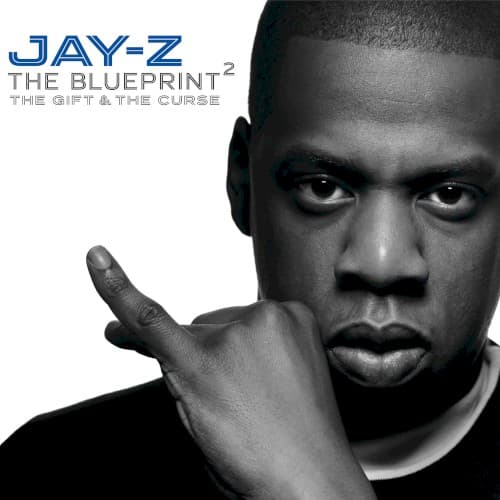
Jay-Z The Blueprint 2: Too Many Songs for a Game Built on Economy
The Blueprint 2: The Gift & The Curse offers a simple lesson in what a double album costs, and the West Coast tradition is a useful yardstick for seeing it. The best West Coast records of the era were disciplined: a clean idea, a clear groove, and a producer who knew when to stop. Jay-Z's follow-up to The Blueprint has the opposite habit. It has more beats, more guests and more genres than any single record needs, and its best material is spread across 110 minutes.
That is a shame, because the rapping is excellent. Jay-Z sounds rested and sharp, and the sheer variety of pocket he finds, from loose swing to tight, clipped phrasing, is some of the strongest evidence of his skill. The problem is not what he says on any given track. The problem is that the album asks the listener to sit through a pop-leaning first disc and a harder second disc, with a few too many near-identical songs on each, before the highlights are fully appreciated.
The Dr. Dre cameo shows the contrast. The Watcher 2 is produced by Dre and sits on the first disc, and it is a good reminder of how a producer from the West Coast school frames a verse: spare, slow, and built around the voice. Next to it, much of the album feels busy. Jay-Z himself later said he considers it one of his worst albums because of its overabundance of tracks, and that judgment is fair on the sequencing while being too harsh on the individual songs.
So the thesis is a narrow one. The Blueprint² is a strong rapper's album trapped in a weak editor's cut. Take away half the tracklist and you have a very good record, and that is exactly what the later one-disc reissue attempted.
Borrowed Funk, Earned Bounce: How The Gift and The Curse Divide the Work
The album is built from a New York core, with Just Blaze and Kanye West producing the largest share, as they did on the first Blueprint. Around them sits a cast that includes The Neptunes, Timbaland, No I.D., Heavy D, Big Chuck and Dr. Dre. The Gift leans on pop-rap and R&B hooks, while The Curse turns to harder, more combative beats, and the split is the clearest organizing idea on the record. The trouble is that the idea is stronger on paper than on tape: the two discs overlap in mood, and the supposedly hard disc contains some of the lightest songs.
The West Coast comparison is instructive in one specific way. The gangsta and G-funk traditions treated the album as a controlled environment, with a single producer's palette setting the mood, and the songs often ran shorter than their reputations suggest. Here the palette keeps changing. Just Blaze's drums are punchy, a heavy kick under a clean sample flip, but within two songs the record has jumped to a Neptunes bounce, then to a Timbaland rhythm, then to a Kanye soul chop. Each one is competent. None of them makes the others look better.
What is earned is the rapping. Jay-Z slides across tempos with an ease that few peers could match, and he treats the guests as foils instead of crutches. Some of the best moments are the ones where he is simply allowed to rap: the tight, clipped flow of the M.O.P. remix and the long, patient storytelling on the second disc. The weaker spots come when the writing reaches for pop appeal, and a number of tracks on The Gift work harder at being catchy than at being interesting.
What is borrowed is a surprising amount of the concept. Reworking material from other rappers, as the first disc does with A Dream and The Watcher 2, can feel like an homage, but one critic called the approach unimaginative, and the criticism has some force. Other choices, like building a track around a Paul Anka sample after failing to clear Sinatra, read as improvisation instead of design. These are the moments when the album feels like a collection of good ideas looking for a reason to be together.
The flaw that matters most is length. A double album demands a reason for every disc, and this one has a reason for the first and an excuse for the second. The darker material on The Curse is stronger than The Gift in terms of writing, yet it arrives after an hour of lighter songs, so the contrast loses its effect. A West Coast producer would have trimmed the weaker mid-tempo cuts without hesitation.
A Long Road Between Two Discs
The album is sequenced as two separate records, and the shift between them is the most noticeable event in the running order. The Gift opens with a flurry of collaborations and radio-ready singles, and the pacing is brisk for the first half. Then it slows into a long stretch of mid-tempo songs with the same mood, so the first disc ends on a thin note. By the time the listener reaches the second disc, a full hour has gone by.
The Curse is the better disc, and it starts well. The opening is harder and more direct, and the best songs here are the ones where the production steps back and lets the narrative run. The problem is the back end, which stacks guests-heavy posse cuts and three bonus tracks that read like leftovers from the sessions. The result is a closing stretch that feels like it is working through a list rather than building to a conclusion.
At this length, pacing becomes a question of attention. Fewer than half the tracks demand a second listen, and the rest ask for patience. A single disc with the best eleven or twelve songs would have flowed as a clear arc, moving from the pop singles into the harder material, and the one-disc reissue effectively proves the point. As released, the order is a catalog, not a sequence.
The second disc contains the best individual runs, particularly the stretch where the production and the storytelling align, but they are separated by long gaps. The most telling sign is how much of the album feels optional. When a record can lose a third of its running time without losing any of its identity, the length is not earned. That is the central sequencing lesson of the album, and Jay-Z has acknowledged it himself.
Good Rapping, Poor Editing: Where The Blueprint² Lands
The Blueprint² sits below both Watch the Throne and 4:44 in this catalog, and the reason is the same for each. Watch the Throne has the stronger sense of event and a tighter sound, while 4:44 has the finest writing of his late career. This record has more raw rapping than either, but it lacks the editing that would have made it a clear statement. It ranks as a good album with a bad structure, and the structure costs it about a point.
It is for listeners who value pure rapping ability, who enjoy hearing Jay-Z in a transitional phase between the Blueprint era and the albums that followed, and who are willing to build their own playlist from a long tracklist. It is also a useful record for anyone interested in the producers of the period, since Just Blaze, Kanye West, The Neptunes and Timbaland all appear at a high point. Skip it if you want a compact album, or if guest-heavy sprawl tires you quickly.
Start with U Don't Know (remix) for the fast, hard flow, Meet the Parents for the storytelling, and Excuse Me Miss for the pop version of the same skill. Then go to The Blueprint to hear the record this one follows and how a tighter set of ideas sounds, and to The Blueprint 3 for another late-2000s attempt at balancing pop reach with rap credibility. The one-disc Blueprint 2.1 is also worth a look as an edit of the same material.
The album has aged better in its parts than as a whole. Its singles still sound pleasant, and the second disc rewards patient listening, while the heavy running time keeps it from being a record to put on casually. It is the kind of album that gets rated higher in a playlist than on the shelf. The strongest evidence of that is that the best twelve songs here would hold up against almost anything in the catalog.
Track by track
Track Listing
A Dream
SolidA Kanye West production that brings the Notorious B.I.G. into the picture through a posthumous verse alongside Faith Evans. The tribute is sincere and the beat is soulful, but one critic called the idea of reworking another rapper's music unimaginative. It works emotionally and feels borrowed musically.
Hovi Baby
StandoutA Just Blaze beat with a loose, swinging rhythm that lets Jay-Z coast. Easy, confident and a good tone-setter for the first disc.
The Watcher 2
StandoutDr. Dre produces and Rakim and Truth Hurts appear alongside Jay-Z, which makes this the closest the album gets to a West Coast summit. The beat is spare and unhurried, and the verses are patient, which makes it a calm reminder of how economy sounds. At almost six minutes it is long, and the sequel concept leans on an older song's reputation, but the craft is high. It earns its place as a genuine peak of the first disc.
'03 Bonnie & Clyde
SolidBeyoncé joins on a Kanye West production that became a top-ten hit. The chemistry is warm and the hook is catchy. It is pop-rap done well, though it leans on an existing idea and one critic found the approach unimaginative.
Excuse Me Miss
StandoutThe Neptunes supply a bouncing, sparse beat that carries the second top-ten single. Jay-Z's flow is loose and charming, and the song is a clean example of his pop instincts at their best. It is slight but effective, and it shows why The Gift works when it chooses simplicity.
What They Gonna Do
SolidA Timbaland beat with Sean Paul on the hook. The rhythm is bright and the dancehall touch adds variety, but the song does not do much beyond that.
All Around the World
SolidA No I.D. production with LaToiya Williams on the hook. Smooth and forgettable, which is a good description of much of the first disc's middle.
Fuck All Nite
WeakAnother Neptunes beat in the same pocket as the earlier single. Competent, but it repeats ideas the album has already covered.
The Bounce
StandoutTimbaland and Kanye West build the beat on vocal samples from Audio Two and a Bollywood hit, and Kanye takes his first rapping turn on a Roc-A-Fella release. The track is busy and loud, with a hook that sticks, and Jay-Z's rhythm is dense and playful. It charted modestly as a single and stands as one of the album's most distinctive songs. The sample choices give it a character that the rest of The Gift rarely finds.
I Did It My Way
SolidBuilt on a Paul Anka sample after Sinatra clearance failed, according to Christgau. It is a spirited closer for the first disc, but the improvisation shows.
Diamond Is Forever
SolidA harder opening for The Curse, produced by Ron Feemster and Big Chuck. It sets a darker tone and moves quickly, though the writing is more posture than story.
Guns & Roses
WeakLenny Kravitz and a Heavy D production make for the album's oddest pairing. It is a curiosity more than a success.
U Don't Know (remix)
StandoutJust Blaze and M.O.P. turn the song into one of the loudest and most physical cuts on the record. Jay-Z's flow is tight and clipped, and the beat hits hard. Christgau called it a highlight, and it is the clearest answer to the idea that The Curse is the stronger disc.
Meet the Parents
StandoutA Just Blaze production that tells a dark, narrative story. Jay-Z's detail and pacing are among the best writing on either disc, and the beat leaves space for the storytelling. It is one of the clearest arguments for the second disc as the record's center.
Some How Some Way
StandoutJust Blaze again, with Beanie Sigel and Scarface joining Jay-Z for an emotional account of leaving a dangerous neighborhood behind. The three verses each bring a different weight, and the beat is patient. It is the heart of the second disc and one of the best moments on the album.
Some People Hate
SolidA Kanye West production with a defiant tone. Solid and tight, but it covers familiar ground.
Blueprint²
StandoutA Charlemagne production that carries the album's most pointed diss, aimed at Nas and Jaz-O. The performance is aggressive and direct. It is a strong rap statement and one of the few tracks that earns the album's title.
Nigga Please
SolidThe Neptunes supply a swaggering beat with Young Chris. The bravado is entertaining but the song adds little new.
2 Many Hoes
WeakA Timbaland beat that feels like a leftover from the first disc's lighter material. Filler.
As One
SolidA Just Blaze posse cut that gathers the Roc-A-Fella roster. The energy is high and the verses are uneven, as a crowded cut tends to be.
A Ballad for the Fallen Soldier
StandoutThe Neptunes and Pharrell Williams build a somber closer for the official tracklist. Reflective and well performed, it ends The Curse on a more thoughtful note than most of what precedes it.
Show You How
SolidA Just Blaze bonus track. Competent but there is no reason it has to exist.
Bitches & Sisters
WeakA short Just Blaze bonus cut that adds length without adding much. Leftover.
What They Gonna Do, Part II
SolidA Digga-produced bonus that revisits the earlier song. It closes the album on an afterthought.
Frequently Asked Questions
Is The Blueprint 2 a good album?
What is the difference between The Gift and The Curse?
Who produced The Blueprint 2?
What is Blueprint 2.1?
Styles