Scorecard: 6.6/10 · Good
How we score- Writing(25%)
- 7.0
The storytelling on Lost Ones and the fatherless-home perspective on Breakdown show real specificity, but too many verses settle for good-enough punchlines instead of earned images.
- Production(25%)
- 6.5
Cole handles most beats himself with competent boom-bap and soul loops, though the orchestral additions on Rise and Shine add texture the album otherwise lacks.
- Delivery(15%)
- 7.5
His flow is technically clean but rarely finds a pocket that surprises; Drake outperforms him on In the Morning and Jay-Z coasts past him on Mr. Nice Watch.
- Cohesion(15%)
- 5.5
Sixteen tracks is at least three too many, and the sequencing lurches from the focused introspection of Lost Ones to the radio grab of Work Out with no transition.
- Originality(10%)
- 6.0
The mixtape-to-album model and the self-production approach were Roc Nation's answer to Drake, but Cole plays it safer than his Toronto peer did a year earlier.
- Replay value(10%)
- 6.5
The singles wore out fast, but the album tracks with no commercial ambition—Sideline Story, God's Gift, Breakdown—hold up better than expected a decade later.
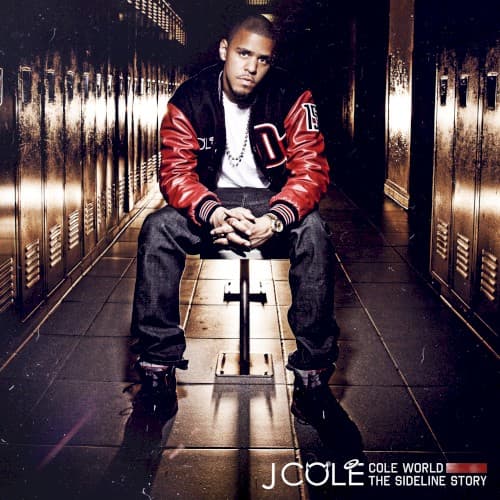
J Cole Cole World: The Sideline Story — The Hunger Jay-Z Signed Him For, Buried Under Radio Bids
The thesis is in the subtitle. J. Cole wanted this album to document what it felt like to wait: signed to Roc Nation in 2009, sitting on three acclaimed mixtapes, watching Drake take the lane he thought was his. The Sideline Story was supposed to prove he belonged on the court, but the album that arrived in September 2011 sounds like a negotiation between the rapper who earned Jay-Z's attention and the Columbia Records product manager who needed a single for CHR. The introspective storyteller who made The Warm Up shows up on six or seven tracks here, the guy chasing a Kanye West workout-plan sample shows up on the rest, and they barely acknowledge each other. The result is a debut that works better as a catalog of what Cole could do than as an argument for why he should.
Cole produced twelve of sixteen tracks himself, and the self-reliance reads as both a strength and a limitation. He builds competent soul-loop beats that let his writing breathe, but he never constructs a soundscape that demands repeated attention the way No I.D. does on Never Told or the way Cole's own 2010 leaks hinted he might. The album's better half focuses on abortion, fatherless homes, and the ethics of leaving: subjects that were scarce in 2011 mainstream rap and that Cole approaches with enough nuance to earn the comparison to Nas that his team was selling. But Columbia wanted four singles, and Cole gave them four singles, and the record sags under the weight of songs built for formats that no longer played rap albums the way they did in 2004.
The Tug-of-War Between the Backpack and the Billboard Chart
Cole's writing is at its best when he lets a story unfold without crowding it with punchlines. Lost Ones, produced by Cole, lays out an abortion dilemma from both sides of the argument without resolving it, a rare example of a rap song trusting the listener to think. Breakdown flips a Mariah Carey hook into a meditation on abandonment and cycles of poverty, the orchestration arranged by Larrance Dopson giving the narrative weight it would lack over a standard loop. Sideline Story, the title track, catches him between hunger and frustration, still sharp enough to sound like the kid who got signed off The Warm Up. On these songs the writing has a pulse: the images are specific, the arguments are thought through, and the verses feel like they were written because Cole had something to work out, not because a tracklist needed filling.
But the album's commercial half exposes the limits of Cole's songcraft in 2011. Work Out samples Kanye's workout plan and Paula Abdul in a bid for crossover play that collapses under its own obviousness; the hook is strained and the verses circle the same flirtation metaphor without developing it. Can't Get Enough, produced by Brian Kidd, pairs him with Trey Songz on a club record that sounds like it was reverse-engineered from a focus group, the Balla et ses Balladins sample doing all the heavy lifting while Cole delivers competent but inessential verses. Nobody's Perfect aims for the same lane and lands in the same place: a Missy Elliott feature that should elevate the song instead reminds you how much more commanding a hook artist she is. Cole himself noted he held onto some of these tracks before he was signed, meaning songs that felt too good for mixtapes in 2009 were already dated by the time Columbia pushed them to radio in 2011.
The production, mostly handled by Cole, is solid but rarely inspired. He knows how to flip a soul sample and let it breathe—Lights Please, carried over from The Warm Up, is still the template—but he does not build beats that create tension or momentum the way his best producers did on later albums. No I.D. shows up for one track, Never Told, and delivers the album's most sophisticated sonic architecture, a beat that shifts and contracts in ways that make Cole's verses feel more urgent than they do over his own loops. The orchestral flourishes on Rise and Shine and Lost Ones, recorded by Ginny Luke, add texture Cole's DIY approach otherwise lacks, but they also highlight how much the rest of the album sounds like a guy working alone in a home studio. Mr. Nice Watch gestures toward dubstep and electronica in a way that felt trendy in 2011 and now sounds like an artifact of the moment; Cole's attempt to make a bigger-sounding beat for his Jay-Z collaboration ends up feeling more dated than the stripped-down soul of God's Gift.
Cole's delivery is technically proficient but rarely finds a gear that surprises. His flow is clean and his cadences are varied enough to avoid monotony, but he does not have the presence to command a song the way his guests do. Drake coasts through In the Morning, a leftover from Friday Night Lights, and sounds more comfortable in the pocket than Cole does on his own album. Jay-Z shows up on Mr. Nice Watch, stops the mastering to record his verse, and makes Cole sound like the undercard. Even Missy Elliott, half-singing a hook on Nobody's Perfect, reminds you that star power is not the same thing as technical skill. Cole raps well, but in 2011 rapping well was not enough to justify an hour of listening when the songs themselves were only half-committed to a vision.
Sixteen Tracks, Three Too Many, and the Weight of Sequencing
The album's sequencing makes the split personality worse. It opens with a continuation of the mixtape series that reassures fans Cole has not abandoned the hungry kid they discovered, then immediately pivots to a Trey Songz collab that feels like it belongs on a different artist's record. The middle stretch holds the album's strongest run, three songs in a row where the introspection and the ambition do not conflict. But the back half loses focus: the radio songs show up late enough in the tracklist that they derail the momentum instead of building it, and by the time the closer arrives the listener has already been asked to switch modes too many times.
At sixteen tracks and nearly an hour, the album does not earn its length. The interlude is exactly what it says, a minute-forty skit about the day Cole found out Jay-Z wanted to sign him and then spent the night in jail for parking violations, and it adds nothing the music could not convey. The intro is a ninety-second scene-setter that feels like a concession to the idea that debut albums need intros. The pop concessions could have been relegated to deluxe-edition bonus tracks without weakening the album, and doing so would have tightened the record into a forty-minute statement instead of a fifty-four-minute negotiation. The pacing sags because Cole and his team could not decide whether this was a commercial debut or a serious album, and the compromise satisfies neither goal completely.
A Debut That Proved Competence Without Defining a Vision
Cole World: The Sideline Story is the sound of a talented rapper caught between what got him signed and what his label needed to move units. The album's six or seven best tracks—Lost Ones, Breakdown, Sideline Story, God's Gift, Never Told—argue for Cole as a writer capable of bringing underexplored subjects into mainstream rap with the nuance they deserve. The rest of the tracklist argues for him as a guy who can make a single if you need one, and in 2011 that was enough to debut at number one and go platinum. But the album does not make a case for Cole as an artist with a vision that only he could execute, the way good kid m.A.A.d city would a year later or the way Take Care did two weeks after this. It is a capable debut that documents what Cole could do without defining what he should do, and the result is an album that works better in pieces than as a whole.
The record is for listeners who want to hear where Cole started, and for fans of early-2010s boom-bap revivalism who can forgive the radio concessions for the sake of the album tracks. Skip it if you need a debut to announce an artistic identity or if you find mixtape-era Cole more compelling than major-label Cole. The album has aged better than its singles suggested it would, mostly because the songs built for radio stopped getting played and the songs built to last—Lost Ones, Breakdown, Sideline Story—have outlived the context that made them feel like compromises. Start with those three tracks, add God's Gift and Never Told, and you have the twenty-minute EP this should have been. For the full album experience, follow it with 2014 Forest Hills Drive to hear what happened when Cole stopped negotiating and started making albums on his terms, or reach back to The Warm Up to hear the hunger that Jay-Z signed him for before Columbia softened it.
Track Listing
Intro
●Ninety seconds of Cole setting the scene, atmospheric and forgettable. It does the work an intro is supposed to do and then disappears.
Dollar and a Dream III
▲The third installment of the mixtape series, produced by Capsvl and Cole, reassures fans that the major-label debut has not erased the kid who rapped in college dorms. The Kingdom Hearts sample gives it an eerie undertow, and Cole's verses are technically sharp, but the song functions more as a callback than as a statement. It reminds you what the mixtapes felt like without matching their urgency.
Can’t Get Enough
▼A Trey Songz collab produced by Brian Kidd that samples Balla et ses Balladins, built for format radio and nothing else. The beat does the work, Trey handles the hook, and Cole delivers competent verses that never justify why this song needed to exist. It was the second single and it sounds like one.
Lights Please
▲Carried over from The Warm Up, produced by Cole, sampling Dexter Wansel. It remains the template for what Cole does well: a soulful loop, a love-song narrative that complicates itself as it unfolds, and a hook that sticks without pandering. The song holds up a decade later because it was never chasing a trend. Cole said this was the track that won over his manager and Jay-Z, and you can hear why: it is a complete idea, executed with patience, that sounds like no one else in 2011 mainstream rap.
Interlude
●Cole recounts the day he found out Jay-Z wanted to sign him, then got pulled over and spent the night in jail for parking violations. He says it was the easiest time ever because he knew success was coming. The story is fine; the song did not need it.
Sideline Story
▲The title track, produced by Cole, interpolating Rhythm's "The World Is a Place." This is Cole at his most focused: hungry, frustrated, and willing to admit both. The verses toggle between the confidence required to believe you belong and the doubt that comes from watching others take your shot. The beat is spare enough to let the writing breathe, and the writing is specific enough to justify the space. It is the best argument on the album for why Jay-Z signed him.
Mr. Nice Watch
●Cole wanted Jay-Z on God's Gift; Jay chose this beat instead, and Cole had to stop the mastering to make room for the verse. The production gestures toward dubstep and electronica in a way that sounded trendy in 2011 and now dates the song badly. Jay-Z shows up, delivers a competent verse, and makes Cole sound like the undercard. The interpolation of Jay's own "A Million and One Questions" feels like a wink that only one of them earned.
Cole World
▲A three-minute mission statement, produced by Cole, that lays out the stakes of the album without overselling them. The verses are confident, the beat is clean, and the song does not overstay its welcome. It works.
In the Morning
●Carried over from Friday Night Lights, produced by L&X Music, featuring Drake. The song interpolates Jay-Z's "Can I Get A" and 2Pac's "Hold Ya Head." Cole defends the re-release by saying the song never got the push it deserved, and he is right that it deserved a bigger audience, but putting it on the album also highlights how much more comfortable Drake sounds in this lane than Cole does. Drake coasts through his verse and owns the song; Cole raps well and still feels like the guest.
Lost Ones
▲The album's best writing, produced by Cole with orchestral arrangements by Larrance Dopson. The song lays out an abortion dilemma from both sides—her reasons, his reasons, the choice neither of them wants to make—and refuses to resolve it. Cole narrates without editorializing, a rare example of a rap song trusting the listener to think instead of handing them a verdict. The violin, recorded by Ginny Luke, gives the narrative weight it would lack over a standard loop. It is the clearest argument on the album for Cole as a writer capable of handling subjects most rappers avoid or flatten. The video was shot three years before the album and released two days before the record dropped, a sign that Cole knew this was the track that mattered.
Nobody’s Perfect
▼Produced by Cole, featuring Missy Elliott, interpolating Curtis Mayfield's "Think." It aims for the same radio lane as Can't Get Enough and lands in the same place: a competent song with a strong guest that never justifies its existence beyond filling a format slot. Missy's hook is commanding, but the song around it is flat. It was the fourth single, solicited to urban radio in February 2012, and by then the album cycle was already spent.
Never Told
▲Produced by No I.D., the only outside producer on the standard edition besides Brian Kidd. No I.D. delivers the album's most sophisticated beat, a track that shifts and contracts in ways that make Cole's verses feel more urgent than they do over his own loops. The writing is sharp—Cole reflecting on success, paranoia, and the gap between what he wanted and what he got—and the production gives the reflection room to resonate. It is a reminder of what the album might have sounded like if Cole had trusted other producers to push him.
Rise and Shine
●Produced by Cole and Cubic Z, sampling Greg Dykes and the Synanon Choir. The song opens with a sample from the Backstage documentary where Jay-Z talks about finding the one great artist he will sign, a choice that frames the album as the fulfillment of Jay's search. The orchestration, arranged by Larrance Dopson with violin by Ginny Luke, gives the track a cinematic feel Cole's DIY approach otherwise lacks. The verses are solid but not revelatory; the production does more work than the rapping. The track appeared in NBA 2K16.
God’s Gift
▲Produced by Cole, sampling Milton Nascimento and interpolating Bone Thugs-n-Harmony's "1st of Tha Month." This is the track Cole originally wanted Jay-Z on, and you can hear why: the beat has room for two voices, and the subject—Cole's belief in his own talent and the doubt that comes with it—would have gained authority from Jay's cosign. Cole raps alone and delivers some of the album's most technically impressive verses, the flow shifting to match the Bone Thugs interpolation. The song works better than the actual Jay-Z collaboration, mostly because Cole sounds like he is rapping for himself instead of for the radio.
Breakdown
▲Produced by Cole, sampling Eero Koivistoinen and interpolating Mariah Carey and Bone Thugs-n-Harmony's "Breakdown." The song tackles abandonment and the cycles that follow: the fatherless home, the choices that repeat across generations, the weight of trying to break the pattern. Cole tells the story from his own perspective and from his mother's, the verses specific enough to feel lived rather than constructed. The orchestration, arranged by Larrance Dopson, gives the narrative emotional heft without overselling it. It is the album's second-best piece of writing after Lost Ones, and like that song it benefits from Cole giving the story room to breathe instead of rushing to a punchline.
Work Out
▼Produced by Cole, sampling Kanye West's "The New Workout Plan" and Paula Abdul's "Straight Up." The first single, released June 2011, certified double platinum, and the most transparent attempt on the album to chase crossover success. The Kanye sample is obvious, the flirtation metaphor is strained, and the verses circle the same idea without developing it. It was a hit because it sounded like a hit, and it aged poorly because it had nothing underneath the hook. Cole said he held onto tracks that were too good for mixtapes; this was not one of them.