Scorecard: 7.8/10 · Great
How we score- Writing(25%)
- 9.0
The therapy transcripts are specific and unsparing, from childhood trauma on 'Mother I Sober' to infidelity confessions on 'Purple Hearts', all written with craft that never sacrifices clarity for cleverness.
- Production(25%)
- 7.5
Sounwave and DJ Dahi's minimalist arrangements serve the words on 'Count Me Out' and 'Crown', but the sparse beats on 'Rich Spirit' and 'Savior' feel airless where they should breathe.
- Delivery(15%)
- 8.5
Lamar's cadence shifts from therapy-patient monotone on 'Father Time' to doubled-up aggression on 'N95', and the vocal argument on 'We Cry Together' is performed with uncomfortable conviction.
- Cohesion(15%)
- 6.5
The two-disc structure makes thematic sense but at 73 minutes the sequencing sags between peaks; 'Rich (interlude)' and 'Savior (interlude)' are speed bumps, and the back half drags until 'Mother I Sober' earns its runtime.
- Originality(10%)
- 8.0
No rap album this confessional has charted this high since, but the therapeutic framework and minimal production follow the introspective template Lamar established on 'u' and refined across 'DAMN.', making this more refinement than reinvention.
- Replay value(10%)
- 6.0
The most important songs ('Mother I Sober', 'Auntie Diaries', 'Father Time') are difficult by design and reward study more than repeat spins; the accessible moments ('Die Hard', 'Rich Spirit') are the album's weakest writing.
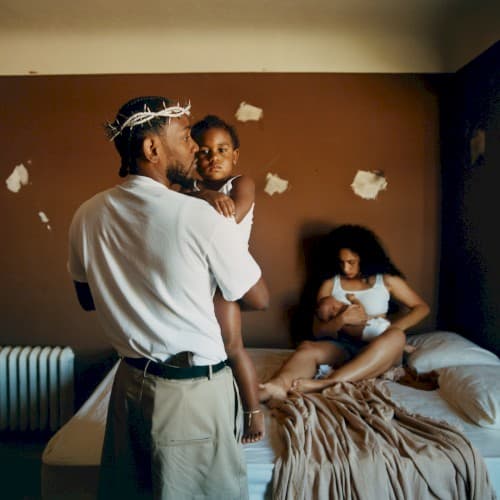
Kendrick Lamar Mr. Morale & the Big Steppers — The Reckoning He Owed Himself
The claim that Kendrick Lamar is rap's conscience has always been a burden he accepted and a cage he resented. Mr. Morale & the Big Steppers is the album where he stops accepting it. Over 73 minutes split into two discs, he turns the scrutiny inward with the same intensity he once aimed at Compton's streets and America's sins, and what he finds is messy enough to make the listener uncomfortable: infidelity, sex addiction, unprocessed childhood trauma, transphobia he learned at church, the limits of his own moral authority.
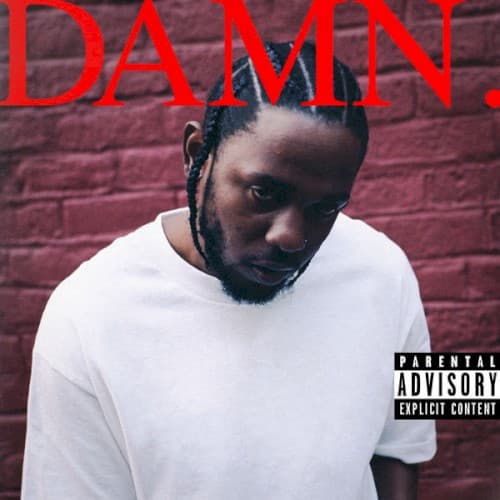
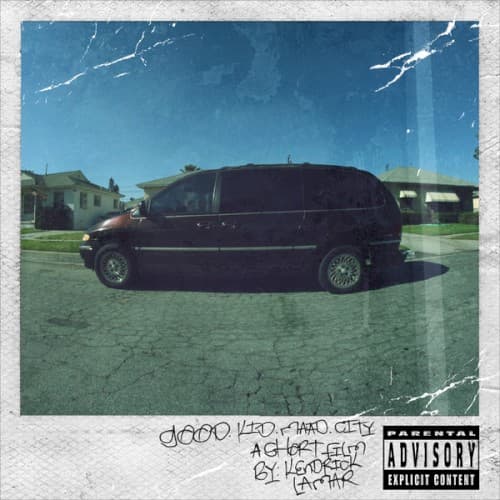
This is not the album his fans expected after a five-year wait, and that is the point. Where To Pimp a Butterfly diagnosed the nation and DAMN. claimed the throne, Mr. Morale & the Big Steppers is an exit interview with the role of prophet, written in therapy and released against his own better judgment.
The thesis is uncomfortable but clear: the man held up as rap's moral center spent years lying to his partner, inherited damage he is only now naming, and does not want to save you because he is still trying to save himself. It is his most human album and his least likable, the sound of a artist dismantling his own mythology in real time.
Therapy Sessions Masquerading as Rap Songs
The writing is specific in ways that make even close listeners flinch. On Father Time, Lamar traces his emotional unavailability to a father who taught him that crying was weakness, and he delivers the revelation in the flat affect of someone reading his own case file. On Mother I Sober, he unpacks generational sexual trauma across three generations of his family, naming the specific lie his mother told him as a child and the weight it still carries. On Auntie Diaries, he recounts his relationship with his transgender uncle and cousin with enough detail to locate the homophobia he absorbed at church and the empathy that eventually overpowered it, though the repeated slur and the misgendering he describes remain points of contention.
The wordplay and internal rhyme schemes that made good kid, m.A.A.d city so infectious are mostly gone, replaced by plainspoken confession that prioritizes honesty over craft. When the writing does reach for complexity, as on the double-time flows of N95 or the nested metaphors of Crown, it feels like relief from the emotional labor of the rest of the album. The verses from guests are mostly competent filler; Sampha's hook on Father Time does real work, but Kodak Black's appearance on Silent Hill remains controversial for reasons outside the music, and his verse adds little beyond his presence.
The production, handled mostly by Sounwave and DJ Dahi with contributions from Bekon, The Alchemist, and Pharrell Williams on the Tanna Leone-assisted closer Mr. Morale, commits to minimalism as a strategy rather than a flourish. The piano-led beats on Count Me Out and the sparse arrangements on Crown leave space for the words to land without competition, and the Alchemist's claustrophobic loop on We Cry Together traps the listener inside the argument as intended. But minimalism is also a liability: Rich Spirit and Savior are built on beats so sparse they feel unfinished, and the lack of dynamic range across the album's 18 tracks makes the runtime feel longer than it is. The moments of real sonic ambition, like the free jazz detours on United in Grief or the Duval Timothy piano sample that anchors Crown, are rare enough to stand out as exceptions.
The sequencing splits the album into Big Steppers and Mr. Morale, two nine-track discs that mirror each other thematically, but the structure creates more problems than it solves; the interludes (Rich, Savior) feel like padding, and the back half of disc two sags under its own weight until Mother I Sober justifies the wait.
The delivery is where Lamar earns the album's difficulty. On We Cry Together, he and actress Taylour Paige perform a five-minute argument with enough venom to make it clear this is not fiction, and the decision to include it unedited is either brave or self-indulgent depending on your tolerance for discomfort. On Purple Hearts, he confesses to infidelity with Summer Walker on the hook, and the monotone delivery makes it sound like an admission rather than a boast. On N95, his flow is aggressive and technically sharp, a reminder of what he can do when he chooses to, but those moments are rare.
Baby Keem's contributions on N95 and Savior are energetic but slight, and Ghostface Killah's verse on Purple Hearts is a callback to an earlier era of New York rap that does not quite fit the album's West Coast therapy framework. The weakest link is the lack of hooks; only Die Hard, with Blxst and Amanda Reifer, and Silent Hill offer anything approaching a chorus you might remember after the song ends, and both tracks are among the album's least interesting lyrically.
The Long Walk Through the Hard Parts
The album's pacing is deliberate to the point of being punishing. The opening stretch sets the tone for what follows: slow, dense, and in no hurry to reward your attention. The first disc builds toward its most divisive moment, a raw documentary of a relationship in collapse that either works as unflinching honesty or fails as self-indulgent oversharing, then releases the tension with a more conventional confession that still carries weight.
The second disc mirrors the first but with less momentum; the middle section is strong on its own but does not build toward anything, and the stretch that follows feels like marking time. The album does not truly justify its length until its penultimate track, a six-minute reckoning with childhood trauma that is as difficult as anything Lamar has recorded and earns every second of its runtime. The official closer offers something resembling resolution, with narration from Whitney Alford and spiritual teacher Eckhart Tolle, but the ending is quiet rather than triumphant, a choice that fits the album's rejection of easy answers.
The Least Essential Album from Rap's Most Essential Artist
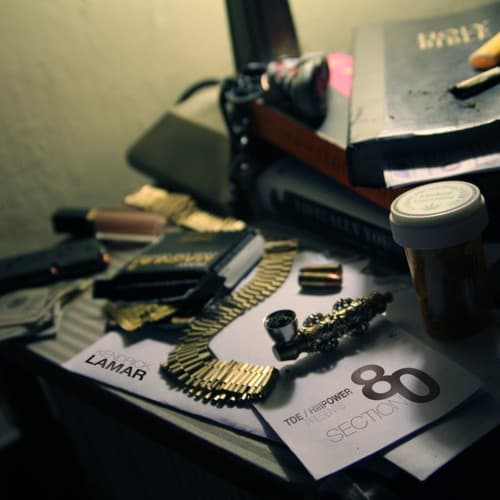
Mr. Morale & the Big Steppers ranks fourth in Kendrick Lamar's catalog, behind To Pimp a Butterfly, good kid, m.A.A.d city, and DAMN., and ahead of Section.80 and the more recent GNX. It is his most ambitious writing and his least successful album as a listening experience, a record that prioritizes therapy over craft and honesty over accessibility. The production is too minimal to support the runtime, the sequencing is too long to hold momentum, and the moments of real brilliance (Mother I Sober, Father Time, Auntie Diaries) are surrounded by filler and interludes that test patience.
It is also the only album in his catalog that feels like it was made for him rather than for us, and that is both its failure and its point. This is an album for people who want to understand Kendrick Lamar the person rather than Kendrick Lamar the icon, and for casual fans or people looking for West Coast bangers, it is skippable. Start with Mother I Sober, Father Time, and Count Me Out to understand what the album is attempting, then decide if you want the full 73 minutes.
If this lands, listen to DAMN. next to hear him at the peak of his balance between ambition and accessibility, or revisit To Pimp a Butterfly to hear what happens when his scope and his songcraft are fully aligned. Mr. Morale & the Big Steppers is not the album Lamar's legacy needed, but it is the album he needed to make, and in five years it may matter more for what it reveals than for how it plays.
Track Listing
United in Grief
●The opener sets the template: sparse production, introspective writing, and a refusal to ease the listener in. Lamar unpacks grief, writer's block, and the weight of expectation over a free jazz-influenced beat from Sounwave and J. Lbs. The repeated chant of "I grieve different" becomes a mantra, and the four-minute runtime feels longer because the song offers no hooks or resolution. It is effective as a thesis statement but not as an invitation.
N95
▲The most accessible song on the album and one of the few built for arenas. Boi-1da and Sounwave's beat is aggressive and uptempo, and Lamar's flow is technically sharp, moving from double-time to syncopated phrasing with the precision that made DAMN. work. Baby Keem's ad-libs add energy but no substance. The writing critiques performative activism and celebrity culture, but the points are familiar from Lamar's past work, and the song's accessibility makes it feel like a concession to the fans who wanted something to rap along to.
Worldwide Steppers
●Lamar confesses to sex addiction and infidelity over a minimalist Sounwave beat that samples The Funkees and Soft Touch. The writing is direct enough to be uncomfortable: he names the behavior, connects it to his father's example, and refuses to excuse it. The production is spare to the point of feeling unfinished, and the track functions more as confession than song. The inclusion of an uncredited comedy clip about a cookout with no cheese feels out of place and undercuts the song's seriousness.
Die Hard
●The album's most conventional single, built around a Kadhja Bonet sample and featuring Blxst and Amanda Reifer on a hook that actually sticks. The production from Sounwave, DJ Dahi, Baby Keem, and FnZ is warmer and more melodic than anything else on the album, and the song functions as a breather after the heaviness of the opening tracks. The writing is vague compared to the specificity elsewhere, and the song feels like it was included to give radio something to play. It works on its own terms but highlights the gap between Lamar's accessible and ambitious modes.
Father Time
▲The album's first thesis track, recorded in London in early 2019 and built around a Hoskins 'NCrowd sample. Lamar traces his emotional unavailability to his father's lessons about Black masculinity, and Sampha's hook ("Daddy issues, ask me how I'm healing") is one of the few moments on the album where the melody does real work. The writing is specific without being showy: he describes his father's silence, connects it to his own inability to process emotion, and delivers it in a flat monotone that makes the revelation land harder. The production from Sounwave and DJ Dahi is minimal but purposeful, giving the words space to breathe. This is the blueprint for what the album does well.
Rich (interlude)
●A minute and 43 seconds of Duval Timothy's piano with no rapping. It functions as a mood piece between the emotional weight of Father Time and the more uptempo Rich Spirit, but it is filler that could have been cut without loss.
Rich Spirit
▼Lamar raps about internal wealth over a Sounwave and DJ Dahi beat that is too sparse to support the song's runtime. The hook is repetitive without being catchy, and the writing lacks the specificity that makes the album's best moments land. The song was released as a single and received significant streaming numbers, but it is one of the album's weakest tracks, a case where minimalism becomes absence.
We Cry Together
●The album's most divisive track: a five-minute argument between Lamar and actress Taylour Paige, performed with uncomfortable realism over an Alchemist beat that samples Florence and the Machine. The writing is specific enough to feel like documentary, and the performances are committed enough to make the listener want to leave the room. It is either a brave piece of raw confessional art or self-indulgent theater depending on your tolerance for discomfort, and the decision to include it unedited says more about Lamar's commitment to honesty than his judgment about what belongs on a rap album. The command to "stop tap dancing around the conversation" is on-the-nose, but the rest of the track earns its difficulty.
Purple Hearts
●Lamar confesses to infidelity with Summer Walker on the hook and Ghostface Killah contributing a verse that feels like a guest spot from a different album. The production from Sounwave and DJ Khalil is more fleshed out than most of the album, with actual bass and melody, and the song functions as a release of tension after We Cry Together. The writing is direct about the betrayal and its consequences, and Walker's vocals add emotional weight. Ghostface's verse about loyalty and street codes does not quite fit the therapy framework, but his presence is a reminder of the New York-West Coast dialogue that Lamar has always valued.
Count Me Out
▲The second disc opens with one of the album's strongest tracks. Lamar raps about depression, suicidal ideation, and the decision to choose life over a beat from Sounwave and DJ Dahi that gives the words room to land. The writing is specific without being maudlin, and the hook ("I choose me, I'm sorry") is one of the few on the album that feels like a real chorus. The production interpolates the same Not the Twos sample used on United in Grief and Mother I Sober, creating thematic cohesion across the album's most important moments. This is Lamar at his best: clear writing, purposeful production, and delivery that trusts the material.
Crown
▲A four-minute meditation on the weight of expectation, built entirely around a Duval Timothy piano sample with minimal drums. Lamar addresses the pressure of being called the king of rap and the decision to step away from the crown, and the writing is quieter and more reflective than most of the album. The lack of a traditional beat makes the song feel more like a spoken-word piece, and it works as a palette cleanser before the more aggressive Silent Hill. The sentiment is earnest without being preachy, and the song earns its runtime.
Silent Hill
●The second single, featuring Kodak Black, whose inclusion remains controversial due to his 2016 rape accusation and guilty plea to assault and battery. The song itself is one of the album's more energetic moments, with Boi-1da and Sounwave's beat recalling the uptempo aggression of N95. Lamar's verse is technically sharp, and Kodak's contribution is competent but unremarkable. The decision to feature him reads as either a defense of redemption or a failure of accountability depending on your perspective, and the song's quality is overshadowed by the debate about whether it should exist.
Savior (interlude)
●Another interlude that functions as connective tissue between Silent Hill and the full version of Savior. It is two and a half minutes of Lamar rapping about false idols and performative activism, and it works better as the intro to the next track than as a standalone piece. Cutting it and folding the bars into the full Savior would have tightened the album.
Savior
●Lamar deconstructs celebrity worship and his own complicity in it, with Baby Keem and Sam Dew contributing to a song that is more interesting thematically than sonically. The production from Cardo and Sounwave is minimal to the point of feeling skeletal, and the lack of a real hook makes the song feel longer than its three minutes and 44 seconds. The writing is sharp in places (the line about fans wanting him to save them when he cannot save himself is the clearest articulation of the album's thesis), but the song does not build momentum, and it feels like a missed opportunity to turn the idea into something that lands harder.
Auntie Diaries
●Lamar recounts his relationships with his transgender uncle and cousin, tracing his own journey from the homophobia he learned at church to the empathy that eventually replaced it. The writing is specific and grounded in real moments: family dinners, slurs he used without understanding their weight, the cognitive dissonance of loving someone the church told him to hate. The repeated use of the slur and the descriptions of deadnaming and misgendering his relatives and Caitlyn Jenner have drawn criticism from some transgender listeners, even as others have praised the song's honesty about the messiness of unlearning bigotry. The production from Bekon and Beach Noise is understated, letting the narrative carry the song. This is one of the album's most important tracks, and its reception will depend on whether you believe the honesty justifies the harm of the language.
Mr. Morale
●The penultimate track, produced by Pharrell Williams and featuring Tanna Leone, is one of the album's few moments of something resembling joy. Lamar raps about choosing himself and his family over the expectations of fans and the industry, and the production is brighter and more melodic than most of the album. Leone's contribution is forgettable, and the inclusion of an uncredited clip from a Dallas Cowboys commentary show feels arbitrary. The song functions as a thesis restatement rather than a revelation, but after 16 tracks of difficulty, the lighter tone is welcome.
Mother I Sober
▲The album's climax and its most devastating track. Lamar unpacks generational sexual trauma across three generations of his family: his mother's assault, the false accusation she made against him as a child to protect him, and the weight that lie carried into his adult relationships. Beth Gibbons of Portishead contributes haunting vocals, and the production from Sounwave and Bekon is minimal, giving the six-minute runtime space to breathe. The writing is unflinching and specific, naming the damage and the silence that allowed it to compound, and Lamar's delivery is flat and exhausted, the sound of someone who has said the thing out loud for the first time and cannot take it back. This is the song that justifies the album's difficulty and its length, and it is the reason Mr. Morale & the Big Steppers will matter more in five years than it does now.
Mirror
●The official closer, featuring narration from Whitney Alford and spiritual teacher Eckhart Tolle, offers something resembling resolution without tying up the album's themes in a bow. Lamar addresses the listener directly, acknowledging the discomfort of the past 70 minutes and refusing to apologize for it. The production from Sounwave, DJ Dahi, and Bekon brings back the Not the Twos interpolation from United in Grief, creating bookend symmetry. Alford's voice is heard throughout the album as a narrator, and her presence here feels like a reminder that the person he hurt most is the one still standing next to him. The song ends quietly, with no triumphant final statement, a choice that fits the album's refusal of easy catharsis.