The scorecard
5.8/10 · Mixed
- Writing25%
- 5.5
- Production25%
- 6.5
- Delivery15%
- 6.5
- Cohesion15%
- 5.0
- Originality10%
- 5.0
- Replay value10%
- 5.5
Loyalty and hardship themes recur in broad strokes, and tracks like Smackers and Midas Touch offer little detail beyond the hook.
A long list of producers yields a coherent, airy sound, with Boi-1da and Vinylz giving He Love the Streets real weight, but the narrow palette of shared tempo and mood limits the record's range.
Kodak's bent, melodic phrasing and croaked hooks carry personality, but the same tricks and shapes repeat across an hour with only one guest break.
Nineteen songs with a saggy middle and no narrative arc make the length feel unearned, as AllMusic's call for an edit suggests.
It refines melodic trap rather than extending it, sits comfortably beside similar 2022 releases, and the one guest spot is the only real change of voice.
The hooks will keep the singles in rotation, but the interchangeable deep cuts and sameness of tone will blur together; this is a projection for a recent release.
Kodak Black Back for Everything: A Comeback Built on Hooks, Not Confessions
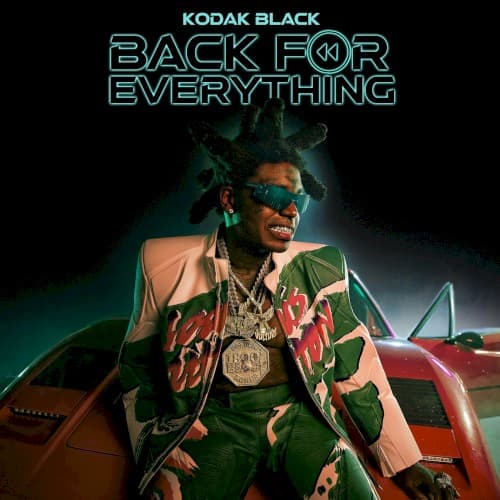
Back for Everything presents itself as a comeback record, and across nineteen songs it proves something narrower: Kodak Black can still make a melody stick faster than almost anyone in his lane. The title and the cover, which the fact sheet says nods to Back to the Future, promise a return and a reckoning. What arrives is a long, mostly pleasant stretch of melodic trap in which the voice is the main event and the autobiography stays at arm's length.
My argument is that this is an album about belonging that never decides who it belongs to. Kodak speaks for the Sniper Gang circle he keeps naming, for the Florida streets that made him, and for a fan base that has followed his public turbulence for years. The record gestures at all three without committing to any of them. Songs about loyalty, money and distrust borrow the vocabulary of confession but leave out the particulars that make confession land. That is why it sounds friendly on a first pass and thin by the third.
The critics split along exactly this line. Billboard and Vibe heard an intimate, focused Kodak; AllMusic said his performances run out of inspiration well before the production does, and HipHopDX called it a mediocre record that does not let the listener in. Both camps are describing something real. The intimacy is in the sound: close vocals, few guests, a croak bent into hooks. The distance is in the writing, where a hardship story and a flex arrive in nearly the same register.
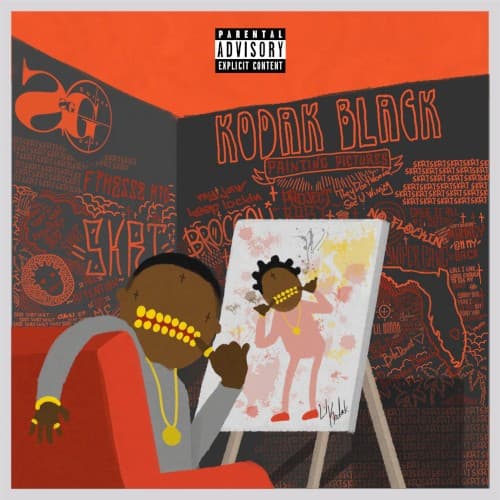
Next to Painting Pictures, his 2017 debut, the craft is smoother and the pop instincts are sharper, but the hunger to explain himself has cooled. The best songs here show what a more committed version of this album could have been, and the weakest show why a shorter one would have been better. Together they place Back for Everything in the middle of his catalog and the middle of 2022 melodic trap: likable, replayable in pieces, and rarely revealing.
Where the Melody Does the Talking and the Circle Stays Nameless
The writing works in short bursts. Kodak's best lines are blunt statements of loyalty or suspicion, delivered with a flat certainty that sounds like he is talking to one person in a car. That directness is the album's real strength, and it connects to the community he keeps invoking: the crew is always present, the outsiders are always suspect, and the language of the circle is treated as self-explanatory. When he leans into that, the music feels like a private conversation overheard, which is more interesting than most of the generic boasting around it.
The weakness is that the circle never gets a face. The record cites its loyalties constantly and illustrates them rarely. Money talk repeats, the street talk repeats, and the hardship narratives come in outline form where AllMusic's phrase, forgettable tales of struggle, fits uncomfortably well. A song like Smackers is typical of the problem: a clean beat, a confident hook, and almost nothing you could repeat the next day except the tune. The album promises vulnerability in a title like Vulnerable (Free Cool) and then keeps the vulnerability general.
The production deserves more credit than the writing. The fact sheet lists Buddah Bless, London on da Track, Murda Beatz, Scott Storch, Zaytoven and Boi-1da among a long list of credited producers, and for a project assembled from this many hands it holds together unusually well. The prevailing texture is airy and melodic, with enough low-end weight to keep the songs from drifting. Zaytoven's contribution sits in the album's tighter, more rhythmic corner, and Boi-1da and Vinylz bring a more dramatic bounce to He Love the Streets. Still, the palette is narrow. Many beats share a tempo and a mood, so the album runs on one emotional setting, a kind of wistful swagger, for most of an hour.
Delivery is where Kodak earns his keep. The voice bends vowels, drops to a murmur, then climbs into a hook with almost no effort, and the sing-song phrasing is the reason the singles work on rhythmic radio. His cadences are idiosyncratic enough that even weaker verses carry some personality. The cost is a certain sameness: the same tricks, the same melodic shapes, the same close-mic confiding tone. A single guest appearance, from Lil Durk, is the only break in the voice, and it is welcome for that reason alone.
In terms of what the album adds, it adds polish rather than ideas. It sits comfortably beside other melodic Southern trap of its moment and does not change what that sound can say. If Kodak had matched his hooks with the specificity of a rapper like Lil Durk, who writes from a similar place of loss and loyalty and whose work appears at Lil Durk's artist page, the identity this record keeps hinting at would have had a chance to take shape.
Nineteen Songs, One Mood: A Strong Start, a Soft Middle and a Proper Ending
As a sequence, Back for Everything front-loads its identity. The opening run sets the terms quickly: a mid-tempo, melodic, slightly weary Kodak who sounds sure of himself. For the first third the pacing is good. Songs are short, most of them under three and a half minutes, and there is a clear rhythm of hard beat, melodic beat, hard beat. The problem is that the rhythm never changes, so by the middle the album is repeating its own best idea.
The sag arrives around the center, where several tracks of similar tempo and similar subject matter run together. This is the stretch AllMusic seems to have in mind when it argues that nearly half the songs could be cut. That estimate is harsh, but the instinct is sound. Trimming the weaker songs from the middle would leave a tighter project of perhaps twelve or thirteen tracks and give the stronger material more room to be noticed. As it stands, the length is not earned; it is simply the current streaming-era default, and the album does not justify it with development or contrast.
The late stretch recovers some ground. The sequencing places the lead single, Love & War, at the very end, where it works as a closing statement and the most committed performance of the set, a good decision that gives the album a proper exit instead of a fade. The Lil Durk feature, Take You Back, lands as a mid-record pivot that gives the listener a second voice just as the first starts to blur. Both are smart placements.
What the sequence lacks is a spine. There is no narrative arc from fame to doubt to resolution, no escalation, and few moments where the album changes direction. That absence matches the thesis: an album about belonging that wants to feel like a mood more than a story. As a playlist it works well; as an album it is passive. The peaks are real, but they stand alone, and the listener has to find them.
A Better Listen Than a Statement, and a Case for Cutting Seven Songs
Within Kodak Black's catalog, Back for Everything beats Painting Pictures on craft and consistency of sound but trails it on urgency and on how much it reveals, which is why it lands just under that album's 6.5 here. The hooks and melodies are better, the production is richer and the voice is more controlled. The earlier record had a rawer sense of someone with something to prove, and this one has a star's comfort. It is a good listen and a limited statement.
It is for fans of melodic trap who want hooks first and meaning second, and for listeners who already like Kodak's voice and want a full-length highlight for it. It is also a decent entry point for someone coming from the radio singles who wants to hear the rest of the catalog. It is not for anyone who comes to Kodak for confession or narrative depth. The AllMusic and HipHopDX complaints about generic bragging and a lack of redemption are fair, and listeners who want an album-length argument will find it missing.
As for aging, the singles will outlast the album. Usain Boo, Super Gremlin and Love & War are the likeliest to stay in rotation, since they have the clearest hooks and the most distinct personality, while a good number of the deep cuts will drift into the pile of mid-2020s melodic trap that sounds very similar. Start with those three. If you want something more story-driven from the same part of the rap world, try Lil Durk's 7220, where the details of loss and loyalty are written out rather than implied. For Kodak at his rawest, go back to Painting Pictures.
The most accurate summary is that Back for Everything is an album where the melody carries more of the load than the story, and the best songs prove how well that can work when the hook has a real feeling behind it.
Track by track
Track Listing
Let Me Know
SolidA smooth, mid-tempo opener from a four-producer team that sets the album's wistful, melodic tone straight away. Kodak's voice is relaxed and the hook is easy to hum, but it states the album's mood more than any idea. A fine entry point, not a highlight.
Back for Everything
StandoutThe title track announces the comeback theme with confidence. The beat, credited to Buddah Bless and Mondo, is spare and bouncy enough to give Kodak room, and his delivery is assertive without straining. It argues for return through attitude rather than detail, which is both its charm and its limit. Short and efficient, it is one of the better statements of purpose in the first half and a good test of whether his voice works for you.
Grinding All Season
SolidA promotional single built on a quick, determined cadence. The theme of working through hardship is familiar, and the lyrics rely on general hustle talk rather than particulars, but the rhythm of the delivery makes it fun. Solid rather than special.
Smackers
SolidA compact London on da Track and Cubeatz production, just over two minutes, with a clean hook. It is enjoyable in the moment and gone afterward, a good example of the album's money talk without much to hold on to.
On Everything
SolidA midtempo loyalty song with a hook built around swearing allegiance. The idea fits the album's theme of community, but the verses stay at the level of assertion. Pleasant, interchangeable with its neighbors.
Purple Stamp
SolidMurda Beatz brings a sharper, more rhythmic bounce, and Kodak responds with a tighter, more percussive flow. It is a short burst of energy that breaks up the melodic run, though it contributes little beyond tone.
Midas Touch
WeakA glossy flex record that sits in the middle of the album's sag. The vocal melody is appealing but the lyrical content is the kind of by-the-numbers wealth talk AllMusic criticized. Filler with a nice surface.
Sink My Ship
SolidA Scott Storch credit sounds like a statement, and the beat has a slightly more elaborate, melodic feel than much of the surrounding material. Kodak's phrasing stays measured. A modest standout in the second half, though the writing does not match the production's ambition.
Usain Boo
StandoutThe second single, produced by Starrah and June Nawakii and sent to rhythmic radio, is one of the album's most successful pop moves. The hook is light and playful, Kodak's voice floats over the beat, and the song makes a case for his melodic gift without needing a message. It is among the three tracks most likely to last, and the clearest proof that this album's best asset is the tune.
Vulnerable (Free Cool)
SolidThe title suggests openness and the song gets closest to the album's emotional center, with a shout to a friend that ties it to the community theme. Even so, the vulnerability is stated more than shown, and the track ends before it can deepen. Interesting premise, partial payoff.
Elite Division
SolidZaytoven provides a brisk, keys-driven beat, and Kodak responds with a more rhythmic delivery than usual. It is short and punchy, a welcome change of texture in the center of the record, though forgettable lyrically.
Omega
WeakA moody, mid-tempo cut that lines up with the surrounding material. Kodak's tone is steady and the production is competent, but nothing in the writing or the arrangement distinguishes it. Filler.
Hitting Houses
SolidAt nearly three and a half minutes it is one of the longer cuts, and it feels it. The beat is atmospheric and the street narrative has a bit more shape than most, but the song does not move far from where it begins.
Love Isn’t Enough
SolidA relationship song about the limits of affection, with a sympathetic hook. It touches on vulnerability without exploring it, and the short running time helps. A pleasant, minor entry.
Take You Back
StandoutThe only guest spot, from Lil Durk, arrives at the point where the album most needs a second voice. Durk's strained, bruised delivery contrasts with Kodak's bent croak, and the pairing gives the song more emotional weight than its neighbors. The nostalgic hook suits the album's return theme. A highlight, and a reminder of how much a sharper counterpart could add to the rest.
He Love the Streets
StandoutBoi-1da, Vinylz and Lee Major give this track a more dramatic, weighty bounce than most of the project, and Kodak rises to it with a more serious tone. It is the closest the album comes to a direct statement about the neighborhood and loyalty. One of the strongest cuts and the best test of the album's identity theme.
Super Gremlin
StandoutOriginally released on a Sniper Gang compilation, according to the fact sheet, it is the album's most distinctive personality moment. The hook is sticky, the voice is playful and menacing at once, and the song feels like it belongs to a specific crew rather than a general audience. It is the track that best embodies the community the album keeps naming.
I Wish
StandoutA promotional single with a wistful hook and a regretful tone that comes closest to personal reflection. The beat is gentle and the vocal melody is memorable, though the lyrics stay general. Strong, if more affecting as a mood than as a story.
Love & War
StandoutThe lead single closes the album and is its most committed performance. The longest song here, it gives Kodak room to stretch, and the melody carries real feeling. It balances romance and conflict without leaning on cliche, and it works well as an ending. A top-three track and the best case for the album.
Frequently Asked Questions
Is Kodak Black's Back for Everything good?
What are the best songs on Back for Everything?
Who features on Back for Everything?
How did Back for Everything perform commercially?
Genres
Styles