The scorecard
3.8/10 · Poor
- Writing25%
- 3.0
- Production25%
- 4.5
- Delivery15%
- 3.5
- Cohesion15%
- 4.0
- Originality10%
- 5.5
- Replay value10%
- 2.5
The album's lyricism abandons Wayne's signature wordplay and storytelling for generic rock clichés about heartbreak and angst, with lines like "the price is wrong when you're priceless" representing the least clever writing Wayne has committed to record.
Cool & Dre, DJ Infamous and others provide competent guitar-based arrangements that are professionally executed, though the AutoTune-heavy mix and reliance on stale pop-punk templates keep the sound from achieving real distinction.
Wayne's heavily processed singing lacks the dynamic range needed for rock and his rapping is nearly absent, though Eminem's verse on Drop the World and occasional melodic lifts prevent total collapse.
The twelve-track runtime maintains its rock experiment concept without sprawling, though the unvarying formula of distorted guitars and AutoTune creates monotony that makes functional tracks feel like filler.
While crossing into rock was a bold move for a major rap artist in 2010, the execution relies on dated nu-metal and pop-punk tropes rather than forging new ground.
The novelty of Wayne attempting rock wore off immediately upon release; only Drop the World and possibly On Fire justify returning to this misstep in his catalog.
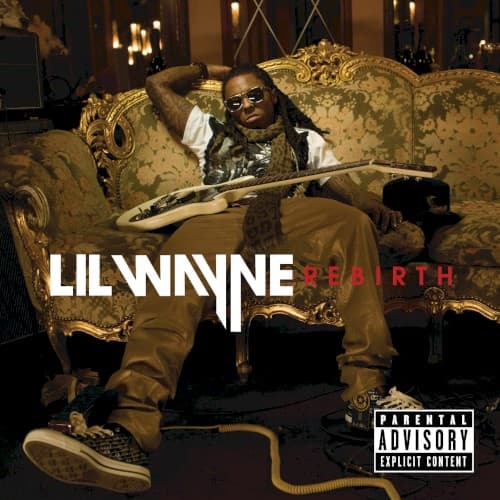
Lil Wayne Rebirth — When the Best Rapper Alive Forgot How to Rap
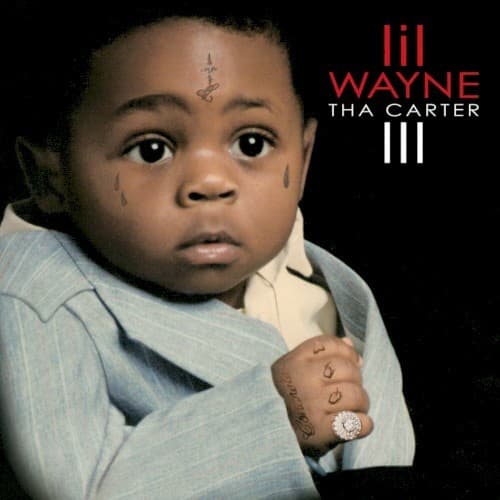
When the biggest rapper in the world spent 2009 telling anyone who would listen that his rock album would change music, the warning signs were flashing bright. Lil Wayne had earned the benefit of the doubt with Tha Carter III, a commercial and creative peak that proved he could bend rap into any shape he wanted. But Rebirth makes the fatal mistake of treating rock music as a costume rather than a language, and the result is an album that satisfies neither rap fans waiting for Wayne's next move nor rock audiences who could hear the homework-assignment quality of every power chord.
The thesis is simple and the verdict immediate: this is Wayne's worst album by a wide margin, a 47-minute demonstration that wanting to make rock music is not the same as understanding it. Where Tha Carter III built entire worlds inside three-minute songs, Rebirth reduces Wayne to a collection of emo-rock clichés about heartbreak and haters, delivered through AutoTune so thick it buries whatever melody might have existed. The production from Cool & Dre, DJ Infamous and others is professionally competent but creatively bankrupt, leaning on distorted guitars and power-pop templates that were already stale when Linkin Park was doing them a decade earlier. Wayne plays bass on Da Da Da and guitar on On Fire, but the gestures feel like a celebrity learning an instrument for a movie role rather than a musician with something to express.
The only reason to engage with Rebirth now is to understand how far Wayne's ambition could outrun his execution. This is not an interesting failure or a misunderstood experiment that aged into relevance. It is simply bad: poorly written, poorly sung, and built on a fundamental misreading of what made either rap or rock compelling in 2010. The album went platinum on Wayne's name alone, debuted at number two, and was immediately recognized as one of the year's worst records by nearly every outlet that reviewed it. Even Wayne seemed to know it, burying Rebirth in his catalog and returning to rap with nothing learned except that he should stay there.
AutoTune Over Distortion, Sincerity Over Skill
The production on Rebirth tries to split the difference between pop-punk accessibility and rap-rock aggression, and the compromise leaves the album stuck in the shallow end of both. Cool & Dre dominate the tracklist with seven beats, and their approach is to layer distorted guitars over programmed drums, add a bass line thick enough to rattle a car stereo, and let Wayne wail over the top. On Fire samples Amy Holland's She's on Fire and builds a hook around the riff, but the song is all sugar-rush energy with no dynamics, just four minutes of the same intensity. Da Da Da and Get a Life follow the same formula, switching out the guitar tones but never finding a reason for the song to exist beyond proving Wayne can stay on a rock beat.
DJ Infamous and Drew Correa handle Prom Queen, the lead single that stalled at number 15 and previewed the album's central problem: Wayne singing about high school rejection with all the specificity of a mall-punk band from 2003, his voice so processed it barely registers as human. Ground Zero, produced by Streetrunner and DJ Infamous, goes harder with the guitars but still sounds like a demo for a Rock Band downloadable track. Kevin Rudolf and Travis Barker appear on Paradice and One Way Trip, respectively, lending rock-world credibility that does nothing to make the songs more convincing. The J.U.S.T.I.C.E. League productions on Runnin and Knockout fare slightly better because they let Wayne rap a little, but even those tracks drown his voice in effects until the words blur.
The writing is where the album collapses entirely. Wayne built his reputation on unpredictable punchlines, dense internal rhymes and a surrealist's sense of imagery. Rebirth discards all of it for the most obvious rock-lyric moves imaginable: metaphors about fire, declarations that he does not care what you think, vague threats to enemies, and breakup songs that never name a specific detail. Prom Queen rewrites every teen-movie revenge fantasy into four verses of whining. Paradice strings together clichés about heaven and hell without a single line that could not have come from a thousand other songs. The Price Is Wrong builds to a hook about how the price is wrong when you are priceless, which might be the least clever thing Wayne has ever committed to a record.
The guest verses expose the gap between Wayne's skills and his ambitions. Eminem shows up on Drop the World with a technically sharp performance that sounds like he is rapping over a rock beat rather than pretending to be a rock star, and the contrast makes Wayne's AutoTune crooning on the same track sound even weaker. Nicki Minaj delivers a competent verse on Knockout, but she is clearly rapping, not reinventing herself. Shanell appears on three tracks and blends into the processed vocal mush. The album refuses to let Wayne be a rapper, but it never teaches him how to be a singer or a songwriter, so he ends up in limbo, doing neither well.
Twelve Tracks of the Same Mistake
The sequencing does the album no favors. The opening stretch sets the template for the next 44 minutes: AutoTune, distorted guitars, vague declarations of greatness. The album keeps doubling down without variation. By the midpoint, the formula is so entrenched that even occasional melodic lifts cannot shake the monotony.
Drop the World is the only track that justifies its existence, and that is entirely because Eminem brings a verse sharp enough to remind listeners what Wayne used to sound like when he cared about rapping. The song works as a rap track with rock production, which is what the entire album should have been if Wayne had any interest in playing to his strengths. A few other attempts land somewhere in the middle, too generic to be memorable but at least functional.
The back half sags under the weight of the concept. The closing run sounds like album filler, the kind of tracks a label includes to stretch a ten-song idea to twelve. The album does not build to anything, does not earn its length, and does not leave room for a single moment of surprise. It simply runs out of ideas and stops.
Skip It and Pretend It Never Happened
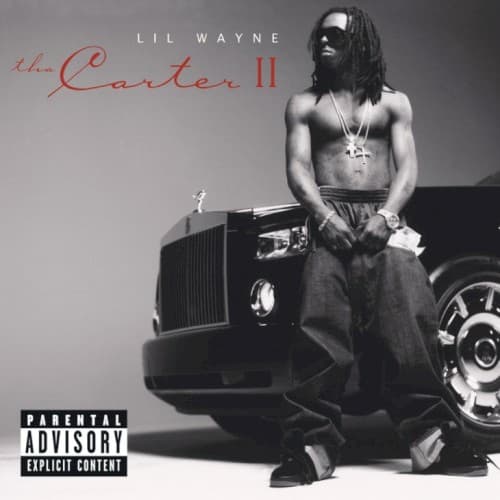
Rebirth ranks dead last in Lil Wayne's catalog, and it is not close. Where Tha Carter II and Tha Carter III showcased a rapper at the peak of his technical and creative powers, Rebirth is a vanity project that mistakes ambition for vision. Wayne wanted to make a rock album, but he never bothered to learn what made rock music work, and the result is an album that fails on every level: as a rock record, as a rap record, and as a piece of songwriting. The album went platinum because Wayne's name was on the cover, not because anyone needed to hear it twice.
This album is for no one. Rap fans will find nothing of the Wayne they came for: no wordplay, no storytelling, no flow, no personality. Rock fans will hear a dilettante fumbling through their genre with training wheels and a safety net. The only listeners who might find value here are completists who need to hear every Wayne project to understand his career arc, and even they will finish Rebirth understanding only that great rappers are not automatically great at everything.
If you must engage with this album, start with Drop the World to hear Eminem show Wayne how it should have been done, then maybe On Fire to understand the kind of catchy-but-empty song the whole album was aiming for. After that, move directly to Tha Carter IV and forget this experiment ever happened. For context on what Wayne can do when he stays in his lane, revisit Tha Carter III or even Tha Carter II, both of which demonstrate the creativity and skill that Rebirth abandons entirely. This is not a bold risk that failed interestingly. It is a bad album that was recognized as such immediately and has only aged worse as the rap-rock fusion it attempted has been done better by artists who actually understood both genres.
Track by track
Track Listing
American Star
WeakThe album opens with Wayne crooning over a midtempo rock arrangement from DJ Nasty & LVM, setting the AutoTune-heavy template for everything that follows. Shanell provides harmonies that blur into Wayne's processed vocals. The lyrics aim for aspirational but land on generic, with vague talk of stardom and destiny. The guitars chug along without variation, and the hook is instantly forgettable. This is a weak opener that promises nothing good to come.
Prom Queen
WeakThe lead single and the album's most telling failure. DJ Infamous and Drew Correa build a pop-punk beat that sounds focus-grouped for radio, and Wayne sings about being rejected in high school with all the depth of a CW teen drama. The AutoTune is oppressive, the melody is nonexistent, and the lyrics recycle every revenge-of-the-nerd cliché without a single specific image. The song stalled at number 15 on the Hot 100, and its reception should have killed the project. Instead, it became the blueprint for the rest of the album. Shanell's backing vocals do nothing to save it. This is Wayne at his least interesting, abandoning wordplay and wit for whining.
Ground Zero
WeakStreetrunner and DJ Infamous push the guitars harder here, aiming for a heavier rock sound, but the song still feels like a template waiting for a real idea to fill it. Wayne's vocals remain buried in effects, and the lyrics are more vague declarations about being unbothered by critics. The hook is a nonstarter, and the track has no reason to exist beyond proving Wayne can yell over a rock beat. Filler disguised as aggression.
Da Da Da
WeakCool & Dre provide a bass-heavy rock beat, and Wayne reportedly plays bass himself, but the performance is so unambitious it barely registers as a creative choice. The song is another exercise in AutoTune crooning over power chords, with lyrics about not caring what people think delivered with zero conviction. The repetitive hook makes the three-and-a-half-minute runtime feel longer. This is the kind of track that makes you wonder if anyone in the studio was willing to tell Wayne the truth.
Paradice
WeakKevin Rudolf and Cool & Dre team up for a production that aims for anthemic and lands on overwrought. Wayne sings about heaven and hell, paradise and pain, stringing together clichés without a single memorable line. The guitars are loud, the drums are bigger, and the AutoTune is still doing all the melodic work because Wayne cannot carry a tune on his own. The song wants to be a stadium rock moment but sounds like a bad power ballad from a forgotten 2000s rock band. Rudolf's involvement adds nothing.
Get a Life
WeakCool & Dre return with another distorted-guitar chug, and Wayne uses the track to address critics and haters with the kind of generic defiance that says nothing. The hook is weak, the verses are weaker, and the song has no dynamic range. It simply exists at one level of loud, processed aggression for three minutes and then ends. This is the kind of filler that Wayne would have cut from a Carter album without a second thought.
On Fire
SolidCool & Dre sample Amy Holland's She's on Fire and build the album's second-best song around the riff. Wayne reportedly plays guitar here, and the track has more melodic lift than most of Rebirth, with a hook that at least attempts to be catchy. The AutoTune is still oppressive, and the lyrics are still empty, but the energy is higher and the production does some of the work. This is the kind of song that could work as a guilty pleasure on a different, better album. As a single, it peaked at number 62, which tells you how little traction even Wayne's name could give this material.
Drop the World
StandoutThe album's lone highlight and the only track that justifies listening to Rebirth. Hit-Boy and Chase N. Cashe provide a rock-influenced beat that still lets Wayne and Eminem rap, and Eminem's verse is sharp, technical, and engaged in a way that reminds you what great rapping sounds like. His performance exposes how much Wayne has abandoned his strengths on the rest of the album. Wayne's hook is passable, his verse is competent, and the song works as a rap track with guitars rather than a failed rock experiment. It peaked at number 18 on the Hot 100 and was praised by critics as the album's only redeeming moment. If Wayne had made an entire album in this mode—rapping over rock production instead of trying to become a rock singer—Rebirth might have been salvageable.
Runnin
SolidThe J.U.S.T.I.C.E. League handle production, and Shanell returns for more processed harmonies that do nothing to distinguish the track. Wayne raps a little more here, which is a relief, but the song is still drowning in AutoTune and generic rock-rap clichés. The beat is fine, the hook is forgettable, and the track disappears as soon as it ends. This is competent filler, which is a low bar but higher than most of the album clears.
One Way Trip
SolidKevin Rudolf and Travis Barker collaborate on a track that should have more personality than it does. Barker's drums are live and energetic, Rudolf contributes vocals, and the production has more texture than most of the album. But Wayne's performance is still AutoTune mush, and the lyrics are still vague declarations about living fast and not looking back. The track feels like a missed opportunity, the kind of collaboration that could have worked if Wayne had been willing to meet his guests halfway. Instead, it is just another Rebirth song, louder but not better.
Knockout
SolidThe J.U.S.T.I.C.E. League return, and Nicki Minaj delivers a competent guest verse that reminds you she is rapping, not trying to be something she is not. Wayne raps more on this track too, and the song benefits from letting both artists do what they do well. The hook is weak, and the production is still generic rock-rap, but the track at least functions as a song rather than a failed experiment. It debuted at number 44 on the Hot 100 off digital sales, which suggests listeners were searching for anything on the album that sounded like rap. This is passable, nothing more.
The Price Is Wrong
WeakDJ Infamous closes the album with a track that sums up everything wrong with Rebirth. The guitars are loud, the AutoTune is thick, and Wayne sings a hook about how the price is wrong when you are priceless, which is the kind of wordplay that would embarrass a high schooler. The verses are more vague posturing, the production is more cookie-cutter rock, and the album ends not with a statement but with a whimper. This is filler masquerading as a closer, and it leaves the listener with nothing except the knowledge that the album is finally over.