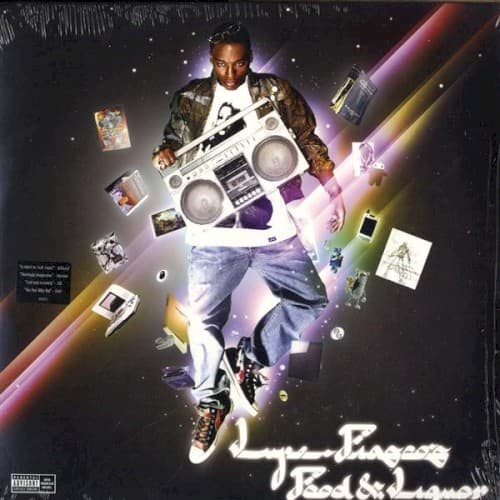
Scorecard: 8.0/10 · Great
How we score- Writing(25%)
- 9.0
Fiasco builds entire worlds in single verses—the skateboarder aging through life on "Kick, Push", the dead gangster in "The Cool"—with imagery precise enough to carry ideas about rejection, displacement and moral choice without stating them.
- Production(25%)
- 7.5
Soundtrakk's string arrangements and Kanye's soulful flip on "The Cool" anchor the album, but The Neptunes' synth exercise on "I Gotcha" and some of Prolyfic's beats feel like placeholders next to the album's best moments.
- Delivery(15%)
- 8.0
Fiasco's conversational, unhurried flow suits the storytelling perfectly and lets verses unspool with total control, though his sung hooks on tracks like "Sunshine" and "Just Might Be OK" lack the melodic strength of his rapping.
- Cohesion(15%)
- 7.0
The album front-loads its strongest material and sags in the middle stretch from "I Gotcha" through "Sunshine"; the 12-minute outro reads as bloat even if the thank-you list suits the earnestness.
- Originality(10%)
- 8.5
In 2006, when snap music and ringtone rap dominated, a debut this conceptual and literate—opening with Qur'anic recitation, closing with anti-imperialism—carved out space no peer was claiming.
- Replay value(10%)
- 8.0
"Daydreamin'", "The Cool" and "Hurt Me Soul" hold up as essential conscious rap; the weaker hooks and mid-album lulls mean full album runs happen less often than the standouts get revisited.
Lupe Fiasco's Food & Liquor — The Smartest Gamble Atlantic Let Happen
The thesis arrives in the first four tracks: Lupe Fiasco writes rap songs the way people who do not listen to rap think rap songs should be written—packed with allegory, moral architecture, ideas that arrive in metaphor rather than slogans—and he does it well enough to make the didacticism feel earned instead of smug. Food & Liquor is a conscious rap album that never apologizes for being one, released in a year when the genre's commercial center had moved toward snap beats and club records with minimal concern for saying anything. That Fiasco pulled it off as a debut on a major label, with Jay-Z as executive producer and Kanye West in the credits, made it both an improbable victory for the backpack set and a high-wire act with little margin for error.
The stakes were real. When the album leaked months before release, critics and peers called Fiasco the potential savior of hip-hop, a designation that would have crushed most 24-year-olds. The final version landed at number eight on the Billboard 200, earned four Grammy nominations, and placed on year-end lists as one of 2006's best rap albums. But the hype obscured a simpler truth: Food & Liquor works because Fiasco is a better storyteller than most rappers attempting this level of conceptual ambition, not because ambition alone deserves applause. The album's title references the corner stores in Chicago where good and evil sit on the same shelf, and that tension—between the world as it is and the world Fiasco wants to describe—runs through every track. The writing carries it; the hooks sometimes do not.
The Machinery of a Concept Album That Mostly Works
Fiasco structures nearly every song as a narrative with a moral center, which means the writing has to justify the sermon or the whole thing collapses into tedium. On "Kick, Push", he follows a skateboarder from childhood through marriage, using the deck as a stand-in for any pursuit that draws ridicule and rejection. The verses move through time without wasted lines, specific enough to picture—concrete, cops, a girlfriend who also skates—and the central image does the work the chorus only hints at. "He Say She Say" splits perspectives between a child without a father and a single mother explaining the absence, each verse its own monologue, the kind of structural choice that requires total control of the camera. "The Cool" narrates a dead gangster's return from the grave in under four minutes, and the imagery—crack vials, gravestones, the chill of resurrection—lands because Fiasco never breaks character or explains the metaphor. The allegories work when they stay rooted in a specific scene and falter when they reach for abstraction.
The production splits between Soundtrakk's lush string arrangements and a rotating cast of bigger names brought in after the leak. Soundtrakk handles most of the album's best tracks: the orchestral swell on "Kick, Push", the mournful strings threading through "He Say She Say", the soul loop on "Real". Kanye West's work on "The Cool" uses chopped Dexter Wansel keys and a James Brown drum break to build a noir atmosphere that matches the writing. Mike Shinoda's beat on "The Instrumental" samples a Far song and lets the guitars breathe, understated enough to let Fiasco's critique of television addiction carry the track. But The Neptunes' "I Gotcha" feels like a contractual obligation, synths and drums with no thematic connection to the album's center, and Prolyfic's beats on "Pressure" and "American Terrorist"—while serviceable—lack the polish of the Soundtrakk material. The string-heavy approach ties the album together sonically, but the middle stretch sags where the production fails to match the ambition of the writing.
Fiasco's delivery suits the storytelling—conversational, unhurried, willing to let a verse unspool without hooks or punch-ins—but his sung choruses undermine several tracks. "Sunshine" coasts on a Diana Ross sample and a melody Fiasco cannot quite carry. "Just Might Be OK" reaches for radio play with a hook that sounds focus-grouped next to the verses. Even "Daydreamin'", which won a Grammy, leans on Jill Scott's chorus to cover for a refrain Fiasco himself could not sell. The album works best when he trusts the rapping and skips the singing, which happens too rarely. Guest verses from Jay-Z on "Pressure" add weight but no surprises. Matthew Santos on "American Terrorist" provides the exact somber tone the track needs. The features never overshadow Fiasco, which on a debut with this many names attached counts as discipline.
An Album That Peaks Early and Takes Too Long to End
Food & Liquor front-loads its strongest material and struggles to maintain momentum once the thesis is established. The opening run through the first third includes most of the album's best writing and tightest production, and by the time the tenth track arrives, the album has already made its case. The middle stretch extends the peak with strings and meditations on alienation that earn their introspection. But weaker hooks disrupt the flow in the second quarter, and the section from late midpoint through the penultimate stretch feels like the album marking time rather than building toward a conclusion.
The sequencing choice to end with a 12-minute outro—most of it Fiasco reading a thank-you list—undercuts the impact of the preceding closer, which revisits an earlier narrative with a quieter, more resigned tone that would have closed the album more effectively. The outro fits Fiasco's earnest personality, but earnestness is not the same as good sequencing. At 16 tracks and over an hour, the album would have been tighter at 12 or 13, cutting the filler and letting the conceptual spine stand without interruption. The pacing problems do not ruin the album, but they prevent it from sustaining the energy of its best moments across the full runtime.
Where It Lands and Who Needs to Hear It
Food & Liquor is the best kind of debut: one that announces a voice too distinctive to ignore, even when the execution has not caught up to the vision. Fiasco writes better than nearly anyone in mainstream rap in 2006, and the album's willingness to tackle religion, systemic violence, and personal displacement without dumbing down the language or the ideas marked it as essential for listeners exhausted by the genre's commercial turn. It holds up better than most conscious rap from the era because the storytelling stays concrete—Fiasco describes scenes and builds characters rather than lecturing—and the best tracks remain in rotation 15 years later. But the weaker hooks, uneven production, and bloated runtime keep it from all-time status. This is a very good album that could have been great with sharper editing.
It ranks as Fiasco's most cohesive statement, the album where his conceptual ambitions and his technical skill aligned before later projects tilted too far toward abstraction or industry compromise. Listeners drawn to Nas, Talib Kweli, or early Kanye will find plenty to value here; fans who need hooks to match the verses will hit skip more often than they should. Start with "Kick, Push", "The Cool", and "Hurt Me Soul" to understand what Fiasco does best, then work backward through "He Say She Say" and "Daydreamin'". If those tracks land, the full album is worth the hour. For a next step, The Roots' Game Theory from the same year offers a darker, tighter take on similar themes, and Common's Be shows how Chicago conscious rap sounds when the production never dips. Food & Liquor does not need those comparisons to justify itself—it carved out space no one else was claiming and did it with enough skill to make the claim stick.
Track Listing
Intro
▲Fiasco chants the opening lines of the Qur'an in Arabic over minimal production, a bold opening that establishes the album's willingness to center his Muslim identity without apology. His sister Ayesha Jaco contributes spoken word. The track sets the tone but does not overstay.
Real
▲A mission statement: Fiasco reflects on making music he does not have to be ashamed of, which in 2006 meant rejecting the materialism and empty club records dominating the charts. Soundtrakk's production provides warm soul without overdoing it, and the verse lays out the thesis plainly—he wants to write raps that matter, and he knows that makes him a target. The simplicity works because the conviction is audible.
Just Might Be OK
●Prolyfic's beat has energy, but the sung hook is generic and Fiasco cannot sell it. The verses are fine—reflections on persistence and self-belief—but the track aims for radio play and misses. Filler.
Kick, Push
▲The album's centerpiece and clearest proof that Fiasco can build a narrative that works as allegory without collapsing under its own weight. He follows a skateboarder from childhood through adulthood, each verse advancing the timeline—learning to skate, getting kicked out of spots by cops, meeting a girl who also skates, marriage, a child. The skateboard is the through-line, but the real subject is rejection: doing what you love when the world tells you it is not for you. Soundtrakk's strings and horns give the track a warmth that matches the wistfulness in Fiasco's delivery. The hook is simple enough to stay out of the way. The song works because it never explains the metaphor; it trusts the listener to hear it. This is the track that put Fiasco on the map, and it earned the attention.
I Gotcha
▼The Neptunes deliver one of their least interesting beats—synths and drums that sound like a first draft—and Fiasco does not have the melodic chops to make the hook work. The verses are competent but unremarkable. The weakest track in the album's first half.
The Instrumental
▲Mike Shinoda samples Far's guitar-driven post-hardcore and builds a beat minimal enough to let Fiasco's critique of television addiction hold the center. The verses describe a culture numbed by screens, and the imagery—kids glued to shows, parents zoned out, Fiasco himself admitting complicity—stays specific enough to avoid the trap of vague moralizing. Jonah Matranga from Far contributes vocals. The track proves Fiasco can write social commentary that lands without preaching.
He Say She Say
▲Fiasco splits the song into two monologues: a child questioning why his father is absent, then the mother explaining why she kept the father away. Each verse is a complete perspective, and the structural discipline required to pull this off without breaking character or editorializing is what separates Fiasco from lesser conscious rappers. Soundtrakk samples Burt Bacharach and The B-52's, stitching them into strings that underscore the sadness without melodrama. The verses are devastating because they refuse to resolve the conflict—both speakers have their truth, and the song lets them coexist. One of the album's best tracks.
Sunshine
▼Soundtrakk flips a Diana Ross sample, but Fiasco's sung hook is flat and the verses about optimism and perseverance do not say anything the album has not already covered. It feels like an attempt at a single that no one needed.
Daydreamin’
▲Craig Kallman's production samples I Monster's cover of "Daydream in Blue", and Jill Scott's chorus does the heavy lifting Fiasco's hooks elsewhere cannot manage. The verses describe escapism—retreating into imagination to survive a harsh reality—and the writing stays grounded in images rather than abstractions. The track won a Grammy for Best Urban/Alternative Performance, and while it is not the album's best song, it is the most complete: the hook, verses, and production all aligned. The sample choice gives it a dreamy, suspended quality that matches the subject.
The Cool
▲Kanye West flips Dexter Wansel's keys and a James Brown break into a haunting noir backdrop, and Fiasco narrates the story of a dead gangster who rises from the grave and returns to the streets where he died. The imagery is vivid—gravestones, crack vials, the coldness of being undead—and the track works as both a horror story and a metaphor for the cycle of violence that keeps pulling people back in. Fiasco never breaks character or explains the conceit; he trusts the writing to carry the idea. The beat is one of Kanye's best deep cuts from this era, understated and eerie. This is the track that became a character in Fiasco's later concept album of the same name, and it earns the expansion.
Hurt Me Soul
▲Needlz provides mournful strings, and Fiasco delivers one of his most introspective performances: a meditation on alienation, the weight of being conscious in a world that rewards ignorance, and the displacement he feels from his own neighborhood. The writing here is as sharp as anything on the album—specific images of violence, friends lost, the pull of the streets versus the desire to escape—and the verse structure lets him unspool the thoughts without rushing to a hook. The track sags slightly in its final third, but the first two verses are essential Fiasco.
Pressure
●Jay-Z contributes a verse, and Prolyfic's beat does its job without standing out. Fiasco's writing about the pressures of success and the expectations placed on him is solid, but the track does not reach the heights of the album's best material. Jay-Z's appearance adds weight without taking over. A good track that feels minor next to what surrounds it.
American Terrorist
▲Prolyfic's middle-eastern style beat sets the tone for Fiasco's most overtly political track, addressing the misconceptions of Islam in America, the hypocrisy of calling out foreign terrorism while ignoring domestic violence, and the role of racism and gun culture in perpetuating both. The song opens with a reference to slavery and smallpox blankets, then draws a line to the present. Matthew Santos provides the somber chorus. The writing is sharp—Fiasco paraphrases his points rather than sloganeering—but the beat feels slightly undercooked compared to the Soundtrakk and Kanye productions. The original sample from Chick Corea's "The Romantic Warrior" was never cleared, which may explain the rougher final mix. Still, this is essential listening for understanding what Fiasco was trying to do with the album: force the conversation mainstream rap was avoiding.
The Emperor’s Soundtrack
●Soundtrakk flips a UFO sample into a brief interlude, and Fiasco delivers a verse about power, empire, and collapse. At under three minutes, the track works as a palate cleanser before the album's final stretch. Not essential, but not filler either.
Kick, Push II
●Brandon Howard provides a quieter, more subdued piano loop, and Fiasco revisits the skateboarder narrative with a more resigned tone. The sequel does not reach the heights of the original—it is more reflection than story—but it serves as a bookend, showing the skateboarder older and still skating, still facing the same resistance. The track would have worked better as the album closer instead of the 12-minute outro that follows.
Outro
▼Fiasco reads an extensive thank-you list over minimal production for over 12 minutes. The gesture fits his earnest personality, but as an album-closing choice it is self-indulgent. The list goes on too long.
![[untitled] by Nas album cover](/_next/image?url=https%3A%2F%2Fv8ewju5eansilllx.public.blob.vercel-storage.com%2Fcovers%2Fnas-untitled.jpg&w=640&q=75)